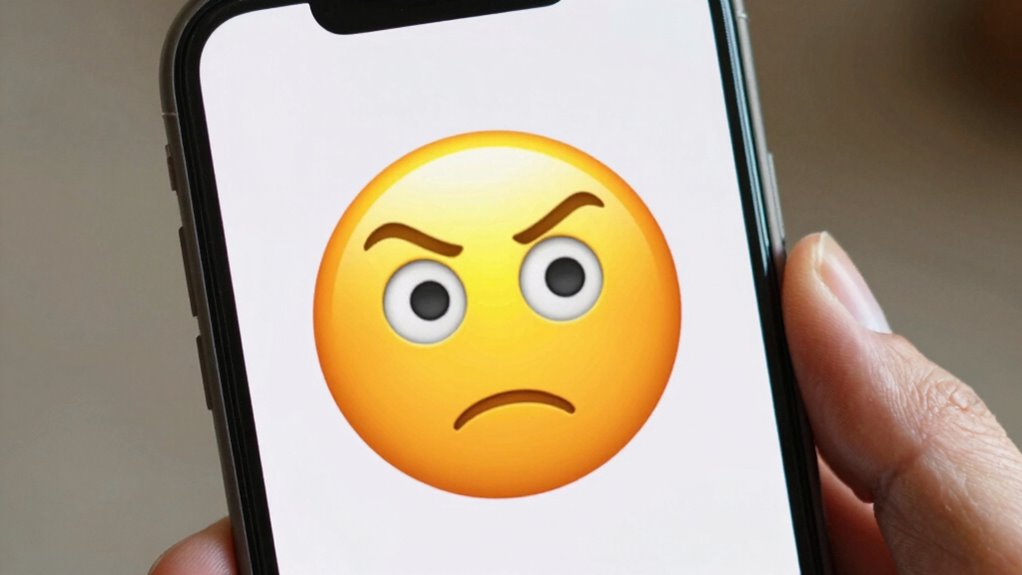
The 🤔 emoji in text shows you’re thinking, doubting, or questioning something. It helps express internal pondering or skepticism, often used to clarify whether you’re genuinely curious or sarcastic. In different cultures, it can mean different things—sometimes sparking curiosity, other times signaling a need for clarification. It’s versatile and often paired with other emojis or words to convey tone. If you want to understand more about its uses and meanings, keep exploring further.
Key Takeaways
- The 🤔 emoji typically indicates thinking, pondering, or questioning in digital communication.
- It can express curiosity, doubt, or the need for clarification in conversations.
- Usage context influences whether it signifies genuine reflection or sarcasm.
- Cultural differences affect how the emoji is interpreted, varying from sincere thought to skepticism.
- It enhances emotional nuance, making online messages more expressive and engaging.
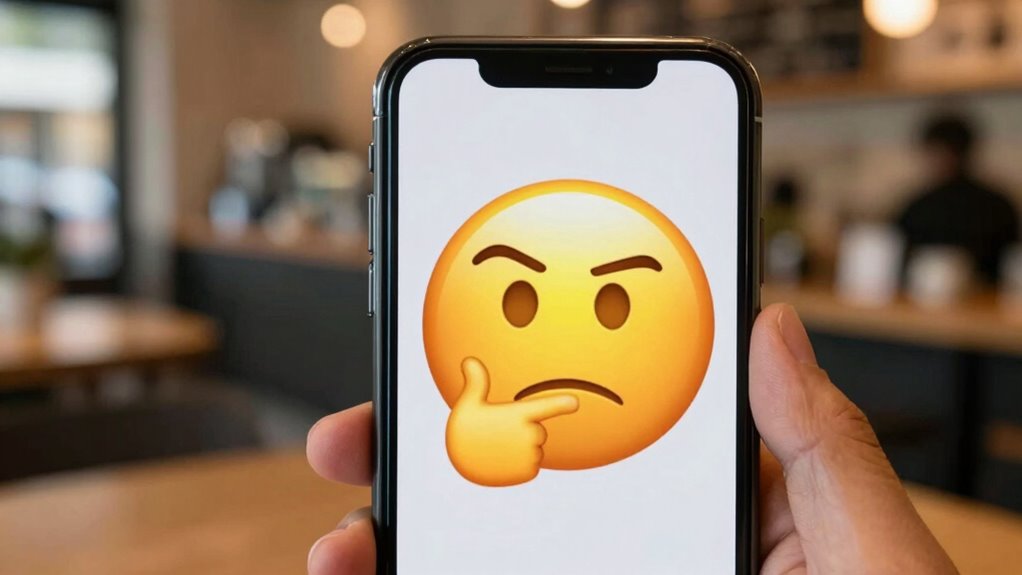
Have you ever wondered what the 🤔 emoji really means when you see it in a text? It’s a curious little symbol that can convey a range of thoughts, from pondering to skepticism. To understand it fully, you need to look at its origins and how different cultures interpret it. Emojis like 🤔 didn’t appear out of nowhere; they evolved from early digital expressions designed to add nuance to plain text. The emoji’s origins trace back to Japan, where emojis first gained popularity in the late 1990s. Created to bridge the gap between text and emotion, these tiny images quickly spread worldwide. The 🤔 emoji, specifically, was introduced as part of the Unicode Standard, aiming to give users a quick way to express thoughtfulness or doubt. As digital content continues to evolve, exploring new content formats helps us understand the shifting landscape of online communication.
Cultural interpretations of this emoji can vary, depending on the context or region. In Western cultures, 🤔 often signals that you’re thinking about something or questioning what’s been said. It can serve as a prompt for someone to clarify or reconsider their statement, making conversations more engaging. In other parts of the world, the same emoji might carry subtler or different connotations. For example, in some Asian cultures, it might be used more sparingly, reserved for moments when someone is genuinely pondering or analyzing a situation, rather than expressing skepticism. Additionally, the way emojis like 🤔 are integrated into digital communication can influence how messages are perceived, emphasizing the importance of context and tone. Interestingly, the psychological aspect of emoji use also plays a role in how emotions are conveyed digitally, including how the 🤔 emoji can reflect internal thought processes or uncertainty. Moreover, the way this emoji is used can also be influenced by cultural differences, shaping its interpretation in various social contexts.
The way you use the 🤔 emoji can also change based on tone. If you add it after a statement, it might mean you’re genuinely contemplating or unsure. If it’s used sarcastically, it can suggest skepticism or disbelief. For instance, if someone claims they can run a mile in three minutes, a 🤔 emoji might imply doubt. It’s a versatile symbol that easily adapts to various moods, depending on the conversation. You’ll notice that many people pair it with other emojis or words to make their intent clearer, especially since a simple emoji can sometimes be ambiguous without context.

The Original Mood Flipbook for Kids; 20 Different Moods/Emotions; Autism; ADHD; Help Kids Identify Feelings and Make Positive Choices; Laminated Pages (Emoji Flipbook)
"HIGH QUALITY" EDUCATIONAL TOOL. Teach kids about different moods/emotions and positive actions that can be taken in a…
As an affiliate, we earn on qualifying purchases.
As an affiliate, we earn on qualifying purchases.
Frequently Asked Questions
Can the 🤔 Emoji Be Used Sarcastically?
Yes, you can use the 🤔 emoji sarcastically, but it’s highly context-dependent. When you want to highlight humorous misunderstandings or question something skeptically, this emoji works well. Your tone and the conversation’s flow matter—if your message is playful or teasing, the emoji signals sarcasm effectively. However, be mindful that without clear context, some might interpret it literally, so use it thoughtfully to guarantee your sarcasm lands correctly.
How Do Different Cultures Interpret the 🤔 Emoji?
You might find that different cultures interpret the 🤔 emoji through diverse cultural symbolism and regional interpretations. In some regions, it signals deep thought or curiosity, while in others, it could imply doubt or skepticism. You should consider these cultural nuances to avoid misunderstandings. Recognizing that the emoji’s meaning varies helps you communicate more effectively across cultural boundaries and guarantees your message resonates as intended.
Is the 🤔 Emoji Appropriate in Professional Messages?
You probably shouldn’t use the 🤔 emoji in professional messages, as it’s usually seen as casual or playful. The emoji symbolism often conveys curiosity or doubt, which can be misinterpreted in serious contexts. In emotional expression, it might seem like you’re questioning or unsure, making it unsuitable for formal communication. To keep things professional, stick to clear words—your message will be taken more seriously and won’t cause any confusion.
What Are Alternative Emojis to Express Thinking?
You can use alternative emojis like 🤨, 🧠, or 📝 to express thinking, depending on the message’s tone. Emoji combinations, such as 🤓💭 or 🧐🤔, also work well for conveying thoughtfulness. Keep in mind the contextual interpretations—some emojis may seem more playful or serious. Choose options that match your intent, ensuring your message clearly communicates your thinking process without ambiguity.
How Has the Meaning of 🤔 Evolved Over Time?
The 🤔 emoji’s meaning has evolved from a simple symbol of pondering to a versatile expression of curiosity and skepticism, influenced by its emoji history and pop culture references. You might now see it used to question ideas, indicate doubt, or show deep thought in conversations. Over time, its usage has expanded, reflecting how people express nuanced feelings about complex topics, making it a popular emoji for conveying contemplation.

The Connected Church: A Social Media Communication Strategy Guide for Churches, Nonprofits and Individuals in Ministry
As an affiliate, we earn on qualifying purchases.
As an affiliate, we earn on qualifying purchases.
Conclusion
Next time you see the 🤔 emoji, you’ll know it’s often used to show you’re thinking, questioning, or considering something. For example, if a friend sends you a message asking, “Should I take the job offer?” with a 🤔 emoji, they’re probably weighing their options. Recognizing this emoji helps you understand their thought process better, making your conversations more engaging and meaningful. So, next time, embrace the 🤔 and keep the dialogue thoughtful!

Media Law (Peter Lang Media and Communication)
As an affiliate, we earn on qualifying purchases.
As an affiliate, we earn on qualifying purchases.

A Kids' Guide to Manners: 50 Fun Etiquette Lessons for Kids (and Their Families)
As an affiliate, we earn on qualifying purchases.
As an affiliate, we earn on qualifying purchases.