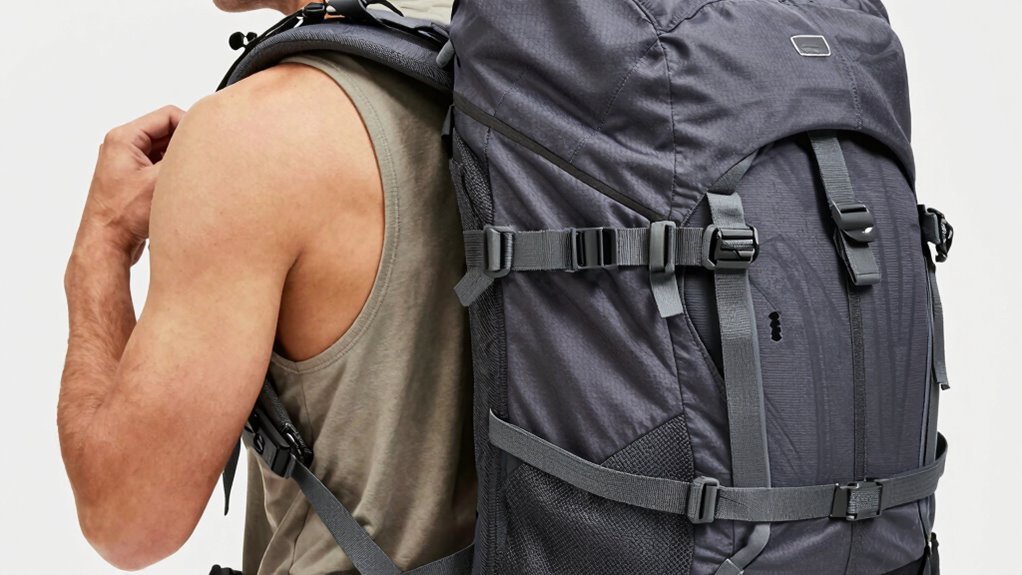

To fit your hiking backpack correctly, start by adjusting the shoulder straps so the pack sits snugly on your hips rather than your shoulders, ensuring comfort and good weight distribution. Use the hip belt to stabilize the load, sitting on your iliac crests, and tighten the load lifters to keep the pack close to your back. Make sure the back panel provides good ventilation for airflow, and fine-tune all straps while standing upright. Keep going to learn all the tips for a perfect fit.
Key Takeaways
- Adjust shoulder straps so the pack sits snugly without restricting movement or causing pressure.
- Ensure the hip belt is tight enough to transfer weight to your hips, not shoulders.
- Position heavier items higher and closer to your back for proper weight distribution.
- Use load lifters and chest straps to stabilize and center the pack on your body.
- Regularly re-check and fine-tune straps during your hike for continued comfort and fit.
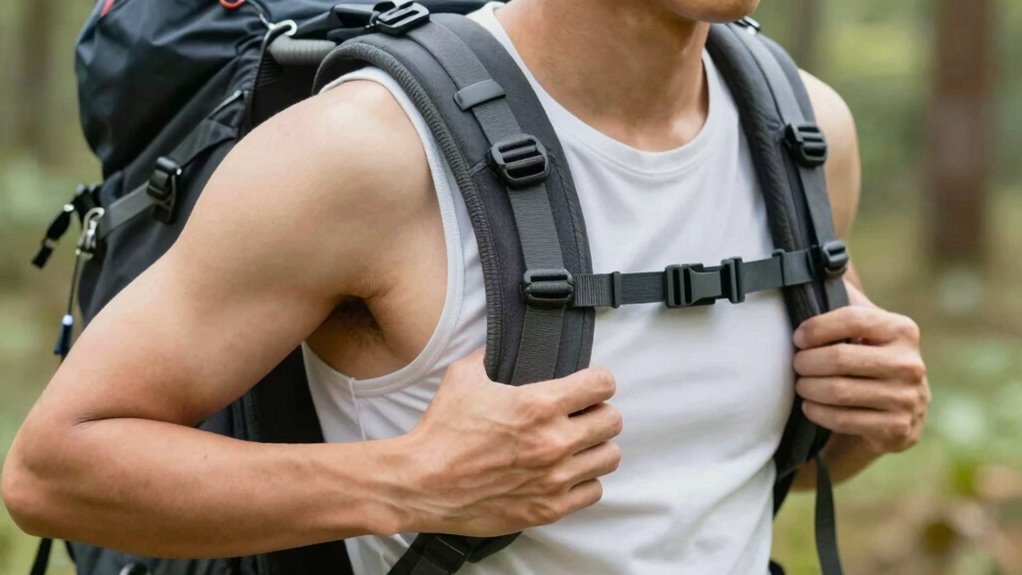
Fitting a hiking backpack properly is essential for comfort and safety on your outdoor adventures. When you wear a backpack that fits well, you’ll notice a significant difference in how manageable and comfortable your hike feels, especially on long trails. One of the key factors to guarantee is backpack ventilation. If your pack doesn’t allow for good airflow, you’ll quickly become sweaty and uncomfortable, which can lead to chafing or even skin irritation. Look for a backpack with a ventilated back panel or mesh padding that promotes airflow between your back and the pack. This helps keep you cooler and reduces moisture buildup, making your hike more enjoyable.
Ensure your hiking pack has good ventilation to stay cool and prevent discomfort on long trails.
Equally important is assuring proper weight distribution. If the weight isn’t balanced correctly, you’ll feel strain on your shoulders, back, or hips, which can cause fatigue or even injury. To achieve the best weight distribution, start by adjusting the pack’s shoulder straps so that the pack’s weight rests comfortably on your hips rather than your shoulders. Your hips are designed to carry most of the load, so make sure the hip belt is snug but not tight, sitting on your hips’ iliac crest. The shoulder straps should be tight enough to prevent the pack from shifting but not so tight that they pinch or restrict movement. Some backpacks also feature load lifters—small straps located near your shoulders—that can be adjusted to bring the pack closer to your body, further stabilizing weight and improving balance.
When fitting your pack, take the time to fine-tune these adjustments while standing upright and wearing the gear you plan to carry. Load the pack with some weight similar to what you’ll be carrying on your trip, so you can get an accurate feel for the fit. Make sure that the weight is centered, with heavier items placed closer to your back and higher up in the pack to maintain a lower center of gravity. This not only enhances stability but also reduces strain on your back and shoulders. Additionally, understanding how contrast ratio affects visual clarity can help you choose a backpack with appropriate visibility features, especially in varying outdoor lighting conditions. Properly adjusted straps and harnesses can also significantly improve overall fit and comfort, preventing unnecessary fatigue during extended hikes. Research shows that proper backpack fit can significantly reduce the risk of injury and increase hiking endurance. When your pack is correctly fitted, it not only feels more comfortable but also helps prevent postural issues that can develop from carrying an improperly adjusted load.
A well-fitted backpack also promotes better airflow and reduces sweating, which can be particularly beneficial in hot weather or during intense activity. Remember, a well-fitted pack doesn’t just improve comfort—it also enhances your safety by preventing unnecessary fatigue and potential injuries.
Regularly check and adjust your pack throughout your hike, especially if your load shifts or if you notice discomfort. Proper fitting involves a combination of good backpack ventilation, accurate weight distribution, and personalized adjustments. When you take the time to get it right, your outdoor experience becomes much more enjoyable, allowing you to focus on the trail ahead rather than your gear.

Maelstrom Hiking Backpack,Camping Backpack,40L Waterproof Hiking Daypack with Rain Cover,Lightweight Travel Backpack,Blue
High-Quality Material:Hiking backpack is made of high quality rip-stop 210d nylon fabric,which is water resistant,tear resistant,anti-scratch and wear…
As an affiliate, we earn on qualifying purchases.
As an affiliate, we earn on qualifying purchases.
Frequently Asked Questions
How Often Should I Adjust My Backpack During a Hike?
You should adjust your backpack straps whenever you notice discomfort or after every hour of hiking. As your backpack weight shifts with terrain or the load settles, proper strap adjustments keep your pack snug and balanced. Regularly check and tighten straps to prevent strain and improve comfort. This guarantees your pack stays securely in place, helping you maintain good posture and avoid fatigue during your hike.
Can I Use the Same Fit for Different Types of Backpacks?
Like Cinderella’s slipper, the perfect fit varies. You can’t use the same fit for different backpacks because each has unique features like backpack weight and ventilation features. Heavier loads require a snug fit to distribute weight properly, while ventilation features help keep you cool. Adjust straps accordingly for each pack, ensuring comfort and stability. Always customize the fit based on the specific design and your load to avoid discomfort or injury.
What Should I Do if My Backpack Causes Shoulder Pain?
If your backpack causes shoulder pain, first loosen the shoulder straps to reduce pressure. Make sure the straps are snug but not tight, distributing weight evenly across your shoulders. Check if the backpack has padded shoulder straps for added comfort. Adjusting the load distribution and taking breaks can also help prevent back pain. If pain persists, consider a different pack or consulting a specialist to avoid long-term discomfort.
How Do I Choose the Right Backpack Size for My Body?
To choose the right backpack size, consider your torso length and overall body size. You want a pack that comfortably fits your frame without adding unnecessary weight. Keep backpack weight light by using effective packing techniques—distribute weight evenly and pack essentials first. Try on different sizes and adjust straps to guarantee a snug fit. A properly sized pack reduces strain, making your hike more enjoyable and comfortable.
Are There Specific Techniques for Fitting a Men’s Versus Women’s Backpack?
Sure, because men and women are obviously from different planets, right? When fitting a backpack, you can’t ignore gender-specific adjustments—women’s packs usually have narrower shoulders and shorter torso options, while men’s are designed with broader frames in mind. Consider ergonomic design features that support your body’s natural shape, ensuring comfort and proper weight distribution. Tailoring your fit to gender-specific adjustments makes all the difference between a trek and a trial.

Vigorport Utility Straps Quick Release Nylon Backpack Accessory Bag Strap,Adjustable for Hiking,Travel,Outdoor Sports-4 Pack (Black, 0.75" W-40 L)
High Quality: Utility strap with quick-release buckle are made of top nylon materials, soft, wear-resistant, heavy duty and…
As an affiliate, we earn on qualifying purchases.
As an affiliate, we earn on qualifying purchases.
Conclusion
Fitting your hiking backpack just right is like finding the perfect pair of shoes—once it fits well, every step feels easier. I remember my first long trek; an ill-fitting pack made every hill seem steeper. Now, I know that an hour spent adjusting can turn a grueling hike into a smooth journey. Take the time to get it right, and you’ll enjoy every trail more, making your adventure safer and more comfortable from start to finish.

Lemuvlt Small Hiking Daypack Rucking Backpack 15L,Lightweight & Durable -Ideal Backpack for Skiing, Skating, Snowboarding,Hiking, Running, MTB Cycling (Orange)
❤【SPACIOUS WITH MULTIPLE POCKETS】: This 15L capacity hiking backpack has 5 zippered locations including 2 waist zipper pockets…
As an affiliate, we earn on qualifying purchases.
As an affiliate, we earn on qualifying purchases.

Hiking Backpack,40L to 50L Extra Large Capacity Hiking Bag,Internal Frame Camping Backpack,Upgraded X-PAC Lightweight Sport Daypack Travel Backpack Fit For Mountain Climbing Camping(Yellow)
【Large Capacity & Multiple Compartment】The 40L to 50L large capacity camping hiking backpack can accommodate travel equipment for…
As an affiliate, we earn on qualifying purchases.
As an affiliate, we earn on qualifying purchases.