
TL;DR
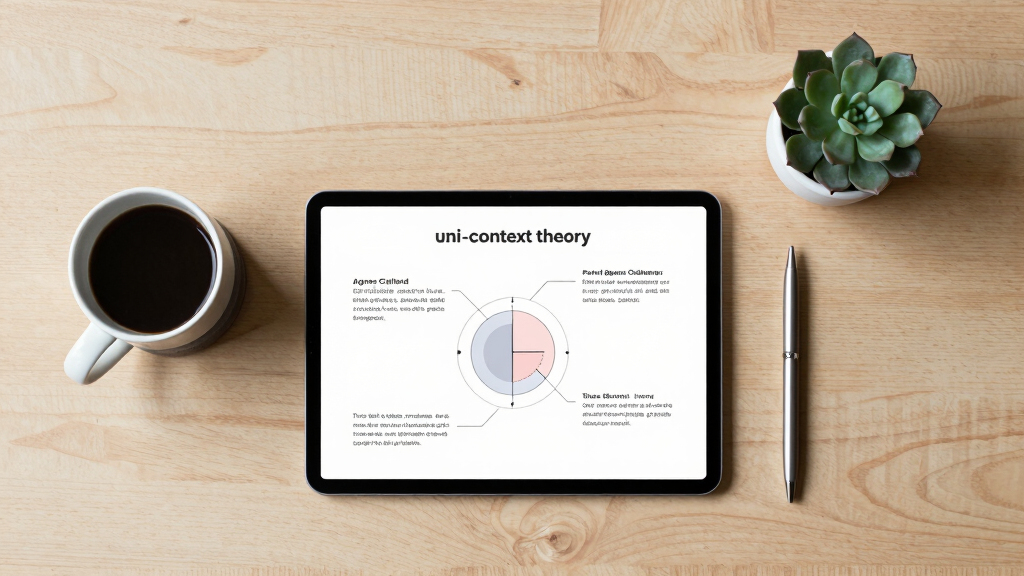
Philosopher Agnes Callard has introduced the ‘uni-context’ theory, suggesting a new framework for understanding moral reasoning. The theory is currently under academic discussion and analysis.
Philosopher Agnes Callard has introduced her theory of the uni-context, a new philosophical framework that aims to unify diverse moral reasoning processes. This development, announced publicly in March 2026, is drawing significant attention from academic philosophers and ethicists, as it may reshape existing understandings of moral judgment and reasoning.

Prime made for students and young adults
- Fast, free delivery for dorm and study essentials
- Prime Video and Amazon Music included
- Member-only deals
Implications for Moral Philosophy and Ethical Frameworks
The introduction of the uni-context theory could have far-reaching consequences for moral philosophy and ethical decision-making. If validated, it may lead to a reevaluation of how moral judgments are formed and understood across diverse cultural and philosophical traditions. This could influence fields ranging from moral psychology to public policy. The theory’s emphasis on a single, unifying context offers the possibility of more consistent moral reasoning, potentially impacting debates on moral relativism and universal ethics. However, critics caution that the theory’s abstract nature may face challenges when applied to real-world moral dilemmas, and its acceptance remains uncertain among scholars.
Products Worth Considering

Philips Hue Bridge Pro Starter Kit with 4 A19 E26 Color Smart Bulbs

Philips Hue Play Floor Lamp, RGBWWIC LED, 53 Inch, Black

Ring Alarm 14-Piece Kit
As an affiliate, we earn on qualifying purchases.
Callard’s Philosophical Background and the Development of the Uni-Context
Agnes Callard, a prominent philosopher known for her work on moral philosophy and ethics, has long engaged with questions about how moral reasoning functions across different contexts. Her recent proposal builds on her previous writings that emphasize the importance of understanding moral judgments as part of larger interpretive frameworks. The concept of the uni-context appears to synthesize her earlier ideas, aiming to provide a unified model that explains how individuals arrive at moral conclusions. The theory was formally introduced during her keynote address at the International Conference on Moral Philosophy in early 2026, following years of reflective work and engagement with contemporary debates on moral relativism and universalism.
“The uni-context is an attempt to synthesize the various influences on moral reasoning into a single, coherent framework that underpins all ethical judgments.”
— Agnes Callard
Uncertainties Surrounding Practical Application and Acceptance
While Callard’s theory of the uni-context has generated interest, it remains theoretical and untested in practical settings. Scholars are debating whether the concept can be effectively applied to complex moral dilemmas or if it remains an abstract philosophical idea. Additionally, some critics question whether a single overarching context can truly account for the diversity of moral reasoning across different cultures and individuals. The degree of acceptance within the philosophical community is still uncertain, and further peer review and discussion are anticipated.
Next Steps for Validation and Scholarly Debate
Researchers and philosophers are expected to analyze Callard’s presentation in upcoming academic journals and conferences. Empirical studies may be initiated to test the practical implications of the uni-context theory, especially in moral psychology and decision-making. The theory’s acceptance will depend on ongoing debate, peer review, and possible refinement. Callard herself has indicated plans to publish a detailed paper elaborating her framework, which will likely stimulate further discussion and critique in the philosophical community.
Key Questions
What is the core idea of Agnes Callard’s uni-context theory?
The core idea is that moral reasoning is based on a single, overarching context that influences all ethical judgments, aiming to unify diverse moral considerations into one coherent framework.
How does the uni-context differ from traditional moral theories?
Traditional theories often consider multiple contexts or influences on moral judgment, whereas Callard’s uni-context proposes a single, unified framework that underpins all moral reasoning.
Has the uni-context theory been tested in practical settings?
No, the theory is currently in the conceptual and academic stage, with empirical testing and practical validation still forthcoming.
What are the main criticisms of the uni-context theory?
Critics argue that the theory may be too abstract and idealized, potentially oversimplifying the complexity and diversity of moral reasoning across different cultures and individuals.
What are the next steps for the theory’s development?
Scholars will analyze Callard’s detailed writings, conduct empirical research, and debate its validity and applicability in various moral and philosophical contexts.
Source: hn