
Among these slang dictionaries for teens, my best overall pick is Fluent in Brainrot, which pairs Gen Z and Gen Alpha slang with activities. Gen Z Slang Activity Book is a strong alternative for teens who learn by solving puzzles, while McGraw-Hill’s Dictionary of American Slang and Colloquial Expressions suits readers who want broader American usage beyond teen trends. The main tradeoff is between lively, age-focused formats and wider reference coverage that may feel less teen-specific. Some titles also focus on fast-moving internet phrases, which can date more quickly than general slang guides. Read on for the full breakdown and help matching a book to its reader.

Prime made for students and young adults
- Fast, free delivery for dorm and study essentials
- Prime Video and Amazon Music included
- Member-only deals
Key Takeaways
- Fluent in Brainrot leads for readers who want both a Gen Z and Gen Alpha slang reference and activities, rather than a bare list of definitions.
- Gen Z Slang Activity Book makes practice part of the format, while standard dictionary-style titles suit readers who mainly want to look up a word quickly.
- McGraw-Hill’s Dictionary of American Slang and Colloquial Expressions and American Slang, 4th Edition offer broader American slang coverage, but are less tightly focused on teen internet language.
- Titles built around phrases such as skibidi and Ohio rizz are most relevant to current meme-driven talk, but their narrow focus may be less useful for general slang lookup.
- Parent- and teacher-focused guides such as the 2026 Gen Z Slang Dictionary frame slang as something to interpret, while teen-facing activity books make the subject more playful.
| Fluent in Brainrot: The Gen Z and Gen Alpha Slang Dictionary & Activity Book |  | Best for Learning Through Play | Format: Dictionary and activity book | Slang coverage: More than 200 words | Generations covered: Gen Z and Gen Alpha | VIEW LATEST PRICE | See Our Full Breakdown |
| Gen Z Slang Activity Book: Word Searches, Crosswords, Chats and a Dictionary to Decode How Gen Z Really Talks | 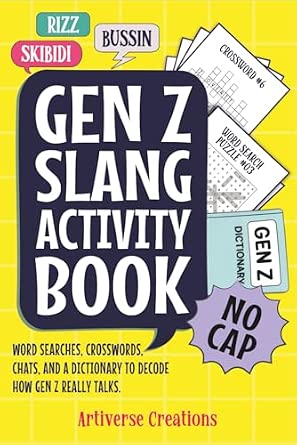 | Best for Gen Z Conversation Practice | Format: Slang dictionary and activity book | Primary coverage: Gen Z slang | Activities: Word searches and crosswords | VIEW LATEST PRICE | See Our Full Breakdown |
| The Urban Slang Dictionary: Modern Words, Phrases & Meanings Explained |  | Best for Digital Slang Lookups | Format: Slang dictionary | Coverage: Modern slang, internet phrases, and trending expressions | Digital contexts: TikTok and text messaging | VIEW LATEST PRICE | See Our Full Breakdown |
| 2025 Slang Guide: Teen Talk Slang Guide, So You Can Keep Up |  | Best for a Dated Teen-Focused Snapshot | Format: Slang guide | Audience focus: Teenagers | Timeframe in title: 2025 | VIEW LATEST PRICE | See Our Full Breakdown |
| McGraw-Hill’s Dictionary of American Slang and Colloquial Expressions |  | Best for Broad American English Context | Format: Dictionary | Language focus: American English | Coverage: Slang and colloquial expressions | VIEW LATEST PRICE | See Our Full Breakdown |
| The Gen Z Dictionary |  | Best for Broad Gen Z Context | Format: Dictionary | Language focus: Generation Z slang and phrases | Additional coverage: Cultural references | VIEW LATEST PRICE | See Our Full Breakdown |
| American Urban Dictionary: The Dictionary That Makes You Look 10x Cooler (Urban Slang Dictionary) |  | Best for Humorous, Casual Browsing | Format: Urban slang dictionary | Language focus: Contemporary slang | Definition style: Described as humorous and insightful | VIEW LATEST PRICE | See Our Full Breakdown |
| Skibidi Ohio Rizz: The Gen Alpha & Gen Z Dictionary: Understanding the slang that’s taking over the internet |  | Best for Internet-Slang Spotting | Format: Dictionary | Language focus: Gen Alpha and Gen Z slang | Additional focus: Internet language trends | VIEW LATEST PRICE | See Our Full Breakdown |
| 2026 Gen Z Slang Dictionary: The Complete A-Z Guide for Parents & Teachers to Understand Teen Talk |  | Best for Parents and Teachers | Format: A–Z slang dictionary | Stated term count: More than 600 words and phrases | Language focus: Gen Z and teen slang | VIEW LATEST PRICE | See Our Full Breakdown |
| American Slang, 4th Edition: The Complete Dictionary of Modern Colloquialisms―1,500+ Words and Phrases |  | Best for Broader American Slang Coverage | Format: Dictionary | Edition: Fourth edition | Stated entry count: More than 1,500 words and phrases | VIEW LATEST PRICE | See Our Full Breakdown |
| Gen Z to English Dictionary: The Ultimate Gen Z Slang Dictionary |  | Best for Parents Decoding Gen Z | Subject: Modern Gen Z slang | Content type: Slang explanations and meanings | Tone: Humorous | VIEW LATEST PRICE | See Our Full Breakdown |
| American Slang Dictionary: A Fun Guide to Modern American Expressions |  | Best for Broader American Slang | Subject: Modern American slang and colloquialisms | Content type: Guide to expressions and their meanings | Tone: Humorous and engaging | VIEW LATEST PRICE | See Our Full Breakdown |
| Teen Slang – A Pocket Guide to Teenager Words & Phrases |  | Best Compact Quick Reference | Subject: Teenager words and phrases | Content type: Mini dictionary and quick overview | Format: Pocket guide | VIEW LATEST PRICE | See Our Full Breakdown |
| slang dictionaries for teen | Format |
|---|---|
| Fluent in Brainrot: The Gen Z | Dictionary and activity book |
| Gen Z Slang Activity Book: Wor | Slang dictionary and activity book |
| The Urban Slang Dictionary: Mo | Slang dictionary |
| 2025 Slang Guide: Teen Talk Sl | Slang guide |
| McGraw-Hill’s Dictionary of Am | Dictionary |
| The Gen Z Dictionary | Dictionary |
| American Urban Dictionary: The | Urban slang dictionary |
| Skibidi Ohio Rizz: The Gen Alp | Dictionary |
| 2026 Gen Z Slang Dictionary: T | A–Z slang dictionary |
| American Slang | Dictionary |
| Gen Z to English Dictionary: T | — |
| American Slang Dictionary: A F | — |
| Teen Slang | Pocket guide |
More Details on Our Top Picks
Fluent in Brainrot: The Gen Z and Gen Alpha Slang Dictionary & Activity Book
Fluent in Brainrot makes slang practice an activity rather than a list to memorize: it pairs more than 200 terms with word searches, puzzles, and text translations. That mix suits teens who enjoy solving something while picking up meanings, and gives parents or other adults a way to join in. Compared with Gen Z Slang Activity Book, it explicitly reaches across both Gen Z and Gen Alpha, which may make it a better fit for mixed-age households. The tradeoff is that its activity-book format is less suited to someone who simply wants a quick reference for a word they saw online. Slang also changes quickly, and the supplied description does not identify an edition or update schedule, so some entries may date sooner than a general slang reference.
Pros:- Covers more than 200 slang words.
- Combines word searches, puzzles, and text translations.
- Designed to appeal to teens, tweens, parents, and adults.
- Uses activities to make language learning more interactive.
Cons:- The activity format may slow down readers who only want a definition.
- No edition date or update details are provided.
- Slang entries can become dated as usage changes.
Best for: Teens, tweens, and parents who want to learn slang together through puzzles and text examples.
Not ideal for: Readers seeking a fast lookup dictionary or a clearly dated guide to the latest slang trends.
- Format:Dictionary and activity book
- Slang coverage:More than 200 words
- Generations covered:Gen Z and Gen Alpha
- Activities:Word searches and puzzles
- Examples:Text translations
- Intended audience:Teens, tweens, parents, and adults
Our verdict“Choose this for shared, puzzle-based slang learning; pick a reference-focused dictionary if quick lookups matter more.”
Gen Z Slang Activity Book: Word Searches, Crosswords, Chats and a Dictionary to Decode How Gen Z Really Talks
This book links slang definitions to word searches, crosswords, and chat scenarios, so readers can encounter terms in a conversational setting instead of relying on definitions alone. That makes it a strong match for teens who want practice interpreting messages and informal exchanges. Compared with Fluent in Brainrot, which advertises coverage of both Gen Z and Gen Alpha and includes text translations, this title focuses squarely on Gen Z and names chats as part of its activity mix. That narrower scope can help keep the premise clear, but it is less appealing for families looking for a cross-generational guide. The supplied details do not give an edition date, sample entries, or the size of its dictionary, so buyers cannot tell how broad or current its coverage is.
Pros:- Combines a slang dictionary with word searches and crosswords.
- Includes chat scenarios that place slang in conversational context.
- Has a clear Gen Z focus.
- Offers an activity-based alternative to a definitions-only reference.
Cons:- The description does not state how many terms the dictionary includes.
- No edition date or update information is provided.
- Its Gen Z focus may not suit readers seeking Gen Alpha terms or broader age coverage.
Best for: Teens who want to understand Gen Z slang in chat-style examples and enjoy solving word puzzles.
Not ideal for: Readers who need Gen Alpha coverage, a dated edition, or a quick-reference guide with clearly stated scope.
- Format:Slang dictionary and activity book
- Primary coverage:Gen Z slang
- Activities:Word searches and crosswords
- Conversation practice:Chat scenarios
- Reference feature:Slang dictionary
- Edition date:Not specified in the supplied product details
Our verdict“Pick this for puzzle-loving teens who want to read Gen Z-style chats, but choose a broader guide for mixed-age slang coverage.”
The Urban Slang Dictionary: Modern Words, Phrases & Meanings Explained
The Urban Slang Dictionary is the most direct reference-style pick here for readers trying to decode internet phrases and trending expressions. Its description points to TikTok and text messaging, giving teens a useful digital-language focus without requiring them to work through puzzles first. Compared with the activity-driven Gen Z Slang Activity Book, this title appears better suited to checking a term’s meaning quickly; the tradeoff is that the supplied description does not mention chat exercises or other practice. It also does not specify an edition, sample pages, or how many expressions it covers. Readers looking for a clearly bounded, dated teen guide may prefer a title that states its timeframe, while this one makes the most sense as a straightforward explainer of online usage.
Pros:- Focuses on contemporary slang, internet phrases, and trending expressions.
- Connects coverage to TikTok and text messaging.
- Uses easy-to-understand explanations, according to the product description.
- Reference format is better suited to lookups than an activity-led book.
Cons:- No edition date or update schedule is specified.
- The number of terms and phrases is not provided.
- The supplied details do not describe activities or example pages.
Best for: Teens who regularly encounter unfamiliar expressions on TikTok or in messages and want a definitions-first reference.
Not ideal for: Readers who want puzzles, sample conversational exercises, or clear details about edition date and coverage size.
- Format:Slang dictionary
- Coverage:Modern slang, internet phrases, and trending expressions
- Digital contexts:TikTok and text messaging
- Definition style:Explanatory meanings
- Number of entries:Not specified in the supplied product details
- Edition date:Not specified in the supplied product details
Our verdict“Choose this for direct explanations of digital slang, not for a puzzle-based or clearly dated teen slang guide.”
2025 Slang Guide: Teen Talk Slang Guide, So You Can Keep Up
The clearest distinction here is the 2025 framing and a stated focus on teen talk. For readers who want a guide aimed specifically at keeping up with teenage expressions, that date offers a more defined reference point than The Urban Slang Dictionary, whose supplied description does not name an edition year. The product also pitches slang for trivia and social interactions, suggesting a practical audience beyond adults decoding online posts. Its weakness is the lack of detail: the description does not say how many terms appear, whether examples or activities are included, or how the guide handles regional differences. Compared with Fluent in Brainrot, it is a more direct teen-guide proposition, but it does not advertise the same puzzle-based learning or cross-generational appeal.
Pros:- Explicitly focuses on teen talk.
- Names 2025 in the title, giving the guide a clear timeframe.
- Positions slang as useful for trivia and social interactions.
- Offers a more teen-specific framing than a broad digital slang reference.
Cons:- The supplied description does not state the number of terms.
- Activities, examples, and entry format are not described.
- A dated guide may not reflect slang that gains popularity later.
Best for: Parents, educators, and teens who want a teen-specific slang guide tied to a stated 2025 timeframe.
Not ideal for: Buyers who need a detailed contents list, exercises, a stated entry count, or coverage beyond teen slang.
- Format:Slang guide
- Audience focus:Teenagers
- Timeframe in title:2025
- Use cases:Trivia and social interactions
- Number of entries:Not specified in the supplied product details
- Activities:Not specified in the supplied product details
Our verdict“Choose this for a teen-centered guide with a stated 2025 frame, but look elsewhere if you need known coverage details or activities.”
McGraw-Hill’s Dictionary of American Slang and Colloquial Expressions
McGraw-Hill’s Dictionary of American Slang and Colloquial Expressions is the broadest reference-style option in this batch, covering nonstandard usage, popular jargon, and vulgarisms in American English. That scope can help older teens understand slang beyond the newest social-media vocabulary, while writers and students may also value its colloquial-language focus. Compared with 2025 Slang Guide, it is less explicitly tailored to current teen talk; compared with The Urban Slang Dictionary, its stated coverage reaches beyond online expressions. That breadth is also the key tradeoff: vulgar language may make it unsuitable for younger teens or families seeking a clean, school-friendly reference. Its American-English focus also limits its value for readers looking for slang from other dialects or regions.
Pros:- Covers slang, colloquial expressions, nonstandard usage, and popular jargon.
- Offers broader American English context than a social-media-focused guide.
- May suit older students and writers as well as teen readers.
- Provides a reference-oriented alternative to activity books.
Cons:- Vulgarisms may make it unsuitable for younger teens or some households.
- American English focus may not serve readers seeking other dialects.
- The supplied product details do not state an edition date or entry count.
Best for: Older teens, students, and writers who want a broad American English reference and can handle vulgar entries.
Not ideal for: Parents seeking a child-friendly teen-only guide or readers looking for slang from outside American English.
- Format:Dictionary
- Language focus:American English
- Coverage:Slang and colloquial expressions
- Usage types:Nonstandard usage and popular jargon
- Content note:Includes vulgarisms
- Edition date:Not specified in the supplied product details
Our verdict“Choose this for broad American slang reference and context, but skip it if you need a teen-only or family-friendly guide.”
The Gen Z Dictionary
The Gen Z Dictionary is the broadest-sounding choice here for readers who want slang alongside the cultural references and communication styles behind it. That scope makes it more useful to parents, educators, and older teens than a title focused mainly on a wave of viral phrases. Compared with Skibidi Ohio Rizz, which centers its pitch on internet trends shared by Gen Alpha and Gen Z, this book appears aimed at a wider picture of Gen Z language. The tradeoff is that the listing offers no sample entries, term count, or detail about how explanations are organized, so I can’t tell how deep its coverage goes. I’d choose it for general cultural orientation, not as a verified, exhaustive glossary or a guaranteed guide to the newest online slang.
Pros:- Covers Gen Z slang, phrases, and cultural references
- Aims to explain communication styles as well as vocabulary
- Could serve adults seeking context for conversations with teens
Cons:- No term count, sample entries, or content outline is provided
- The available description does not establish how thoroughly terms are explained
- No specific approach to tracking rapidly changing slang is described
Best for: Parents, educators, and older teens seeking a general introduction to Gen Z language and cultural references
Not ideal for: Readers who need a documented term count, sample definitions, or a clearly described guide to the latest platform-specific slang
- Format:Dictionary
- Language focus:Generation Z slang and phrases
- Additional coverage:Cultural references
- Stated scope:Gen Z language and communication styles
- Intended audiences:Marketers, educators, and parents
- Term count:Not specified
- Sample entries:Not provided in the supplied product description
Our verdict“Choose this for a broad introduction to Gen Z language and culture, but pick a more clearly specified guide if coverage depth matters most.”
American Urban Dictionary: The Dictionary That Makes You Look 10x Cooler (Urban Slang Dictionary)
American Urban Dictionary puts entertainment first, promising humorous definitions that can make slang less intimidating for a casual reader. That gives it a different feel from 2026 Gen Z Slang Dictionary, whose stated appeal is its A–Z reference format and large term count. For teens who want an amusing browse through contemporary expressions, the playful framing may be a plus; for parents or teachers who need dependable context, the listing leaves too much unclear. It gives no sample definitions, coverage boundaries, or indication of how terms are explained, and its promise of helping readers use slang confidently isn’t backed by details about usage notes. I’d treat it as a light, informal introduction rather than a reliable guide to when a phrase fits.
Pros:- Humorous approach may make casual browsing more engaging
- Focuses on contemporary slang and urban expressions
- Aims to help readers understand popular slang
Cons:- No sample definitions are provided to show the humor or clarity
- The listing does not describe context or usage guidance
- No term count or coverage boundaries are specified
Best for: Teens and pop-culture fans who want a humorous, low-pressure introduction to contemporary slang
Not ideal for: Parents, teachers, or language learners who need detailed context, usage guidance, or a defined glossary scope
- Format:Urban slang dictionary
- Language focus:Contemporary slang
- Definition style:Described as humorous and insightful
- Stated purpose:Help readers understand and use popular slang
- Intended audience:Readers interested in modern language and culture
- Term count:Not specified
- Content samples:Not provided in the supplied product description
Our verdict“Pick this for an entertaining slang browse, not when you need the structured coverage described for 2026 Gen Z Slang Dictionary.”
Skibidi Ohio Rizz: The Gen Alpha & Gen Z Dictionary: Understanding the slang that’s taking over the internet
Skibidi Ohio Rizz is the most explicitly internet-focused pick in this group, with a scope spanning slang associated with both Gen Alpha and Gen Z. That makes it a closer match for readers trying to decode phrases encountered in online conversation than The Gen Z Dictionary, which presents a wider cultural and communication overview. The title’s emphasis on current trends also points toward a narrower, more trend-led read rather than a general reference for all teen language. That focus has a downside: online slang can date quickly, and the supplied description offers no update method, sample entries, or term count. I’d choose it for a snapshot of internet vocabulary, while readers wanting broader context or a better-defined glossary should compare the listings carefully.
Pros:- Clearly targets internet slang and online language trends
- Includes slang associated with both Gen Alpha and Gen Z
- Useful as a starting point for readers trying to understand digital conversations
Cons:- Internet trends may lose relevance quickly
- No term count or sample entries are supplied
- The description does not explain how definitions provide context
Best for: Teens, parents, and educators who mainly want help recognizing slang associated with online conversations across Gen Alpha and Gen Z
Not ideal for: Readers seeking a long-lasting general slang reference or a clearly documented list of entries and definitions
- Format:Dictionary
- Language focus:Gen Alpha and Gen Z slang
- Additional focus:Internet language trends
- Stated purpose:Help readers understand slang used in online conversations
- Term count:Not specified
- Definition samples:Not provided in the supplied product description
- Update approach:Not specified
Our verdict“Choose this for a trend-focused look at Gen Alpha and Gen Z internet slang, but favor The Gen Z Dictionary for a broader cultural angle.”
2026 Gen Z Slang Dictionary: The Complete A-Z Guide for Parents & Teachers to Understand Teen Talk
2026 Gen Z Slang Dictionary is the clearest reference-style option for adults, with an A–Z format and a stated collection of more than 600 terms and phrases. That concrete scope gives it an advantage over American Urban Dictionary, whose listing offers no term count or organizing details. The named examples—Rizz, No Cap, and Fanum Tax—also signal the kind of current teen and platform-related vocabulary it aims to explain. Its focus is practical rather than playful: the description promises definitions, not activities or extended cultural commentary. I’d pick it when quick lookups matter, though the listing does not show sample entries or explain how much context accompanies each definition. Its date-specific framing also makes long-term freshness a question for buyers.
Pros:- States a scope of more than 600 slang words and phrases
- A–Z organization is suited to quick reference
- Names slang examples including Rizz, No Cap, and Fanum Tax
- Specifically targets parents and teachers decoding teen talk
Cons:- The description focuses on definitions rather than activities or broader cultural material
- No sample entries are supplied to show the depth of explanations
- The listing does not describe how the dictionary will keep pace with changing slang
Best for: Parents, teachers, and caregivers who want an alphabetized lookup guide to teen slang, including terms used on social and gaming platforms
Not ideal for: Teens who want an activity-based or humorous book, or readers looking for cultural essays beyond definitions
- Format:A–Z slang dictionary
- Stated term count:More than 600 words and phrases
- Language focus:Gen Z and teen slang
- Named examples:Rizz, No Cap, and Fanum Tax
- Platforms referenced:TikTok, Instagram, and gaming platforms
- Intended audience:Parents, teachers, and caregivers
- Publication framing:2026 edition, as stated in the title
Our verdict“Choose this for a substantial A–Z reference aimed at adults; skip it if you want a teen-facing activity book or richer cultural discussion.”
American Slang, 4th Edition: The Complete Dictionary of Modern Colloquialisms―1,500+ Words and Phrases
American Slang, 4th Edition offers the broadest stated vocabulary count in this batch, with more than 1,500 words and phrases covering modern American colloquialisms. That makes it a wider language reference than the teen- and platform-focused 2026 Gen Z Slang Dictionary, but breadth is not the same as teen relevance: the description does not identify a specifically Gen Z focus or name current social-media examples. It may suit older teens, writers, and language enthusiasts who want slang beyond youth culture, while parents seeking a quick decoder for current teen talk may prefer the more targeted A–Z guide. The supplied details also say little about entry format or added context, so I’d choose it for range rather than a clearly defined teaching approach.
Pros:- States coverage of more than 1,500 words and phrases
- Addresses modern American slang and colloquialisms
- Fourth edition signals a revised edition, though specific changes are not described
- Can offer broader language coverage than a narrowly Gen Z-focused guide
Cons:- The description does not establish how much of the content is specific to teens
- No sample entries or entry-format details are provided
- No additional activities or teaching material are mentioned
Best for: Older teens, writers, and language enthusiasts who want a broad reference to American slang beyond current Gen Z expressions
Not ideal for: Parents and teachers who need a clearly teen-focused guide to current social-media and gaming slang
- Format:Dictionary
- Edition:Fourth edition
- Stated entry count:More than 1,500 words and phrases
- Language focus:Modern American slang and colloquialisms
- Intended audiences:Language enthusiasts and writers
- Teen-specific focus:Not specified in the supplied description
- Additional features:None described in the supplied product information
Our verdict“Choose this for breadth across American colloquialisms, but pick 2026 Gen Z Slang Dictionary if teen-specific online language is your priority.”
Gen Z to English Dictionary: The Ultimate Gen Z Slang Dictionary
Written for adults decoding Gen Z slang, this humorous guide is a natural fit for parents who want plain-language explanations without a formal reference-book tone. Its focus is narrower than American Slang Dictionary: A Fun Guide to Modern American Expressions, which covers American expressions more broadly; that narrower lens may make this pick easier to approach when the main goal is understanding Gen Z terms. The tradeoff is that the description promises explanations, not usage examples, historical context, or an extensive reference system. I’d treat it as a light, entertaining aid for everyday conversations rather than a definitive resource for teens researching how slang changes. Teens looking for activities or deeper exploration may prefer a title such as Fluent in Brainrot, while this book is better suited to adults who want humor alongside quick explanations.
Pros:- Explains modern Gen Z slang in accessible language
- Humorous approach makes casual browsing entertaining
- Its specific Gen Z focus suits adults trying to follow teen conversations
- Works as a lighthearted gift for parents and other adults
Cons:- The stated scope is limited to slang explanations rather than a comprehensive dictionary
- No examples or detailed context are specified
- The description does not provide format, length, or coverage details
Best for: Parents and adult relatives who want humorous, accessible explanations of modern Gen Z slang.
Not ideal for: Teens seeking an activity book, detailed usage examples, or a broad reference covering slang beyond Gen Z terms.
- Subject:Modern Gen Z slang
- Content type:Slang explanations and meanings
- Tone:Humorous
- Intended audience:Adults and parents
- Use:Language guide and gift
- Coverage scope:Gen Z slang; not described as a comprehensive dictionary
Our verdict“Choose this humorous, Gen Z-focused guide if you’re an adult seeking approachable explanations rather than a detailed reference or teen activity book.”
American Slang Dictionary: A Fun Guide to Modern American Expressions
This is the broadest cultural-language option among these three: it covers contemporary American slang and colloquialisms, rather than focusing only on Gen Z terms like Gen Z to English Dictionary or teenage expressions like Teen Slang – A Pocket Guide to Teenager Words & Phrases. That wider scope may help language learners and culture-minded readers connect slang to everyday American expression, though the description does not spell out how entries are organized or how much detail they receive. Its humorous, informal style sounds approachable for casual reading, but that same informality makes it a poor substitute for a formal language reference. For teens who specifically want current youth vocabulary, the wider American focus may include material beyond their needs; I’d pick it when cultural breadth matters more than a teen-only lens.
Pros:- Covers modern American slang and colloquial expressions
- Broader scope than a Gen Z- or teen-only guide
- Humorous writing offers an accessible way into informal language
- Relevant to readers interested in American culture and language learning
Cons:- The description gives no detailed information about entry structure or features
- Informal, slang-specific content is not suited to formal language reference needs
- Its broad American focus may be less targeted for teens seeking youth slang
Best for: Language learners and culture enthusiasts who want an engaging introduction to contemporary American slang beyond teen vocabulary alone.
Not ideal for: Teens or educators seeking a clearly defined teen-only dictionary, detailed entry features, or a formal reference for schoolwork.
- Subject:Modern American slang and colloquialisms
- Content type:Guide to expressions and their meanings
- Tone:Humorous and engaging
- Intended audience:Language learners and culture enthusiasts
- Geographic focus:American English
- Use:Informal language and cultural reference
Our verdict“Pick this for an entertaining overview of American slang and culture, but choose a teen-focused guide if youth vocabulary is your main goal.”
Teen Slang – A Pocket Guide to Teenager Words & Phrases
Portability and a teen-specific focus define this pocket guide. It offers a quick overview of common teenager words and phrases, making it a practical fit for parents, teachers, grandparents, or employers who want a handy starting point. Compared with American Slang Dictionary: A Fun Guide to Modern American Expressions, it targets youth language more directly; compared with Gen Z to English Dictionary, its compact quick-reference format is the clearest stated distinction. The tradeoff is depth: the description says meanings receive limited treatment and offers no detailed explanations or examples. Since teen slang changes quickly, this may work best as a convenient snapshot, not a lasting authority. Teens who want to explore language through activities or fuller context should look elsewhere; adults needing a fast orientation are the better match.
Pros:- Focuses specifically on teenager words and phrases
- Pocket-guide format is described as compact and portable
- Designed as a quick overview for adults who interact with teens
- Offers a direct youth-language focus compared with a general American slang guide
Cons:- Meanings are covered with limited depth
- No detailed explanations or usage examples are specified
- Teen slang can evolve quickly, which may date a quick-reference guide
Best for: Parents, teachers, grandparents, and employers who want a portable, quick introduction to common teen words and phrases.
Not ideal for: Teens seeking detailed definitions, examples, a long-term up-to-date reference, or activities for learning slang.
- Subject:Teenager words and phrases
- Content type:Mini dictionary and quick overview
- Format:Pocket guide
- Portability:Compact
- Intended audience:Teens, teachers, parents, grandparents, and employers
- Coverage depth:Limited overview of common slang
- Stated limitation:No detailed explanations or examples specified
Our verdict“Choose this pocket guide for a portable overview of teen slang, not for detailed explanations or a durable reference.”

How We Picked
I compared the 13 titles by how clearly they serve the needs implied by slang dictionaries for teens: accessible explanations, relevance to teen and online language, ease of lookup, and an age-appropriate format. I also considered whether a book offers practice or context, whether its scope reaches beyond a handful of viral terms, and whether its intended reader is a teen, parent, teacher, or general slang learner. Those distinctions matter because a fun activity book and a broad reference dictionary solve different problems.
The ranking gives priority to teen relevance and usability, then weighs breadth and format. That puts Fluent in Brainrot first for combining teen-focused language with activities, with the Gen Z activity title close behind for interactive learning. Broad American slang references rank lower for this specific search because their wider coverage may help with general expressions but is not as directly aimed at teen talk. Narrow meme-focused and parent-facing titles can still be better matches for specific readers, even when they are not the strongest all-purpose pick.
Factors to Consider When Choosing Slang Dictionaries For Teens
Choosing between slang books is less about finding one definitive list and more about matching purpose, audience, and format. These differences can help narrow the field before you choose.
Decide Who Will Use the Book
A teen reading for fun may prefer an upbeat title with puzzles or chat-style examples, while a parent or teacher may want clear explanations that help decode conversations. These audiences overlap, but they do not need the same tone or layout. A book aimed at adults can explain terms plainly yet feel less inviting to a young reader. A teen-facing activity book may be entertaining without answering every question an adult has about context. Check the title and description for the intended reader before treating a general slang reference as a teen guide. The best match is the one the person will actually open and use.
Choose Between Quick Lookup and Active Learning
Dictionary-style books work best when the reader already has a word in mind and wants a definition fast. Activity books add word searches, crosswords, or other exercises, which can make learning more memorable but take longer than a simple lookup. That extra interaction is useful for reluctant readers or gifts meant to be entertaining, yet it may frustrate someone who wants a concise answer. Think about how the book will be used: occasional reference, casual browsing, or a shared activity. For classroom or family use, exercises can prompt conversation. For a backpack or desk reference, clear organization may matter more than games.
Match the Scope to the Language You Want to Understand
Some titles focus on Gen Z and Gen Alpha expressions; others cover American slang and colloquial speech across a wider range. A narrow scope can make a guide feel more relevant to current teen internet language, but it may leave out everyday expressions outside that lane. Broad references can offer more range while giving less attention to teen-specific meanings. A common mistake is assuming that a book with “slang” in its title covers every kind of slang equally. Look for the stated audience and subject, then decide whether the reader needs meme-heavy terms, general American usage, or both. A wider dictionary is not automatically the better teen guide.
Think About How Quickly Online Language Changes
Internet slang can spread and fade quickly, so a book built around viral phrases may feel timely but have a shorter useful life. A broad slang reference is less dependent on one meme cycle, though it may not capture the newest teen expressions. Publication year can offer a clue to recency, but it cannot guarantee that every entry remains current or that a phrase is used the same way by every group. Regional, social, and platform differences also shape meaning. Treat a printed guide as a helpful snapshot rather than a final authority on how every teen speaks. If current usage is the main goal, pair the book with attention to the reader’s own community and context.
Look for Context, Not Just Definitions
A short definition may tell a reader what a term roughly means without showing when it sounds natural, ironic, affectionate, or rude. Context matters because the same phrase can carry different meanings across a group or setting. Examples and conversational formats can help readers see how a word works, while a compact entry list may be faster to scan. Parents and educators should avoid treating a dictionary as a substitute for asking what a phrase means in a particular conversation. Teens may care more about recognizing tone than memorizing definitions. Choose a format that supports the kind of understanding the reader wants.
Pay for the Right Kind of Breadth or Engagement
A longer general reference makes sense when the reader wants slang beyond current teen expressions, while an activity-led book earns its space through engagement rather than sheer scope. Do not assume a larger or more formal dictionary will be easier for a teenager to use. Likewise, a playful title may be a poor fit if the buyer needs a dependable reference for varied American expressions. Compare what the book adds—more entries, clearer explanations, examples, or activities—against the reader’s actual use. For a casual gift, format and humor may matter most. For recurring lookup, organization and breadth are more useful priorities.
Frequently Asked Questions
Which type of slang dictionary is best for a teen who dislikes reference books?
An activity-led title is usually a more inviting starting point than a conventional reference layout. In this lineup, Fluent in Brainrot and Gen Z Slang Activity Book combine slang with activities, giving readers something to do beyond scanning definitions. The tradeoff is that exercises may take up space a lookup-focused reader would rather use for more entries. If the teen prefers short, direct answers, choose a clear dictionary format instead. Their reading habits are a better guide than the word “dictionary” on the cover.
Should I choose a teen-focused guide or a broader American slang dictionary?
Choose a teen-focused guide when the main goal is understanding Gen Z, Gen Alpha, or internet-driven expressions. A broader title such as McGraw-Hill’s Dictionary of American Slang and Colloquial Expressions or American Slang, 4th Edition makes more sense when the reader wants colloquial American language beyond teen talk. Neither scope replaces the other: broad coverage can miss the emphasis a teen reader wants, while a teen guide may not explain older or more general expressions. Consider the questions the buyer expects to ask most often. That will point more clearly to the right scope.
Are meme-focused slang guides a good choice if I want a book that stays useful?
They can be a good fit when recognition of current meme language is the main goal, especially for a reader who enjoys internet culture. Their limitation is that specific viral phrases may lose relevance, and a narrow focus may not help with everyday slang. A broader guide is likely to cover more kinds of expressions, though it may feel less tuned to the latest online talk. If long-term reference value matters, favor scope and clear explanations over a title centered on a small set of trends. If the book is meant as a timely, playful gift, the narrower angle can be part of its appeal.
Can a slang dictionary help parents or teachers without making conversations awkward?
Yes, if it is used as a reference rather than a script for repeating teen phrases. A parent- or teacher-oriented title, such as the 2026 Gen Z Slang Dictionary, is framed for adults trying to interpret teen talk. Meanings still depend on context, and using a term without understanding its tone can sound forced. The book can help an adult ask a more informed question, but listening to the teen’s explanation is often more useful than insisting on a fixed definition. For a shared activity, an interactive title may create a more relaxed way to discuss words.
How do I choose between a slang dictionary and a slang activity book?
Pick a dictionary when speed and lookup are the priorities; choose an activity book when engagement and practice matter more. A reference is easier to consult during a conversation, while puzzles and chat-style exercises can make the material more enjoyable for a reader who would not browse a word list. Some books combine both, so check whether the activity pages support the intended use or simply add bulk. For a gift or group activity, interaction can be a plus. For a parent, teacher, or teen who needs quick definitions, organization and direct explanations deserve more weight.
Conclusion
For the strongest blend of teen relevance and engagement, I recommend Fluent in Brainrot as the best overall. Gen Z Slang Activity Book is my best value-style choice for readers who want practice built into the experience, while McGraw-Hill’s Dictionary of American Slang and Colloquial Expressions is the best premium-style pick for broader reference coverage rather than teen-only slang. Beginners are likely to prefer an activity-led guide that makes browsing feel approachable; parents and teachers may get more from the adult-focused 2026 Gen Z Slang Dictionary. For a specific interest in viral phrases, choose Skibidi Ohio Rizz, but for wider everyday slang, pick an American slang reference. Match the book to the reader’s purpose, and the choice becomes much clearer.
Halloween Picks
halloween
As an affiliate, we earn on qualifying purchases.