
To improve your fuel economy, drive smoothly by maintaining steady speeds, using cruise control when possible, and accelerating and braking gently. Plan routes to avoid traffic and reduce idling. Keep your tires properly inflated and remove unnecessary loads or external accessories like roof racks. Limit use of air conditioning and other power-heavy features. Regular maintenance guarantees your vehicle runs efficiently. If you want to discover more tips, continue exploring ways to make your driving more eco-friendly.
Key Takeaways
- Maintain steady speeds and use cruise control to reduce unnecessary acceleration and deceleration.
- Accelerate and brake gently to minimize engine strain and fuel consumption.
- Plan routes with navigation apps to avoid traffic and reduce idling time.
- Remove external accessories and reduce vehicle load for better aerodynamics and efficiency.
- Regularly perform vehicle maintenance and limit use of power-consuming features to optimize fuel economy.
Maintain Steady Speeds and Use Cruise Control
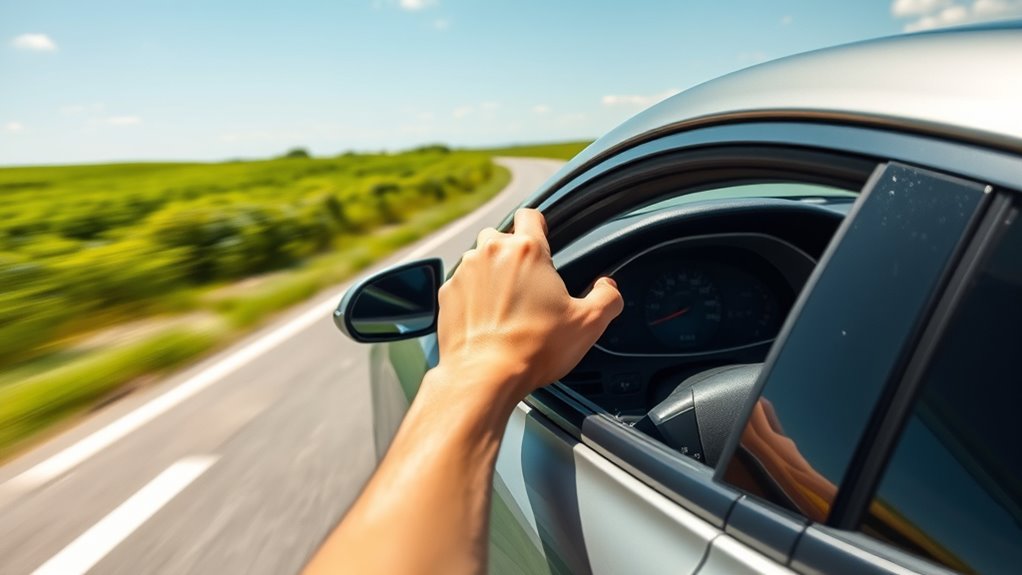
Have you ever noticed how fluctuating your speed can waste fuel? Speed fluctuations caused by inconsistent acceleration and braking make your engine work harder, reducing efficiency. Traffic signals often cause these fluctuations, forcing you to stop and start frequently. To save fuel, aim to maintain steady speeds whenever possible, especially on highways. Using cruise control helps you keep a constant pace, minimizing unnecessary acceleration and deceleration. When you see traffic signals ahead, anticipate changes in flow and adjust your speed gradually rather than abrupt braking or acceleration. This not only improves fuel economy but also leads to smoother driving. Proper driving techniques can further enhance your fuel efficiency by promoting consistent engine performance. Consistent speeds reduce engine strain and help you get the most out of every gallon.
Accelerate and Brake Gently

Smooth and gradual acceleration and braking can considerably boost your vehicle’s fuel efficiency. By avoiding sudden starts and stops, you practice eco friendly driving and reduce fuel consumption. When you accelerate gently, your engine works less hard, saving fuel and decreasing emissions. Similarly, braking smoothly minimizes unnecessary energy loss and helps maintain better control. These fuel saving techniques not only improve your mileage but also reduce wear on your brake system. Anticipate stops and slow down gradually rather than hitting the brakes abruptly. This mindful driving habit ensures your vehicle uses fuel more efficiently and lowers your carbon footprint. Incorporating gentle acceleration and braking into your routine makes a noticeable difference in your vehicle’s overall fuel economy while supporting environmentally friendly driving practices.
Plan Your Routes to Avoid Traffic and Excessive Idling
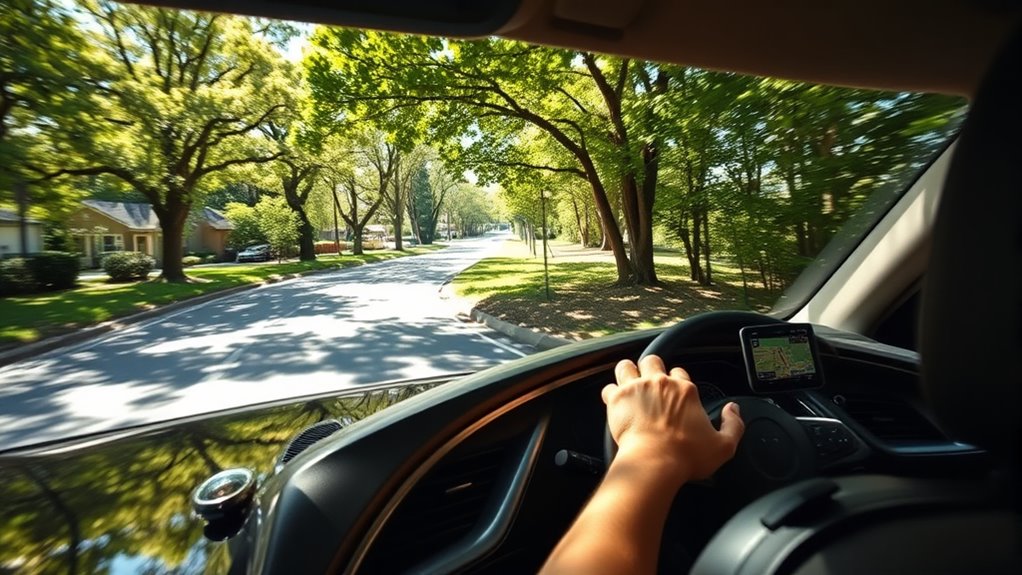
You can save fuel by using navigation apps to find less congested routes. Consider taking alternative roads or adjusting your trip times to avoid peak traffic. Planning ahead helps you reduce idling and keeps your drive efficient. Additionally, maintaining proper tire pressure ensures optimal fuel efficiency proper tire pressure.
Use Navigation Apps Wisely
Using navigation apps wisely can considerably reduce fuel consumption by helping you choose the most efficient routes. By leveraging real-time traffic data, you avoid congestion and unnecessary idling, saving fuel and time. Route optimization features suggest alternatives to avoid delays and minimize stop-and-go driving. Planning your trip with these tools ensures you take the smoothest path possible, reducing engine strain and emissions. Keep in mind that updating your app regularly guarantees you get the latest traffic info. Use the following table to understand key features:
| Feature | Benefit |
|---|---|
| Real-time traffic | Avoids congestion, reduces idling |
| Route optimization | Finds the fastest, most fuel-efficient path |
| Alternative routes | Offers options to bypass traffic jams |
| Traffic alerts | Notifies about accidents or delays |
| Estimated arrival | Helps plan better, avoid rush hours |
Additionally, regularly checking for app updates ensures you benefit from the latest features and traffic data improvements.
Opt for Alternative Routes
Choosing alternative routes can considerably cut down on unnecessary fuel consumption caused by traffic congestion. By planning ahead, you can avoid gridlock and reduce idle time, saving fuel and lowering emissions. Consider using navigation apps to find the best alternative routes that bypass heavy traffic areas. Sometimes, scenic detours might take a bit longer but can offer a more relaxed drive and less stop-and-go driving, which improves fuel efficiency. These routes help you maintain a steady speed instead of constantly accelerating and braking, which wastes fuel. Be flexible with your plans and explore different paths. Not only will you save fuel, but you may also discover new, enjoyable areas along the way. Incorporating driver behavior techniques such as smooth acceleration and maintaining a consistent speed can further enhance fuel economy. Opting for smarter routes is a simple yet effective way to boost your vehicle’s fuel economy.
Time Your Trips Smartly
Ever wondered how timing your trips can boost your fuel efficiency? Planning your trips during off-peak hours helps you avoid traffic congestion and excessive idling, saving fuel. By steering clear of peak hours, you reduce stop-and-go driving, which burns more fuel. Additionally, choosing a calm environment allows for a more consistent speed, further improving fuel economy.
Scheduling errands outside rush hours minimizes fuel waste. Check traffic apps to find less congested routes and times. Smarter timing means less idling, smoother drives, and better fuel economy. So, plan ahead and run your trips during quieter times for most effective savings.
Keep Your Tires Properly Inflated
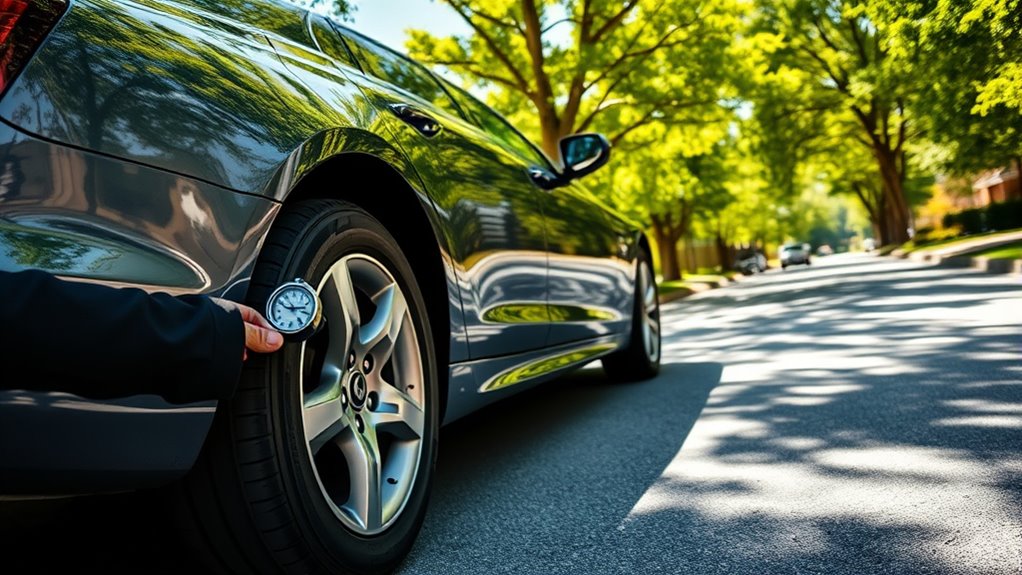
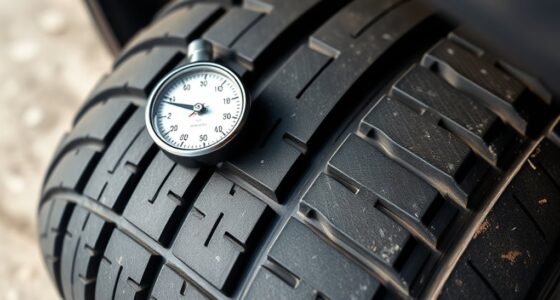
Maintaining the correct tire pressure is essential for maximizing your vehicle’s fuel efficiency. When your tires are properly inflated, your engine doesn’t have to work as hard to move the vehicle, saving fuel. Regularly check your tire pressure, ideally once a month, and before long trips. Proper inflation maintenance helps prevent uneven tire wear and reduces the risk of blowouts. Keep a tire gauge handy to ensure your tires stay at the recommended PSI, which you can find in your owner’s manual or on the driver’s side door jamb. Underinflated tires increase rolling resistance, wasting fuel, while overinflated tires impact handling and comfort. Staying on top of tire pressure is a simple, effective way to improve your fuel economy and ensure safer driving. Proper tire maintenance also extends the lifespan of your tires and enhances overall vehicle safety.
Reduce Unnecessary Car Load and Drag
To boost your fuel economy, it’s important to cut down on unnecessary load and drag. Remove extra roof cargo, ditch any excess weight inside your car, and limit external accessories like roof racks or spoilers. These simple steps can make a noticeable difference in your fuel efficiency.
Minimize Roof Cargo
Did you know that carrying unnecessary items on your roof can considerably decrease your fuel efficiency? Roof cargo adds drag, disrupting your vehicle’s aerodynamics and forcing your engine to work harder. The more you load on your roof, the greater the resistance, which burns more fuel. To maximize fuel economy, remove any roof racks or cargo carriers when you don’t need them. Even lightweight items can impact your vehicle’s airflow and increase drag. By keeping your roof clear, you reduce unnecessary air resistance and improve overall efficiency. Remember, every bit of saved fuel counts, and minimizing roof cargo is a simple way to keep your vehicle running smoothly and economically. Stay mindful of your roof load, and you’ll see the benefits in your fuel savings.
Remove Excess Weight
Reducing unnecessary weight in your vehicle can considerably boost fuel efficiency by decreasing the overall load and drag. Start by organizing your trunk to remove any heavy, unused items. A cluttered trunk adds weight and can cause extra wind resistance, lowering your miles per gallon. Similarly, clear out interior clutter, such as old supplies or extra gear, which contributes to excess weight. Every pound you remove reduces the strain on your engine, helping it run more efficiently. Avoid carrying unnecessary tools or items you don’t need for your trip. Keeping your vehicle lightweight not only saves fuel but also improves handling and safety. Regularly check and declutter your car to maintain ideal performance and fuel economy. Additionally, using pimple patches can help keep your skin clear, reducing the need for additional skincare products that might add weight to your routine.
Limit External Accessories
External accessories like roof racks, bike carriers, and spoilers can markedly increase your vehicle’s wind resistance and overall weight, which in turn lowers fuel economy. Unnecessary external accessories and aftermarket modifications add drag and weight, forcing your engine to work harder and consume more fuel. To maximize efficiency, remove any accessories you don’t need regularly, especially when not in use. For example, take off roof racks or bike carriers after trips, and avoid installing spoilers or other modifications that don’t serve a functional purpose. Keeping your vehicle streamlined reduces air resistance and helps it run more efficiently. Additionally, vehicle aerodynamics play a significant role in fuel consumption. By limiting external accessories, you improve your car’s aerodynamics and decrease fuel consumption, making every mile cost less and your drive more economical.
Limit Use of Air Conditioning and Other Power-Consuming Features

Using the air conditioning can considerably decrease your vehicle’s fuel efficiency, especially during long drives or in stop-and-go traffic. Air conditioning efficiency depends on how often you use it, as it requires extra power from the engine. To save fuel, consider rolling down the windows at lower speeds instead of turning on the AC. When driving at higher speeds, however, using the air conditioning may be more effective than open windows, which can increase drag. Additionally, limit other power-consuming features like heated seats, defrosters, and high-powered audio systems when possible. By reducing reliance on these features, you help your vehicle operate more efficiently, conserve fuel, and lower emissions. Small adjustments in managing power-consuming features can lead to noticeable improvements in your overall fuel economy. Understanding vehicle efficiency can further help you make informed decisions about your driving habits.
Regular Vehicle Maintenance for Optimal Performance

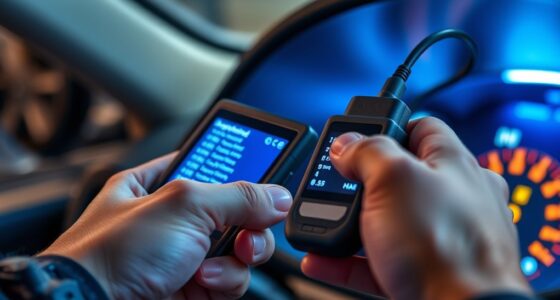
Regular vehicle maintenance is essential for keeping your car running efficiently and maximizing fuel economy. When you regularly check and replace engine oil, you ensure ideal engine performance and fuel use. Spark plug condition also impacts combustion; worn or dirty spark plugs can cause misfires and decrease efficiency. To help you stay on track, consider this maintenance table:
| Maintenance Task | Frequency | Benefit |
|---|---|---|
| Check engine oil quality | Every 3,000-5,000 miles | Improved engine lubrication |
| Replace spark plugs | Every 30,000 miles | Better combustion, fuel savings |
| Inspect air filters | Every 10,000 miles | Increased airflow, efficiency |
| Tire pressure check | Monthly | Reduced rolling resistance |
Keeping up with these tasks keeps your vehicle running smoothly and saves you fuel. Additionally, ensuring your refrigerant levels are properly maintained can help optimize your vehicle’s cooling systems and overall efficiency.
Frequently Asked Questions
How Does Driving Speed Specifically Impact Fuel Efficiency?
Driving at higher speeds decreases your fuel efficiency because your engine works harder and consumes more fuel. Maintaining proper engine maintenance and tire pressure helps mitigate this effect, ensuring your vehicle runs smoothly. When you drive at moderate, steady speeds, you reduce aerodynamic drag and engine strain, saving fuel. Keep your tires inflated to the recommended pressure for ideal performance, and stay within a safe speed range for the best fuel economy.
What Are the Best Practices for Driving in Hilly Areas?
When driving in hilly areas, choose eco-friendly routes that avoid steep inclines whenever possible. Maintain a steady speed to prevent unnecessary acceleration and braking. Manage your vehicle load by removing excess weight, which reduces strain on your engine. Use low gears on steep climbs and engine braking on descents to save fuel. These habits help you conserve fuel and reduce emissions while traversing challenging terrain efficiently.
How Does Weather Affect Fuel Economy and Driving Habits?
A stitch in time saves nine, so consider weather’s impact on your fuel economy. Cold temperatures can decrease tire pressure, leading to higher rolling resistance, and affect vehicle maintenance, making your engine work harder. Hot weather can cause overheating, reducing efficiency. To stay efficient, regularly check tire pressure, maintain your vehicle properly, and adapt your driving habits to weather conditions. This keeps your car running smoothly and saves fuel.
Can Using Higher Gears Improve Fuel Efficiency?
Using higher gears can improve your fuel efficiency by reducing engine load. When you shift to a higher gear at the right time, the engine works less hard, which conserves fuel. Avoid unnecessary gear shifting; instead, shift smoothly and early as your speed increases. This practice keeps the engine running efficiently, helping you save fuel and reduce emissions. Always follow your vehicle’s recommended shifting points for ideal results.
How Often Should I Check and Replace My Vehicle’s Air Filter?
You should check your vehicle’s air filter regularly, ideally every 12,000 to 15,000 miles, or more often if you drive in dusty conditions. Follow your car’s recommended replacement schedule to maintain ideal air filter performance. Regular air filter maintenance helps improve fuel economy, engine efficiency, and prolongs your vehicle’s lifespan. Don’t ignore signs of a clogged filter, like reduced acceleration or increased fuel consumption, and replace it promptly.
Conclusion
By maintaining steady speeds, accelerating gently, planning your routes, keeping your tires inflated, reducing unnecessary loads, limiting power use, and staying on top of maintenance, you can boost your fuel economy. These habits create a smoother drive, less strain on your vehicle, and save you money. Embrace these habits for a more efficient, eco-friendly, and enjoyable driving experience—because when you drive smart, you save more, stress less, and protect your planet.