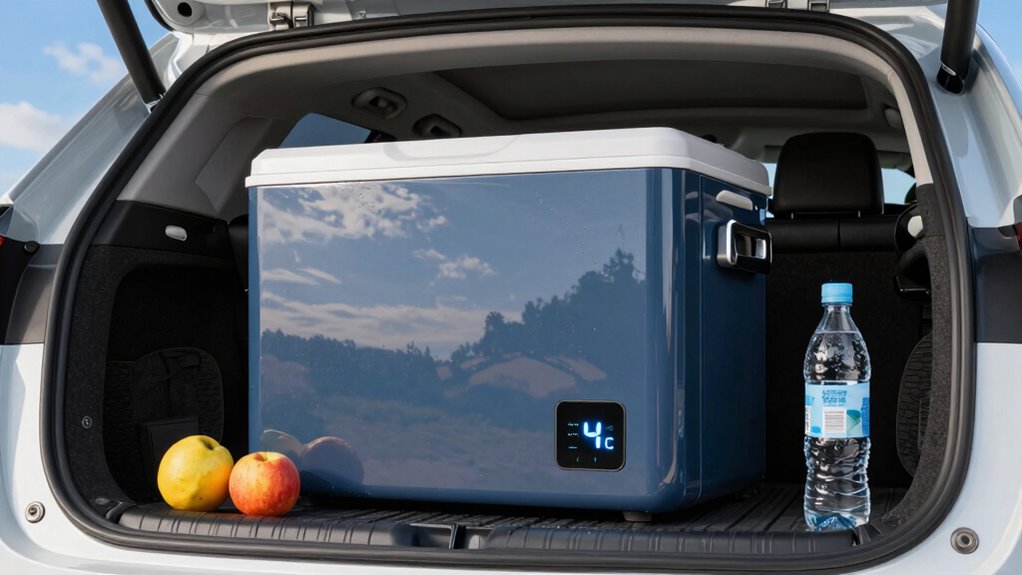
To keep your food fresh and your battery happy on road trips, set your portable car fridge between 39°F to 43°F (4°C to 6°C). Avoid setting it too low, as that drains your battery faster, and don’t go too high, or your food might spoil. Keep the fridge in a shaded spot and limit how often you open it to save power. Want more tips to optimize your fridge’s performance? Keep exploring for all the essential details.
Key Takeaways
- Keep the fridge temperature between 39°F to 43°F (4°C to 6°C) for optimal freshness and energy efficiency.
- Avoid setting the temperature too low to prevent excessive power drain and battery depletion.
- Higher temperatures save battery but risk food spoilage; balance is key for safety and efficiency.
- Minimize opening the fridge frequently and position it in shaded areas to reduce energy consumption.
- Monitor internal temperature and adjust settings based on external conditions and trip duration.
When you’re planning a road trip, keeping your food and drinks fresh is essential, and a portable car fridge can be a game-changer. To make the most of it, understanding how temperature settings affect your fridge’s performance is key. Most portable fridges operate within a temperature range of about 32°F to 50°F (0°C to 10°C), allowing you to keep perishables chilled or even frozen, depending on your needs. Maintaining the right temperature ensures your supplies stay fresh without wasting energy. If you set the temperature too low, the fridge works harder, which can drain your vehicle’s battery faster and increase power consumption. Conversely, setting it too high might not preserve your items properly, risking spoilage.
Battery efficiency plays a vital role in how well your portable fridge performs during long trips. Many models are designed to be energy-efficient, but their performance heavily depends on your settings. When you keep the temperature at a moderate level—say around 39°F to 43°F (4°C to 6°C)—you strike a good balance between keeping your food fresh and conserving battery life. Lower temperatures demand more power, causing your fridge to run more frequently and drain your car’s battery quicker. If you’re using an inverter or a portable power station, pay attention to its capacity and how the fridge’s power consumption affects it over time. Some models feature eco modes or adjustable settings that help optimize battery efficiency, allowing you to extend usage without risking battery drain.
Power consumption varies based on factors like ambient temperature, insulation quality, and how often you open the fridge. When it’s hot outside, your portable fridge works harder to maintain cool temperatures, which increases power usage. To minimize this, try to limit the frequency of opening the fridge, and keep it in a shaded spot inside your vehicle if possible. Good insulation also helps reduce power consumption because it keeps internal temperatures stable longer. Monitoring your fridge’s energy use and adjusting the temperature accordingly can make a significant difference in how long your battery lasts. For longer trips, consider using a dual-battery system or an auxiliary power source to ensure your fridge stays operational without draining your main vehicle battery. Being aware of energy efficiency can help you get the most out of your portable fridge during your adventures.

EUHOMY 12 Volt Refrigerator, 19QT(18L) Compressor Electric Cooler APP Control, Car Fridge -4℉~68℉, Portable Refrigerator 12/24V DC 100-240V AC, Portable Freezer for Camping, Travel, Boat
- Versatile Power Options: AC and DC adapters for home or car use
- 2-Year Tech Support: Reliable assistance for your cooler
- Large 19QT Capacity: Compact, portable fridge or freezer
As an affiliate, we earn on qualifying purchases.
As an affiliate, we earn on qualifying purchases.
Frequently Asked Questions
How Often Should I Calibrate My Portable Car Fridge Thermometer?
You should calibrate your portable car fridge thermometer at least once a month to guarantee accurate readings. Regular fridge calibration helps maintain thermometer accuracy, especially when you’re on the road and relying on precise temperatures to keep your food fresh. Check the calibration after significant temperature changes or if you notice inconsistent readings. Properly calibrated thermometers give you peace of mind, ensuring your food stays safe during your adventure.
Can I Use a Portable Fridge in Extreme Cold or Heat Conditions?
You can use your portable fridge in extreme cold or heat, but beware—conditions may strain your battery and cause power fluctuations. In freezing temperatures, the fridge might struggle to maintain proper cooling, while scorching heat can overwork the compressor. Stay alert, monitor your power source, and consider insulation or additional power support. This way, you avoid unexpected shutdowns and keep your food fresh, no matter the weather.
What Are the Energy Consumption Differences Between Temperature Settings?
You’ll notice that setting your portable car fridge to a higher temperature uses less energy, making it more energy-efficient. Conversely, lower temperature settings demand more power to maintain temperature stability. Balancing your desired cooling level with energy consumption is key; if you want to conserve power on long trips, set your fridge to a slightly higher temperature. This approach helps optimize energy efficiency while keeping your food fresh.
How Does Ambient Outside Temperature Affect Fridge Cooling Efficiency?
Ambient outside temperature impacts your fridge’s cooling efficiency considerably. When it’s hot outside, poor air circulation can cause the fridge to work harder, reducing efficiency. Good insulation quality helps maintain a consistent internal temperature, even in high temperatures, by minimizing heat transfer. To optimize performance, make sure proper air circulation around the fridge and check insulation quality regularly, especially during extreme weather conditions, to keep your contents cool and energy use low.
Are There Safety Precautions for Maintaining Specific Temperatures?
Yes, you should follow safety precautions to maintain specific temperatures. Always monitor your portable fridge’s thermometer to guarantee food safety, preventing spoilage and bacteria growth. Keep the temperature stable by avoiding frequent door openings and placing the fridge in a shaded spot. Properly set the temperature according to the contents, typically around 0°C for perishables. These steps help preserve food quality and ensure safe consumption during your road trip.

VEVOR 12V Car Refrigerator 10 QT, Portable Mini Freezer with APP Control, -4℉ to 68℉, 12/24V DC & 110-220V AC Compressor Cooler for Travel, Camping, Home, Road Trip
- Fast Cooling Technology: Cools from 68℉ to -4℉ in 15 minutes
- Energy Efficient & Rapid Modes: ECO for efficiency, MAX for quick cooling
- Touch Screen Control: Adjust modes and temperature precisely
As an affiliate, we earn on qualifying purchases.
As an affiliate, we earn on qualifying purchases.
Conclusion
Remember, maintaining the right temperature in your portable car fridge is like tending a delicate garden—you nurture it with care, and it rewards you with fresh food and cool drinks on every adventure. By understanding the basics, you become the captain of your own ship, confidently steering through the open road. So, keep an eye on your fridge’s settings, and let your road trip be as smooth and invigorating as a cool breeze on a summer’s day.
EUHOMY 12 Volt Refrigerator, 19QT(18L) Compressor Electric Cooler APP Control, Car Fridge -4℉~68℉, Portable Refrigerator 12/24V DC 100-240V AC, Portable Freezer for Camping, Travel, Boat
- Versatile Power Options: AC and DC adapters for home or car use
- 2-Year Tech Support: Reliable assistance for your cooler
- Large 19QT Capacity: Compact, portable fridge or freezer
As an affiliate, we earn on qualifying purchases.
As an affiliate, we earn on qualifying purchases.

BougeRV 12V Refrigerator with 240Wh Battery CRD2 V2 52QT, -4~68°F Dual Zone
- Dual Zone Independent Cooling: Adjustable temperatures for each compartment
- Flexible Storage Options: Set as fridge or freezer independently
- Detachable 240Wh Battery: Extended use up to 18 hours
As an affiliate, we earn on qualifying purchases.
As an affiliate, we earn on qualifying purchases.