You should clean your makeup brushes at least once a week to keep them hygienic and guarantee flawless application. Brushes used with liquids or creams need cleaning every 3-4 days, while powder brushes can be cleaned every two weeks. Dirty brushes can cause breakouts, skin irritation, and uneven makeup. Proper cleaning and drying routines help prolong your tools’ lifespan and prevent bacteria buildup. Keep going to discover more tips on maintaining your brushes and skin health.
Key Takeaways
- Clean brushes weekly for general use; more frequently for liquid, cream, or switching products.
- Liquid or cream brush tools should be cleaned every 3-4 days to prevent bacteria buildup.
- Powder brushes can be cleaned approximately every two weeks unless used intensely or with different shades.
- Regular cleaning prevents streaky makeup, uneven blending, and skin issues like breakouts.
- Proper drying and storage practices extend brush lifespan and maintain hygiene standards.
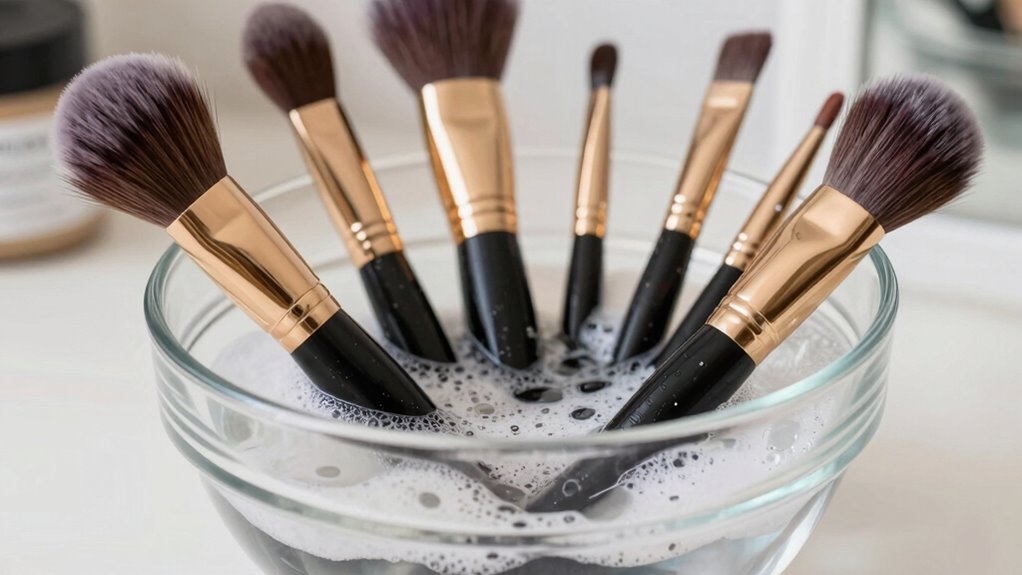
Cleaning your makeup brushes regularly is vital for maintaining healthy skin and achieving flawless makeup application. When you keep up with proper brush maintenance, you reduce the buildup of bacteria, dirt, and oil that can cause breakouts and skin irritation. It’s not enough to simply use your brushes; you need to pay attention to hygiene practices that guarantee your tools stay clean and safe to use. The frequency with which you should clean your brushes depends on how often you use them and the types of products you apply, but a good rule of thumb is to clean them at least once a week.
If you wear makeup daily, neglecting to clean your brushes for extended periods can lead to a messy buildup of product and bacteria. Over time, this buildup can cause skin issues like acne, clogged pores, or irritation. For brushes used with liquid or cream products, you may want to clean them more often, ideally every 3-4 days, because these formulations tend to harbor more bacteria and are harder to fully rinse out. Brushes used for powder products can be cleaned less frequently—about once every two weeks—since powders are less likely to trap bacteria. Regular cleaning also helps prevent the spread of bacteria between different makeup products, which can be especially important when switching shades or formulas.
In addition to preventing skin problems, regular cleaning helps your brushes perform better. Dirty brushes can cause streaky makeup, uneven blending, and poor color payoff. When you neglect brush maintenance, your tools become less effective, and your makeup application can look dull or patchy. To keep your brushes in excellent condition, use gentle cleansers designed specifically for makeup tools or mild baby shampoo. Rinse thoroughly to remove all residue, and reshape the brush heads before drying. Proper drying is vital—lay your brushes flat or with the bristles facing downward to prevent water from seeping into the handle, which can loosen glue and cause shedding. Incorporating eco-friendly craft supplies like biodegradable cleaning solutions can also minimize environmental impact. Additionally, understanding the contrast ratio of your tools or workspace can help ensure your brushes are stored in optimal lighting and environment for long-term preservation.
Developing a routine that fits your makeup habits is key. Incorporate brush cleaning into your weekly schedule so it becomes a habit, and always wash brushes used with liquid or cream products more frequently. Remember, good hygiene practices aren’t just about the appearance of your brushes—they directly impact your skin’s health. Clean brushes will give you a fresh, flawless finish every time, while also reducing the risk of skin issues caused by bacteria and dirt. For added longevity, consider storing your brushes in a dry and clean environment to prevent mold or bacteria growth. With consistent brush maintenance, you’ll extend the life of your tools, enjoy better makeup application, and keep your skin healthy and clear.

Clean-n-Fresh Makeup Brush Cleaner Set For Brushes, Sponge and Puff 6.8 Fl Oz, 2-Pack Deep Cleaning Washing Cleanser Shampoo With a Cleaning Mat, Gentle Wash
UPGRADED 2-PACK VALUE: Unlike many single-bottle alternatives on the market, our kit includes two 3.4 Fl Oz bottles…
As an affiliate, we earn on qualifying purchases.
As an affiliate, we earn on qualifying purchases.
Frequently Asked Questions
Can Cleaning Brushes Too Often Damage Their Bristles?
Cleaning your brushes too often can potentially damage their bristles, impacting brush longevity. Excessive cleaning might cause the glue holding the bristles to weaken or the bristles to shed prematurely. However, maintaining a proper cleaning frequency balances hygiene and brush care. You should clean your brushes regularly—usually weekly or bi-weekly—depending on use. This routine keeps them in good shape without risking damage from over-cleaning.
What Cleaning Products Are Safest for Delicate Brushes?
Did you know your brushes can harbor bacteria even after just one use? For delicate brushes, opt for gentle cleaning solutions like baby shampoo or specialized brush cleansers. Avoid harsh chemicals, as they can damage the bristles. Look for makeup brush preservatives that are alcohol-free and hypoallergenic, ensuring your tools stay clean without harm. These safe products help maintain your brushes’ integrity while keeping your skin healthy.
How Do I Dry Brushes Properly After Cleaning?
After cleaning your brushes, you should use proper brush drying techniques to keep them in good shape. Gently squeeze out excess water with a clean towel, then reshape the brush heads. Use air drying methods by laying brushes flat on a clean towel in a well-ventilated area, avoiding the brush tips to prevent water from seeping into the handles. This guarantees your brushes dry thoroughly without damage.
Is It Necessary to Disinfect Makeup Tools Regularly?
Yes, it’s absolutely essential to disinfect your makeup tools regularly. Neglecting makeup hygiene can turn your beauty routine into a breeding ground for bacteria, causing breakouts and infections. Proper brush maintenance isn’t just about cleanliness; it’s about protecting your skin and health. Disinfecting guarantees your brushes stay safe and effective, preventing germs from lurking. Regular disinfection is the key to flawless, healthy skin and a safer beauty routine.
Can Dirty Brushes Cause Skin Breakouts or Infections?
Yes, dirty brushes can definitely cause skin breakouts and infections. Poor makeup hygiene allows bacteria, oil, and dirt to accumulate on your brushes, which then transfer onto your skin. This can clog pores, trigger breakouts, or lead to infections. To protect your skin health, it is crucial to clean your makeup tools regularly, especially if you notice redness, irritation, or persistent breakouts. Proper hygiene keeps your skin healthy and prevents unwanted skin issues.
makeup brush cleaner solution
As an affiliate, we earn on qualifying purchases.
As an affiliate, we earn on qualifying purchases.
Conclusion
Cleaning your makeup brushes and tools regularly keeps your skin healthy, your makeup flawless, and your tools lasting longer. It prevents bacteria buildup, reduces breakouts, and guarantees smooth application every time. By establishing a routine—whether weekly or biweekly—you protect your skin, maintain hygiene, and enjoy better makeup results. Consistency is key, so make cleaning a habit, and you’ll always look and feel your best, with tools that perform at their best, too.
eco-friendly makeup brush cleaner
As an affiliate, we earn on qualifying purchases.
As an affiliate, we earn on qualifying purchases.
professional makeup brush cleaning tools
As an affiliate, we earn on qualifying purchases.
As an affiliate, we earn on qualifying purchases.