TL;DR
Ring cameras and doorbells connect to home Wi-Fi and the Ring app to provide features such as motion alerts, live view, recorded events, and two-way talk, depending on the model and plan. If the Battery Doorbell 2K listing you wanted is unavailable, compare the current Battery Doorbell 2K, Wired Doorbell Pro (3rd Gen), Wired Doorbell 2K (2nd Gen), and Battery Doorbell by power source, video, installation, and connectivity. Check current subscription terms, Wi-Fi coverage, and privacy settings before choosing.
A doorbell camera can turn a missed knock into a clear choice: answer from the kitchen, ask a courier to leave a parcel, or wait until you are free. Ring cameras and doorbells connect that everyday moment to your phone, but the experience depends on more than the lens. Power, Wi-Fi, recording plans, account security, and where the camera points all matter.

Prime made for students and young adults
- Fast, free delivery for dorm and study essentials
- Prime Video and Amazon Music included
- Member-only deals
If you are shopping for the Ring Battery Doorbell 2K package described as the “Newest Model,” you may find that exact listing unavailable or changed. That does not prove the model is discontinued. This guide helps you compare similar Ring options, understand what you give up or gain with each, and check the practical details before you buy.
You will also find the key facts for Ring devices: what the app can do, how subscriptions affect video history, what weak Wi-Fi feels like in daily use, and how to keep a camera useful without pointing it carelessly at neighbors or shared spaces.
Treat the “Newest Model” Battery Doorbell 2K package as possibly unavailable or changed; that does not establish that the product has been discontinued.
Compare the Battery Doorbell 2K, Wired Doorbell Pro (3rd Gen), Wired Doorbell 2K (2nd Gen), and Battery Doorbell by power, installation, view, video, and Wi-Fi…
Check Wi-Fi at the actual mounting spot and compare upload capacity with the model’s stated recommendation.
Confirm current Ring plan terms separately for live view, alerts, recordings, video history, retention, and sharing.
Aim the camera at the entrance, use privacy and motion settings thoughtfully, and secure the account with a unique password and two-step verification where ava…
See what a Ring camera can do before choosing a model
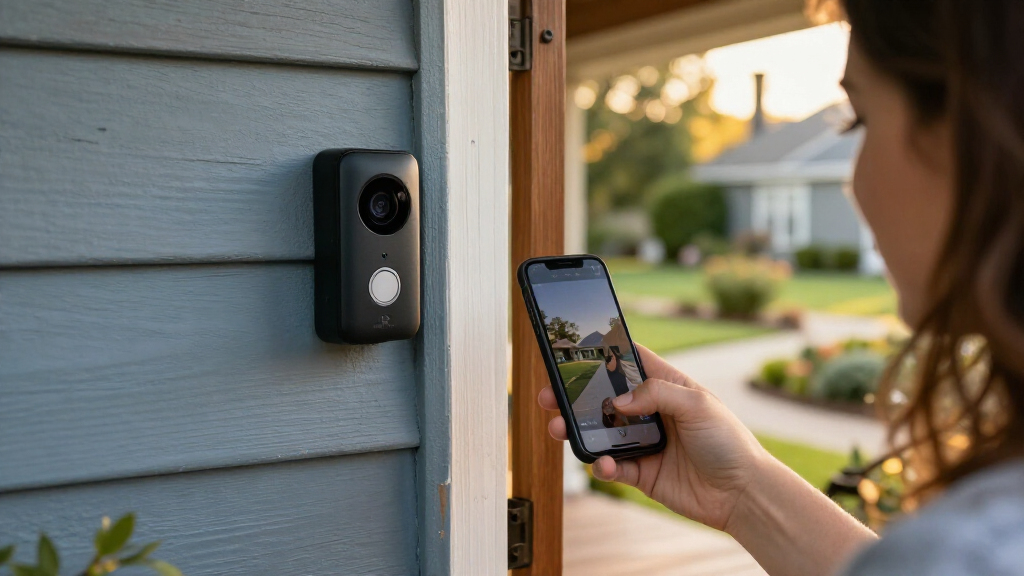
Ring cameras and doorbells are internet-connected devices that can detect motion, send phone alerts, show a live feed, and support two-way talk; some models can also save event recordings. The exact features depend on the model, your settings, your region, and any current Ring plan. Think of the device as a door-side window that can ring your pocket, not as a complete security service.
That distinction matters when you are comparing listings. A live view lets you check the porch now; recorded video lets you return later to see when a package arrived. Alerts tell you that something happened, while recording and retention determine whether you can inspect that event tomorrow. These are separate functions, and plan terms can change, so check the current Ring materials for the model you are considering.
For example, imagine you are on a video call when a delivery arrives. A motion alert can tell you someone is at the door, and two-way audio may let you ask the driver to set the parcel beside the planter. If you later want to review the visit, whether a recording exists depends on the device, settings, and plan.
Ring sells internet-connected security cameras and video doorbells that work through home Wi-Fi and the Ring app. Some run on rechargeable batteries; others use existing doorbell wiring, an outlet adapter, or a compatible solar accessory. Check compatibility before assuming an accessory or an existing chime will work with a particular device.
A camera gives you visibility and a way to respond. It does not guarantee prevention, continuous recording, emergency response, or a working connection during an outage.
That is the useful starting point: decide which moments you want to see and respond to, then check whether the model and plan support those jobs. A front-door camera for parcel alerts may call for different features from a camera meant to monitor a wide driveway. Put your routine ahead of a product name.
Products Worth Considering

Shark Cordless Anti-Allergen Pet Power Stick Vacuum, Blue, IZ363HT

Bose SoundTouch 30 Wireless Speaker, Black

Levoit Core 600S-P Smart Air Purifier for Large Rooms up to 2933 ft²
As an affiliate, we earn on qualifying purchases.
Compare four Ring alternatives by the jobs they can do
If the Battery Doorbell 2K package you found is unavailable, compare the alternatives by the feature you care about most: battery convenience, wired power, higher-spec connectivity, or a simpler doorbell setup. The current Battery Doorbell 2K shares many listed specifications with the package in the brief, while the Wired Doorbell Pro (3rd Gen) changes the power and Wi-Fi story. Model names can be similar, so confirm the exact generation and listing details.
| Option | Power and connection | Video and view | What to check |
|---|---|---|---|
| Battery Doorbell 2K | Built-in rechargeable battery; USB-C; 2.4 GHz Wi-Fi 4 | Retinal 2K, up to 6x enhanced zoom; 140° horizontal and vertical view | Charging routine, cable needs, and 10 Mbps minimum upload recommendation |
| Wired Doorbell Pro (3rd Gen) | Hardwired; dual-band Wi-Fi 6 on 2.4 and 5 GHz | 4K with Low-Light Sight, adaptive night vision; 140° horizontal and vertical view | Compatible power supply, installation, and 15 Mbps minimum upload recommendation |
| Wired Doorbell 2K (2nd Gen) | Wired doorbell system, Ring plug-in adapter, or compatible transformer; 2.4 GHz Wi-Fi 4 | Video specification not stated in the supplied comparison | Check the exact video details and your transformer or chime compatibility |
| Battery Doorbell (1st Generation, 2024 Release) | Rechargeable battery; compatible hardwiring is listed as 8–24 VAC, 40 VA max; 2.4 GHz Wi-Fi | 1440 × 1440 HD, Live View, color night vision; 150° horizontal and vertical view | Check the listing condition, wiring compatibility, and how its resolution fits your needs |
Consider a real doorstep: if your router is far from the porch and your existing bell wiring is compatible, the wired Pro’s dual-band Wi-Fi support may suit your setup. If you rent or want to avoid wiring work, a battery model may be easier to place, though you will need to recharge it. A wider stated view is not automatically better if it captures more of a shared walkway.
One supplied alternative listing is described as “Like-New.” Treat its condition and included accessories as listing-specific details, not features of every Battery Doorbell. Also confirm which features are included with your account and plan before treating video storage or sharing as part of the device itself.
Choose battery or wired power based on your front door
A battery doorbell suits a doorway where you want to avoid wiring changes, while a wired model fits a home with compatible power and a preference for a permanent connection to its power source. That choice affects installation and upkeep as much as it affects the product itself. Battery life varies with motion activity, settings, weather, and Wi-Fi signal, so a manufacturer estimate cannot promise how long your own device will run.
Picture a busy townhouse entrance where a dozen neighbors, delivery workers, and visitors pass the camera each day. Frequent motion events can mean more activity and more charging than a quiet porch. A doorway that faces a windy street may also trigger more alerts or activity than one tucked behind a fence. Motion settings and placement can help tailor the experience, but they do not remove the need to check the battery.
Wired power also needs a little homework. The Pro specification lists support for 16 or 24 VAC, or 24 VDC at 12 W; the Wired Doorbell 2K (2nd Gen) lists a doorbell system, Ring plug-in adapter, or compatible transformer. The original Battery Doorbell comparison lists compatible hardwiring at 8–24 VAC, 40 VA maximum. Those figures are model-specific. Verify the exact device’s guidance and your home’s transformer, chime, and wiring before installation.
- Look at your current setup. Check whether you have doorbell wiring and identify the chime and transformer if you can.
- Decide how much upkeep suits you. A rechargeable model avoids relying on existing wiring, but it adds a charging task.
- Match the device to your doorway. Consider exposure to weather, visitor traffic, mounting space, and whether a solar accessory is supported.
- Check installation requirements. Confirm compatibility in Ring’s current model-specific instructions before connecting wires or buying an adapter.
For a renter in an apartment, a battery model may make sense because the doorbell can be installed without changing household wiring, subject to building rules. For a homeowner replacing an existing wired bell, a wired model might mean fewer charging interruptions. Your best choice is the one that fits the power available and the maintenance you will actually keep up with.
Make sure your Wi-Fi can reach the doorstep
A Ring doorbell needs a reliable home Wi-Fi connection for internet-dependent features such as remote live viewing and phone alerts. A weak signal may show up as delayed notifications, a slow live feed, or interruptions just when you want to answer the door. The product brief lists a 10 Mbps minimum upload recommendation for the Battery Doorbell 2K and Wired Doorbell 2K (2nd Gen), and 15 Mbps for the Wired Doorbell Pro (3rd Gen).
Those recommendations are useful starting points, not a promise that every porch will work well. Your internet plan might offer plenty of upload speed beside the router but a poor signal through brick walls at the front door. Imagine tapping a motion notification while carrying groceries: a spinning loading indicator can make the feature feel less convenient than a plain doorbell.
The models in the supplied comparison differ in wireless support. The Battery Doorbell 2K and Wired Doorbell 2K (2nd Gen) list Wi-Fi 4 at 2.4 GHz; the Wired Doorbell Pro (3rd Gen) lists Wi-Fi 6 and both 2.4 GHz and 5 GHz bands. The Battery Doorbell lists 2.4 GHz Wi-Fi. A newer Wi-Fi label does not fix a dead zone by itself, and a 2.4 GHz connection may reach farther through some walls than 5 GHz. Your router and the device both shape the result.
- Test at the mounting spot. Use your phone where the doorbell will sit, not only in the living room beside the router.
- Check upload capacity. Compare your connection with the model’s stated recommendation and account for other household use.
- Watch the practical signs. Repeatedly slow live view or late alerts can point to a connection problem.
- Plan for outages. Remote viewing and alerts generally depend on internet access; local behavior during an outage depends on the device.
If the porch is a Wi-Fi dead zone, fixing coverage may matter more than choosing between similar camera resolutions. A mesh node or router adjustment can sometimes help, depending on your home and equipment. Check the device and network guidance before purchasing additional hardware.
Check recording plans before you count on video history
Live view, motion alerts, event recordings, video history, and clip sharing are different features, and a Ring subscription may be required for some recording and review functions. A camera can show you what is happening now without giving you a lasting recording to check later. Because Ring can change its plans, feature access, and device compatibility, check the current terms for your exact model and region before you decide what a subscription adds.
Consider a parcel left at 10 a.m. You see the alert at work, but you cannot open your phone until lunch. If you need to review what happened, you need to know whether your plan saves that event and how long the clip remains available. Storage and retention depend on the plan, device, and account settings; do not assume every alert becomes an indefinitely saved video.
Most consumer Ring cameras are designed around motion-triggered events rather than continuous recording, according to the supplied research brief. That distinction changes what the camera can tell you. An event-based camera may capture a delivery or a person entering a motion zone, but it should not be treated as a constant video archive. Specific capabilities can vary by product and service, so check current official documentation before relying on a particular recording mode.
Before you buy, write down the jobs you expect from recorded video: reviewing deliveries, checking an alert you missed, or sharing a relevant clip. Then compare those needs with current Ring plan terms. You may decide basic live viewing and alerts are enough, or that a plan’s recording period justifies its ongoing cost. Either way, treat subscription fees as part of the ownership decision, alongside a spare battery, mount, Chime, solar accessory, or professional installation if needed.
Ask “Can I see the door now?” and “Can I review this event later?” as two separate questions. A product page can answer them differently.
Video storage is also a privacy choice. Review retention settings, download or delete footage when appropriate, and limit who can access recordings. A short clip of a courier may feel routine; a long archive can reveal when a home is empty.
Protect your privacy and account without losing useful alerts
A doorbell camera can record neighbors, passersby, delivery workers, or shared spaces if they enter its field of view. Placement, motion zones, privacy settings, and local recording rules all affect how responsibly you use it. A wide-angle view may help you see a package on the step, but it may also sweep in a neighbor’s doorway or a shared corridor.
Imagine a camera mounted in a small apartment building. A slight turn toward your own mat may still capture residents walking by, especially with a 150° field of view. Adjust the angle and privacy zones so the camera focuses on the area you need. Check local rules around video and audio recording, particularly where people have a reasonable expectation of privacy.
Your account and network also deserve attention. A connected camera is only as secure as the account and Wi-Fi protecting it. Use a strong, unique password, enable two-step verification where available, keep device software current, and be careful when sharing access. Individual accounts and limited permissions can make it easier to remove someone’s access when a household arrangement changes.
- Frame the entrance carefully. Aim toward your own doorway and parcel area, not deep into a neighbor’s windows or shared rooms.
- Set motion zones with purpose. Reduce alerts from a busy sidewalk when your main concern is the porch.
- Review who has access. Remove former household members or guests when they no longer need it.
- Check current sharing and law-enforcement policies. Access depends on user choices, applicable law, and Ring’s current policies and processes.
Privacy discussions around Ring have included law-enforcement access, data retention, and video sharing. Avoid relying on old headlines or blanket claims; policies and processes can change. If this is a deciding factor, read Ring’s current official documentation and your local rules, then choose settings that match your comfort level.
The goal is a useful view of your doorstep with fewer unnecessary recordings. A camera that watches a narrow slice of the porch can answer “Did the parcel arrive?” without turning the whole street into your personal feed.
Use Ring as one part of a calmer home routine
A Ring camera can help you see who is at the door, respond to a delivery, and check motion events, but it is not a complete security system or a guaranteed alarm service. It does not promise that an incident will be prevented, that every alert will arrive instantly, or that emergency services will respond. Treat it as a tool for awareness and communication, then decide what other measures your home needs.
For instance, you may use a doorbell camera to tell a courier to leave a box behind a bench, while a sturdy lock and a clear household plan handle other parts of home security. If you are away, a family member might receive shared access to a front-door alert, but that does not replace checking who has permission or agreeing how to handle an urgent situation.
Smart-home compatibility also needs a model-specific check. Selected Ring features work with compatible Amazon Alexa devices, but support varies by device and function, and compatibility with other platforms is not universal. If you want an announcement on a speaker or a live feed on a display, verify that the exact doorbell and Alexa device support that feature before building your routine around it.
Build the routine around what you will actually do when an alert arrives. Will you open live view? Speak through two-way audio? Ask another household member to check? A noisy street can generate frequent motion events, so tune notification settings and zones to keep alerts meaningful. If every passing bicycle buzzes your phone, you may start ignoring the one alert that matters.
Reliability comes from the whole setup: a suitable power source, adequate Wi-Fi, maintained account access, and settings you understand. Ring cameras and doorbells can add a small window into your front step, like a porch light you can carry in your pocket. They work best when that window is aimed carefully and connected to a practical response.
Frequently Asked Questions
Do Ring cameras work without a subscription?
Some devices may offer live view and basic alerts without a paid plan, while recorded-video history and other features may be limited. Check the current plan terms for your exact model and region before relying on recordings.
Can I use a Ring doorbell without existing doorbell wiring?
Many Ring models use rechargeable batteries, so they can suit a doorway without existing doorbell wiring. Wired models have different power and installation needs, and battery life varies with activity, settings, weather, and signal strength.
How long does a Ring doorbell battery last?
There is no single real-world duration that fits every home. Frequent motion events, cold weather, settings, and a weak Wi-Fi connection can all affect how often you need to recharge it.
Does a Ring camera record continuously?
Most consumer Ring cameras are designed around motion-triggered events rather than continuous recording, according to the supplied research brief. Capabilities depend on the product and service, so check current official details before expecting a particular recording mode.
Will a Ring doorbell work during an internet outage?
Remote viewing and phone alerts generally depend on an internet connection. What the device does locally during an outage depends on the model, so check its current specifications and do not rely on remote features when the connection is down.
Can neighbors or passersby be recorded?
They may enter the camera’s field of view, especially if the lens covers a sidewalk or shared area. Adjust placement and privacy zones, and check local rules for video and audio recording.
Can I share Ring access with family members?
Ring offers device and account sharing options, but permissions can differ. Use individual accounts where available, grant only the access each person needs, and remove access when it is no longer appropriate.
Conclusion
Choose a Ring doorbell by starting at your front step: check the available power, test the Wi-Fi, decide whether you need recordings after the moment has passed, and consider what the lens will capture. If your preferred Battery Doorbell 2K listing is unavailable, compare the current battery and wired alternatives against those needs instead of assuming the name alone tells the whole story.
Then set the camera to watch the parcel, the doorway, and the visitor you need to see. A useful doorbell gives you a little more control over a busy day; a well-aimed one leaves the rest of the street out of view.