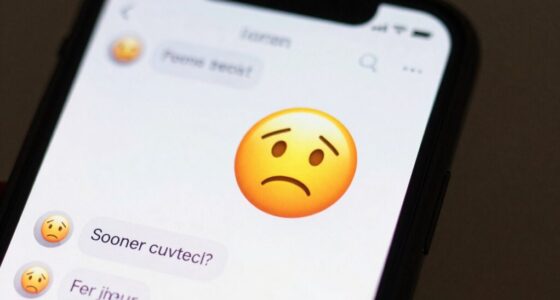

When a girl sends you the 😭 emoji, she might be expressing genuine sadness or frustration, but it can also signify overwhelming happiness or laughter, depending on the situation. It reflects her emotional openness and may show vulnerability or comfort in your relationship. The emoji can also be a shared language for humor or to deepen your bond. Understanding her typical style and context helps you respond better—keep exploring to uncover more about her emotions.

Prime made for students and young adults
- Fast, free delivery for dorm and study essentials
- Prime Video and Amazon Music included
- Member-only deals
Key Takeaways
- The 😭 emoji from a girl can indicate genuine sadness, frustration, or overwhelming happiness, depending on the context.
- It may show vulnerability or emotional openness in close relationships or friendships.
- The emoji can express shared laughter or joy, especially when something is hilariously funny.
- Frequent use might suggest high emotional expressiveness or reassurance-seeking behavior.
- Understanding the relationship and tone helps interpret whether it reflects genuine emotion or playful teasing.
Have you ever received the 😭 emoji from a girl and wondered what she really means? It’s a common question, especially since emojis have become such a key part of digital communication. The 😭 emoji isn’t always straightforward; its meaning varies depending on the friendship dynamics and emotional expressions behind the message. In some cases, it’s a sign of genuine sadness or frustration, while in others, it might be a way to express overwhelming happiness or laughter. Understanding the context is essential to decoding her true intention.
When a girl sends you this crying emoji, it could be her way of showing vulnerability or emotional openness. She might be sharing her feelings in a subtle yet impactful way, signaling that she’s emotionally affected by something you said or did. This could be rooted in the friendship’s dynamics—perhaps she feels comfortable enough with you to show her softer side, or maybe she’s trying to gauge your response to her emotional expression. If she’s close to you, the emoji could be a way to seek comfort or understanding, indicating that she’s genuinely upset or overwhelmed. Conversely, if your friendship is more casual, it might simply be a way of expressing sympathy or shared sentiment about a situation.
On the other hand, sometimes the 😭 emoji isn’t about sadness at all. It can be used to show that she’s laughing so hard she’s crying, which is an emotional expression of joy or amusement. In this case, the emoji acts as a shared language for humor, reinforcing that she finds something you said or did hilarious. This emotional expression helps deepen the friendship by creating a sense of shared experience, even if it’s just over a joke or funny story.
The way she uses the 😭 emoji can also reveal her level of emotional openness. If she sends it frequently in response to minor things, she might be more emotionally expressive or seeking reassurance. If she only uses it sparingly, it could mean she’s selective about when she shows her vulnerability. Pay attention to her tone and the context of your conversations—are she genuinely upset, or is she just being playful? Her intent often becomes clearer when you consider her overall communication style and the friendship’s dynamics. Recognizing emotional expression and how it varies can help you interpret her messages more accurately. Additionally, knowing about electric bikes and their features can help you relate to her interests or hobbies, which can open up more meaningful conversations.
Furthermore, understanding digital content formats and the variety of ways emojis are used can help you interpret her messages more accurately. The 😭 emoji is a versatile tool for emotional expression. It can convey sadness, joy, frustration, or humor—depending on the situation. When you notice her using it, think about your relationship’s context, her typical communication patterns, and the conversation’s tone. Doing so helps you better understand her feelings and respond appropriately, strengthening both your understanding and your friendship.
emotional intelligence books for couples
As an affiliate, we earn on qualifying purchases.
As an affiliate, we earn on qualifying purchases.
Frequently Asked Questions
Can the 😭 Emoji Indicate Happiness or Laughter Sometimes?
Yes, the 😭 emoji can sometimes indicate happiness or laughter, depending on the context. Its emoji evolution shows that it’s not just about sadness anymore; it’s used for exaggerated reactions, including joy or hilarity. In digital expression, people often combine it with other emojis or text to clarify their feelings. So, don’t assume it always signals tears of sadness—sometimes, it’s just a way to show you’re laughing so hard you’re crying!
How Do Context and Tone Change the Emoji’s Meaning?
You probably think the 😭 emoji always signals sadness, but in sarcastic humor or playful teasing, it can mean the opposite—like laughing so hard you cry. Context and tone totally flip its emotional expression; a serious message uses it genuinely, while a joke or flirty chat makes it lighthearted. So, pay attention to the vibe—your emoji could be crying tears of joy or fake sobs for effect.
Is the 😭 Emoji Used Differently Across Age Groups?
You’ll find that the 😭 emoji’s used differently across age groups, reflecting the emoji evolution and digital expression trends. Older users might see it as a sign of real sadness or frustration, while younger users often use it to show exaggerated laughter or relief. This variation shows how digital expression adapts with age, making the emoji a versatile tool for conveying emotions, depending on the context and the user’s familiarity with online communication styles.
What Are Common Misunderstandings About the 😭 Emoji From Girls?
They say, “Don’t judge a book by its cover,” but many misunderstand the 😭 emoji from girls, assuming it’s always sadness. In the evolution of emojis, this symbol often expresses overwhelming emotions, not just tears of sorrow. During digital communication, people might think it signals genuine distress, but it can also convey laughter or frustration. Remember, context is key—don’t jump to conclusions based solely on this emoji.
Does the 😭 Emoji Have Cultural Variations in Meaning?
The 😭 emoji does have cultural variations in meaning, influenced by emoji symbolism and cultural differences. In some cultures, it represents intense sadness or grief, while in others, it might express overwhelming happiness or laughter. You should consider context and the sender’s background, as these cultural differences can lead to misunderstandings. Paying attention to tone and accompanying words helps you interpret the emoji accurately across different cultural settings.
relationship communication cards
As an affiliate, we earn on qualifying purchases.
As an affiliate, we earn on qualifying purchases.
Conclusion
When a girl sends you the 😭 emoji, it’s like she’s opening her heart’s floodgates, revealing raw emotion. It might mean she’s overwhelmed, upset, or even genuinely happy tears, depending on the context. Think of it as a window into her feelings—sometimes fragile, sometimes intense. Just as a storm can clear to bring calm, her tears may signal a need for understanding or support. Pay attention, and you’ll better understand what she’s really trying to tell you.
As an affiliate, we earn on qualifying purchases.
digital emotion recognition tools
As an affiliate, we earn on qualifying purchases.
As an affiliate, we earn on qualifying purchases.
Fall Picks
fall essentials
As an affiliate, we earn on qualifying purchases.