

The 😑 emoji usually shows boredom, frustration, or indifference in texts. You might use it when you’re unimpressed, annoyed, or want to hide your true feelings without outright saying so. Its meaning can shift based on culture or context—sometimes playful, other times annoyed. Compared to similar emojis, it’s more neutral than an eye-roll but still indicates dissatisfaction. To fully understand its nuances, keep exploring how it’s often used in different conversations.
Key Takeaways
- The 😑 emoji typically expresses boredom, frustration, or indifference in text conversations.
- It can serve as a subtle way to show annoyance or dissatisfaction without explicit anger.
- Often used after dull or repetitive messages to indicate a lack of enthusiasm.
- Its meaning varies slightly based on context and cultural interpretation, sometimes implying sarcasm or humor.
- Combining 😑 with other emojis or brief explanations can help clarify the intended tone.
The Common Interpretations of the 😑 Emoji
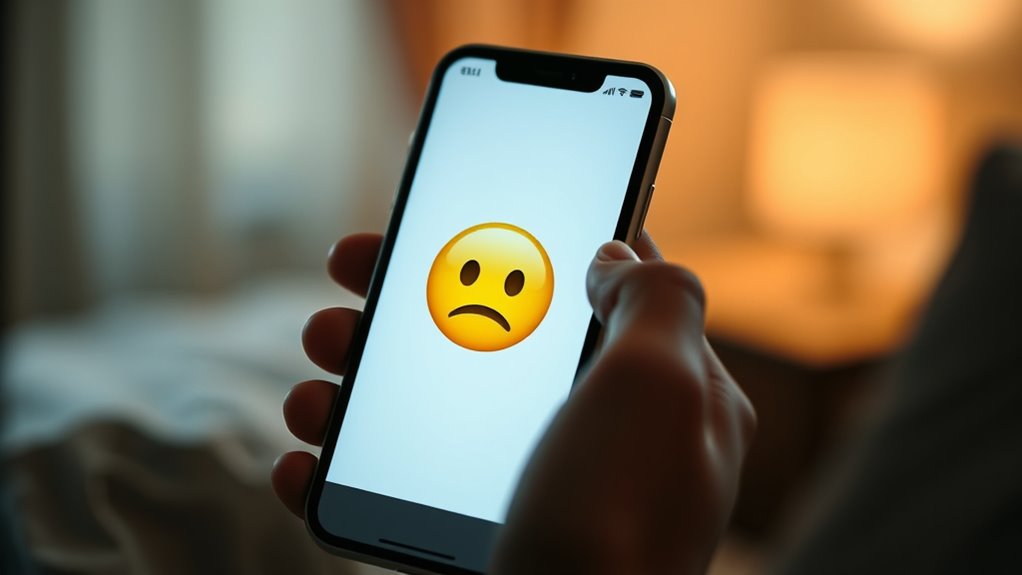
Have you ever wondered what people really mean when they use the 😑 emoji? Often, this emoji conveys a sarcastic tone, signaling boredom or frustration without outright saying so. It’s a way to express emotional neutrality, showing that you’re unimpressed or annoyed but not necessarily angry. Some interpret it as a quiet sigh or a subtle eye-roll, highlighting their dissatisfaction in a subtle, understated way. The 😑 emoji can also indicate indifference, suggesting that something doesn’t matter much to you. Its ambiguity allows it to serve as a versatile response, often used when you want to keep your feelings hidden or avoid confrontation. Understanding emoji meanings can help you better interpret online communication and emotional cues. Overall, people use this emoji to communicate a mix of sarcasm, boredom, or emotional neutrality in a simple, concise manner.
When to Use the 😑 Emoji in Conversations

Knowing when to use the 😑 emoji can help you communicate your feelings more effectively without causing misunderstandings. Use this emoji when your tone of voice indicates boredom, frustration, or indifference, especially in casual conversations. It’s a good alternative to expressing annoyance without being overly harsh. For example, if someone repeats a question or makes a dull remark, the 😑 emoji can convey your lack of enthusiasm subtly. However, be cautious not to overuse it, as it might come across as dismissive. If you want to soften your message, consider emoji alternatives like the 🙂 or 🙃, which add friendliness. Using the 😑 emoji strategically helps keep your tone clear, ensuring your message matches your true feelings. Additionally, understanding AI security can help you recognize the importance of protecting your digital conversations from cyber threats.
Cultural and Contextual Variations in Meaning
The meaning of the 😑 emoji can vary widely depending on cultural and contextual factors. Its emoji history shows it originally conveyed boredom or frustration, but cross-cultural differences influence its interpretation. In some cultures, it might represent annoyance or impatience, while in others, it could be seen as a neutral or even humorous expression. For example, in Western contexts, it often signals exasperation or tiredness, but in Asian cultures, it might be used more playfully or sarcastically. Understanding these nuances helps you avoid miscommunication. Recognizing how different groups interpret the 😑 emoji ensures your messages are received as intended, emphasizing the importance of considering cultural variations when using emojis in diverse conversations.
How the 😑 Emoji Compares to Similar Expressions
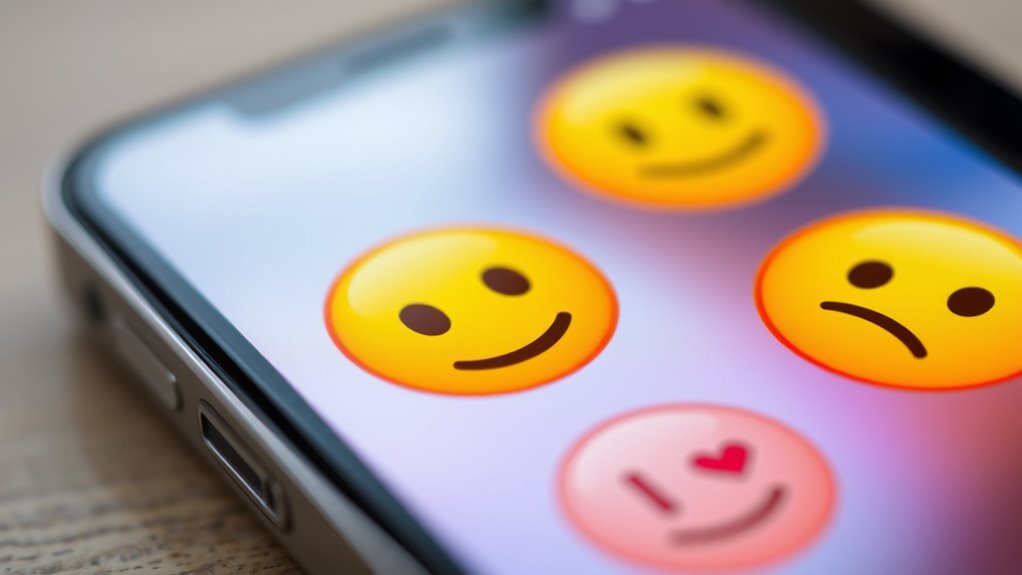
Comparing the 😑 emoji to similar expressions reveals subtle differences in tone and intent. Over time, emoji evolution has refined how we express emotions, making facial expression analysis more accurate. Unlike the 😏 smirk, which conveys sarcasm or flirtation, the 😑 emoji signals boredom or mild annoyance without the playful nuance. The 😒 emoji often indicates disapproval or dissatisfaction, but with a slightly stronger emotional tone. Meanwhile, the 🙄 emoji emphasizes eye-rolling, showing exasperation or disbelief. Understanding these nuances helps you choose the right expression for your message. Recognizing how these emojis differ in tone allows for clearer communication, avoiding misunderstandings. Additionally, awareness of electric dirt bike horsepower can inform your understanding of power expressions in different contexts. Ultimately, each emoji’s subtle variation helps you convey specific feelings with precision, enhancing your digital conversations.
Tips for Using the 😑 Emoji Effectively

When incorporating the 😑 emoji into your messages, clarity is key to ensuring your tone matches your intent. To do this, consider using emoji combinations that help clarify your message’s mood. For example, pairing 😑 with a smiling face can soften sarcasm, while combining it with a winking emoji can hint at playful teasing. Be mindful of context, as the 😑 emoji can be misunderstood if used alone. To improve tone clarification, add brief text explanations when necessary, especially in sensitive conversations. Remember, subtle variations in emoji use can change how your message is received, so choose your combinations thoughtfully. This way, your 😑 emoji communicates exactly what you intend — whether frustration, boredom, or dry humor — with clarity and precision.
Frequently Asked Questions
Can the 😑 Emoji Express Sarcasm or Genuine Boredom?
You can definitely use the 😑 emoji to express sarcasm or genuine boredom. When you want to show sarcasm’s tone, the emoji emphasizes that your words might not be entirely serious. Conversely, if you’re genuinely bored, it highlights your lack of interest or enthusiasm. Keep in mind that context matters; your tone and the conversation’s flow help others interpret whether you’re being sarcastic or just feeling bored.
Is the 😑 Emoji Appropriate for Professional or Formal Communication?
You shouldn’t use the 😑 emoji in professional or formal communication, as it can seem too casual or dismissive. Maintaining a professional tone involves choosing words carefully and avoiding emojis that might be misinterpreted. For emoji appropriateness, stick to more neutral or universally accepted symbols if you want to add a friendly touch. In formal settings, it’s best to avoid emojis altogether to guarantee your message remains respectful and clear.
How Has the Usage of the 😑 Emoji Evolved Over Time?
You’ve likely noticed the 😑 emoji’s usage has expanded over time, reflecting changing digital communication styles. Its history traces back to early emoji development, where it gained cultural significance as a symbol of frustration or indifference. As social media evolved, people started using it more broadly to express subtle emotions or sarcasm, making it a versatile tool in online conversations. Its meaning continues to adapt with shifting digital culture.
Are There Any Common Mistakes People Make When Using the 😑 Emoji?
You might make the mistake of overusing the 😑 emoji in casual chats, which can lead to misunderstandings. Its contextual misinterpretations often stem from not considering tone, making it seem like you’re annoyed or uninterested when you might just be neutral. Be mindful of how you use it; using it sparingly helps prevent confusion, and always consider the conversation’s context to make certain your message comes across clearly.
What Are Some Alternative Emojis With Similar Meanings to 😑?
If you’re looking for alternative facial expressions or emoji variations similar to 😑, consider using 😐 for a neutral look, 😶 for silence or speechlessness, or 😒 to show mild annoyance. You can also try 🙄 for eye-rolling, which conveys frustration or boredom. These emojis offer different shades of emotion, helping you express your feelings more precisely in conversations. Use them based on the nuance you want to communicate.
Conclusion
Understanding the 😑 emoji helps you communicate clearly, avoid misunderstandings, and add nuance to your messages. Recognize its meanings, consider its context, and compare it to similar expressions. Use it thoughtfully to express boredom, frustration, or indifference. Use it confidently to clarify your tone, to show subtle emotion, and to connect authentically. Mastering the 😑 emoji allows you to communicate more effectively, express yourself more precisely, and navigate conversations with greater confidence.