
The 😐 emoji usually shows neutrality, mild discontent, or thoughtfulness. You might use it when you want to keep your feelings neutral or show slight annoyance without being harsh. It can also indicate boredom or indifference, especially if a topic isn’t interesting. Sometimes, it’s a way to signal you’re contemplating or unsure. If you want to understand more about its subtle meanings and uses, keep exploring what this emoji really conveys.
Key Takeaways
- The 😐 emoji typically indicates neutrality, mild discontent, or indifference in a conversation.
- It can express subtle annoyance, disappointment, or a lack of strong emotion.
- Usage depends on context, showing thoughtfulness, boredom, or passive disagreement.
- Cultural differences may influence whether it signals seriousness, boredom, or mild irritation.
- It’s best used for subtle emotional cues without conveying strong feelings or anger.
The Neutral Expression: When Simplicity Matters

Sometimes, you just want to keep things simple, and the 😐 emoji does exactly that. It conveys a neutral stance without adding emotional weight or drama. When your message doesn’t call for strong feelings or opinions, this emoji provides a minimal expression of indifference or calmness. It’s perfect for situations where you want to acknowledge something without showing enthusiasm or disapproval. Using the 😐 emoji helps you maintain a neutral tone, avoiding misunderstandings or unintended emotional signals. It’s a straightforward way to keep your communication clear and balanced, especially when you don’t want your message to be misinterpreted as happy, upset, or excited. Sometimes, minimal expression is exactly what’s needed to keep things simple and to the point. Additionally, understanding the meaning of emojis can help you communicate more effectively and avoid misinterpretations.
Signs of Mild Discontent or Annoyance

You might notice the 😐 emoji when someone feels mildly discontent or annoyed. It’s a subtle way to show that their patience is wearing thin or they’re slightly irritated. Recognizing these signals can help you understand their true feelings without overreacting. Being aware of emojis as emotional cues can enhance your communication skills in digital conversations.
Expressing Mild Discontent
The 😐 emoji often signals mild discontent or annoyance, serving as a subtle way to show you’re not entirely pleased without sounding overly upset. Its use reflects the emoji evolution, where symbols convey nuanced emotions efficiently. This emoji helps maintain digital etiquette by expressing feelings without offending others. You might use it when a situation is slightly frustrating but not worth a full complaint. Additionally, understanding its emotional nuance allows for more effective communication in digital conversations. Here’s a look at how it fits different contexts:
| Context | Meaning | Response Example |
|---|---|---|
| Minor inconvenience | Slight annoyance or disapproval | “Yeah, I noticed that too.” |
| Unsatisfied expectation | Displeasure subtly shown | “Not quite what I expected.” |
| Mild impatience | Bored or impatient tone | “Okay, got it.” |
| Small disagreement | Mild disagreement or annoyance | “Hmm, I see your point.” |
| Frustration simmering | Hidden frustration, polite | “Alright, let’s move on.” |
Subtle Annoyance Signals
Subtle annoyance signals often show up in your messages without overtly sounding upset. You might notice sarcastic undertones or passive aggressive signals that hint at discontent. For example, a reply like “Sure, whatever you say” can carry underlying irritation without explicitly stating it. These cues often reflect mild annoyance rather than full-blown anger, making them easy to miss if you’re not paying close attention. You might also see a message with minimal effort or enthusiasm, signaling that the sender is quietly annoyed or frustrated. These subtle cues act as quiet protests, revealing dissatisfaction without direct confrontation. Recognizing these signals helps you understand that someone’s annoyance might be present even if they aren’t openly expressing it.
Indifference and Lack of Emotion

When someone uses the 😐 emoji, it often signals a sense of indifference or emotional detachment. You might notice it when they want to keep their feelings neutral or avoid showing strong emotion. This emoji can convey a subtle nuance in emotion, suggesting that they’re unfazed or uninterested. It’s a form of social signaling, indicating that they’re not invested or don’t want to engage deeply. You may see it used in situations like:
- Responding to a topic they find boring
- Showing mild disapproval without confrontation
- Signaling their feelings are neutral or indifferent
- Sometimes, it reflects a lack of enthusiasm or disinterest in the conversation.
A Sign of Thoughtfulness or Contemplation

While the 😐 emoji often signals indifference, it can also reveal moments of genuine thoughtfulness or contemplation. When you see this emoji in a conversation, it might be more than just a neutral face; it can carry emotional nuance, showing you’re reflecting on what’s been said. You might use it to indicate you’re carefully considering a topic or processing complex feelings, especially when words aren’t enough. Recognizing this subtle social cue helps you understand others better, as it signals a pause for thought rather than disinterest. It shows you’re engaging more deeply, indicating a moment of seriousness or introspection. Using the 😐 emoji in this way fosters clearer communication, emphasizing that you’re thoughtfully absorbing the conversation rather than dismissing it. Additionally, understanding the emotional nuance behind this emoji can improve your overall social interactions.
The Emoji as a Response to Uninteresting Topics

Have you ever noticed someone respond with the 😐 emoji during a dull or uninteresting conversation? This emoji’s versatility allows it to convey mild annoyance, boredom, or indifference without words. It captures emotional nuance subtly, signaling that the topic isn’t engaging enough. When you see the 😐 in these moments, it’s often a way for someone to acknowledge the conversation’s dullness without outright dismissing it. People may use it to:
- Show they’re unimpressed or uninterested
- Signal they’re tired of the topic
- Avoid offending the other person with harsher responses
Additionally, the 😐 emoji can sometimes reflect a personality test response, indicating a neutral or indifferent personality style in digital communication. The emoji helps keep communication polite yet honest, making it a handy tool to express feelings of disinterest while maintaining emotional nuance in digital conversations.
Using 😐 to Signal Uncertainty or Hesitation
Sometimes, instead of outright disagreement or irritation, people use the 😐 emoji to show they’re unsure about a topic or hesitant to commit to a response. This emoji acts as a subtle emotional cue, signaling that the sender is uncertain or needs more time to think. In digital communication nuances, it helps convey hesitation without words, preventing potential misunderstandings. You might use 😐 when you’re unsure about a plan, hesitant to express a strong opinion, or want to acknowledge a statement without fully agreeing or disagreeing. Its neutral tone creates space for clarification or further discussion. By using 😐 this way, you communicate your ambiguity clearly, maintaining politeness while signaling that you’re not fully confident or certain about your stance. Recognizing this emoji as a form of trustworthy information can help interpret subtle emotional cues more accurately.
Cultural and Contextual Variations in Interpretation
You might find that people from different cultures interpret the 😐 emoji differently, depending on local norms and communication styles. The meaning of the emoji can also shift based on the context of your message, making it essential to take into account the situation. Recognizing these variations helps you understand how others may perceive your texts more accurately. Additionally, understanding cultural symbols and their meanings can further enhance your interpretation of emojis in diverse settings.
Cultural Differences in Emoji Use
Cultural backgrounds considerably influence how people interpret the 😐 emoji, leading to varied perceptions across different regions. Your understanding of this emoji can differ based on cultural context, affecting cross-cultural perceptions and sometimes causing emoji misinterpretations. For example, in some cultures, 😐 may seem neutral or even mild, while in others, it might imply displeasure or indifference. To navigate these differences:
- You might see it as a sign of contemplation in one culture but as boredom elsewhere.
- In certain regions, it could be perceived as a polite response, while in others, it might seem dismissive.
- Recognizing these variations helps prevent misunderstandings and improves your communication across cultures. Being aware of how emojis are interpreted differently enables you to express yourself more clearly and avoid unintended offense. Additionally, understanding emoji interpretation can enhance your digital communication effectiveness.
Context-Dependent Emoji Meaning
The meaning of the 😐 emoji can shift considerably depending on the situation and the relationship between the people involved. Its emoji versatility allows it to convey different emotional nuances, making it a flexible tool in communication. In some contexts, you might use 😐 to show mild annoyance or discomfort without overt anger. Alternatively, it can express indifference or a neutral stance when you don’t want to reveal strong feelings. The interpretation often depends on the tone of the conversation and your connection with the other person. Recognizing these subtle differences helps you understand whether the emoji signals genuine neutrality, dissatisfaction, or a more complex emotional response. Additionally, understanding context-dependent emoji meaning can improve your overall communication skills and emotional awareness. Ultimately, context shapes how you and others perceive and use the 😐 emoji, emphasizing its emotional nuance.
How 😐 Differs From Similar Emojis
Ever wonder how the 😐 emoji stands out from similar expressions? Its subtle facial expression nuances set it apart from others. Over time, emoji evolution has refined these tiny icons to convey specific moods. Unlike the 😑 (expressionless face), which feels blank or indifferent, the 😐 shows mild concern or neutrality with a hint of seriousness. Meanwhile, the 😶 (face without mouth) suggests silence or speechlessness. Recognizing these differences helps you communicate more precisely. emoji evolution has played a key role in shaping these subtle distinctions, allowing users to express nuanced emotions more accurately.
When to Use the 😐 Emoji Appropriately
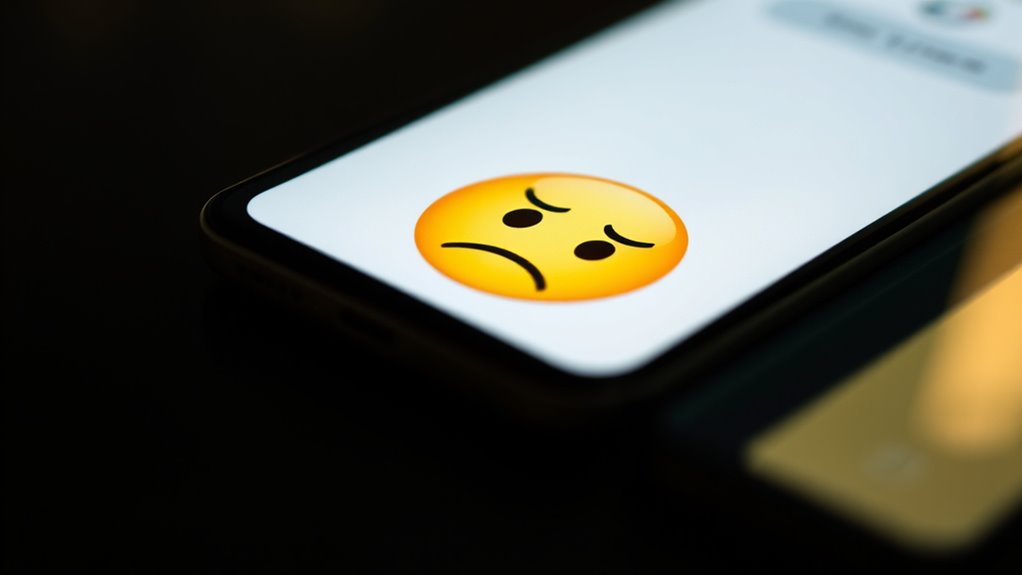
You should use the 😐 emoji when you want to express mild displeasure or disappointment without sounding harsh. It’s helpful in situations where you want to communicate your feelings subtly, like when something didn’t meet expectations. Just be mindful not to overuse it, as it can come across as passive-aggressive. Additionally, understanding emotional regulation can help you choose the most appropriate emoji to convey your feelings effectively.
When to Use the 😐 Emoji Appropriately
Knowing when to use the 😐 emoji appropriately can help you communicate subtle feelings without misunderstanding. Use it when you want to convey emotional nuance, like mild confusion or neutrality, without sounding upset. Be mindful of cultural variations, as some audiences might interpret it differently. For example, in casual chats, it can express indifference or a neutral reaction. However, avoid overusing it, which might make your message seem passive or dismissive. Consider these situations:
- When you want to show you’re unimpressed but not angry
- To indicate a neutral or contemplative mood
- When a straightforward response is needed without strong emotion
- Recognizing emotional attachments that can influence how you interpret or express feelings through emojis.
Express Mild Displeasure
The 😐 emoji can also be an effective way to express mild displeasure without sounding confrontational. As emoji evolution continues, this symbol helps you convey subtle dissatisfaction while maintaining proper digital etiquette. Use it when someone’s message is slightly off or disappointing but doesn’t warrant a strong reaction. It signals your feelings without escalating the situation. Recognizing emotional expression in digital communication can improve how you connect with others online.
Recognizing the Limitations of Emoji Communication
While emojis can add nuance and emotion to digital conversations, they also have significant limitations that can lead to misunderstandings. Emoji versatility varies greatly, and not everyone interprets symbols like the 😐 emoji the same way. Emotional ambiguity can cause confusion, as the same emoji might express indifference, annoyance, or neutrality depending on the context. You should be aware that relying solely on emojis may oversimplify complex feelings. Remember these points:
- Emojis don’t always convey the full depth of your emotions
- Different people may interpret the same emoji differently
- Cultural and contextual factors influence emoji meaning
- Attention to detail in emoji use can help mitigate miscommunication and clarify intent.
Recognizing these limitations helps you communicate more clearly and avoid unintended messages. Emojis are helpful but shouldn’t replace clear, direct conversation when clarity matters most.
Frequently Asked Questions
Can 😐 Be Used to Express Sarcasm or Dry Humor?
Yes, you can use the 😐 emoji to express sarcasm or dry humor, but it depends on your tone of voice and context clues. When your message’s tone is subtle or sarcastic, the emoji helps convey that nuance. Just guarantee the recipient understands your intent, as 😐 can also indicate neutrality or mild annoyance. Pay attention to the overall message and relationship to make sure your sarcasm comes across clearly.
How Does 😐 Differ in Meaning Across Different Cultures?
You might notice that 😐 has different meanings across cultures due to regional differences in interpretation. In some cultures, it signifies neutrality or indifference, while others see it as a sign of mild annoyance or discomfort. These cultural interpretations influence how you use or interpret the emoji in conversations. Being aware of these regional differences helps you communicate more effectively and avoid misunderstandings when interacting with people from diverse backgrounds.
Is 😐 Appropriate for Professional or Formal Communication?
Using the 😐 emoji isn’t appropriate for professional or formal communication. It can seem dismissive or neutral, which might undermine a professional tone. Instead, stick to clear, respectful language that maintains a formal context. If you want to express neutrality or seriousness, choose words carefully and avoid emojis that could be misunderstood. Maintaining a professional tone guarantees your message stays respectful and effective in formal settings.
Can 😐 Replace Words in Conveying Complex Emotions?
Think of the 😐 emoji as a paintbrush for your emotional palette. While it offers a quick visual shorthand, it can’t fully replace words in conveying complex emotions. You risk your message becoming a sketch with missing details, lacking emotional nuance. Use 😐 carefully—it’s useful for subtle feelings but often needs accompanying words to express the depth of your true sentiments clearly.
How Do Age Groups Interpret the 😐 Emoji Differently?
You’ll find that age groups perceive the 😐 emoji differently. Younger users often see it as a neutral or subtle expression of indifference or mild annoyance, reflecting their more casual emoji use. Older generations may interpret it as a sign of discomfort, dissatisfaction, or seriousness, showing their different approach to emoji understanding. This age-related emoji perception highlights how generational emoji understanding varies, shaping how you communicate emotions across different age groups.
Conclusion
Ultimately, understanding the 😐 emoji helps you navigate conversations like a seasoned explorer charting new territories. Its neutral face acts like a trusty compass, signaling indifference, mild annoyance, or contemplation. Just as a medieval scribe chose their words carefully, you should use this emoji thoughtfully to avoid misunderstandings. Remember, emojis are like a secret handshake—powerful but limited—so don’t rely solely on them to convey your true feelings.