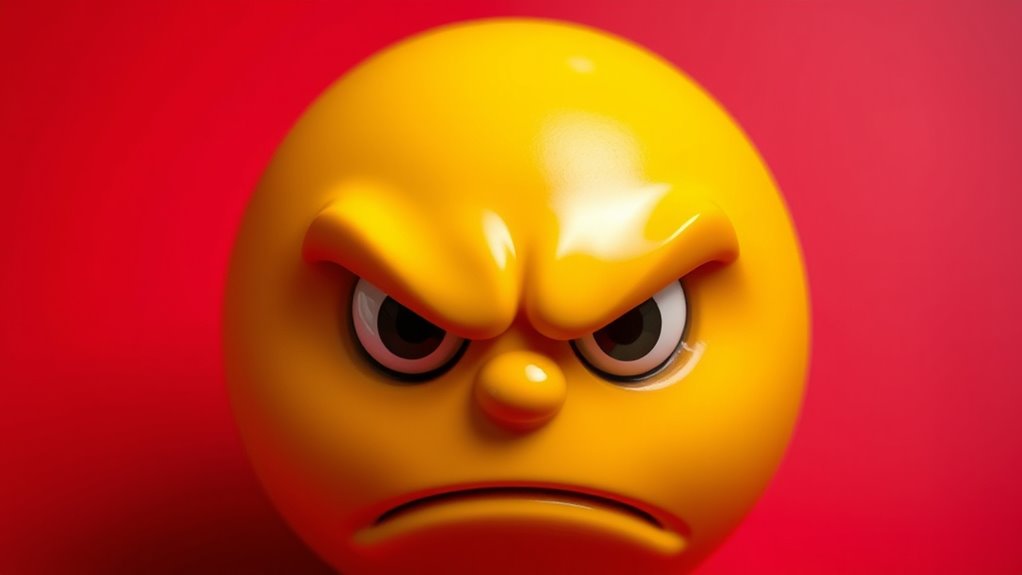

The 😠 emoji shows anger or frustration in texts, helping you express displeasure or annoyance quickly without words. It’s best used in casual chats with friends or family to add emotional clarity, and it can also reflect surprise or sarcasm depending on the context. Be careful not to overuse it, as it might seem rude. Want to learn more about how to use this emoji effectively? Keep going to understand its full emotional range and proper usage.
Key Takeaways
- The 😠 emoji signifies anger, frustration, or displeasure in digital communication.
- It is used to express annoyance or disapproval in casual conversations.
- The emoji can also convey surprise, sarcasm, or mock frustration depending on context.
- Combining it with other emojis enhances emotional nuance, such as intensity or specific feelings.
- Use sparingly to avoid misinterpretation and ensure it matches the tone of the message.
The Basic Meaning of the 😠 Emoji

Have you ever wondered what the 😠 emoji really means? Its basic message centers on anger or frustration. Over time, emoji evolution has shaped this symbol into a clear way to express displeasure without words. You can also customize emojis, but the 😠 emoji consistently conveys irritation or annoyance. It’s often used when you’re upset about something, whether it’s a mistake or an injustice. Unlike words, emojis like 😠 provide quick, visual cues that your mood is tense. This simple yet powerful icon captures strong emotions and helps you communicate feelings instantly. Knowing its basic meaning helps you use it appropriately in conversations, making your messages more expressive and authentic.
When to Use the 😠 Emoji in Conversations

Wondering when it’s appropriate to use the 😠 emoji in conversations? As emoji evolution influences how we express emotions, knowing the right timing matters. Use this emoji when you want to show genuine frustration or annoyance, but be mindful of emoji etiquette. Overusing the 😠 emoji can come across as aggressive or rude, so reserve it for moments when your feelings are clear and justified. It’s best to avoid using it in professional or sensitive chats, where tone can be misunderstood. Instead, reserve the 😠 emoji for casual conversations with friends or family when you want to convey displeasure without words. Being thoughtful about when you deploy this emoji helps maintain respectful communication while clearly expressing your feelings. Additionally, understanding digital literacy can help you navigate online expressions more effectively.
Differentiating Between Anger and Frustration
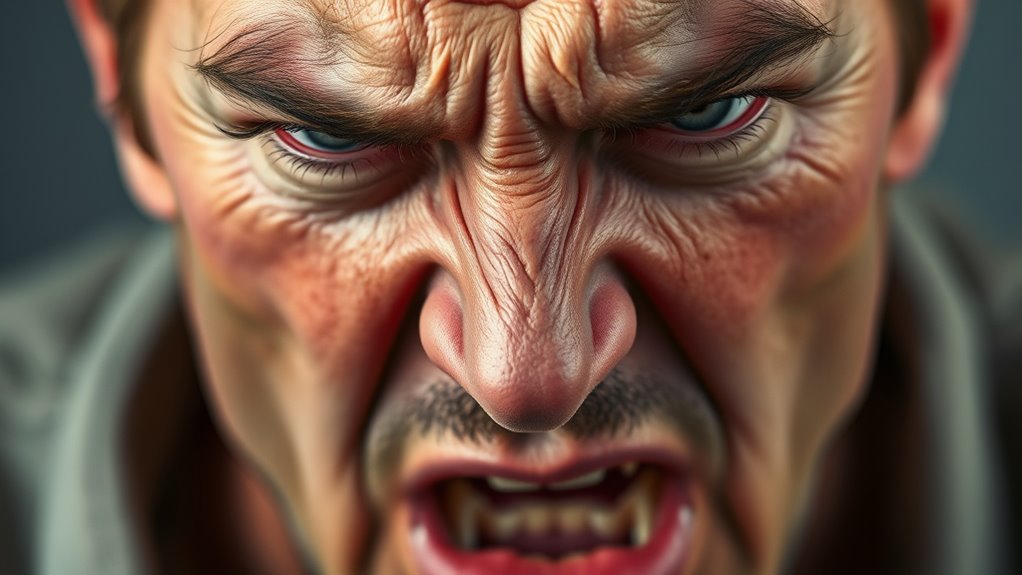
Understanding the difference between anger and frustration is key to accurately expressing your emotions with emojis. The 😠 emoji can convey both feelings, but tone interpretation and emotional nuance matter. A new sentence with shifting gears and the rest of the sentence. Here are ways to differentiate them:
- Intensity: Anger feels stronger and more outward, while frustration is often milder and more internalized.
- Context: Anger might be triggered by unfairness or injustice, whereas frustration often results from obstacles or unmet expectations.
- Facial Expression: Anger shows a scowl or clenched jaw; frustration may display a sigh or a facepalm.
- Tone interpretation: Use the emoji to match the emotional nuance—more intense for anger, more resigned for frustration.
Cultural Differences in Emoji Interpretation

Cultural backgrounds considerably influence how people interpret emojis like 😠. Over time, emoji evolution has shaped how different cultures perceive these symbols, leading to diverse cross cultural emoji meanings. For example, in some cultures, 😠 might signify genuine anger, while elsewhere, it could represent playful teasing or frustration. You might see an emoji as a sign of seriousness, but someone from a different background may interpret it as sarcasm or even humor. These differences highlight how cultural norms, communication styles, and social contexts impact emoji understanding. Recognizing these variations helps you avoid miscommunication and appreciate the rich diversity of emoji interpretation across cultures. For instance, local customs can significantly influence how emotional expressions are conveyed and received in digital communication. Ultimately, appreciating the cultural influences on emoji meaning can make your digital interactions more nuanced and respectful.

When you see the 😠 emoji in social media posts, it often signals anger or frustration. People use it to show discontent or annoyance with a situation or comment. Understanding this can help you interpret the true tone behind a post more accurately. Recognizing the emotional nuance of emoji use can improve your overall communication online.
Expressing Anger or Frustration
Have you ever noticed how the 😠 emoji often appears in social media posts when someone wants to show they’re upset or annoyed? Over time, the emoji evolution has made it a common way to express frustration in digital communication. When you see this emoji, it often signals a strong emotional response, like anger or irritation. Here are some ways people use it:
- To vent about unfair situations
- To react to frustrating news
- To highlight personal annoyances
- To emphasize dissatisfaction in conversations
- Its frequent use reflects the importance of predictive analytics in understanding emotional responses and user behavior online.
Using the 😠 emoji helps communicate feelings quickly and clearly, especially when words might fall short. It’s become a staple in social media, reflecting how digital communication adapts to human emotions and reactions.
Conveying Discontent or Annoyance
The 😠 emoji effectively conveys discontent or annoyance in social media posts by providing a visual cue that words alone might not fully express. Its role in digital communication has evolved alongside the emoji evolution, becoming a quick way to show irritation or dissatisfaction. When you use this emoji, you’re not just sharing feelings; you’re enhancing your message’s tone, making your discontent clear without lengthy explanations. Social media users often rely on the 😠 emoji to signal frustration with a situation, person, or event. This visual shorthand helps prevent misunderstandings in fast-paced conversations. Over time, the emoji’s meaning has expanded from simple anger to general annoyance, making it a versatile tool for expressing discontent efficiently and effectively in digital communication.
Combining the 😠 Emoji With Other Emojis

Combining the 😠 emoji with other emojis can considerably change the tone or meaning of your message. These emoji combinations add emotional nuance, helping you express complex feelings more clearly. Here are some popular ways to mix 😠:
Mixing 😠 with other emojis adds emotional depth, making your messages clearer and more expressive.
- 😠🔥 — Shows intense anger or frustration, like you’re burning with rage.
- 😠🤷♂ — Indicates annoyance combined with indifference or resignation.
- 😠💥 — Suggests a sudden outburst or explosive anger.
- 😠🤔 — Reflects irritation mixed with confusion or contemplation.
- Using emoji combinations strategically can enhance your communication, especially in digital conversations where tone may be hard to interpret.
Understanding these emoji combinations helps you communicate more effectively, capturing subtle emotional nuances that words alone might miss. When used thoughtfully, combining 😠 with other emojis enhances your messages, making your tone clearer and more expressive.
Common Mistakes When Using the 😠 Emoji

One common mistake when using the 😠 emoji is misinterpreting its intensity, which can lead to misunderstandings. People often overlook the emoji’s history, which shows it evolved from simple emoji design to convey mild annoyance or frustration. Without this context, you might think it signals extreme anger when it actually doesn’t. Additionally, poor emoji design can cause confusion, especially if the emoji appears more aggressive than intended. To avoid miscommunication, consider the tone of your message and how others might perceive the emoji. Understanding its origins and how it’s designed helps you use it accurately. Proper use guarantees your message reflects your true emotion without unintended offense or ambiguity. Being aware of the emoji’s background allows you to communicate more effectively and prevent misinterpretations in digital conversations.
| Aspect | Explanation |
|---|---|
| Emoji history | Evolution from mild annoyance to anger |
| Emoji design | Visual cues influence perception |
| Intensity level | Varies based on context and user intent |
| Misinterpretation | Often due to lack of context or design flaws |
| Communication | Clearer with awareness of emoji’s background |
How the 😠 Emoji Reflects Emotions Beyond Anger

While the 😠 emoji is often associated with anger, its emotional range extends far beyond just frustration. You can use it to convey different feelings through emoji symbolism, reflecting emotional nuance. Here are some ways it does so:
- Disapproval or annoyance, not anger, showing you’re irritated but not furious.
- Surprise or disbelief, indicating you’re taken aback by something upsetting.
- Determination or resolve, expressing that you’re ready to stand your ground.
- Sarcasm or mock frustration, hinting you’re joking or not genuinely upset.
The emoji’s versatility lets you communicate complex emotions, making your messages more nuanced. It’s a tool for expressing feelings that go beyond simple anger, adding depth and clarity to your digital conversations.
Examples of 😠 Emoji in Text Messages

You might see the 😠 emoji in text messages to express a range of emotions depending on the context. Its use reflects the emoji history of conveying feelings visually, evolving from simple symbols to complex expressions. For example, you could use 😠 when you’re frustrated with a delay or annoyed at a friend’s comment. It might appear in conversations about disagreements, disagreements, or even playful teasing. As part of emoji evolution, this emoji helps add nuance to digital communication, making your tone clearer. Sometimes, it’s a quick way to show that you’re upset without words. Whether in serious disputes or lighthearted banter, the 😠 emoji adds emotional depth, helping you communicate feelings more effectively in your texts. Emotional expression is a key aspect of effective digital communication, allowing nuanced connections even through small symbols.
Tips for Properly Conveying Emotions With Emojis
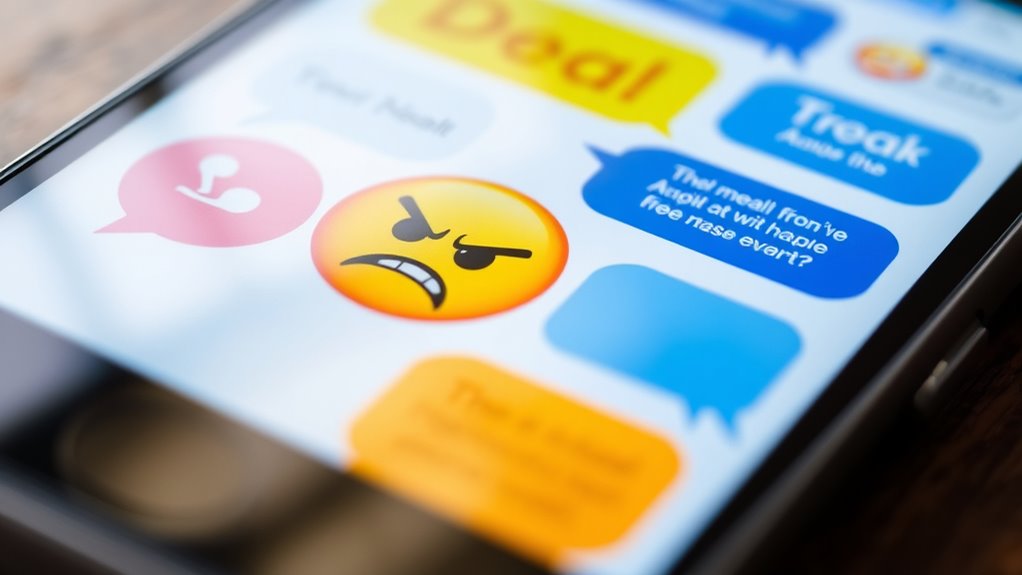
To effectively convey emotions with emojis, it’s important to contemplate the context and your intent. Emojis have evolved over time, reflecting changes in how we express feelings digitally. To master emoji etiquette, consider how your message might be received and choose symbols that match your tone. Here are some tips:
Effectively using emojis involves considering context, intent, and cultural nuances for clear digital communication.
- Use emojis sparingly to avoid miscommunication.
- Match your emojis with the message’s mood for clarity.
- Be aware of cultural differences in emoji interpretation.
- Stay updated on emoji evolution to understand new meanings.
- Recognize the importance of AI Bifurcation in understanding how digital communication influences societal perceptions and emotional expression.
Frequently Asked Questions
Can the 😠 Emoji Express Sarcasm or Irony?
Yes, you can use the 😠 emoji to express sarcasm or irony, but it often relies on tone shift and context clues. When combined with a joking or exaggerated message, it signals that you’re not genuinely angry. Pay attention to how your message is written—if the tone is playful or teasing, the emoji helps clarify irony. Always consider the overall context to make sure your sarcasm comes across clearly.
How Do Age Groups Perceive the 😠 Emoji Differently?
You’ll find that age groups perceive the 😠 emoji differently, like it’s a secret code. Younger folks often see it as playful or teasing, while older generations interpret it as genuine anger or frustration. This emotional interpretation varies because of cultural shifts and tech familiarity. So, your message might seem lighthearted to teens but serious to seniors—just remember, emojis can be like a mirror reflecting your audience’s feelings.
Is the 😠 Emoji Appropriate in Professional or Formal Communication?
You probably shouldn’t use the 😠 emoji in professional tone or formal contexts, as it can be seen as unprofessional or overly emotional. In work emails or official communication, sticking to clear language is best to guarantee respect and clarity. If you want to express frustration, do so politely and directly without emojis. This approach helps make sure your message remains appropriate and respectful in all professional situations.
Are There Any Regional Variations in How the 😠 Emoji Is Understood?
Did you know that over 60% of emoji users notice regional differences? Regional usage and cultural interpretations profoundly influence how the 😠 emoji is understood. In some areas, it shows genuine anger, while others see it as frustration or annoyance. These variations highlight that the same emoji can carry different emotional weight depending on where you are. Be mindful of regional nuances when using the 😠 emoji to communicate effectively.
How Does the 😠 Emoji Compare to Other Angry or Frustrated Emojis?
The 😠 emoji shows a high level of emotional intensity compared to other angry or frustrated emojis, like 😡 or 😤. Its facial expression, with furrowed brows and a frowning mouth, clearly conveys anger or annoyance. You’ll notice it often used when someone’s feelings are strongly hurt or irritated, making it more intense than milder emojis. It effectively communicates a powerful emotional state, emphasizing frustration or fury in your messages.
Conclusion
Think of the 😠 emoji as a fiery spark that illuminates your feelings. When used correctly, it helps you share your emotions clearly, avoiding misunderstandings. Just like a well-timed flare, it draws attention to your frustration or anger, but if misused, it can set off unintended sparks. So, handle this emoji with care, and let it be the guiding light that honestly reflects your mood, keeping your digital conversations genuine and clear.