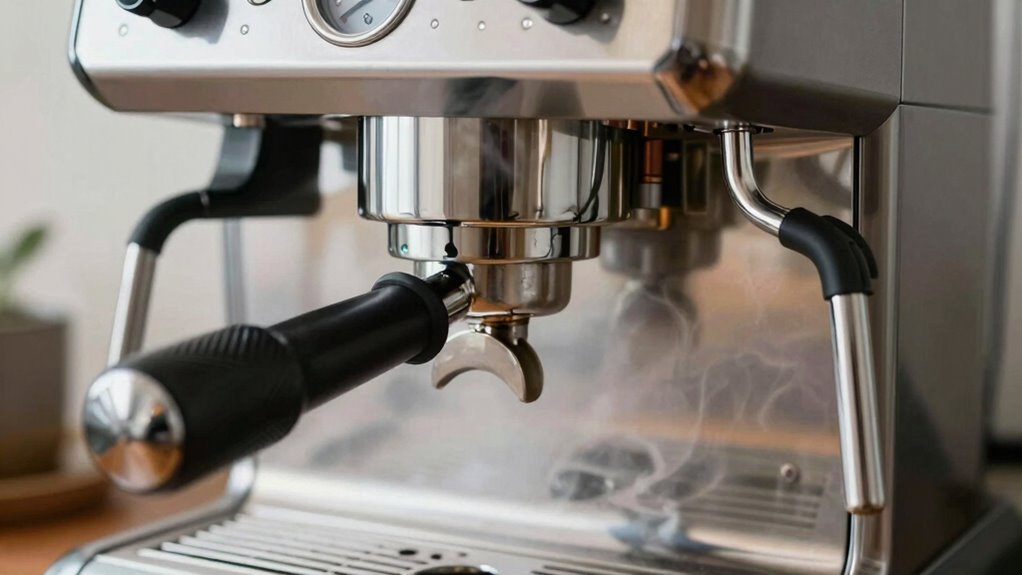

There are three main types of espresso machine boilers: single, dual, and heat exchange. Single boilers are simple and energy-efficient but can’t brew and steam at the same time. Dual boilers allow you to do both simultaneously for speed and consistency, but they cost more. Heat exchange boilers balance these features, letting you brew and steam almost at once, with better energy use. Want to know which one fits your needs? Keep exploring to find out more.

Get school and study supplies delivered free — and shop member deals
- Fast, free delivery on millions of items
- Access to Prime Big Deal Days deals on October 6–7
- Prime Video, Amazon Music and more included
Key Takeaways
- Single boilers heat water for brewing or steaming separately, saving energy but requiring wait times for switching functions.
- Dual boilers have separate chambers for brewing and steaming, allowing simultaneous operation and consistent temperatures.
- Heat exchange boilers combine features of both, enabling near-simultaneous brewing and steaming with better energy efficiency.
- Your choice depends on how often you make milk-based drinks, budget, and need for speed and consistency.
- Understanding boiler types helps select the best machine for casual use, high-volume, or professional coffee-making.

Have you ever wondered what makes a great espresso? The answer often lies in the machine’s boiler type. Your choice impacts not just the quality of your brew but also how efficiently your machine operates. Different boiler types influence how easily you can do milk frothing and how much energy you consume during use. Understanding these differences helps you pick a machine that suits your needs, whether you’re a casual coffee drinker or a dedicated barista.
One common type is the single boiler. It’s simple, cost-effective, and easy to maintain. However, since it only heats water for brewing or steaming separately, you can’t do both at the same time. This means waiting for the boiler to heat up again if you want to switch from brewing to milk frothing. While this might slow you down, single boilers tend to be more energy-efficient because they only heat when needed. If you’re concerned about electricity usage or just want a straightforward machine, this could be a good fit.
Single boilers are simple, affordable, and energy-efficient but can’t brew and steam simultaneously.
Dual boiler machines, on the other hand, provide separate boilers for brewing and steaming. This setup allows you to brew espresso and froth milk simultaneously, saving you time and making the process smoother. The dedicated steaming boiler heats milk more consistently and to higher temperatures, resulting in better milk frothing. Since both boilers operate independently, the machine can maintain ideal temperature for each function, which leads to more consistent results. However, dual boiler systems are typically more expensive and consume more energy because they keep two boilers heated at once, even when not in use. If you value speed and precision in milk frothing, and don’t mind the higher energy bill, dual boilers are worth considering.
Some machines use heat exchange boilers, which combine the benefits of both systems. These boilers have a single boiler with a separate channel for steam, allowing you to brew and steam almost simultaneously. They are more energy-efficient than dual boilers and can deliver excellent milk frothing quality. This setup is a good compromise if you want faster operation without the higher energy costs of dual boiler machines.
In essence, your choice of boiler type influences how efficiently your espresso machine runs and how easily you can produce milk frothing. Think about how often you make milk-based drinks and your budget. A single boiler offers simplicity and energy savings, while dual boilers or heat exchange systems give you faster, more consistent results but use more power. Knowing these differences helps you make an informed decision, ensuring your mornings start with delicious espresso every time.
espresso machine with dual boilers
As an affiliate, we earn on qualifying purchases.
As an affiliate, we earn on qualifying purchases.
Frequently Asked Questions
How Often Should I Descale My Espresso Machine Boiler?
You should descale your espresso machine boiler every 1 to 3 months, depending on your water quality. Regular descaling prevents mineral buildup, which can affect performance and taste. If you notice slower heating or a decline in espresso quality, it’s time to descale sooner. Using filtered water can extend the descaling frequency. Consistent maintenance guarantees your machine functions smoothly and prolongs its lifespan.
Are There Safety Concerns With Pressurized Boiler Systems?
Yes, there are safety concerns with pressurized boiler systems. You should prioritize pressure safety by regularly checking that your espresso machine adheres to boiler regulation standards. Over-pressurization can cause leaks or even explosions, so make certain the pressure relief valve functions correctly. Always follow manufacturer instructions, and perform routine maintenance to prevent accidents. Staying vigilant about pressure safety helps keep you safe and your machine operating smoothly.
Can Boiler Type Affect the Flavor of Coffee?
You might worry that boiler type impacts your coffee’s flavor, but it actually plays a subtle role. Different boilers influence water temperature stability, which affects coffee extraction and overall taste. For example, a well-designed boiler ensures consistent heating, enhancing flavor clarity. Plus, selecting the right boiler type can extend boiler longevity, meaning your machine stays reliable longer and keeps delivering great-tasting coffee with each brew.
What Maintenance Is Required for Different Boiler Types?
You need to regularly descale and clean your boiler to maintain water quality and extend its lifespan, especially if you use hard water. For different boiler types, follow manufacturer instructions for descaling, flushing, and inspecting seals. Keep an eye on mineral buildup, and replace parts as needed to prevent corrosion. Proper maintenance guarantees your boiler runs efficiently, preserves coffee flavor, and prolongs its durability over time.
Are Certain Boilers More Energy-Efficient Than Others?
Yes, some boilers are more energy-efficient than others. You’ll find that boilers made with better insulation and energy-conserving materials reduce energy consumption considerably. For example, boilers with stainless steel or copper tend to retain heat better, lowering energy use. By choosing a boiler with high-quality materials and efficient design, you can save on electricity and enjoy consistent performance, making your espresso experience both cost-effective and environmentally friendly.
As an affiliate, we earn on qualifying purchases.
Conclusion
Understanding the different boiler types helps you choose the right espresso machine for your needs, ensuring better coffee and smoother operation. While some might think that more advanced boiler systems are overly complicated or expensive, they actually offer superior temperature stability and energy efficiency, ultimately enhancing your brewing experience. By investing in the right boiler type, you’ll enjoy consistently great espresso shots and a more satisfying coffee journey. So, don’t shy away from exploring these options—your perfect cup awaits.
As an affiliate, we earn on qualifying purchases.
professional espresso machine for home use
As an affiliate, we earn on qualifying purchases.
As an affiliate, we earn on qualifying purchases.
Halloween Picks
halloween
As an affiliate, we earn on qualifying purchases.