
TL;DR

Prime made for students and young adults
- Fast, free delivery for dorm and study essentials
- Prime Video and Amazon Music included
- Member-only deals
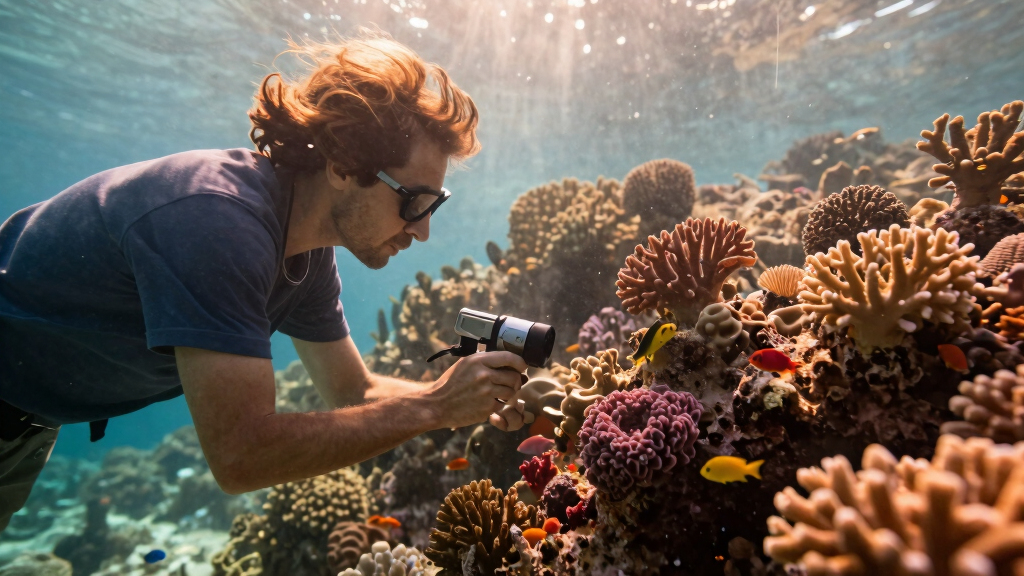
A coral reef in West Africa, long presumed dead, has been rediscovered as a thriving ecosystem. This unexpected find challenges prior beliefs about coral decline and offers new hope for marine conservation.
Scientists have confirmed the discovery of a thriving coral reef in West Africa, long presumed to be extinct. This finding challenges previous assessments of coral health in the region and could influence future conservation efforts.
The discovery was made during a recent marine survey conducted by researchers from the Marine Conservation Institute, who identified a vibrant coral ecosystem off the coast of Senegal. The reef appears to be in excellent health, with abundant coral cover and diverse marine life, contradicting earlier reports suggesting widespread coral bleaching and death in the area.
According to Dr. Amina Diop, lead marine biologist involved in the survey, “This reef’s existence was unexpected given the prior assumptions about regional coral decline. Its health indicates resilience and potential for recovery if protected.” The reef’s location and condition have been documented through underwater photography, video footage, and scientific sampling.
Implications for Marine Conservation and Regional Ecosystems
This discovery is significant because it challenges the prevailing narrative that coral reefs in West Africa are largely dead or severely degraded. The presence of a thriving reef suggests that some ecosystems may be more resilient than previously believed, highlighting the importance of targeted conservation efforts. It also opens new avenues for marine research, ecotourism, and local economies dependent on healthy marine environments.
Environmental experts emphasize that protecting this reef could serve as a model for restoring other degraded coral ecosystems in the region. The finding underscores the need for continuous monitoring and the implementation of marine protected areas to prevent further damage from climate change, overfishing, and pollution.
Products Worth Considering

Arlo Essential Wireless Security Camera 2K (3rd Gen), 3-Camera Set with Yard Sign

Arlo Pro Wireless Security Camera, 2K HDR, 6th Generation, 4-Camera System

Hisense E6SR Series 55-Inch 4K UHD Hi-QLED Roku Smart TV
As an affiliate, we earn on qualifying purchases.
Historical Decline and Recent Marine Surveys in West Africa
Coral reefs in West Africa have faced significant threats over the past decades, including rising sea temperatures, ocean acidification, overfishing, and pollution. Prior assessments, based on satellite data and limited underwater surveys, indicated widespread coral bleaching and mortality, leading to the belief that many reefs had been lost.
Recent marine surveys, however, have begun revealing more complex pictures. In 2024, a small number of reports hinted at the survival of some coral patches, but these findings were not widely confirmed until the recent comprehensive survey conducted in early 2026. The new discovery confirms that some coral ecosystems have persisted despite adverse conditions, offering hope for regional recovery.
“Finding a thriving coral reef in such a degraded region redefines what is possible for marine ecosystems under threat.”
— Marine Conservation Institute spokesperson
Extent and Long-Term Stability of the Recovered Reef
It is not yet clear how extensive the reef is beyond the surveyed area or whether it can sustain its health long-term amid ongoing climate pressures. Further studies are needed to assess its resilience and potential threats.
Planned Monitoring and Conservation Measures
Researchers plan to conduct detailed mapping and ongoing monitoring of the reef over the coming months. Conservation groups are advocating for the establishment of marine protected areas to safeguard this ecosystem and promote regional reef recovery.
Key Questions
How was the reef previously believed to be dead?
Previous assessments based on satellite data and limited underwater surveys indicated widespread coral bleaching and mortality, leading scientists to conclude the reef was no longer viable.
What makes this discovery important for marine science?
It challenges assumptions about coral resilience, suggesting that some ecosystems can recover or survive despite adverse conditions, informing future conservation strategies.
Are there immediate threats to this newly discovered reef?
While current health appears good, ongoing threats such as climate change, overfishing, and pollution could impact it. Continued monitoring and protection are essential.
Could this lead to ecotourism development?
Potentially, if the reef’s health is maintained, it could attract ecotourism, which may support local economies and conservation funding.
What are the next steps for scientists and policymakers?
Further research to assess the reef’s extent and resilience, along with efforts to establish protective measures, are planned to ensure its long-term survival.
Source: hn