
Heart rate zones are categories that show how hard you’re working during exercise, helping you meet your fitness goals safely and effectively. To use them, first calculate your maximum heart rate, then determine your target zones based on percentages. Each zone offers different benefits, like burning fat or building endurance. Monitoring your heart rate guarantees you’re training at the right intensity. Keep exploring to learn how to track your zones and personalize your workouts for best results.
Key Takeaways
- Heart rate zones categorize exercise intensity, helping tailor workouts to specific fitness goals like fat-burning or endurance.
- Calculate your maximum heart rate using age-based formulas, then determine zone boundaries as percentages of that number.
- The five zones range from warm-up and recovery to maximum effort, each offering unique cardiovascular and performance benefits.
- Use a heart rate monitor to track your real-time effort and stay within targeted zones during workouts.
- Incorporate different zones into your routine—steady-state, intervals, cooldown—to optimize results and prevent overtraining.
Fitbit Inspire 3 Health &-Fitness-Tracker with Stress Management, Workout Intensity, Sleep Tracking, 24/7 Heart Rate and more, Midnight Zen/Black One Size (S & L Bands Included)
Inspire 3 is the tracker that helps you find your energy, do what you love and feel your...
As an affiliate, we earn on qualifying purchases.
What Are Heart Rate Zones and Why Are They Important?
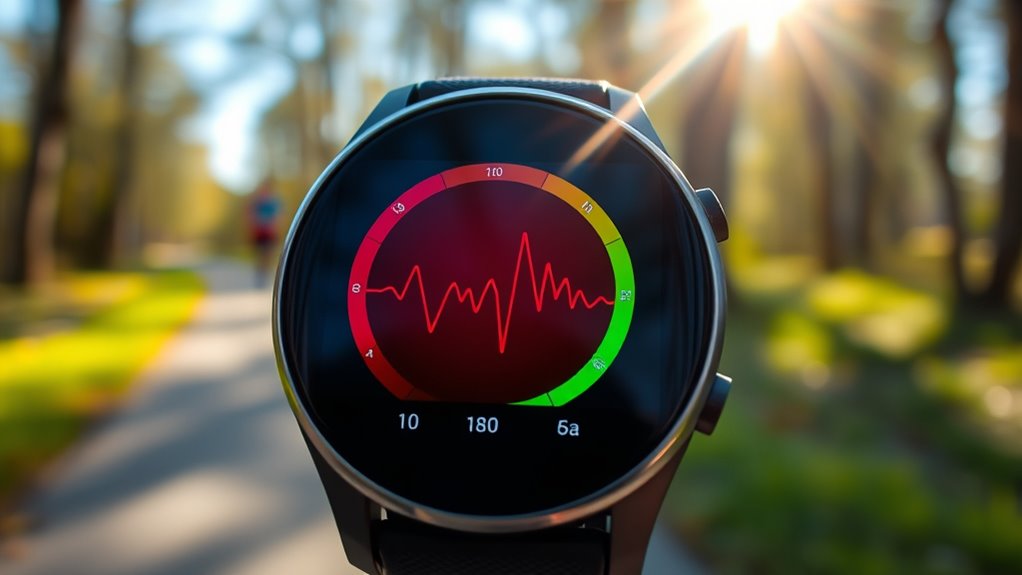
Understanding your heart rate zones is essential because they help you optimize your workouts for specific goals. When you target different zones, you directly influence your cardiovascular health and overall fitness. Heart rate zones divide exercise intensity into categories, such as fat-burning, aerobic, and anaerobic zones, each offering unique benefits. By knowing which zone you’re in, you can tailor your workouts to improve endurance, burn calories more efficiently, or boost your speed. This exercise personalization guarantees you’re working at the right level for your objectives, reducing the risk of overtraining or undertraining. Ultimately, understanding your heart rate zones empowers you to make smarter decisions during workouts, leading to better results and a healthier heart.

Fitness Tracker with 24/7 Heart Rate Blood Oxygen Sleep Monitor,Activity Tracker with 1.1" AMOLED Touch Color Screen, Multiple Sport Modes Step Counter,IP68 Waterproof for Women Men (Dark Black)
【24H Health Monitoring】Fitness Tracker With the function of monitoring heart rate and blood oxygen, you can track your...
As an affiliate, we earn on qualifying purchases.
How to Calculate Your Maximum Heart Rate
To determine your maximum heart rate, you need to use a simple calculation based on your age. Heart rate formulas, particularly age-based calculations, provide an easy way to estimate this number. The most common formula is 220 minus your age, which gives your approximate maximum heart rate. This method is straightforward and widely used for initial assessments. Keep in mind, individual differences can vary, so this is a general guideline. Some alternative formulas, like 206.8 minus (0.67 times your age), can offer slightly more personalized estimates. Knowing your maximum heart rate helps you set appropriate training zones. Remember, these calculations are estimates, so listen to your body and adjust your effort accordingly during workouts.

Fitbit Charge 6 Fitness Tracker with Google apps, Heart Rate on Exercise Equipment, 6-Months Premium Membership Included, GPS, Health Tools and More, Porcelain/Silver, One Size (S & L Bands Included)
Fitbit Charge 6 tracks key metrics from calories and Active Zone Minutes to Daily Readiness and sleep[4]; move...
As an affiliate, we earn on qualifying purchases.
The Five Heart Rate Zones and Their Benefits

Knowing which heart rate zone you’re in can considerably boost your workout effectiveness and safety. Each of the five zones offers unique benefits for your fitness journey. Monitoring your heart rate can also be facilitated through portable energy solutions, allowing for real-time tracking during outdoor activities. 1. Zone 1 (50-60% max HR): Warm-up and recovery, improve basic cardiovascular endurance. 2. Zone 2 (60-70% max HR): Enhances fat burning, builds a solid aerobic base, and boosts cardiovascular endurance. 3. Zone 3 (70-80% max HR): Improves overall fitness, balances training intensity, and increases stamina. 4. Zone 4 (80-90% max HR): Develops speed and power, perfect for high-intensity training. 5. Zone 5 (90-100% max HR): Max effort, improves maximum performance but should be used sparingly. Understanding these zones helps optimize training for endurance and performance gains.
Fitbit Charge 6 Fitness Tracker with Google apps, Heart Rate on Exercise Equipment, 6-Months Premium Membership Included, GPS, Health Tools and More, Obsidian/Black, One Size (S & L Bands Included)
Find your way seamlessly during runs or rides with turn-by-turn directions from Google Maps on Fitbit Charge 6[7,...
As an affiliate, we earn on qualifying purchases.
How to Find Your Personal Heart Rate Zone Boundaries

Finding your personal heart rate zone boundaries is essential for tailoring workouts that match your fitness level and goals. To do this, start with a fitness assessment or use heart rate charts to estimate your maximum heart rate. The most common method is subtracting your age from 220, giving you an estimated maximum heart rate. From there, you can determine your target zones by calculating percentages of that number—like 50-60% for moderate activity. For more accurate results, consider performing a fitness assessment under professional supervision, which can help identify your precise boundaries. Tracking your heart rate during exercise with a monitor ensures you stay within your zones. This approach makes your training more effective and personalized, helping you progress safely toward your fitness goals. Incorporating accurate heart rate measurements can enhance your ability to stay within the correct zones and optimize your workout outcomes.
Applying Heart Rate Zones to Your Workout Routine

Once you’ve identified your heart rate zone boundaries, integrating them into your workout routine becomes straightforward. To maximize benefits, tailor your sessions to target specific zones. Here are some tips:
- Use higher zones for interval training to boost endurance and calorie burn.
- Maintain moderate zones for steady-state cardio, enhancing cardiovascular health.
- Incorporate cooldown strategies, gradually lowering your heart rate to prevent injury.
- Pay attention to nutrition timing, fueling properly before high-intensity workouts and rehydrating afterward.
- Monitoring your heart rate can also support effective juice cleansing by ensuring you stay within safe activity levels during detox routines.
Tips for Monitoring and Maintaining Your Heart Rate During Exercise
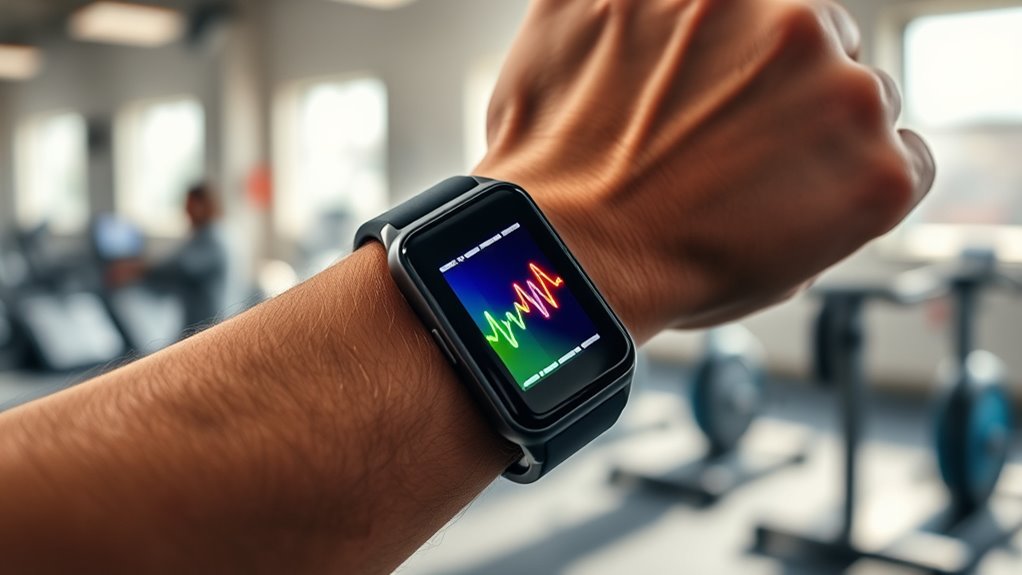
Using a heart rate monitor makes it easier to stay within your target zone, so you get the most out of your workout. Keep an eye on your readings and be ready to adjust your pace if your heart rate drifts too high or too low. Properly managing your exercise intensity helps you improve fitness safely and effectively. Incorporating accurate timing can further enhance your performance and ensure you’re training effectively.
Using Heart Rate Monitors
Heart rate monitors are valuable tools that help you stay within your target zones, but their effectiveness depends on proper use. To get the most from your fitness technology, follow these tips:
- Calibrate your device regularly to ensure accuracy.
- Wear the monitor snugly, but comfortably, to prevent slipping.
- Sync your heart rate monitor with fitness apps for real-time feedback.
- Check the battery life before workouts to avoid interruptions.
- Proper maintenance of your device can help ensure consistent and accurate readings over time.
Using heart rate monitors properly allows you to track your effort precisely, making your workouts more efficient. Keep your device clean and updated, and always start with a warm-up to get accurate readings. By following these simple steps, you’ll optimize your training and reach your fitness goals faster.
Adjusting Exercise Intensity
To effectively adjust your exercise intensity, you need to actively monitor your heart rate throughout your workout. This allows you to stay within your target heart rate zone, ensuring ideal effort and safety. Incorporate interval training by alternating between higher and lower intensity periods, which helps with workout customization and keeps your routine engaging. Keep a close eye on your heart rate monitor during these changes to make quick adjustments, like slowing down or speeding up, to maintain consistency. Remember, maintaining proper intensity prevents overexertion and maximizes benefits. Regularly tracking your heart rate helps you identify when to push harder or ease up, making your workouts more effective and tailored to your fitness goals. Additionally, understanding heart rate zones can optimize your training by aligning effort levels with your specific health and fitness objectives.
Frequently Asked Questions
Can Heart Rate Zones Vary Daily or With Fitness Level Changes?
Yes, your heart rate zones can fluctuate daily due to factors like daily fluctuations in stress, hydration, and fatigue. As you progress in fitness, your zones may shift, reflecting improved efficiency and cardiovascular health. Tracking these changes helps you optimize workouts and avoid overtraining. Stay attentive to your body’s signals, and adjust your intensity accordingly to guarantee consistent progress and avoid injury.
How Do Medications Affect Heart Rate Zone Accuracy?
Medications can markedly alter your heart rate zones, making accuracy tricky. You might notice unexpected heart rate variability during workouts, hinting at medication interactions. These drugs can suppress or elevate your heart rate, misleading your zone calculations and masking true effort levels. Stay alert—consult your doctor if you see unusual fluctuations. Knowing how medications influence your heart rate helps you train safely and effectively, even when the numbers seem unpredictable.
Are Heart Rate Zones Suitable for All Age Groups?
Heart rate zones can be suitable for most age groups, but you should consider age appropriateness and fitness adaptations. As you age, your maximum heart rate decreases, so zones need adjusting for accurate training. Always listen to your body and consult a healthcare professional if you’re unsure. Using heart rate zones can help you train effectively, but tailoring them to your age guarantees safer, more effective workouts.
How Long Should I Stay in Each Heart Rate Zone per Session?
You should aim to stay in each heart rate zone for about 10 to 20 minutes per session, depending on your training goals. This training duration helps you maximize benefits without overexerting. Remember to switch zones gradually, allowing your body to adapt. Incorporate zone switching to target different fitness aspects, like endurance or speed, and listen to your body to avoid fatigue or injury.
What Are Signs of Overtraining Within Specific Heart Rate Zones?
Ever felt exhausted despite resting or noticed your heart rate feels erratic? These are signs of overtraining within specific heart rate zones. Overtraining symptoms include persistent fatigue, irritability, and decreased performance, often caused by heart rate imbalance. If your body doesn’t recover or your heart rate stays elevated longer than usual, it’s time to ease up. Listening to these signals helps prevent injury and promotes healthy progress.
Conclusion
By understanding and using your heart rate zones, you can get the most out of your workouts and avoid overdoing it. Tracking your heart rate helps you stay in the right zone and make every effort count. Remember, hitting the nail on the head means you’re on track, so keep monitoring and adjusting as needed. With consistent effort, you’ll see progress and stay safe—your fitness journey is truly a marathon, not a sprint.