
“Brainrot” online describes feeling mentally overwhelmed or obsessively fixated on digital content like shows, fandoms, or social media. It started as a way to joke about mental fatigue from binge-watching or scrolling too much. The term reflects how digital overload can drain your focus and increase mental exhaustion. If you keep exploring, you’ll discover ways to recognize signs of brainrot and how to restore a healthier balance for your mental well-being.
Key Takeaways
- “Brainrot” is internet slang describing mental fatigue or obsession caused by excessive content consumption.
- It originated from online communities and memes to humorously depict mental decay or overthinking.
- The term is often used to refer to obsession with fandoms, shows, or celebrities, leading to distraction and mental exhaustion.
- It reflects digital overload, where continuous scrolling and notifications impair focus and real-life interactions.
- Managing “brainrot” involves setting digital boundaries, taking breaks, and practicing mindful content consumption.
Origins and Evolution of the Term

The term “brainrot” likely originated from online communities where users describe mental fatigue or obsession with certain topics as a kind of mental decay. Its history origins trace back to internet subcultures, particularly on forums and social media platforms, where people used it humorously or exaggeratedly. Over time, the linguistic evolution of “brainrot” transformed it from a simple metaphor into a popular slang term. Originally, it reflected feelings of being mentally drained or overwhelmed, often due to excessive engagement with media or ideas. The term’s spread was fueled by memes and online conversations, allowing it to gain widespread recognition. Today, “brainrot” continues to evolve, capturing the shared experience of mental exhaustion in digital spaces and shaping how people describe their cognitive states online. Online slang plays a crucial role in how youth communicate their mental and emotional states in digital environments.
Common Contexts Where “Brainrot” Is Used
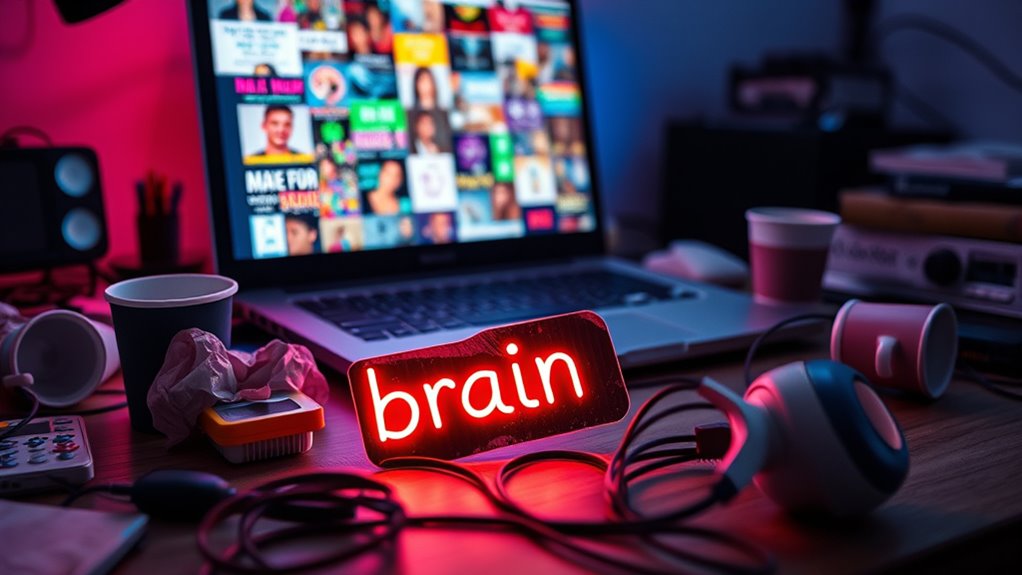
You’ll often see “brainrot” used when someone is obsessively following a favorite show, artist, or fandom. It can also describe feeling overwhelmed after binge-watching or consuming too much content at once. Sometimes, people use it playfully to show they’re jokingly obsessed or just having fun online. This term can also reflect the influence of Inspirational Quotes About Fatherhood, which often emphasize the importance of support and admiration in personal passions.
Obsessive Fan Behavior
Have you ever found yourself unable to stop thinking about a favorite celebrity, character, or fandom obsession? That’s a common example of obsessive fan behavior, often linked to intense fan devotion. When your thoughts are consumed by your favorite media, it can lead to online addiction, where you spend hours scrolling, obsessing, and engaging with related content. This behavior reflects how “brainrot” is used to describe those moments when your focus becomes fixated on something, making it hard to concentrate on anything else. It’s not just harmless enthusiasm; it’s an all-consuming tendency fueled by the desire to stay connected and up-to-date. While passion is healthy, obsessive fan behavior can sometimes spiral into a compulsive cycle that’s hard to break.
Overwhelmed by Content
Ever feel like your brain is overflowing with endless streams of content? That’s the effect of digital overload, where you can’t escape the constant flow of videos, memes, articles, and social media updates. This overwhelm often leads to content addiction, making it hard to step away or focus on anything else. You might binge-watch series late into the night or scroll endlessly without realizing how much time has passed. The more you consume, the more your mind feels overwhelmed and exhausted. “Brainrot” gets used here to describe that feeling of mental fatigue caused by too much online stimulation. It’s a sign that you’re drowning in content, and your brain needs a break from the relentless digital stream. Prolonged exposure to this overload can impact your focus and productivity, highlighting the importance of content moderation for mental well-being.
Playful Online Expression
Where do you see “brainrot” pop up most often online? Usually, it’s in playful contexts like memes, jokes, or fandom discussions where you’re jokingly overwhelmed by favorite characters or trends. It’s a way to express how your brainstorming habits can spiral into endless obsession, yet still feel lighthearted. People use “brainrot” to connect over shared passions without taking things too seriously. Sometimes, you might even see it as a reminder to take a digital detox—stepping back when your mind’s on overload. It’s a playful way to acknowledge how consuming online content can affect your mental space. Overall, “brainrot” becomes a humorous badge of honor for those immersed in their favorite online worlds. Interestingly, anime culture often contributes to this phenomenon, as fans become deeply engaged with characters and stories that fuel their “brainrot.”
The Humorous Side of “Brainrot

You’ve probably seen “brainrot” turn into endless meme references or silly internet ramblings. It’s funny how people jokingly blame their obsession with a meme or topic for their distracted, rambling thoughts. Sometimes, it’s all in good fun, showcasing the humorous side of getting “brainrot.” Interestingly, this phenomenon can be linked to endless entertainment ideas, which often keep users engaged and amused online.
Meme-Inspired Obsession
Have you noticed how some memes seem to take over your thoughts, making it hard to focus on anything else? That’s meme-inspired obsession at work. You find yourself replaying viral trends in your head, giggling at jokes long after you’ve seen them. This is all part of meme culture’s humor-driven side, where a funny image or phrase becomes a mental soundtrack. You might even start imagining scenarios or creating your own variations, feeding the cycle of brainrot. It’s a lighthearted obsession, often rooted in shared humor and community. While it might seem silly, it’s also a testament to how deeply memes embed themselves in your daily life, turning fleeting laughs into persistent, amusing mental visits. Interestingly, this phenomenon reflects how social media fosters community engagement, further cementing memes as a key part of online culture.
Endless Internet Rambling
Endless internet rambling often happens when brainrot takes hold, leading you down a rabbit hole of unrelated topics and memes. You start with a curiosity about neuroscience insights but quickly get sidetracked by a funny meme or obscure fact. This cognitive overload makes it hard to focus, yet you can’t stop clicking. To visualize this chaotic flow, consider the table below:
| Idea 1 | Idea 2 | Idea 3 |
|---|---|---|
| Neuroscience insights | Memes | Random facts |
| Cognitive overload | Unrelated topics | Humor |
| Rabbit hole | Brainrot | Internet chaos |
Your brain keeps jumping, enjoying the humor while struggling to stay on track—proof of brainrot’s humorous side. Recognizing content overload can help you understand why your focus becomes so fragmented during these internet binges.
Mental Fatigue and Overexposure to Content

Constant exposure to an overwhelming stream of content can quickly lead to mental fatigue, making it harder to focus, process information, or even feel motivated. As you scroll endlessly, you risk cognitive overload, where your brain struggles to handle too much at once. This overload can cause digital burnout, draining your mental energy and enthusiasm. To avoid this, pay attention to signs like confusion, irritability, or fatigue. Be mindful of your media intake and consider taking breaks. You might also:
- Limit notifications and screen time
- Prioritize quality content over quantity
- Schedule regular offline periods
- Recognize the importance of emotional support in maintaining mental well-being during stressful digital consumption.
Recognizing When “Brainrot” Becomes a Problem

Recognizing when “brainrot” becomes a problem requires paying attention to certain signs that your mental well-being is being affected. If you notice persistent feelings of fatigue, irritability, or difficulty concentrating, it may indicate you need a digital detox. Overconsumption of online content can drain your mental health, making it harder to focus or relax. You might also feel overwhelmed or detached from real-life interactions. These signs suggest that your brain is overwhelmed, and taking a break from screens can help restore balance. Prioritizing your mental health by setting boundaries and scheduling time away from digital devices can prevent “brainrot” from worsening. Being aware of these cues allows you to address the issue early and protect your overall well-being. Additionally, excessive screen time can contribute to feelings of burnout and reduce your ability to maximize your mental clarity, emphasizing the importance of mindful digital consumption.
How “Brainrot” Reflects Digital Obsession

Have you ever wondered how “brainrot” mirrors our growing obsession with digital media? It’s a reflection of how digital addiction fuels our immersion in online culture. When you spend hours scrolling, your mind becomes fixated on constant updates, memes, and notifications. This obsession is reinforced by:
- The endless stream of content that keeps you hooked
- The social validation from likes and comments
- The fear of missing out on trending topics
These elements deepen your engagement, making “brainrot” a sign of how deeply you’re embedded in this digital environment. It shows how online culture influences your habits, blurring the line between leisure and compulsive consumption. Your brain adapts, prioritizing digital stimuli over real-world interactions, perpetuating the cycle of obsession. Content overload can overwhelm your cognitive resources, making it harder to focus on other aspects of life.
Tips for Managing Content Consumption

Are you finding it hard to control your digital intake? A content detox can help reset your habits and reduce overwhelm. Start by setting specific time limits for social media and streaming platforms, ensuring you don’t spend hours mindlessly scrolling. Consider scheduling regular breaks to step away from screens and reconnect with offline activities. Creating a digital balance is key—prioritize meaningful content over endless consumption. Unsubscribe from channels or accounts that don’t add value and turn off notifications to minimize distractions. Establishing boundaries helps prevent brainrot and keeps your mental health intact. Remember, managing your content intake isn’t about completely abstaining but about being intentional with what you consume. Small, consistent changes can lead to healthier habits and a clearer digital mindset. Incorporating intentional content consumption such as engaging with high-quality or educational material can further enhance your mental well-being.
Frequently Asked Questions
Can “Brainrot” Be Linked to Real Mental Health Issues?
“Brainrot” can be linked to real mental health issues if it causes you to feel overwhelmed, anxious, or depressed. While it’s primarily online slang reflecting obsession or overexposure to certain content, the mental health implications depend on how it affects your well-being. As online slang evolves, it’s important to recognize when these terms mirror genuine struggles, so you can seek support if needed.
Is “Brainrot” a Term Used Worldwide or Only in Specific Regions?
Like a wildfire spreading across a forest, “brainrot” has become a popular term mainly in specific regions, especially among internet communities. You’ll notice cultural variations and regional slang influence its usage, so it’s not quite a universal phrase. While people worldwide might understand it in certain contexts, it’s more common in English-speaking countries and online spaces where regional slang thrives. Keep an eye out for where and how it’s used!
How Does “Brainrot” Affect Productivity and Daily Life?
Brainrot can negatively impact your productivity and daily life by causing digital distraction and focus impairment. When you spend too much time mindlessly scrolling or engaging with low-quality content, your ability to concentrate on important tasks diminishes. This distraction makes it harder to stay organized, meet deadlines, and enjoy meaningful activities. To counteract brainrot, try setting boundaries for screen time and prioritizing quality over quantity in your digital consumption.
Are There Any Positive Aspects of Experiencing “Brainrot”?
Imagine your mind as a vibrant, swirling canvas, where “brainrot” sparks creative engagement, turning dull moments into colorful bursts of ideas. This process can foster social bonding, as you share your quirky thoughts and memes with friends, strengthening connections. Embracing “brainrot” allows your imagination to flourish, offering a playful escape that sparks joy and innovation, ultimately enriching your social life and inspiring new ways to think and create.
What Are the Best Ways to Detox From “Brainrot”?
To detox from “brainrot,” start with mindful meditation to clear your mind and regain focus. Limit your screen time by scheduling regular digital detox periods, where you disconnect from devices entirely. Engage in offline activities like reading, exercising, or hobbies to restore mental clarity. Prioritize sleep and stay hydrated. Consistently practicing these habits helps break the cycle of brainrot, leaving you refreshed, more present, and better equipped to handle digital overload.
Conclusion
Ultimately, “brainrot” is like a double-edged sword—it reflects both your passion and your fatigue. While diving into endless content can keep you entertained and connected, it’s easy to lose yourself in the digital whirlwind. Stay mindful of your limits, like a sailor steering clear of stormy waters, so your online obsession enriches rather than drains you. Balance is key—don’t let your curiosity turn into a permanent brain rot.