

If you see someone say they’re “down bad,” they’re usually feeling overwhelmed by romantic obsession or emotional vulnerability, often in a humorous or self-deprecating way. It means they’re probably overly fixated on a crush or struggling with heartbreak, sometimes showing clinginess or desperation online. Understanding this phrase helps you recognize when someone’s emotions are running high. Keep exploring to learn more about how this slang captures real feelings and social dynamics.
Key Takeaways
- “Down bad” describes someone feeling emotionally vulnerable, obsessed, or desperate, often related to romantic feelings.
- It originated from internet slang, highlighting moments of longing, heartbreak, or emotional struggle.
- The term is commonly used humorously on social media to show overfixation on a crush or relationship.
- Signs include obsessive social media activity, clinginess, or expressing regret and longing publicly.
- Similar terms include “heartbroken,” “crushing,” or “smitten,” emphasizing emotional vulnerability and obsession.
The Origins and Evolution of “Down Bad

The phrase “down bad” has its roots in internet slang and has evolved over time to describe moments when someone is intensely desperate or overly fixated on romantic interests. Its historical slang origins trace back to early African American Vernacular English, where similar expressions signified being in a tough or unfortunate situation. Over time, “down bad” gained cultural significance within online communities, especially on social media platforms like Twitter and TikTok, where it captures relatable feelings of longing or heartbreak. Its usage reflects a shared understanding of vulnerability and emotional struggle, often humorously acknowledging one’s own desperation. This phrase’s evolution highlights how slang can shift from niche origins to mainstream culture, emphasizing the collective experience of love, obsession, and disappointment in modern digital spaces. Additionally, the term’s popularity underscores how internet slang continues to influence everyday language and emotional expression.
Understanding the Contexts and Connotations

Understanding the contexts and connotations of “down bad” reveals how the phrase is often used to express vulnerability, obsession, or emotional desperation in a humorous or relatable way. When you or others say someone is “down bad,” it highlights moments of romantic frustration or emotional vulnerability, where feelings are intense but perhaps not reciprocated. It’s a way to acknowledge when someone’s actions or mindset show they’re struggling to move on or are overly fixated on a crush or relationship. The phrase captures a sense of self-awareness about emotional struggles, often with a humorous tone that makes vulnerability more approachable. Overall, “down bad” emphasizes those awkward, often embarrassing moments when feelings take over logic. Additionally, recognizing the emotional vulnerability behind the phrase can help foster understanding and empathy in social interactions.
How “Down Bad” Is Used in Modern Slang

Ever wonder how “down bad” fits into everyday slang? In modern romantic slang and internet culture, it’s used to describe someone who’s extremely infatuated or desperate for romantic attention. When you’re “down bad,” you might be constantly thinking about someone or going out of your way to impress them, even if it’s not reciprocated. This phrase has become popular on social media platforms like TikTok and Twitter, where users share moments of vulnerability or obsession. It captures a feeling of being overwhelmed by romantic longing, often with a humorous or self-deprecating tone. Overall, “down bad” has become a quick way to express that you’re intensely craving connection or affection, making it a common part of slang conversations online.
Recognizing When Someone Is “Down Bad
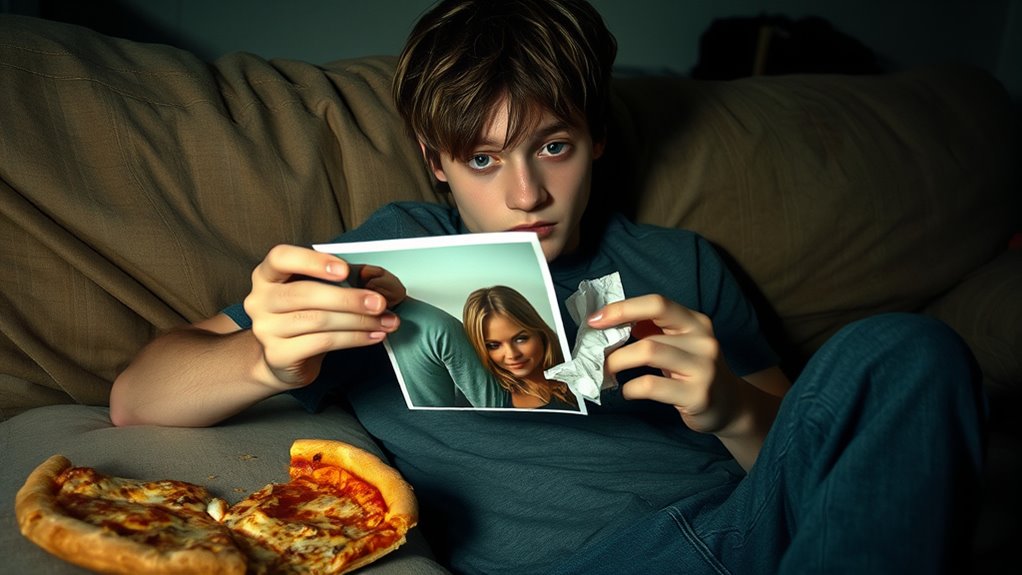
Spotting when someone is “down bad” involves paying attention to their behavior and social media posts. You might notice signs of romantic desperation or emotional vulnerability, which reveal they’re deeply invested in someone else. They may constantly seek reassurance or post overly sentimental messages. Their conversations could revolve around longing or regret, showing a lack of confidence. You might see them repeatedly messaging or trying to win someone over, despite clear signs of disinterest. Here are some indicators:
- Excessive posting about a crush or heartbreak
- Constantly checking or refreshed social media profiles
- Overly emotional or clingy messages
- Ignoring boundaries or signs of disinterest
- Publicly expressing feelings of longing or regret
These behaviors point to someone being “down bad,” driven by romantic desperation and emotional vulnerability.
Additionally, their overall emotional state may appear unstable, further indicating they’re “down bad” emotional vulnerability.
Alternatives and Related Expressions

When someone is “down bad,” there are often alternative ways to describe their emotional state or behavior that capture the same sense of desperation or vulnerability. You might hear romantic expressions like “heartbroken” or “clingy,” which show intense longing. Slang synonyms such as “crushing” or “smitten” also convey infatuation, sometimes with a hint of obsession. If you want to describe someone’s emotional turmoil, terms like “desperate” or “lost in love” fit well. These expressions highlight feelings of vulnerability and longing, much like “down bad,” but offer variety depending on the context. Whether you’re talking about unrequited love or emotional dependence, these alternatives help you communicate the same intense, often embarrassing, state of being hopelessly enamored. Additionally, understanding the emotional intensity behind these terms can help you better express the depth of someone’s feelings.
Frequently Asked Questions
Is “Down Bad” a Positive or Negative Expression?
“Down bad” is generally a negative expression, especially in relationship advice, as it describes someone acting desperate or overly needy for love or attention. It’s a slang evolution that highlights vulnerability, but usually with a connotation of poor decision-making or emotional struggle. When you hear this term, know it’s not a compliment, and it’s best to stay balanced rather than let emotions drive your actions.
How Did “Down Bad” Originate in Internet Culture?
You might wonder how “down bad” started in internet culture. It originates from internet slang, spreading through meme culture influence. Originally, it described someone intensely craving or desiring something, often romantic or emotional. The phrase gained popularity on platforms like Twitter and TikTok, where users humorously shared moments of vulnerability or obsession. Over time, “down bad” became a relatable way to acknowledge feeling desperate or overly invested in something or someone online.
Can “Down Bad” Be Used in Professional Settings?
You probably shouldn’t use “down bad” in professional settings, as 85% of employers value workplace appropriateness. In professional communication, it’s best to keep language formal and respectful. Using slang like “down bad” can undermine your credibility and hinder clear understanding. Focus on maintaining professionalism to build trust and make sure your message is taken seriously, especially when discussing work-related topics or communicating with colleagues and superiors.
What Are Common Signs Someone Is “Down Bad”?
When someone is “down bad,” you’ll notice signs like romantic desperation and emotional vulnerability. They might constantly think about a particular person, neglect other responsibilities, or act overly clingy. You’ll see them cling to hope, even when it’s unhealthy, and display intense longing or insecurity. Their behavior often reveals they’re emotionally vulnerable, willing to do almost anything for love, even if it means risking their well-being or dignity.
Are There Similar Slang Terms With the Same Meaning?
Like “down bad,” other romantic slang terms express deep emotional distress. You might hear “caught feelings,” “heart eyes,” or “losing it” to describe similar situations. These phrases evoke emotional expressions that show vulnerability and longing. Just as in the age of chivalry, today’s slang captures raw feelings, making it clear you’re overwhelmed by love or desire. Embrace these terms; they connect you to others sharing similar romantic struggles.
Conclusion
Now that you know what “down bad” means, you can spot it like a beacon in the fog of slang. Just like a lighthouse guides ships home, recognizing this phrase helps you understand someone’s feelings or struggles better. Whether it’s humorous or serious, “down bad” reveals a lot about vulnerability and desire. So next time you hear it, you’ll see it clearly, like sunlight piercing through clouds, illuminating the true meaning behind the words.