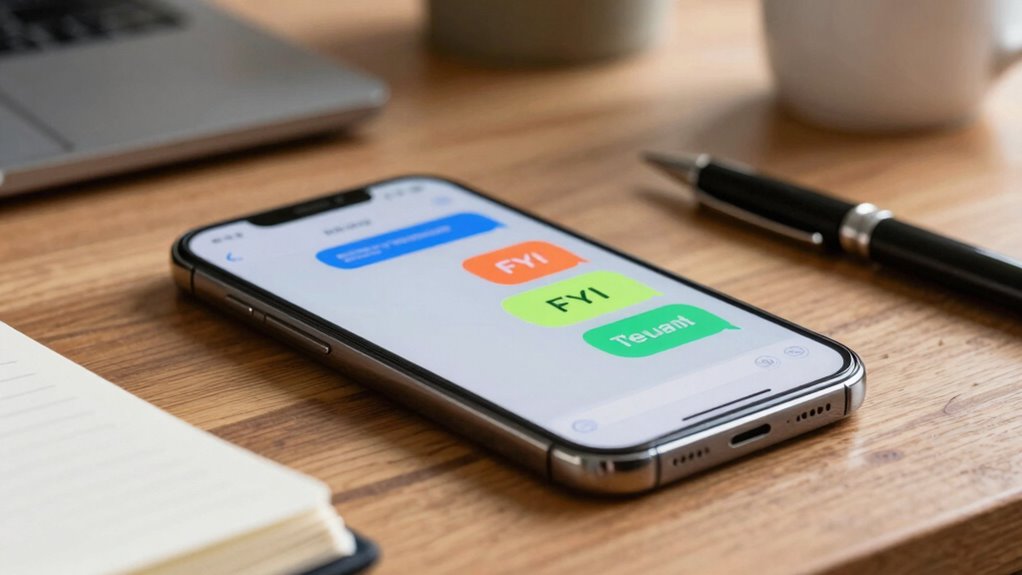

FYI means “For Your Information” and is commonly used in texts and emails to share details without expecting an immediate response. You can use it to pass along updates, news, or links quickly and efficiently. It helps keep messages clear and brief, especially in professional or casual conversations. Just be mindful of tone and context to avoid sounding dismissive. If you want to understand how to use FYI appropriately, keep going to learn more tips.
Key Takeaways
- FYI stands for “For Your Information,” used to share details without expecting a reply.
- It indicates that the message is informational and does not require immediate action.
- FYI is commonly used in text messages, emails, and digital communication to pass along updates.
- It helps keep conversations brief and to the point when sharing relevant data or news.
- The tone of FYI should be considered to ensure it sounds polite and appropriate in context.
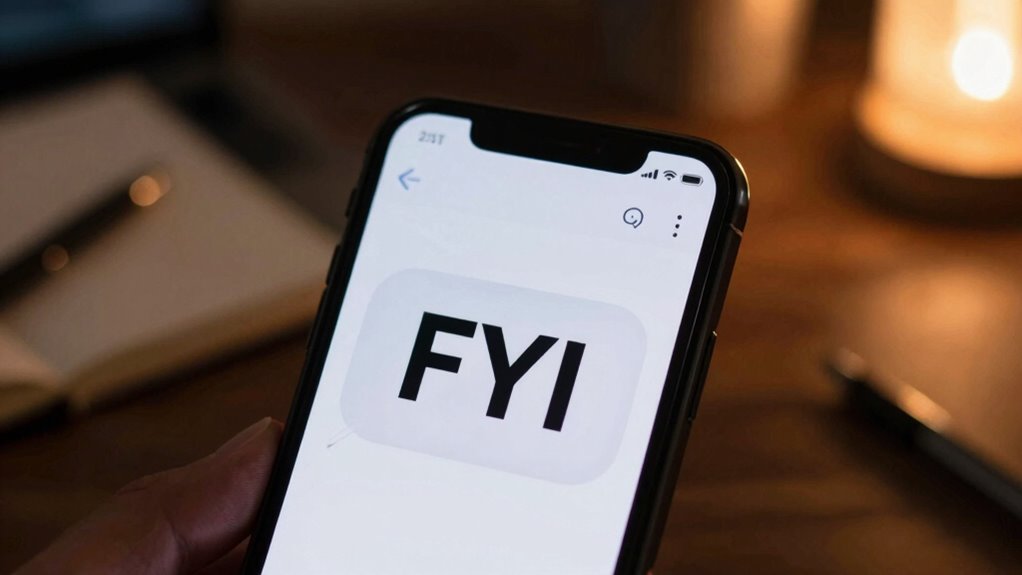
Have you ever wondered what “FYI” really means when you see it in a text message or email? It’s one of those common texting abbreviations that’s become part of everyday communication, but its exact purpose can sometimes be unclear. When you come across “FYI,” it’s usually a quick way to share information without expecting an immediate response. It’s like passing along a fact or update that the recipient might find useful or interesting. Understanding how and when to use “FYI” ties into good email etiquette and effective texting habits.
FYI is a quick way to share info without expecting a response, helping keep communication clear and efficient.
In digital conversations, abbreviations like “FYI” help save time and keep messages brief. They’re especially handy when you want to share information swiftly without elaborating too much. However, it’s important to use them appropriately. Overusing texting abbreviations can sometimes make your messages seem informal or careless, but when used correctly, they streamline communication and make your intent clear. Think of “FYI” as a way to alert someone that you’re providing relevant data or a heads-up, rather than asking a question or making a request.
From an email etiquette perspective, “FYI” can be helpful but should be used thoughtfully. When you include “FYI” in an email, it signals to the recipient that the content is informational and not necessarily requiring action. This helps manage expectations and prevents confusion, especially in professional settings. It’s a polite way to share updates, reports, or background info without cluttering the message with unnecessary detail. Just remember that in formal emails, it’s often better to spell things out more clearly, reserving abbreviations for less formal exchanges or quick texts.
Additionally, understanding the contrast ratio in projectors can help you make more informed decisions about image quality. In everyday texting, “FYI” acts as a shorthand to keep conversations efficient. It’s a common way to pass along facts or news without the need for long explanations. You might use it when sharing a link, a reminder, or a piece of news that doesn’t need much discussion. That said, it’s good to be cautious about the tone. Because “FYI” can sometimes come across as curt or dismissive if used improperly, you should consider your relationship with the recipient and the context. When used correctly, it’s a helpful, straightforward way to keep communication clear and concise. Moreover, being aware of the landscape of backyard transformation can inspire you to incorporate some of these enhancements into your own outdoor spaces for a more enjoyable environment. A well-placed cultural festival in your community can also foster a sense of connection and appreciation for local heritage.
Another useful aspect is recognizing that the essential oils mentioned in natural remedies, like those in aromatherapy, can be a subtle way to enhance your environment or well-being.

The Business Etiquette Bible: The Complete Guide to Professional Manners, Workplace Communication, Networking Mastery, and Email & Meeting Etiquette | From First Job to the Corner Office
As an affiliate, we earn on qualifying purchases.
As an affiliate, we earn on qualifying purchases.
Frequently Asked Questions
Is FYI Used More in Formal or Informal Communication?
You’ll find FYI more commonly used in informal communication, like texts or quick emails, where casual language is acceptable. It’s a handy way to share information briefly. In formal tone, people prefer more polished phrases like “for your information” or complete sentences. So, if you want to keep things professional, avoid FYI and opt for a more formal approach. It’s all about matching the tone to your audience.
Can FYI Be Used in Professional Emails?
Using FYI in professional emails is like adding a dash of spice—it can be appropriate if used correctly. You should prioritize email etiquette and guarantee abbreviation clarity, so your message remains professional and clear. Keep it concise and avoid overusing slang. When you want to share information informally or quickly, FYI can be fitting, but for formal communication, spell things out to maintain professionalism and clarity.
Are There Any Cultural Differences in Using FYI?
Yes, there are cultural differences in using FYI. In some regions, like North America, FYI is common and understood as a neutral, professional abbreviation, fitting into cultural communication styles. However, in other countries, it might come off as overly casual or even dismissive, especially if regional slang influences how informal language is perceived. Always consider your audience’s cultural norms to guarantee your message comes across appropriately.
How Does FYI Compare to Other Abbreviations Like BTW?
You might notice that FYI feels more formal than slang like BTW, which originated from abbreviations used in casual texting. FYI, meaning “for your information,” often shares the same abbreviation origins but leans toward professional or neutral communication. While FYI conveys a simple notice, BTW adds a conversational, friendly tone. Their evolution reflects the way language adapts, with abbreviations shaping how we share info quickly and casually.
When Is It Inappropriate to Use FYI in a Message?
You should avoid using FYI in casual conversations or social media etiquette when the message is sensitive, urgent, or requires a more personal touch. It can seem impersonal or dismissive if used inappropriately. Also, don’t overuse FYI, as it might come across as passive-aggressive or unprofessional. Instead, tailor your tone to the situation, ensuring your message remains respectful and clear, especially in informal or delicate exchanges.

The Technology Tail: A Digital Footprint Story (Communicate with Confidence)
As an affiliate, we earn on qualifying purchases.
As an affiliate, we earn on qualifying purchases.
Conclusion
So, now you know that FYI is a friendly, functional phrase meant for sharing facts fast. It’s a simple, subtle way to stay savvy and stay informed. Remember, using FYI can foster fluency and foster friendships, but be mindful not to overuse it, or it might lose its meaning. Keep communication clear, concise, and considerate—because good habits help you stay ahead, and that’s always advantageous!

4-Piece Message Board, Memo Board,Double-Sided Desktop Display Stand, Office Communication Tool (4)
VERSATILE DISPLAY: Double-sided acrylic stand perfect for organizing sticky notes and important messages in a clear, visible format
As an affiliate, we earn on qualifying purchases.
As an affiliate, we earn on qualifying purchases.

THUNDERBIRD MAIL USER GUIDE FOR BEGINNERS AND PROS 2026: Unlock Powerful Email Management with Advanced Organization, Calendar Tools, Security Features, Automation Workflows, and Expert Tips
As an affiliate, we earn on qualifying purchases.
As an affiliate, we earn on qualifying purchases.