
“Mid Af” is slang used online to describe something as unimpressive or mediocre, with “mid” meaning average and “af” emphasizing the phrase as “as f*.” It’s often used in social media comments** and messages to express disappointment or indifference about a product, performance, or experience. Understanding this slang helps you grasp digital conversations better, and if you keep exploring, you’ll learn even more about how internet language communicates social cues and attitudes.
Key Takeaways
- “Mid Af” is internet slang meaning something is mediocre or average, with “af” emphasizing the bluntness.
- “Mid” signifies mediocrity, while “af” stands for “as f*,” intensifying the expression.
- It is commonly used in social media to describe unimpressive experiences, products, or performances.
- The phrase conveys indifference, disappointment, or a casual critique in online conversations.
- Typically informal, “Mid Af” reflects digital language trends among younger online communities.
The Origin of “Mid Af
The phrase “mid af” originates from internet slang, particularly within social media and meme culture. Its history origins trace back to online communities where shorthand and abbreviations became common. Over time, the slang evolved as users sought quick ways to express opinions, especially on content quality. “Mid” initially meant mediocre or average, and “af” is an abbreviation for “as f*,” intensifying the meaning. This slang evolution reflects how digital spaces adapt language to convey attitudes efficiently. You might have seen “mid” used in comment sections, memes, or tweets to describe something that’s just okay. The term’s rise showcases how internet culture constantly shapes slang, turning simple words into shorthand for a shared, informal way of communicating among users. Additionally, the way such expressions influence online interactions is a reflection of how language adapts in digital environments**.
Breaking Down the Term

To understand what “mid af” really means, it helps to break down each part of the phrase. “Mid” is a shorthand for something that’s just okay or average, not good, but not terrible either. “Af,” short for “as f***,” adds emphasis, making the statement stronger and more blunt. This reflects how slang evolution influences language trends, giving common words new, intensified meanings. Here’s a quick picture:
| Part | Meaning |
|---|---|
| Mid | Average, neither good nor bad |
| Af | Emphasizes, intensifies the statement |
Understanding this breakdown shows how slang adapts over time, blending simplicity with expressive power, which is a hallmark of current language trends. Additionally, slang usage continues to evolve, shaping how communication is understood in different contexts.
Common Contexts and Usage

You’ll often see “Mid Af” used in social media posts and messages to quickly express that something is average or unimpressive. People use it to comment on everything from performances to experiences, making it a common slang term in digital conversations. Understanding these contexts helps you recognize when someone is casually sharing their honest opinion. This slang can also reflect a casual approach similar to how organizations adopt basic security measures rather than comprehensive AI security solutions.
Common Contexts and Usage
Have you ever wondered how “mid af” is used in everyday conversations? It’s common in informal chats to describe something as average or unimpressive. This phrase reflects slang evolution and mirrors current communication trends among youth. You might hear it when someone comments on a movie, meal, or event lacking excitement. Here’s a quick look at typical contexts:
| Context | Example |
|---|---|
| Reviewing food | “That burger was mid af.” |
| Describing movies | “The movie was mid af, honestly.” |
| Commenting on events | “The concert was mid af, not worth it.” |
| Responding to experiences | “My day was mid af.” |
| Comparing products | “This phone is mid af.” |
These usages show how “mid af” fits into daily slang, shaping modern communication trends. Also, understanding language evolution can help you stay updated with current expressions.
Social Media and Messaging Code
In social media and messaging platforms, “mid af” has become a quick way to express disappointment or indifference about content or experiences. This phrase showcases linguistic evolution, where slang adoption happens rapidly among users to convey sentiments efficiently. You’ll often see “mid af” in comment sections or chats when someone feels something is mediocre or underwhelming. Its popularity highlights how slang evolves through digital communication, allowing users to share feelings succinctly. The phrase’s brevity and relatability make it a common code among younger audiences, reinforcing community identity. As language continues to adapt online, expressions like “mid af” exemplify how slang adoption shapes social media interactions, making conversations more expressive and immediate. Additionally, understanding such slang can help in linguistic analysis of internet culture and communication trends.
How “Mid Af” Differs From Similar Phrases
Ever wonder how “Mid Af” stands out from similar slang phrases? It’s all about the slang evolution and how different expressions convey nuanced meanings. Unlike phrases like “meh” or “so-so,” which generally express indifference, “Mid Af” specifically describes something as average or mediocre, often with a slightly dismissive tone. When you compare phrases like “mid” or “mid-tier,” they focus on quality or ranking, but “Mid Af” emphasizes that something is just plain middle-of-the-road, with a hint of attitude. This phrase comparison helps you understand that “Mid Af” isn’t just about average; it’s about a specific vibe or judgment, making it a distinct part of modern slang that reflects cultural shifts.
Recognizing the Tone and Intent

To understand the true meaning behind “mid af,” you need to pay attention to the context and cues around it. Notice the emotional tone—whether it’s playful, sarcastic, or serious—to gauge intent. Also, consider if the language feels casual or formal, as that can change how you interpret the phrase. Recognizing the tone and intent can help clarify whether the phrase is used to express enthusiasm or humor.
Interpreting Contextual Cues
Understanding the tone and intent behind the phrase “mid af” requires paying close attention to contextual cues. As language evolves, slang adoption reflects cultural shifts and helps you interpret meaning more accurately. When someone uses “mid af,” consider the surrounding conversation or situation to gauge if they’re praising, criticizing, or joking. For example, in a casual chat about a movie, “mid af” likely signals disappointment, whereas in a different context, it might be playful teasing. Recognizing these cues helps you understand whether the speaker’s tone is serious, sarcastic, or lighthearted. Staying aware of linguistic evolution and how slang is adopted allows you to interpret the intent behind such phrases effectively, making your communication clearer and more nuanced. Being mindful of language evolution can also help you stay connected and avoid misunderstandings.
Identifying Emotional Tone
How can you tell what someone really means when they use a phrase like “mid af”? By analyzing their emotional expression and tone, you gain insight into their true intent. Tone analysis involves listening to subtleties like sarcasm, excitement, or frustration. Recognizing these cues helps you interpret whether they’re genuinely impressed or joking. Here’s a quick guide:
| Emotional Expression | Tone Analysis Example |
|---|---|
| Excitement | Bright, upbeat language |
| Frustration | Short, sharp responses |
| Sarcasm | Contradictory tone, exaggerated |
| Joy | Warm, enthusiastic language |
| Indifference | Monotonous, flat tone |
Pay attention to these cues to better understand the emotional tone behind casual phrases like “mid af.” Recognizing social cues can improve your interpretation of informal communication.
Differentiating Formal vs. Casual
Have you ever wondered how to tell if someone’s tone is formal or casual just by their words? Recognizing the difference comes down to paying attention to language style. Formal language uses complete sentences, proper grammar, and precise vocabulary, often avoiding slang or abbreviations. In contrast, a casual tone feels relaxed, friendly, and spontaneous, often including slang, contractions, and abbreviations like “mid af.” When someone uses formal language, they aim to convey professionalism or respect, while a casual tone indicates familiarity or informality. By noticing these cues, you can interpret the speaker’s intent and adjust your own communication accordingly. Understanding the distinction helps you navigate conversations smoothly, whether in professional settings or casual chats. Additionally, awareness of anime movies can sometimes influence the tone of casual conversations about entertainment preferences.
Examples of “Mid Af” in Social Media
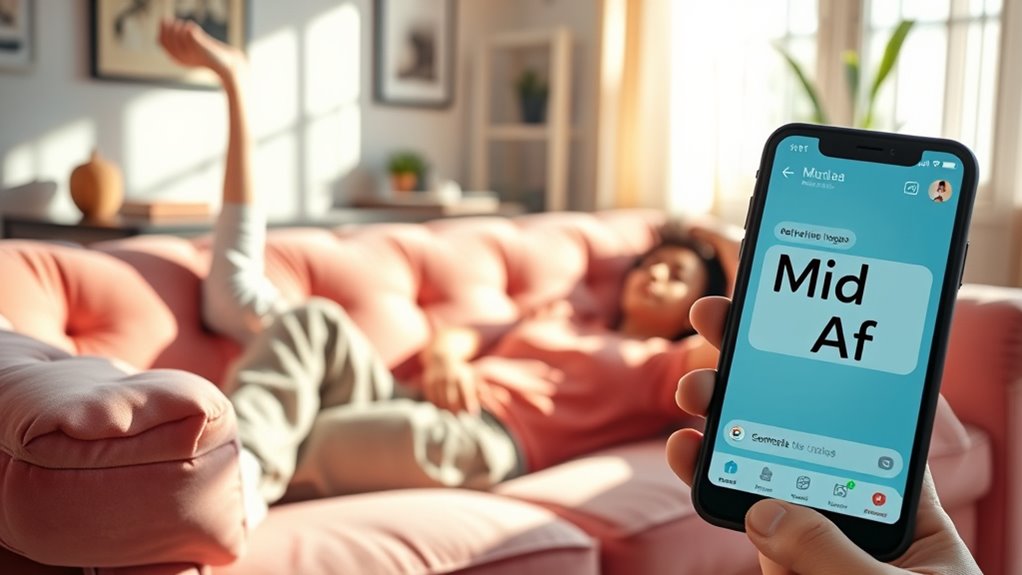
Ever notice “Mid Af” popping up in social media posts and wonder what it really means? As slang evolves, “Mid Af” has become a common way to express that something is just average or mediocre. You’ll see it in memes, comments, and tweets, often used to downplay a person’s experience or a situation. For example, someone might reply “Mid Af” to a picture of a decent but unimpressive meal, or comment “Mid Af” when reviewing a movie that’s neither good nor bad. These examples showcase how language trends shape online communication, making slang like “Mid Af” easy to incorporate and understand within social media culture. It’s a reflection of how slang adapts quickly to fit new contexts and user preferences. Understanding social media slang like “Mid Af” helps us better grasp online interactions and cultural shifts.
The Cultural Significance Behind the Slang

The way “Mid Af” has gained popularity reflects broader shifts in online culture and youth communication styles. This slang evolution highlights how young people use language as a form of cultural expression, shaping identity and social bonds. When you see “Mid Af,” it’s more than just a phrase—it’s part of a larger trend where slang helps convey attitude and authenticity. It also signals belonging within specific online communities. Understanding its cultural significance offers insight into how language adapts quickly in digital spaces. Additionally, such slang often mirrors relationships and social dynamics among youth, emphasizing the importance of communication styles in forming group identities.
Tips for Using or Interpreting “Mid Af”

Wondering how to use or interpret “Mid Af” correctly? Understanding slang evolution helps you stay updated with slang variations like this. “Mid Af” is often used to describe something that’s mediocre or just okay, so context is key. When using it, consider your audience—it’s mostly popular among younger generations and online communities. To avoid misunderstandings, don’t overuse it or apply it in too formal settings. Pay attention to tone and accompanying emojis, which can clarify your intention. Remember, slang evolves quickly, so staying aware of slang variations ensures you’re using “Mid Af” appropriately. Ultimately, it’s a casual, expressive way to comment on something’s average quality, but be mindful of the context to communicate clearly. Understanding slang evolution helps you better grasp how expressions like “Mid Af” develop and spread.
Frequently Asked Questions
Is “Mid Af” Considered Offensive or Inappropriate?
“Mid af” is generally considered casual slang rather than offensive language. It’s used to describe something that’s just okay or average, often in a humorous or exaggerated way. While it’s not offensive, some might find it too informal or dismissive depending on the context. If you’re unsure, it’s best to use it with friends who understand casual slang, but avoid it in formal or sensitive situations.
Can “Mid Af” Be Used in Formal Settings?
You shouldn’t use “mid af” in formal settings, as it’s considered informal slang. It’s appropriate context is casual conversations or online chats among friends. In formal language, stick to more precise and respectful terms to maintain professionalism. Using slang like “mid af” in serious or professional environments can seem disrespectful or unprofessional, so always choose your words carefully based on the appropriate context.
How Did “Mid Af” Become Popular Among Youth?
Ever wonder how “mid af” became popular among youth? You see, slang evolution happens rapidly, especially with social media influence. Young people adopt new phrases to stand out and connect, spreading “mid af” through TikTok, Twitter, and Instagram. Its catchy, relatable vibe makes it easy to use and share, fueling its rise. So, social media accelerates slang trends, making “mid af” a common expression among the younger generation.
Are There Regional Differences in Using “Mid Af”?
You’ll find regional slang like “mid af” varies across different areas, influenced by local culture and social groups. In some regions, it’s common among youth to use “mid af” to describe something average or mediocre, while others might not use it at all. Cultural influences from music, social media, and peer groups shape how widely and how often you hear “mid af,” making it a dynamic part of slang that evolves with local trends.
What Are Some Common Misconceptions About “Mid Af”?
Like Pandora’s box, many believe “mid af” is just a simple slang term, but it’s more than that. People often think it’s always negative or just about quality, yet in internet language, it can express both indifference and admiration. This misconception ignores slang evolution, which constantly shifts meaning based on context. Remember, language adapts, and “mid af”’s true nuance depends on how it’s used, not just fixed definitions.
Conclusion
Now that you know what “mid af” means, you can spot it like a lighthouse guiding ships through the fog of slang. It’s a vivid way to call out something that’s just okay—neither here nor there. Remember, it’s all about tone and context, so use it wisely. Just like a spice in a dish, a little “mid af” can add flavor, but too much might spoil the vibe. Stay sharp and stay slang-savvy!