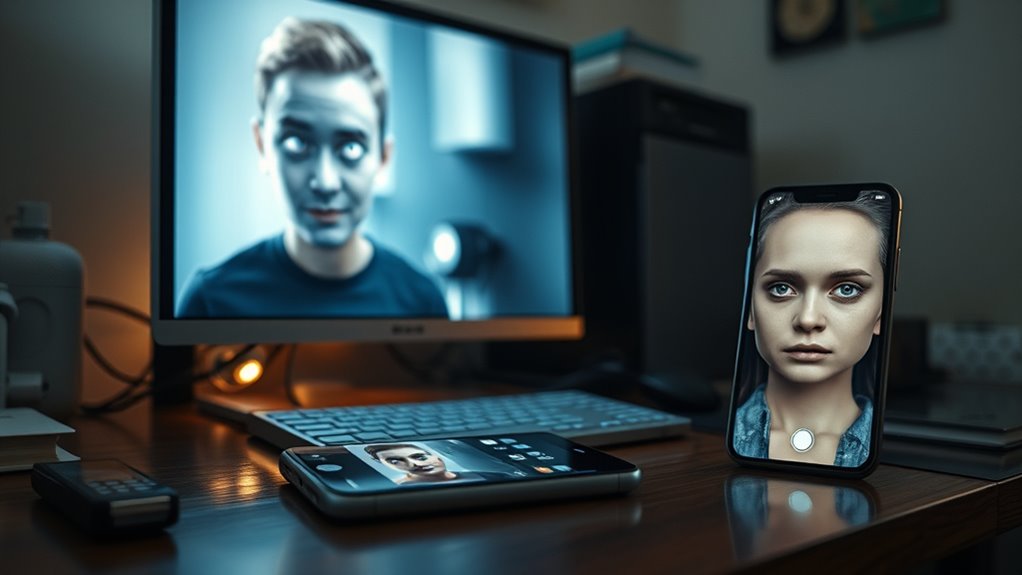

When you encounter “uncanny” online, it means experiencing unsettling feelings caused by digital images, videos, or environments that mix familiar and strange elements. This often happens with AI-generated faces, near-human avatars, or glitchy visuals that look almost real but feel off. The discomfort comes from subconscious judgments and the blend of curiosity and unease. If you’re curious about why the digital world can feel so uncanny, there’s more to explore below.
Key Takeaways
- “Uncanny” online refers to digital content that blends familiar and strange elements, creating a sense of eeriness or discomfort.
- It often involves AI-generated images, virtual avatars, or videos that nearly resemble reality but feel unsettling.
- The concept includes glitch art, surreal visuals, or manipulated media that evoke psychological unease.
- The uncanny online experience is linked to the “uncanny valley” effect, where near-human digital figures trigger discomfort.
- It highlights the psychological and aesthetic tension between familiarity and strangeness in digital environments.
As an affiliate, we earn on qualifying purchases.
The Origins of “Uncanny” and Its Traditional Meaning
The word “uncanny” has roots that trace back to German and early English usage, where it originally described something mysterious or beyond explanation. Freud’s theory explores this feeling, suggesting it arises when familiar things evoke strange or eerie sensations. He linked the uncanny to aesthetic ambiguity, where objects or images blur the line between the familiar and the unfamiliar, creating discomfort. This ambiguity enhances the sense of eeriness, making something seem both known and alien at once. Traditionally, the uncanny referred to experiences or images that triggered this unsettling feeling—like a doll that looks almost human or a house that feels oddly familiar yet strange. It’s a concept rooted in psychological and aesthetic tension, emphasizing the power of ambiguity to evoke mystery and unease. Exploring emotional and mental health aspects of the uncanny can deepen understanding of its impact on human perception and feelings.
As an affiliate, we earn on qualifying purchases.
The Evolution of “Uncanny” in Digital Culture
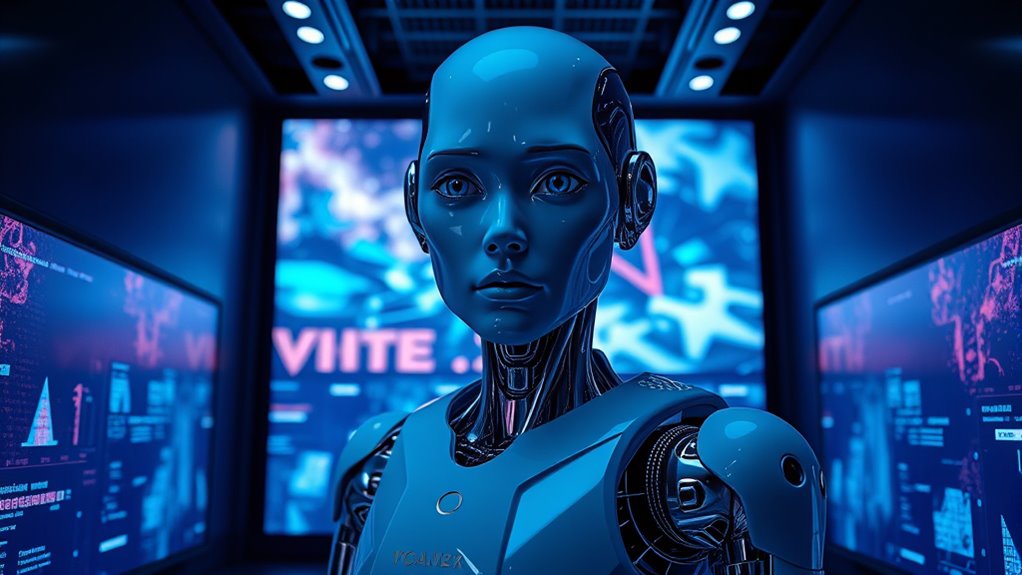
As digital culture evolves, the concept of the uncanny takes on new dimensions, shaping how you experience familiarity and eeriness online. Digital aesthetics now blend the familiar with the strange, creating virtual eeriness that unsettles yet captivates you. This shift reflects how technology blurs boundaries, making digital environments feel both inviting and unsettling. You might encounter images, videos, or virtual spaces that seem almost human but are subtly off, amplifying the uncanny. These transformations deepen the emotional impact of online interactions, blending comfort with discomfort. The rise of eco-friendly handmade crafts also introduces new ways to engage with digital content, emphasizing sustainability and authenticity. Here’s a look at how digital aesthetics are shaping this evolution:
| Aspect | Example | Effect |
|---|---|---|
| Virtual spaces | Realistic avatars with odd features | Enhances eeriness |
| Visual design | Glitch art, surreal imagery | Creates unease |
| User interfaces | Slightly imperfect interactions | Amplifies familiarity and sense of uncanny |
| Content | Deepfake videos | Generates virtual eeriness |
| AI-generated art | Uncanny landscapes | Blurs reality and fiction |
As an affiliate, we earn on qualifying purchases.
How AI and Machine Learning Contribute to the Uncanny
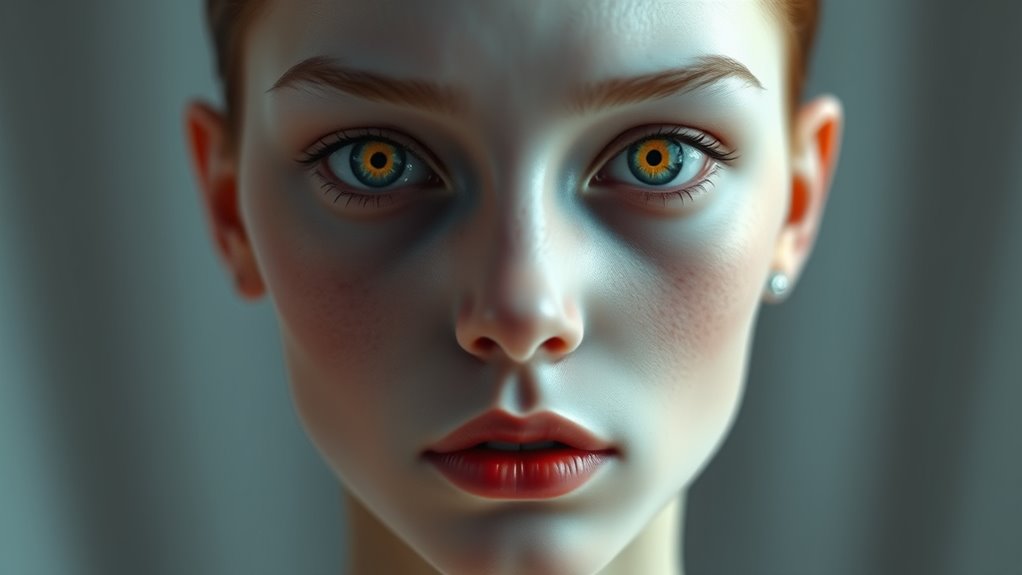
Have you ever noticed how AI and machine learning make digital environments feel more unsettling yet intriguing? They blur the line between human and machine, creating an uncanny atmosphere. Robots and virtual assistants mimic human behaviors, raising questions about robot ethics and what it means to feel truly human. This subtle mimicry sparks digital nostalgia—reminding you of past interactions or human qualities long lost in technology. When AI-generated images or voices eerily resemble real people, it intensifies this feeling, making you question authenticity. The more sophisticated these systems become, the more their uncanny nature emerges, amplifying your sense of unease while mesmerizing your curiosity. Ultimately, AI’s ability to imitate and evoke human traits deepens the uncanny experience online. Additionally, advancements in artificial intelligence contribute to the increasing realism and eeriness of these digital interactions.
deepfake video detection software
As an affiliate, we earn on qualifying purchases.
As an affiliate, we earn on qualifying purchases.
Examples of Uncanny Phenomena on the Internet
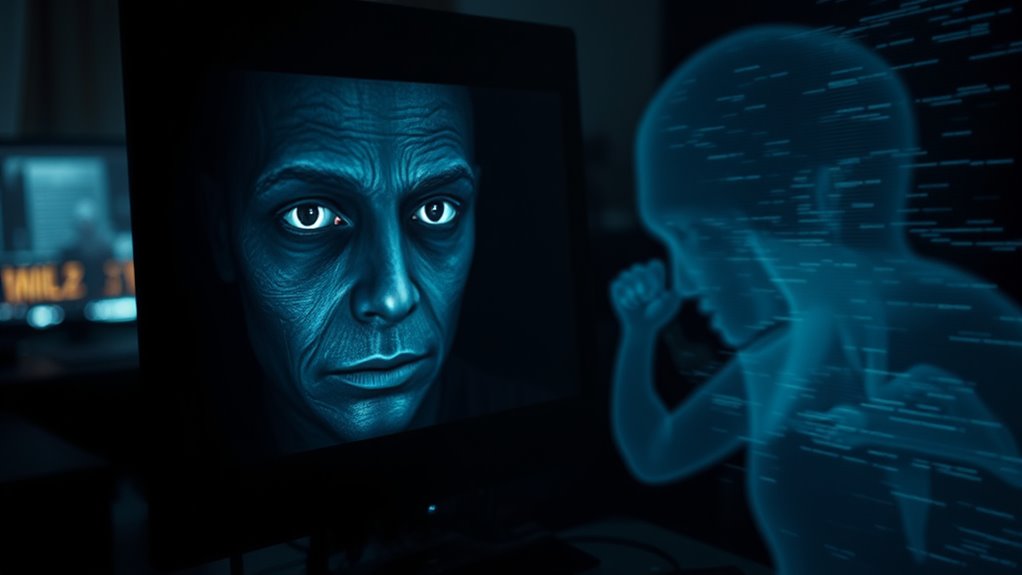
You’ve probably seen AI-generated art that feels almost human but strangely off, highlighting the Uncanny Valley. Deepfakes can convincingly mimic real people, creating eerie and mysterious videos that blur reality. Social media also reveals bizarre, surreal content that leaves you questioning what’s genuine and what’s manipulated. Additionally, some images and videos demonstrate color accuracy issues or unusual contrast effects that add to the sense of unease or surrealism.
Uncanny Valley in AI Art
The Uncanny Valley phenomenon becomes particularly striking when you encounter AI-generated art that closely mimics human features but still feels unsettling. You might see portraits or sculptures that exhibit transhuman aesthetics—blurring the line between human and machine—yet evoke a sense of digital eeriness. These images often appear almost perfect but contain subtle imperfections, like unnatural eye movements or uncanny skin textures, triggering discomfort. This dissonance taps into your subconscious, making you question whether it’s human or machine. AI art that falls into this valley highlights how technology can create eerily lifelike visuals that challenge your perceptions of authenticity and emotion. As these images grow more sophisticated, they deepen the sense of digital eeriness, intensifying the uncanny experience online. Recognizing these patterns can help you better understand the cultural and psychological factors that contribute to the unsettling feeling.
Deepfake Deep Mysteries
Deepfakes have transformed the internet into a playground of uncanny phenomena, where manipulated videos and images can convincingly place someone else’s face or voice in a new context. These mysterious illusions often create eerie coincidences, blurring reality and making you question what’s real. You might see a politician delivering a speech they never recorded or a famous actor saying something bizarre. The line between truth and fiction becomes unsettlingly thin. To help you understand, here’s a quick look:
| Mysterious Illusions | Eerie Coincidences |
|---|---|
| Fake celebrity videos | Public figures in strange situations |
| Altered news clips | Unexpected visual coincidences |
| Voice impersonations | Unbelievable yet convincing |
| AI-generated faces | Uncanny resemblances |
Additionally, understanding the resources and tools available can aid in identifying genuine content from manipulated illusions.
Surreal Social Media
Surreal moments flood social media feeds, blurring the lines between reality and illusion in unexpected ways. This digital uncanny creates a sense of unease, as familiar images are transformed into uncanny, dreamlike scenes. Social surrealism thrives here, with AI-generated videos, deepfake art, and manipulated photos producing unsettling yet mesmerizing content. You might scroll past a seemingly normal post, only to realize it’s subtly altered, evoking feelings of familiarity tinged with eeriness. These phenomena tap into our subconscious, making us question what’s real and what’s fabricated. The digital uncanny in social media challenges your perceptions, mixing the ordinary with the uncanny in ways that leave you intrigued, disturbed, or both. As these uncanny effects become more sophisticated, they highlight the importance of understanding vetted content to distinguish authentic from manipulated material, especially in this rapidly evolving landscape. It’s a fascinating landscape of surreal social experiences that continues to evolve rapidly.
Psychological Roots of the Uncanny Valley Effect
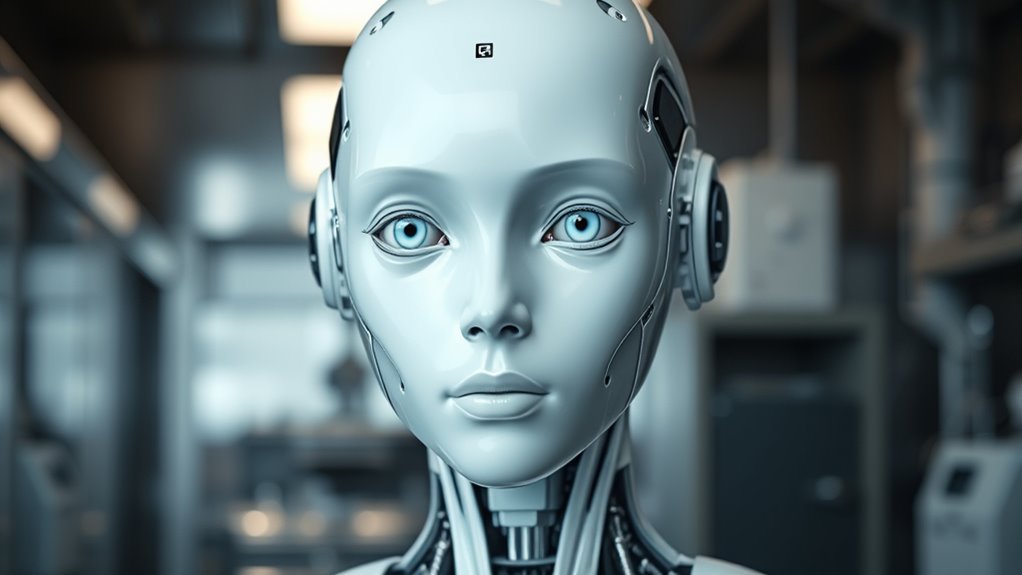
You might notice that human-like figures trigger uneasy feelings because they create cognitive dissonance. This discomfort often stems from conflicting signals your brain receives when something looks almost human but isn’t quite right. Evolutionary fears, like avoiding potential threats, play a key role in why these uncanny feelings arise.
Human-like Uncanny Feelings
The uncanny valley effect often stems from our instinctive reactions to human-like figures that seem almost, but not quite, real. These near-human appearances trigger feelings of unease because they challenge our sense of normalcy and evoke subconscious judgments. Your emotional response can be influenced by moral implications and cultural perceptions, which shape how you interpret these figures. For instance, some cultures may view hyper-realistic robots or avatars as friendly and innovative, while others might see them as unsettling or ethically concerning. This cultural lens affects whether you experience comfort or discomfort in human-like representations. These feelings are rooted in deep-seated psychological mechanisms that evaluate the authenticity and morality of what appears human, contributing to the uncanny sensation when something feels just off. Additionally, the skin type and texture of these figures can significantly influence how realistic or unsettling they appear, as deviations from natural skin qualities often heighten the uncanny feeling.
Cognitive Dissonance Triggers
Cognitive dissonance occurs when your mind encounters conflicting impressions about a human-like figure, creating psychological discomfort. This happens because your brain processes cultural symbolism and linguistic origins that influence how you interpret realistic or unnatural features. When a robot or avatar nearly resembles a human but falls short, your mind struggles to reconcile these signals, triggering dissonance. This internal conflict often stems from deeply ingrained cultural and linguistic cues shaping your expectations. The table below shows how these ideas interconnect:
| Aspect | Example | Effect |
|---|---|---|
| Cultural symbolism | Religious or societal representations | Shapes emotional responses |
| Linguistic origins | Words and phrases about “uncanny” | Influences perception and discomfort |
| Realistic features | Human-like but slightly off | Triggers dissonance |
| Uncanny valley | Near-perfect but imperfect appearance | Amplifies conflicting impressions |
Additionally, the concept of sensory perception plays a role in how these conflicting cues are experienced, further intensifying the uncanny feeling.
Evolutionary Fear Responses
Evolutionary fear responses lie at the core of the uncanny valley effect, rooted in survival instincts that once protected humans from potential threats. Your primal fears are triggered when you encounter almost-human figures that resemble real people but aren’t quite right. These subtle discrepancies evoke a sense of danger because they resemble evolutionary threats, like disease or deception. Your brain is wired to detect inconsistencies that might signal something harmful or unfamiliar, activating a fear response. This instinct helped early humans avoid predators and social danger. Today, these primal fears are still active, causing discomfort when faced with entities that evoke eeriness or eeriness that feels just outside your normal experience. Recognizing this evolutionary basis helps explain why certain human-like objects or characters trigger feelings of unease. Additionally, understanding the neuroscience of perception reveals how our brains process visual cues that may trigger these innate reactions.
Why “Uncanny” Captures Our Curiosity and Discomfort
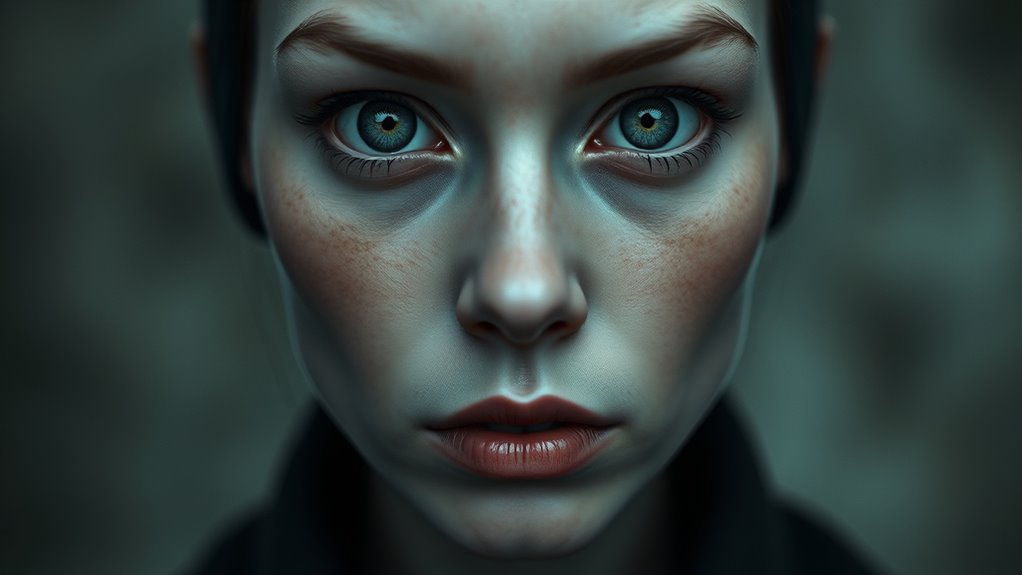
Have you ever felt a strange mix of fascination and unease when encountering something almost human but not quite right? That’s the essence of the uncanny. It taps into deep cultural symbolism, reminding us of familiar faces or objects that suddenly seem unfamiliar, triggering discomfort. Our minds are wired through linguistic evolution to recognize and respond to subtle deviations from normalcy, often as a survival instinct. The uncanny stirs these reactions because it blurs the line between the known and the unknown, sparking curiosity about what’s real or artificial. This combination of familiarity and strangeness makes us stop and think, questioning our perceptions. In the online world, where digital avatars and CGI blur reality, the uncanny becomes even more powerful, fueling both curiosity and discomfort. As AI-generated content becomes more sophisticated, understanding the trustworthiness of these creations is crucial to navigating digital interactions safely.
Frequently Asked Questions
How Does the Uncanny Differ From the Eerie or Creepy Online?
You notice that the uncanny online feels more unsettling than eerie or creepy, especially with virtual reality and AI avatars. It’s when these digital creations look almost human but not quite, triggering a strange discomfort. Unlike eerie or creepy content, the uncanny taps into your subconscious, making you feel uneasy because these simulations blur reality. You sense something’s off, creating a haunting feeling that’s both fascinating and unsettling.
Can the Uncanny Influence Online User Behavior and Interactions?
The uncanny can subtly influence your online behavior by creating a sense of digital mirroring, where avatars or interactions feel eerily familiar yet unsettling. This familiarity can lead you to trust certain profiles or content more deeply, or conversely, make you wary of seemingly human-like AI. As a mirror reflects not just your image but your subconscious, the uncanny shapes your interactions, blurring the line between real and artificial.
What Role Does Cultural Background Play in Perceiving the Uncanny Online?
Your cultural background influences how you perceive the uncanny online. Cultural perceptions shape what you find unsettling or familiar, affecting your reactions to digital content like AI avatars or deepfake images. Background influences your interpretations, making some elements seem eerie or normal. By understanding your own cultural perceptions, you can better grasp why certain online experiences feel uncanny to you, and how others might see them differently.
Are There Specific Digital Platforms More Prone to Uncanny Phenomena?
You’ll find platforms like social media and virtual reality environments more prone to uncanny phenomena. AI-generated avatars often appear eerily realistic or subtly off, creating discomfort. Virtual reality glitches can cause unexpected, unsettling experiences as the digital world malfunctions or behaves oddly. These platforms’ immersive nature amplifies the uncanny, making you more aware of the strange or unsettling qualities, especially when digital imperfections or realistic but strange AI avatars appear.
How Can Creators Intentionally Evoke the Uncanny in Digital Art?
You can evoke the uncanny in digital art by blending digital surrealism and immersive illusions, creating visuals that surprise, unsettle, or evoke familiarity and strangeness simultaneously. Use distorted forms, unexpected juxtapositions, and hyper-realistic details to engage viewers emotionally and psychologically. By manipulating scale, color, and motion, you craft immersive illusions that blur reality and fantasy, making your audience question what they see and feel, heightening the uncanny effect.
Conclusion
As you navigate the digital world, remember that the uncanny is like a shadow lingering just beyond the screen—a mirror reflecting both wonder and unease. It symbolizes our deep curiosity about the unknown and our instinctive discomfort with the almost-human. Embracing this tension helps you understand why certain online experiences feel so strange yet mesmerizing. In this digital mirror, your own reflection may reveal more than you expect, inviting you to explore the mysteries beneath the surface.