
When you see “wya” in slang, it means “where you at,” a quick way to ask someone about their location or what they’re doing. It’s common in digital chats, social media, and texts, especially among younger people. The tone can be friendly, playful, or casual. If you keep exploring, you’ll discover even more about how this slang fits into online culture and how to respond appropriately.
Key Takeaways
- “wya” is shorthand for “where you at,” used in digital slang to ask someone about their location.
- It’s commonly used in social media and texting to initiate casual or quick conversations.
- The term signals curiosity, interest, or an invitation to meet up or engage.
- Its tone can vary from friendly and playful to flirtatious or impatient, depending on context.
- “wya” reflects modern online communication trends emphasizing brevity and informal interaction.

livho High Tech Blue Light Glasses - Advanced Blue Light Blocking Computer Glasses - Screen Fatigue & UV Protection
Elevate your screen time comfort with these stylish women's/men's eyewear frame blue light blocking glasses, designed to reduce...
As an affiliate, we earn on qualifying purchases.
The Origin of “wya” in Digital Communication
Have you ever wondered where “wya” comes from in digital chat? Its history behind slang traces back to shorthand and internet language, evolving from the desire to type quickly. The linguistic origins reveal it as a condensed form of “where you at,” a common phrase used in casual conversations. This abbreviation gained popularity through online messaging platforms and social media, where brevity is key. The slang’s simplicity and ease of use made it a favorite among youth and digital communities. Over time, “wya” became a quick way to ask someone about their location or presence without typing the full phrase. Its emergence highlights how digital communication continually shapes language, creating new slang with roots in functional abbreviation. Language evolution illustrates how online culture influences everyday speech, making such abbreviations widely recognizable.

Gaoye Stylish Blue Light Glasses for Woman - Computer Glasses for Blue Light Blocking - Lightweight Frames - 3 pack
[Filter Blue light Glasses] Blue light filterer with UV400 protection, help you resist harmful blu-ray, reduce discomfort from...
As an affiliate, we earn on qualifying purchases.
Common Uses and Contexts for “wya
You’ll often see “wya” used during casual chats with friends or in quick text messages. It’s common on social media platforms when asking someone where they are or what they’re doing. This slang keeps conversations short and informal, fitting seamlessly into everyday digital communication. Just like choosing a reliable power source for your home, understanding these abbreviations helps keep your conversations safe, clear, and efficient.
Casual Chatting Situations
Wondering when to use “wya” in casual conversations? It’s perfect for quick chats with friends when you want to ask if someone is nearby or available. For example, you might send it while texting about plans or meeting up. When using “wya,” consider emoji interpretation to add tone or emotion, like a wink or smile. As slang evolves, “wya” stays popular among younger crowds for its brevity. Imagine a relaxed group chat where you casually check in, or when you’re bored and want to see if anyone’s free. It’s common in situations like:
- Asking if a friend is close by
- Checking someone’s availability
- Initiating spontaneous meetups
- Keeping conversations light and informal
Using “wya” effectively can also reflect the current slang trends and communication styles among peers. Bedroom
Texting and Social Media
How do people typically use “wya” when texting or posting on social media? You’ll often see “wya” in quick messages or comments, serving as a casual way to ask “where are you?” It’s common to pair it with emoji usage, like a question mark or waving hand, to add friendliness or clarity. As language evolves, “wya” reflects how digital communication favors brevity and efficiency. On social media, it’s frequently used in story replies, direct messages, or casual posts, keeping interactions informal and spontaneous. This slang adapts easily to the fast-paced nature of online conversations, making it a handy shorthand that captures the essence of quick check-ins or inquiries. Overall, “wya” exemplifies how slang continues to evolve alongside texting and social media trends. Additionally, its widespread use demonstrates the influence of internet culture on everyday language.

Oilway Blue-Light Blocking Glasses Computer Reading/Gaming/TV/Phones Glasses Fashion Anti Eyestrain Glasses for Women Men
【Anti-Glare Blue Light Glasses】- Anti blue light glasses can effectively help you block harmful blue light from computer/phone/TV...
As an affiliate, we earn on qualifying purchases.
Variations and Similar Slang Terms
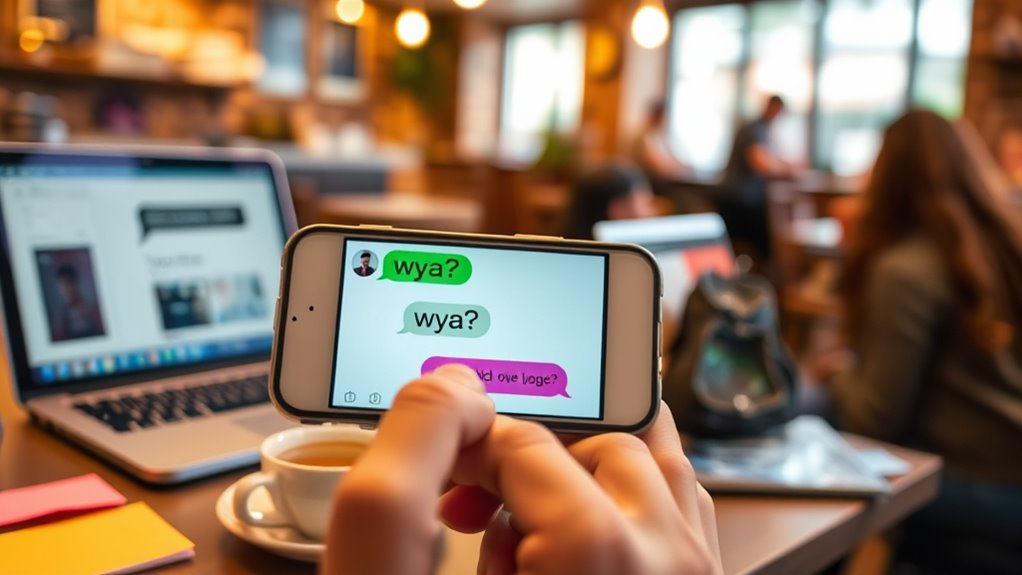
Are there other slang terms that convey the same casual, dismissive tone as “wya”? Absolutely. In digital language trends, you’ll find various slang abbreviations that serve similar purposes. These include phrases like “wyd,” which asks “what are you doing?” in a laid-back way, or “nvm,” meaning “never mind,” often used dismissively. You might also see “brb” for “be right back,” used when ending a conversation abruptly. Visualize these as quick, shorthand signals, like:
- A text bubble with “wyd?” floating in a chat window
- A “nvm” sticker dismissively crossing out a message
- An hourglass icon next to “brb”
- A blinking cursor after “wya”
These variants reflect how digital language trends favor brevity and tone, capturing similar sentiments efficiently.

Gaoye Blue Light Blocking Glasses - Fashion Square Eyeglasses, Anti UV Ray Computer Gaming Glasses Blue Blockers for Women/Men
BLUE LIGHT BLOCKING GLASSES: Our blue light glasses for women boast UV400 protection, blocking harmful blue rays from...
As an affiliate, we earn on qualifying purchases.
How “wya” Is Interpreted in Different Age Groups

Different age groups interpret “wya” in particularly different ways, reflecting their unique communication styles and familiarity with digital slang. Younger generations often see “wya” as a casual, quick way to ask “where you at,” embracing slang evolution and informal online language. Teenagers and Millennials tend to use it frequently in texts and social media, viewing it as a natural part of digital conversations. In contrast, older adults might misunderstand or overlook the term, seeing it as unfamiliar slang or a typo. This variation highlights how age-specific interpretations develop from differing exposure to internet culture and slang evolution. As digital language continues to evolve, each age group adapts its understanding of terms like “wya,” shaping how they communicate across generations. Additionally, understanding the private placement memorandum can provide insights into how structured communication and clear terminology are essential for navigating complex information across different contexts.
The Role of “wya” in Social Media and Texting

You often see “wya” used in social media chats and texts to quickly ask if someone is nearby or available. Its usage reflects current digital communication trends, where brevity and immediacy matter. The tone and intent behind “wya” can vary, from friendly check-ins to casual prompts for conversation. Understanding the context of such abbreviations can enhance effective communication in online interactions, much like selecting the right projector technology can improve a home cinema experience.
Common Usage Contexts
Have you ever noticed “wya” popping up in social media posts or text messages and wondered what it means? It’s commonly used in casual conversations, often with emoji usage to add emotion or tone. People include “wya” in messages to ask where someone is, like checking in or starting a chat. You’ll find it among slang abbreviations that quicken communication. Imagine scrolling through a chat where someone asks:
- “Wya? 🔥” during a fun night out
- “Wya, you free?” to plan meetups
- “Wya? 🤔” when curious about plans
- “Wya, just checking in”
These examples show how “wya” fits into everyday social media and texting, making conversations faster and more informal. It’s become a versatile part of digital slang, especially in casual exchanges. Additionally, understanding Ring Security Cameras can be useful for ensuring your home security while engaging in digital communication.
Digital Communication Trends
Ever wonder how “wya” has become a staple in digital communication? It’s a prime example of the online slang evolution driven by digital communication innovations. In social media and texting, abbreviations like “wya” help keep conversations quick and efficient, fitting the fast pace of modern exchanges. As platforms prioritize instant messaging, abbreviations and acronyms have surged in popularity, making it easier to convey meaning without lengthy messages. This trend reflects how communication styles adapt to technology, encouraging a more casual and informal tone. “wya” specifically allows users to ask questions or start conversations effortlessly, fitting seamlessly into the fabric of social media interactions. Its rise exemplifies how digital communication trends shape language, fostering new ways to connect instantly. Additionally, understanding the context of such slang can improve relationship communication, as it reflects evolving social norms and interaction patterns.
Tone and Intent
In social media and texting, “wya” often conveys curiosity or invites engagement, shaping the tone of a conversation from the outset. It signals you’re interested in someone’s location or plans, setting a friendly, informal vibe. This small piece of digital language reflects the slang evolution, making interactions quicker and more playful. When you see “wya,” it can imply:
- Eagerness to meet up
- Casual check-in
- Playful teasing
- Genuine curiosity
Depending on context, it can also carry different tones—friendly, flirtatious, or even slightly impatient. Understanding its intent helps you respond appropriately. “Wya” exemplifies how slang adapts to social media, influencing the tone and dynamics of digital communication. Additionally, the use of “wya” is often linked to electric bikes, as both involve quick, dynamic exchanges in modern communication.
Tips for Recognizing and Responding to “wya

Wondering how to recognize and respond when someone texts “wya”? Pay attention to contextual cues like the sender’s tone or previous conversations, which help with slang comprehension. When you see “wya,” it’s usually a casual way to ask “where you at?” or “what are you up to?” To respond effectively, consider your availability and tone. Use the table below to guide your responses based on different situations:
| Situation | Recognizing Clues | Suggested Response |
|---|---|---|
| Friend asks “wya” casually | Previous friendly chats | “Just chilling, you?” |
| Someone new or formal | Context of the message | “Hey! Not much, what’s up?” |
| You’re busy | Timing or message content | “Busy now, talk soon!” |
| Playful or teasing tone | Emojis or punctuation | “Haha, wya? Just relaxing.” |
Use these tips to improve your slang comprehension and respond naturally. Additionally, understanding contextual cues can help you gauge the tone and intent behind the message.
The Cultural Significance of Abbreviations Like “wya
Have you noticed how abbreviations like “wya” have become more than just shorthand? They carry cultural significance, shaping how we communicate and connect across generations. These quick texts reflect a broader language evolution, blending formal and informal styles. When you see “wya,” it’s more than a question—it’s part of a cultural movement that values efficiency and immediacy. Visualize:
Abbreviations like wya symbolize a cultural shift toward quick, connected communication blending formality and informality.
- Texting while walking, no time for full sentences
- Sharing memes with abbreviations to stay trendy
- Slang evolving alongside social media platforms
- Younger generations creating their own linguistic identity
These abbreviations create a shared cultural code, influencing perceptions of social belonging and identity. They reinforce a sense of community and keep language adaptable in a fast-paced digital world. Understanding digital communication trends helps us appreciate how language continues to evolve in modern society.
Future Trends and the Evolution of Online Slang
As online communication continues to evolve rapidly, slang is expected to become even more dynamic and inventive, reflecting the changing ways people connect. The digital slang evolution will likely introduce new abbreviations, emojis, and memes that shape how you express yourself online. Future online language trends may emphasize brevity and creativity, making conversations more instant and visually engaging. You’ll see slang adapting to emerging platforms like TikTok and new messaging apps, blending humor, culture, and identity. As generational shifts occur, slang will continue to reflect societal changes, fostering inclusivity or differentiation. Staying current means you’ll need to keep up with these trends, understanding the evolving digital slang to communicate effectively and authentically in an increasingly digital world.
Frequently Asked Questions
Is “Wya” Used Primarily in Specific Online Communities or Globally?
You’ll find “wya” used across various online communities worldwide, making it part of global language trends. Originally rooted in online slang origins, it’s popular among younger users on social media, texting, and gaming platforms. While it’s common in specific groups, its widespread use shows how digital communication fosters shared slang. So, no matter where you are, “wya” connects people through casual, quick exchanges, reflecting the evolving nature of online language.
How Does “Wya” Differ From Similar Abbreviations Like “Wyd” or “Wya”?
Imagine a bustling digital marketplace where slang abbreviations like “wya,” “wyd,” and “wya” are your tools for quick communication. “Wya” asks, “Where are you at?” focusing on your location. Meanwhile, “wyd” inquires, “What are you doing?” emphasizing activity. They may seem similar, but they serve different purposes in online communication, helping you ask exactly what you want in the fastest, clearest way possible.
Can “Wya” Be Interpreted Differently Based on Tone or Context?
Yes, “wya” can be interpreted differently based on tone influence and contextual variations. If your message sounds casual or playful, it might ask if someone’s available or just start a light chat. But if the tone is urgent or annoyed, it could imply impatience. Pay attention to your friend’s mood and the situation, as these factors shape how “wya” is understood, making it flexible depending on context.
Are There Any Common Misunderstandings Associated With “Wya”?
You might have misconceptions about “wya,” often thinking it’s always just a quick way to ask “where you at.” However, clarification is needed because cultural differences and tone can change its meaning, causing misunderstandings. Some may interpret it as impatience or curiosity, so it’s essential to take into account context. Don’t assume the intent; instead, ask for clarification if you’re unsure, to avoid miscommunication.
What Are Some Notable Examples of “Wya” in Popular Culture or Memes?
You’ll find “wya” pop up often in meme internet culture, with over 80% of viral posts featuring it. Celebrities like Drake and Billie Eilish have used “wya” in social media posts, sparking widespread recognition. Its casual, relatable tone makes it perfect for quick messages. In memes, “wya” often signals curiosity or a desire to meet up, cementing its place as a staple in modern online communication.
Conclusion
Understanding “wya” lets you connect effortlessly in digital chats, just like knowing a secret handshake. While it might seem like just letters, it’s a bridge between generations, blending casual slang with online culture. As language evolves, so do these abbreviations—shaping how we communicate and stay connected. Embrace the shift, and you’ll find that sometimes, the smallest words open the biggest doors to understanding others.