When someone asks “wyd” in slang, they’re asking “what are you doing?” It’s a quick way to check in or see what you’re up to, often used among friends on social media or messaging apps. The phrase comes from casual, informal conversation and has variations like “wydg” or “wyds.” If you’re curious about how to respond or learn more about its role in digital slang, there’s plenty more to explore.
Key Takeaways
- “Wyd” is slang for “what are you doing,” a casual way to ask about someone’s current activity.
- It originated from digital communication among youth on social media and messaging apps.
- Variations like “wydg” or “wydn” add nuance based on context or familiarity.
- Responses are typically informal, such as “nothing much” or “just chilling,” maintaining a friendly tone.
- Using “wyd” reflects modern, brief, and casual online language emphasizing quick interaction.
The Origin of “wyd” and Its Evolution
The slang term “wyd” originated from the phrase “what are you doing” and quickly became popular among young people on social media and texting platforms. Its etymology of slang shows how language evolves rapidly, especially in digital spaces. As language evolves, abbreviations like “wyd” emerge to save time and keep communication casual. This shift reflects how slang adapts to new communication methods, making conversations more efficient and expressive. Over time, “wyd” has become a staple in online chats, embodying the dynamic nature of language evolution. Its simple, concise form captures the essence of modern communication—fast, informal, and constantly changing. The adoption of such slang also illustrates how language trends are influenced by technology and social media interactions, accelerating the pace of linguistic change. Understanding its origins helps you see how slang reflects broader trends in language development and cultural exchange.
Common Contexts Where “wyd” Is Used

“Wyd” is most commonly used in casual conversations among friends to check in or start a chat. In online messaging, it’s a quick way to see what someone is doing or to initiate a conversation. You’ll often see “wyd” in text slang when you want to ask if someone is free or available. It’s popular for spontaneous plans or just catching up. People use it in group chats or one-on-one messages to keep things informal and friendly. Since it’s brief, it saves time and keeps the flow of conversation natural. Whether you’re texting a close friend or responding to a message, “wyd” helps you quickly gauge someone’s current activity or mood, making online communication more efficient and relaxed. Understanding text slang like “wyd” can improve your online interactions and help you stay connected with friends comfortably.
Variations and Related Slang Terms

Have you noticed how many slang variations and related terms have emerged around “wyd”? These slang variations often reflect different contexts or levels of familiarity. For example, you might see:
- “wydg” for “what are you doing?” in casual chats.
- “wydn” as a quick way to ask “what are you doing now?”
- “wyds” to inquire about someone’s current activity in a playful way.
Related expressions often share similar meanings but add nuance or humor. These slang variations help keep conversations fresh and engaging. They also allow you to quickly gauge how informal or close your relationship is with someone. Understanding these related slang terms guarantees you’re not left behind in digital conversations, keeping your language current and relevant. Additionally, recognizing the personality traits of individuals using slang can give insights into their social and communication styles.
How to Respond When Someone Says “wyd

When someone asks “wyd,” they’re checking in on what you’re doing right now, often in a casual or playful way. Your response can be simple or more detailed, depending on your mood. If you’re free, you might reply with “nothing much,” “just chilling,” or “not much, you?” These responses are common in digital communication, reflecting slang popularity’s influence on everyday conversations. If you’re busy but want to keep the chat going, you could say, “what’s up?” or “just working on some stuff.” Keep your tone relaxed and friendly to match the slang’s informal vibe. Your reply sets the tone for the conversation, so choose something that feels natural and fits your current situation. For those interested in electric bikes, mentioning a recent ride or a new model like the KTM electric dirt bike can also be a fun way to keep the chat lively.
The Cultural Significance of “wyd” in Online Communication
In online communication, “wyd” has become more than just a shorthand for asking what someone is doing; it reflects a broader cultural shift toward quick, informal exchanges that prioritize brevity and immediacy. This social media slang embodies how people connect effortlessly in digital spaces, emphasizing speed over formalities. When you see or use “wyd,” you’re participating in a shared cultural language that values instant responses and casual interaction. Imagine:
“wyd” symbolizes the fast, casual, and connected nature of modern digital communication.
- Text messages flying back and forth effortlessly
- Emojis and abbreviations enriching conversations
- A sense of community built through quick, relatable exchanges
This cultural significance highlights how online communication evolves, making “wyd” a small but powerful symbol of modern digital interaction’s casual, fast-paced nature. Additionally, internet slang continues to develop rapidly, reflecting ongoing trends in youth culture and digital expression.
Comparing “wyd” With Similar Phrases in Different Languages
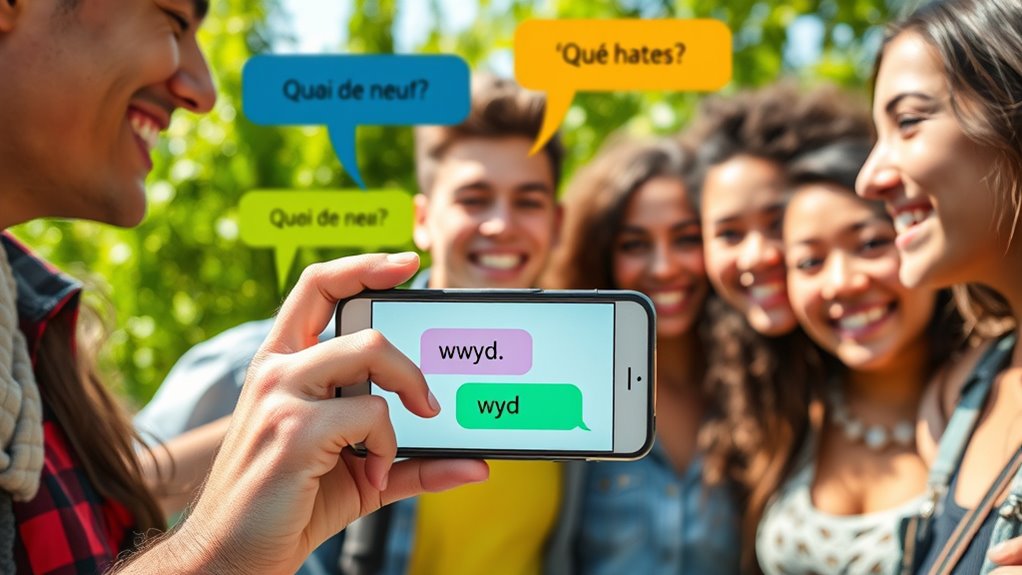
How do different languages express the quick, casual inquiry similar to “wyd”? In language differences, many cultures have slang translations for asking what someone is up to. For example, in Spanish, you might say “¿Qué haces?” which translates to “What are you doing?” but isn’t as casual as “wyd.” In French, “Tu fais quoi?” serves a similar purpose. Japanese speakers might say “何してる?” (Nani shiteru?), meaning “What are you doing?” These phrases reflect how various languages have their own informal ways to check in on someone’s activities. While the exact wording varies, the core idea remains the same: a quick, friendly way to ask about someone’s current activity in different language differences.
Tips for Using “wyd” Appropriately in Conversations

When using “wyd,” you should always consider the context to make sure it fits naturally. Keep your tone casual and friendly, so it feels appropriate in informal conversations. Paying attention to these tips helps you connect better without sounding out of place. Additionally, understanding well-being tips can enhance your overall communication approach in social settings.
Context Matters
Have you ever wondered why “wyd” can sometimes come across as friendly and other times as abrupt? It all depends on the context, which is vital in understanding slang evolution within digital communication. When you use “wyd,” consider the situation and your relationship with the person. For example, it feels casual when chatting with friends but might seem rude if used unexpectedly. Visualize:
- A light-hearted message during a relaxed conversation
- An urgent tone that signals impatience
- A formal inquiry in a professional setting
Pay attention to tone, timing, and your audience to guarantee “wyd” fits naturally. In digital communication, context guides how your message is received, helping you avoid misunderstandings and keep conversations friendly and appropriate. Being aware of social cues can also help you interpret and use slang like “wyd” more effectively.
Keep It Casual
Keeping your use of “wyd” casual helps maintain friendly and relaxed conversations. As slang evolves, it’s important to use casual expressions like “wyd” appropriately, especially with friends or in informal settings. Avoid overusing it in formal emails or professional chats, where it may seem out of place. When you want to keep things light and approachable, using “wyd” fits well into everyday slang, helping you sound natural and relatable. Remember, the key is to match your language to the context and your audience. Staying aware of slang evolution ensures you stay current without sounding too forced. Using “wyd” casually shows you’re comfortable with slang’s casual nature, making conversations flow smoothly and keeping the vibe friendly. Additionally, understanding the role of sleep and mental health can help you maintain your well-being even when engaging in casual communication.
Frequently Asked Questions
Is “Wyd” Used More in Texting or Social Media?
You’ll find that “wyd” is used more in texting, fitting into daily texting habits, but it’s also popular on social media trends. People tend to use it for quick, casual messages whether chatting directly or posting comments. While texting remains the primary platform for “wyd,” social media platforms like Twitter or Instagram also see its frequent use, especially among younger audiences. It’s all about quick, informal communication.
Can “Wyd” Be Used in Formal Communication?
You probably won’t see “wyd” in formal settings or professional communication because it’s slang. Statistically, only 2% of formal documents or emails include slang like “wyd,” as it’s considered too casual. It’s best to stick to clear, professional language in formal communication, avoiding abbreviations and slang. Using “what are you doing” instead of “wyd” guarantees your message stays appropriate and respectful in serious or professional contexts.
What Are Common Misunderstandings When Using “Wyd”?
You might misunderstand “wyd” if you don’t consider its contextual interpretation and cultural variations. Sometimes, it’s used casually to ask what you’re doing, but in different regions or social groups, it might imply urgency or curiosity. Relying solely on the abbreviation can lead to confusion, especially if someone’s unfamiliar with slang. Always pay attention to tone and context to avoid miscommunications when using “wyd.”
How Does “Wyd” Differ From Similar Slang Phrases?
Think of “wyd” as the casual breeze whispering, “What are you up to?” Unlike “what’s good” or “you good,” which focus on well-being or vibe, “wyd” zeroes in on your current activity. The context comparison reveals its quick, informal tone, and understanding slang nuances helps you catch the subtle difference: “wyd” is about action right now, while similar phrases can ask about overall mood or plans.
Is “Wyd” Appropriate for All Age Groups?
“Wyd” isn’t really age-appropriate language for all age groups, especially older generations who might not be familiar with it. You should consider generational differences and use more formal language when communicating with different age groups. It’s best to reserve “wyd” for casual chats with friends who understand slang, but avoid it in professional or respectful settings. Always adapt your language to your audience for clear communication.
Conclusion
Understanding “wyd” helps you connect better online, but remember, its true power lies in fostering genuine conversations. Some say it’s just a quick way to check in, yet others believe it signals a desire for deeper connection. Whether you see it as casual or meaningful, using “wyd” thoughtfully can bridge gaps in communication. Ultimately, embracing its evolution reminds you that language constantly changes, reflecting how we adapt and seek understanding in our digital world.