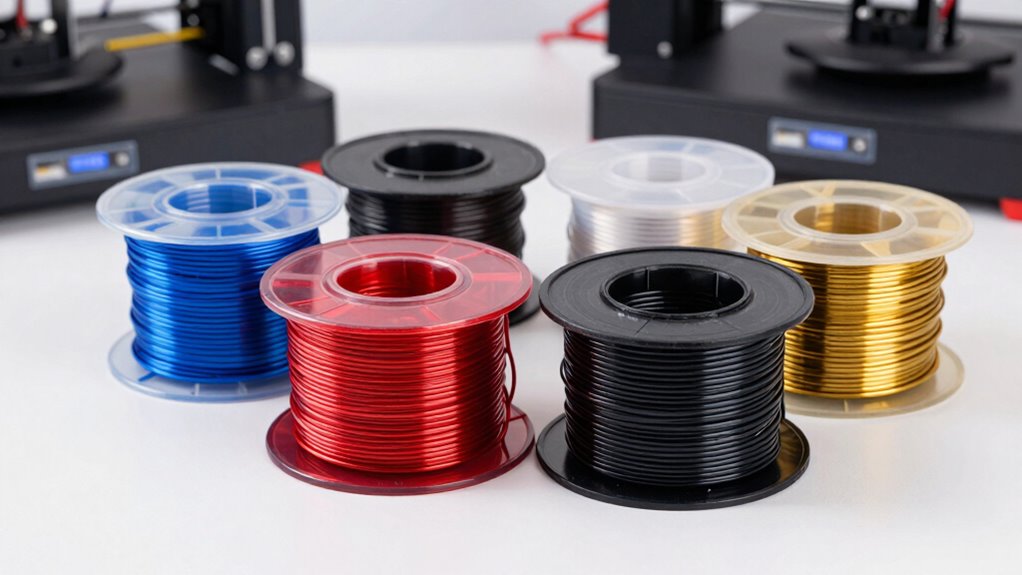

If you’re new to 3D printing, start with PLA filament. It’s easy to use, eco-friendly, and gives good detail with minimal fuss. ABS and PETG are more durable but need careful temperature and ventilation control. Flexible filaments like TPU are best for experienced users due to their tricky handling. Understanding these options helps you pick the right material for your project. Keep exploring to discover tips on choosing and handling your filament for better results.

Prime made for students and young adults
- Fast, free delivery for dorm and study essentials
- Prime Video and Amazon Music included
- Member-only deals
Key Takeaways
- Start with PLA for its ease of use, good detail, and minimal safety concerns.
- Consider PETG for a balance of strength, flexibility, and simpler printing than ABS.
- Avoid flexible filaments like TPU initially; they are more challenging for beginners.
- Store filaments properly in airtight containers to prevent moisture-related printing issues.
- Match filament choice to your project needs, adjusting printer settings accordingly.

Are you overwhelmed by the variety of 3D printer filament types available? It’s a common feeling among first-time users, especially when trying to decide which filament best suits your projects. With options like PLA, ABS, PETG, and TPU, it’s easy to get lost in the choices. To make your experience smoother, start with the basics and learn how to handle each filament properly. Proper filament storage tips are essential to prevent moisture absorption, which can cause printing issues like bubbling or weak layers. Keep your filaments in airtight containers with desiccants, and avoid exposing them to humidity or direct sunlight. This simple step helps ensure consistent print quality and reduces troubleshooting common issues. Additionally, understanding the environmental impact of different filaments can guide you toward more sustainable choices. Recognizing the safety precautions necessary when working with certain materials is also crucial for a safe and successful printing experience. Being aware of filament compatibility with your specific 3D printer model can further improve your results and prevent potential damage to your equipment.
When selecting a filament, consider your project’s needs. PLA is a popular choice for beginners because it’s easy to print, biodegradable, and offers good detail. ABS is more durable and heat-resistant but requires a heated bed and good ventilation due to fumes. PETG combines the best qualities of PLA and ABS—strong, flexible, and less prone to warping. TPU is a flexible filament suited for printing rubber-like objects, but it can be more challenging to print because of its flexibility. Familiarize yourself with the filament’s specific temperature requirements and adjust your printer settings accordingly to avoid common issues like stringing, warping, or improper adhesion. Understanding the role of ethics in business can also help you make responsible choices when selecting and handling materials, ensuring sustainable practices.
As an affiliate, we earn on qualifying purchases.
Frequently Asked Questions
Which Filament Type Is Best for Outdoor Projects?
For outdoor projects, PETG is your best choice. It offers excellent UV resistance and weather durability, making it withstand sun, rain, and other environmental factors. Unlike PLA, which degrades quickly outside, PETG maintains its strength and appearance over time. Its ease of printing also makes it suitable for beginners. So, if you’re planning outdoor 3D prints, go with PETG for longevity and resilience.
How Do Filament Prices Vary Across Different Types?
Filament prices vary based on durability and color options. Typically, more durable filaments like ABS or PETG cost more due to their strength and heat resistance. Basic PLA filaments are usually cheaper and available in a wide range of vibrant color options, making them great for beginners. Specialty filaments with unique properties or colors tend to be pricier, but they offer more customization for your projects.
Are There Eco-Friendly Filament Options Available?
Every cloud has a silver lining, and eco-friendly filament options shine brightly for you. Yes, you can find biodegradable plastics and recycled materials designed for 3D printing. These filaments help reduce your environmental footprint, making your projects more sustainable. By choosing these options, you’re not just creating; you’re also contributing to a greener planet. Eco-conscious choices like these prove that good things come in sustainable packages.
Can I Mix Different Filament Types in One Print?
You can mix different filament types in one print, but you need to ensure filament compatibility first. Not all filaments bond well together, which can lead to print failures. Use color mixing techniques carefully, layering or combining filaments for creative effects. Always check the printer’s specifications to guarantee it can handle multiple filament types, and experiment with small test prints to achieve the best results.
What Safety Precautions Should I Take With Various Filaments?
You should always wear safety gear like masks and gloves when handling filaments to avoid inhaling fumes or skin contact. Store your filaments properly in airtight containers away from heat and direct sunlight to prevent degradation. Ventilate your workspace during printing, especially with materials like ABS or PETG, which emit fumes. Following these precautions helps guarantee your safety and maintains filament quality for successful 3D printing.
As an affiliate, we earn on qualifying purchases.
Conclusion
Choosing the right filament is key to your 3D printing success. With options like PLA, ABS, and PETG, you can find a material that fits your needs and skill level. Remember, “A journey of a thousand miles begins with a single step,” so start simple and learn as you go. As you gain experience, you’ll be able to explore more advanced filaments and create even cooler projects.
PETG filament for outdoor 3D printing
As an affiliate, we earn on qualifying purchases.
As an affiliate, we earn on qualifying purchases.
Flexible TPU filament for 3D printer
As an affiliate, we earn on qualifying purchases.
As an affiliate, we earn on qualifying purchases.
Halloween Picks
halloween
As an affiliate, we earn on qualifying purchases.