
To clean and disinfect toys safely, choose non-toxic, child-safe products without fragrances or dyes, and use gentle methods appropriate for each toy type. Wash plastic and hard toys with warm, soapy water, and soak or steam clean plush toys regularly. For electronic toys, wipe with a damp cloth and avoid submersion. Store toys in a dry place, dry thoroughly, and follow guidelines to prevent germs, ensuring your child’s play environment stays safe and hygienic. Keep exploring for detailed tips.
Key Takeaways
- Use non-toxic, child-safe cleaning products free of fragrances, dyes, and irritants to ensure safety during cleaning.
- Follow manufacturer instructions and appropriate methods for different toy materials, such as hand washing or gentle wiping.
- Regularly disinfect toys, especially soft and frequently handled ones, using safe agents like diluted hydrogen peroxide or vinegar.
- Dry toys thoroughly in a well-ventilated area and store in clean, dry, breathable containers to prevent mold and bacteria buildup.
- Avoid harsh chemicals and excessive soaking; always rinse and dry toys completely before returning them to children.
Choosing Safe Cleaning Products for Toys
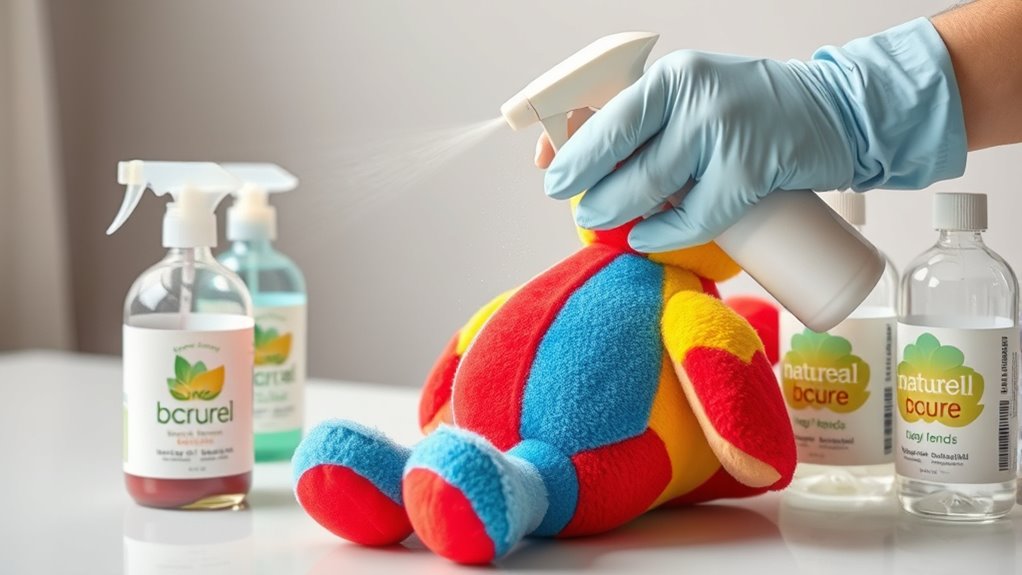
When selecting cleaning products for toys, it’s important to prioritize safety and effectiveness. Look for options made with non-toxic ingredients that won’t harm your child if they put toys in their mouth. These products are formulated to be gentle yet effective at removing dirt and germs without introducing harsh chemicals. Additionally, choose allergen-free options to minimize the risk of allergic reactions or skin irritation. Reading labels carefully helps ensure the product is free from common irritants like fragrances, dyes, and parabens. Choosing safe cleaning products is essential to protect your child’s health while maintaining a clean play environment. By opting for safe, non-toxic, and allergen-free cleaning solutions, you protect your child’s health while keeping their toys clean. Remember, safe products provide peace of mind, making toy cleaning a simple, worry-free task.
How to Properly Wash Different Types of Toys
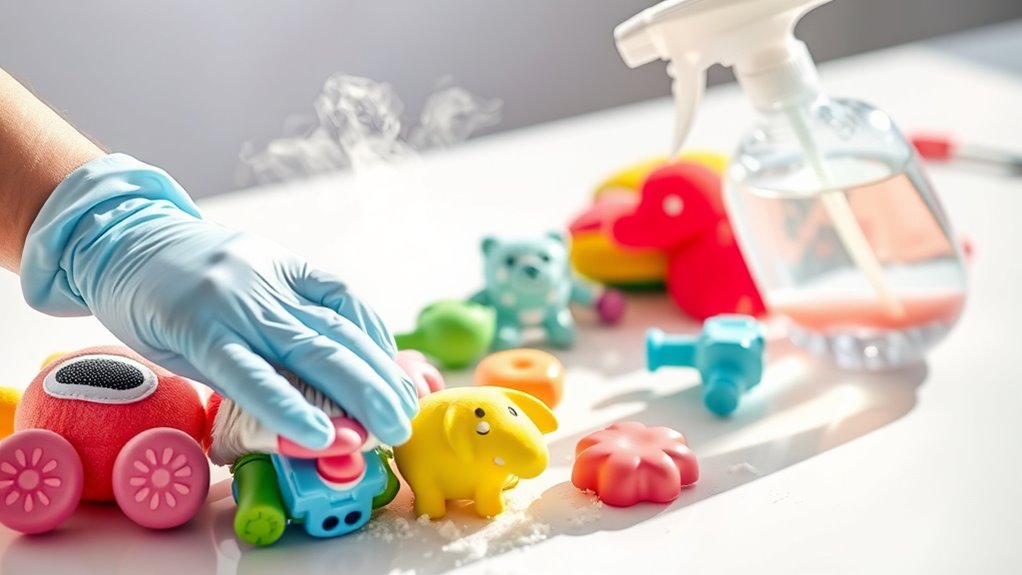
Different types of toys require different cleaning methods to stay safe. You should wash plastic toys with warm, soapy water, disinfect soft toys carefully without soaking them, and handle electronic toys gently to prevent damage. Knowing how to clean each type properly helps keep playtime safe and hygienic. For toys that are part of a larger vehicle or model, like those related to Honda tuning, it’s important to consider material durability to avoid damage during cleaning.
Washing Plastic Toys Safely
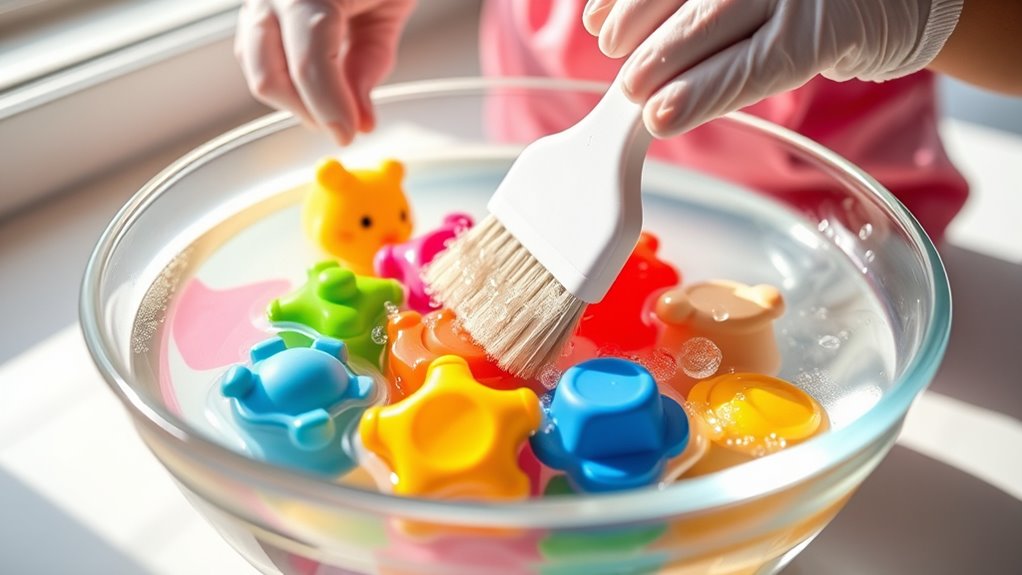
To wash plastic toys safely, you need to contemplate the type of toy and its materials. Check labels or manufacturer instructions to determine if they can be submerged in water. For durable plastic toys, a warm soapy solution works well; just avoid harsh chemicals that could cause damage or lingering residues. Rinse thoroughly to remove soap and dirt. After washing, let the toys dry completely before storing them properly to prevent bacterial growth. Using toy storage that keeps toys dry and organized helps reduce dust and mold buildup. This not only prolongs the lifespan of your toys but also promotes allergy prevention by minimizing dust and allergen accumulation. Regularly washing plastic toys keeps them safe and clean for your child’s playtime, and paying attention to material safety ensures you choose the best cleaning methods for different toy types.
Disinfecting Soft Toys Properly
Disinfecting soft toys properly is essential to keep your child safe from germs and bacteria. To maintain soft toy hygiene, start by checking labels for care instructions. Most plush toys can be machine washed on a gentle cycle with warm water and mild detergent. For added disinfection, you can include a disinfectant safe for fabrics or use a steam cleaner if suitable. If washing isn’t an option, spot clean with a mixture of water and disinfectant, then let the toy air dry completely. Regular soft toy maintenance prevents the buildup of dirt and germs, especially in stuffed animals that are frequently handled or cuddled. Proper cleaning not only preserves the toy’s condition but also ensures your child’s safety and health. Additionally, understanding the color accuracy of your cleaning methods can help ensure the toy’s appearance remains vibrant and appealing after washing.
Handling Electronic Toys Carefully
Handling electronic toys requires a careful approach to avoid damaging sensitive components during cleaning. To guarantee safe maintenance, always disconnect the toy from power sources and remove batteries when possible. Use a damp cloth with mild soap to wipe surfaces, avoiding excess moisture that could seep into openings. Never submerge electronic toys in water or immerse them completely, as this can harm internal circuits. Pay special attention to battery safety—inspect and replace batteries regularly to prevent leaks and corrosion. When cleaning, avoid harsh chemicals or abrasive materials that could damage the device. Remember to handle electronic toys gently and follow manufacturer instructions for maintenance to prolong their life. Proper care helps keep your child’s toys safe, functional, and hygienic.
Using Natural Disinfectants Effectively
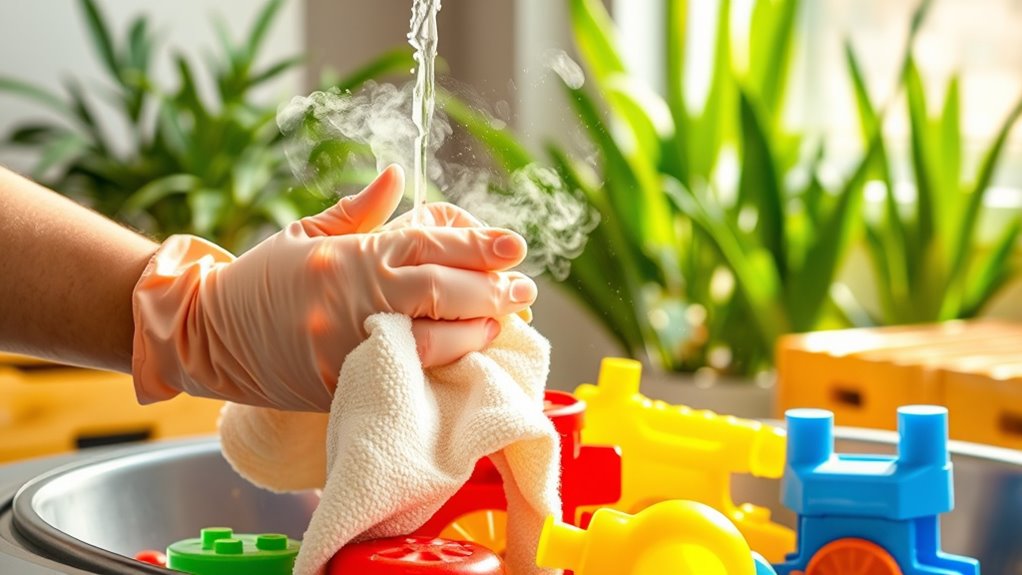
To disinfect toys naturally, you need to choose safe agents like vinegar or diluted hydrogen peroxide. Make sure you apply these solutions properly, soaking or wiping toys thoroughly to guarantee germs are eliminated. Using the right technique helps keep toys safe and effective for your children. Incorporating proper cleaning methods ensures a thorough and safe disinfection process.
Choosing Safe Natural Agents
When choosing natural agents to clean and disinfect toys, it’s important to select options that are both effective and safe for children. Focus on natural ingredients known for their antimicrobial properties, like vinegar or tea tree oil, but always check for potential allergic reactions. Not all natural ingredients are suitable for every child, so read labels carefully. Consider these points:
- Use pure, food-grade natural ingredients to minimize risks
- Avoid harsh additives that could cause allergic reactions
- Test new agents on a small area first
- Consult with a healthcare professional if unsure about sensitivities
- Be aware that natural disinfectants can vary in effectiveness and may require proper dilution to ensure safety and efficacy
Proper Application Techniques
Using natural disinfectants effectively requires proper application techniques to guarantee they work safely and thoroughly. First, always clean toys with soap and water before disinfecting, removing dirt and debris that can hinder disinfectant effectiveness. When applying natural disinfectants, make sure you cover all surfaces evenly, using a spray or cloth to reach crevices. Let the disinfectant sit for the recommended contact time, usually a few minutes, to maximize germ-killing power. Follow a consistent cleaning frequency—ideally after each use or daily—to maintain a safe environment. Avoid rinsing off natural disinfectants immediately, as this can reduce their effectiveness. Proper application techniques ensure you’re disinfecting effectively without exposing your children to unnecessary chemicals or risking incomplete cleaning. Incorporating essential oils for disinfectant use can enhance the antimicrobial properties of your cleaning routine.
When and How to Disinfect Soft and Plush Toys
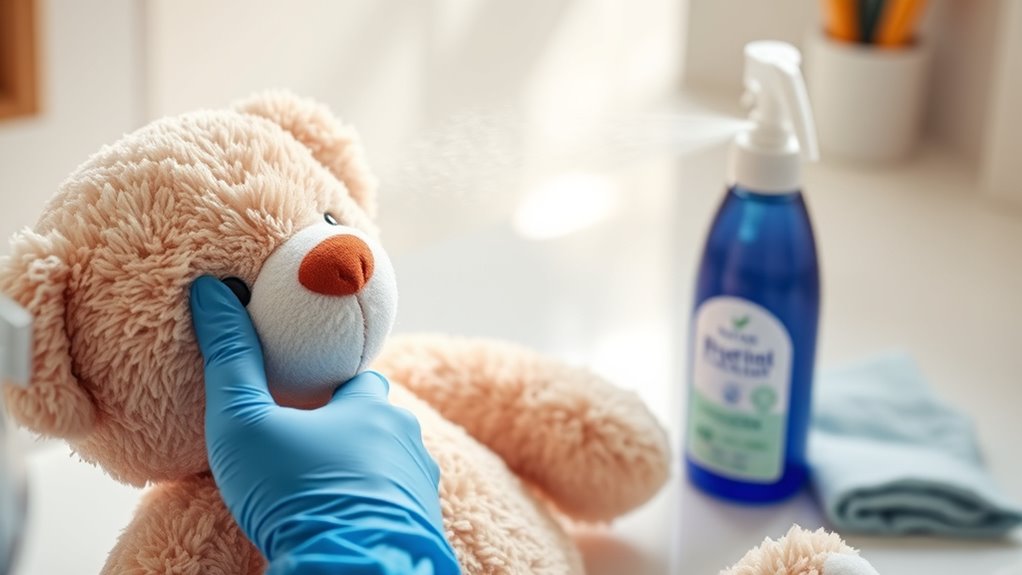
Soft and plush toys should be disinfected regularly, especially during cold and flu season or if they’ve been exposed to germs. The disinfection frequency depends on the toy material and how often your child plays with them. For fabric toys, disinfect after illness or heavy use, while for plush toys that are frequently handled, more regular cleaning is advised. To disinfect effectively:
- Use a gentle bleach solution for durable fabrics
- Wash with hot water when possible
- Consider steam cleaning for delicate materials
- Always check manufacturer instructions before disinfecting
Knowing the toy material helps determine the best method, and maintaining a consistent disinfection schedule reduces germ transmission. Additionally, choosing high-tech bidet systems with advanced sensors can help promote better hygiene in the bathroom environment, reducing the spread of germs. Regularly disinfecting soft and plush toys keeps them safe and hygienic for your child.
Drying and Storing Toys After Cleaning
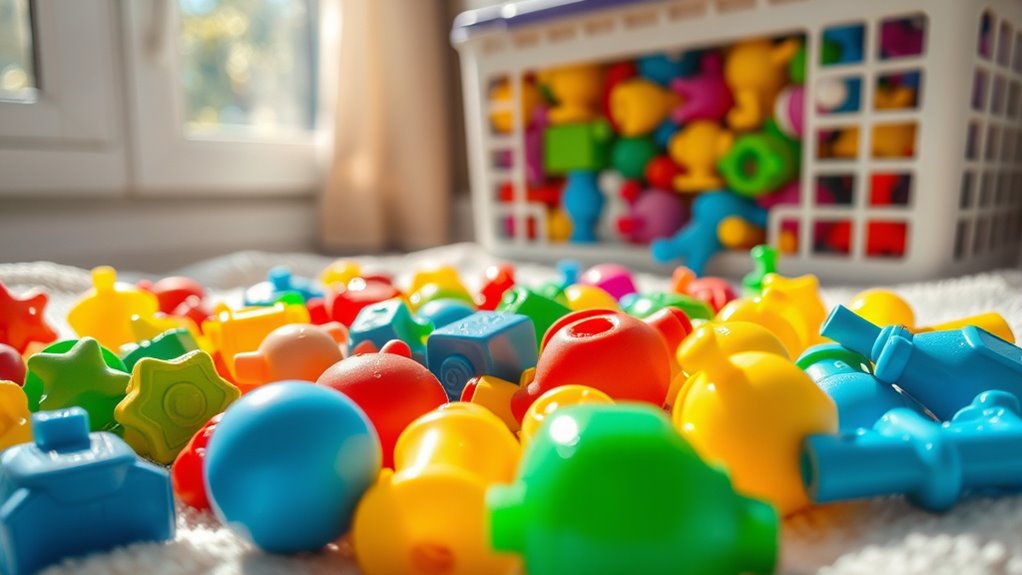
After disinfecting your child’s toys, proper drying and storage are key to preventing mold growth and maintaining their cleanliness. Use air drying techniques by placing toys in a well-ventilated area, ensuring they are completely dry before storing. For soft or plush toys, gently squeeze out excess water and hang them or lay them flat to dry. Hard toys can be air dried on a clean towel. When storing, follow these tips: keep toys in a dry, cool place away from direct sunlight, and consider using storage bins with lids to protect against dust. Avoid stacking wet toys or placing them in humid environments. Proper drying and smart storage keep toys safe, clean, and ready for playtime without risking mold or bacterial growth. Additionally, ensuring toys are made from materials suitable for self-watering plant pots can help prevent moisture retention and bacterial buildup.
Tips for Preventing Germ Buildup on Toys
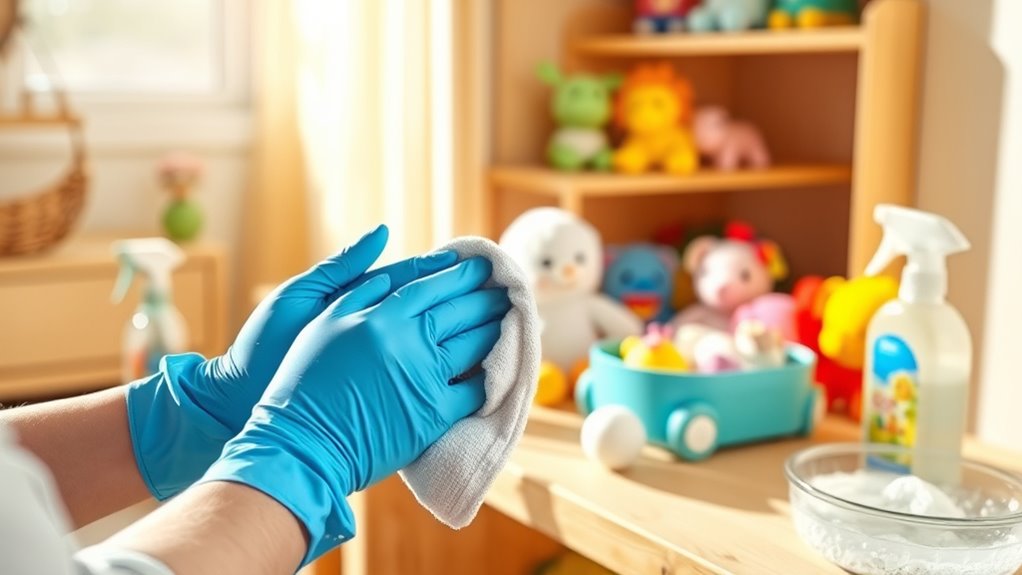
Germ buildup on toys can happen quickly if you don’t take proactive steps to prevent it. To keep your child’s toys safe and reduce allergy risks, focus on proper toy storage and routine cleaning. Store toys in breathable containers or designated bins to limit dust and bacteria exposure. Encourage your child to put away toys after playtime to prevent clutter and bacteria accumulation. Regularly inspect and clean frequently used toys, especially those that go in the mouth or contact skin. Keep play areas well-ventilated and wash hands before handling toys. For added allergy prevention, choose toys made of non-porous materials that are easy to clean. Consistent maintenance helps minimize germs and keeps playtime safe and healthy. Implementing vertical storage solutions can also help organize toys effectively and reduce clutter.
Common Mistakes to Avoid When Cleaning Toys
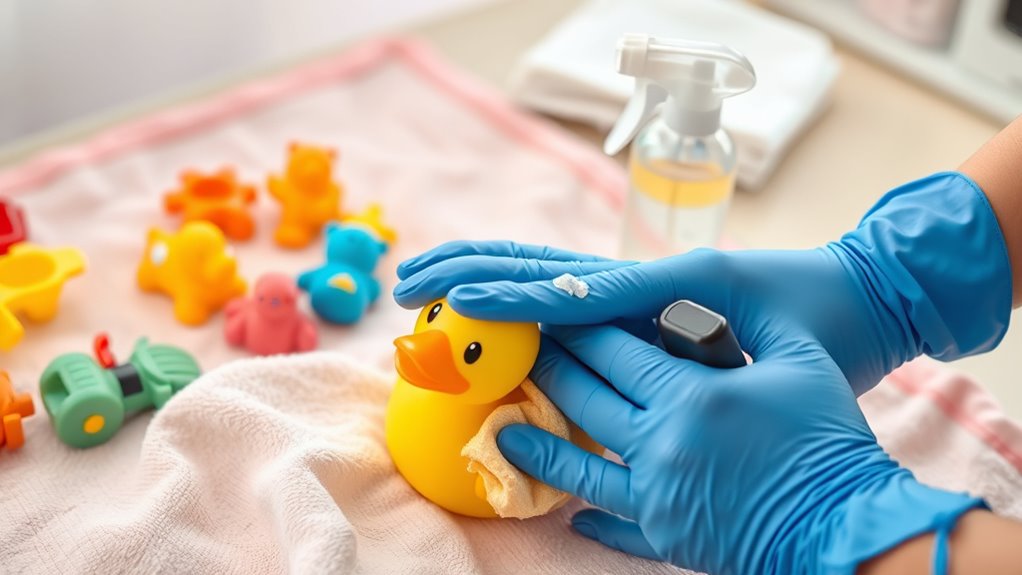
While regular cleaning is important, many people make common mistakes that can compromise toy safety and cleanliness. One mistake is using harsh chemicals or bleach, which can damage toys and pose allergy concerns for sensitive children. Avoid soaking toys in water for too long, especially if they contain electronic parts or batteries, as this can lead to mold growth or malfunction. Not rinsing thoroughly can leave residues that irritate skin or trigger allergies. Additionally, some overlook the importance of drying toys completely, creating a breeding ground for bacteria. Failing to follow manufacturer instructions can also lead to ineffective cleaning or damage. Factors such as toy material can influence the best cleaning method, so always consider the manufacturer’s guidance. To ensure toy safety, always choose gentle cleaning agents and pay attention to allergy concerns, thoroughly rinse, and dry toys properly before giving them back to your child.
Frequently Asked Questions
Are There Toys That Shouldn’t Be Cleaned With Water?
Yes, some toys shouldn’t be cleaned with water. Water-sensitive toys, especially those made of delicate materials like plush, foam, or electronic parts, can be damaged or ruined if exposed to water. Instead, you should use dry or specialized cleaning methods for delicate material cleaning. Always check manufacturer instructions before cleaning, and avoid water on toys that could trap moisture or compromise their safety or function.
How Often Should I Disinfect My Child’s Toys?
You should disinfect your child’s toys weekly or more often if they’re frequently mouthed or shared. The cleaning frequency depends on toy material; plastic and rubber toys can be disinfected regularly, while plush toys need more careful cleaning. Always check manufacturer instructions, and use appropriate disinfectants. Regular cleaning helps prevent germs from spreading, ensuring your child’s toys remain safe and hygienic for playtime.
Can Cleaning Products Cause Allergies or Skin Irritation?
Cleaning products can cause allergies or skin irritation risks if you’re not careful. You might experience cleaning product allergies or skin irritation risks, especially with harsh chemicals. To protect yourself and your child, choose gentle, fragrance-free options and always rinse toys thoroughly. Wearing gloves can also reduce contact. If you notice redness, itching, or other reactions, stop using the product immediately and consult a healthcare professional.
Are There Specific Precautions for Cleaning Electronic Toys?
You should take specific precautions when cleaning electronic toys to guarantee electronic safety. Use a soft, damp cloth with mild soap or disinfectant approved for electronics, avoiding excess moisture that can damage components. Never submerge electronic toys in water or use harsh chemicals. Always turn off and unplug devices before cleaning, and let them dry completely before use. These cleaning methods help protect both the toy’s electronics and your child’s safety.
How Can I Tell if a Toy Is Safe After Cleaning?
You can tell if a toy is safe after cleaning by inspecting it for damage or residue. Verify the toy’s material safety isn’t compromised by checking for cracks or discoloration. Confirm the disinfectant used was effective by following manufacturer instructions and rinsing thoroughly if needed. Always dry the toy completely before use. If the toy remains intact and free of residue, it’s likely safe for your child.
Conclusion
Cleaning your toys safely is key to keeping your family healthy. Did you know that toys can harbor up to 90% of bacteria if not cleaned properly? By choosing the right products, washing different toys correctly, and disinfecting when needed, you reduce germs and prevent illness. Remember to dry and store toys properly, and avoid common cleaning mistakes. With these tips, you can enjoy your child’s playtime while ensuring their toys stay safe and germ-free.