The best handwriting practice workbooks for kids match practice to a child’s age, skill level, and willingness to keep going. I’d choose The All-in-One Print Handwriting Workbook for Kids as the strongest all-around starting point, while Momo & Nashi Grooved Handwriting Practice Books stand out for younger children who benefit from tactile letter paths. For older learners, Print Handwriting Practice for Kids Ages 8–12: 250 Fun Facts adds subject matter to keep writing practice from feeling repetitive. The main tradeoff is between structured tracing and more independent writing, along with reusable formats versus conventional workbook pages. Read on for the full comparison and recommendations by age and learning need.

Prime made for students and young adults
- Fast, free delivery for dorm and study essentials
- Prime Video and Amazon Music included
- Member-only deals
Key Takeaways
- The All-in-One Print Handwriting Workbook for Kids has the broadest stated scope, making it a useful first choice when a family wants one print workbook rather than a narrow letter-tracing title.
- The two grooved options aimed at younger children—Momo & Nashi and Magic Grooved Writing Practice Books—prioritize tactile tracing, while reusable sets add repeated practice without relying on fresh pages.
- Print Handwriting Practice for Kids Ages 8–12: 250 Fun Facts gives older children a content-based reason to write; conventional print workbooks may suit learners who prefer direct handwriting instruction.
- Age labels vary widely, from ages 3–5 to 8–12, so the child’s current control and letter familiarity matter more than choosing by age range alone.
- The lineup spans print, alphabet tracing, and cursive, but titles alone do not establish identical lesson sequences or page layouts; check the workbook’s sample pages and skill progression before buying.
| Handwriting Practice Book for Kids Ages 6–10 | 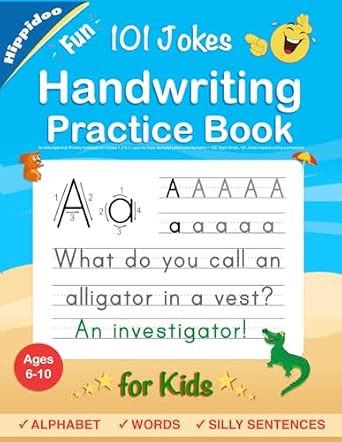 | Best for Handwriting Plus School Skills | Age range: 6–10 years | Grades: 1–4 | Activities: Alphabet tracing, number tracing, sight words, and math drills | VIEW LATEST PRICE | See Our Full Breakdown |
| Momo & Nashi Grooved Handwriting Practice Books for Kids Ages 3–5 |  | Best Reusable Set for Preschool Beginners | Brand: Momo & Nashi | Age range: 3–5 years | Set contents: 5 reusable books, 2 magic pens, 10 ink refills, 2 pencil grips, and a sticker sheet | VIEW LATEST PRICE | See Our Full Breakdown |
| Trace Letters: Alphabet Handwriting Practice Workbook for Kids |  | Best for Focused Letter Practice | Intended age: 3–5 years | Audience: Preschool and kindergarten | Activities: Alphabet handwriting practice and sight words | VIEW LATEST PRICE | See Our Full Breakdown |
| Superhero Handwriting Practice Workbook for Kids Ages 6–9 |  | Best for Theme-Motivated Elementary Learners | Age range: 6–9 years | Intended grades: Kindergarten–4th grade | Theme: Superheroes | VIEW LATEST PRICE | See Our Full Breakdown |
| The All-in-One Print Handwriting Workbook for Kids |  | Best for Varied Print Practice | Pages: 145 | Format: Print handwriting workbook | Suggested practice time: 15 minutes per day | VIEW LATEST PRICE | See Our Full Breakdown |
| The Print Handwriting Workbook for Kids Ages 8–12 |  | Best for Science-Minded Practice | Age range: 8–12 years | Writing style: Print handwriting | Content: 123 science facts | VIEW LATEST PRICE | See Our Full Breakdown |
| Magic Grooved Writing Practice Books for Kids, Ages 3–8 |  | Best Reusable Set for Early Learners | Brand: Timetome | Manufacturer: TIME X EDUCATE | Recommended age: 3–8 years | VIEW LATEST PRICE | See Our Full Breakdown |
| Print Handwriting Workbook for Kids Ages 8–12 |  | Best for Varied Writing Prompts | Age range: 8–12 years | Format: Workbook | Focus: Print handwriting and writing skills | VIEW LATEST PRICE | See Our Full Breakdown |
| Print Handwriting Practice for Kids Ages 8–12: 250 Fun Facts About Science, Animals, and History |  | Best for Cross-Subject Copywork | Age range: 8–12 years | Number of fun facts: 250 | Topics: Science, animals, and history | VIEW LATEST PRICE | See Our Full Breakdown |
| ABC Tracing Workbook: A–Z Letter Tracing Activities for Kids |  | Best for First Letter Formation | Intended age: 3–5 years | Content: Alphabet tracing activities | Letters: A–Z | VIEW LATEST PRICE | See Our Full Breakdown |
| Reusable Grooved Handwriting Practice Workbook Set for Kids Ages 3–8 |  | Best for Broad Early-Learning Practice | Age range: 3–8 years | Included workbooks: 6: alphabet, numbers, math, drawing, shapes, and sight words | Included accessories: 6 magic pens, silicone pencil grips, stickers, and storage pouch | VIEW LATEST PRICE | See Our Full Breakdown |
| PracticeJQDEN Reusable Grooved Handwriting Practice Set for Kids, 5 Books with Magic Pens and Grips |  | Best for Early Math Extension | Age range: 3 years and up | Included items: 5 themed books, magic pens, pen grips, 30 refills, and storage bag | Book topics: Letters, numbers, arithmetic, drawing, multiplication, and division | VIEW LATEST PRICE | See Our Full Breakdown |
| Carson Dellosa Beginning Traditional Cursive Handwriting Workbook for Grades 1–3 |  | Best for Beginning Cursive | Brand: Carson Dellosa | Grade level: 1–3 | Subject: Cursive handwriting | VIEW LATEST PRICE | See Our Full Breakdown |
| The Complete Step-by-Step Print Handwriting Workbook for Kids Ages 8–12 |  | Best for Older Print Writers | Target age: 8–12 years | Format: Workbook | Content type: Handwriting practice | VIEW LATEST PRICE | See Our Full Breakdown |
| handwriting practice workbooks for kid | Age range |
|---|---|
| Handwriting Practice Book for | 6–10 years |
| Momo & Nashi Grooved Handwriti | 3–5 years |
| Trace Letters: Alphabet Handwr | — |
| Superhero Handwriting Practice | 6–9 years |
| The All-in-One Print Handwriti | — |
| The Print Handwriting Workbook | 8–12 years |
| Magic Grooved Writing Practice | — |
| Print Handwriting Workbook for | 8–12 years |
| Print Handwriting Practice for | 8–12 years |
| ABC Tracing Workbook: A–Z Lett | — |
| Reusable Grooved Handwriting P | 3–8 years |
| PracticeJQDEN Reusable Grooved | 3 years and up |
| Carson Dellosa Beginning Tradi | — |
| The Complete Step-by-Step Prin | — |
More Details on Our Top Picks
Handwriting Practice Book for Kids Ages 6–10
This workbook broadens handwriting practice with alphabet and number tracing, sight words, and math drills. That mix gives children in grades 1–3 a chance to work on writing while also revisiting early school skills, rather than spending every session on letters alone. Compared with The All-in-One Print Handwriting Workbook for Kids, which has a stated 145 pages and uses jokes, science facts, and real-world prompts, this book’s main distinction is its explicit number practice through 100 and math activities. The tradeoff is less clarity about the experience: page count and format are not provided, so I can’t tell how much handwriting repetition it offers or how the activities are laid out. It suits families seeking varied elementary practice, but buyers wanting a clearly documented print-focused sequence may prefer the All-in-One workbook.
Pros:- Combines alphabet tracing with number tracing from 1 to 100
- Adds sight words and math drills alongside handwriting
- Covers activities associated with multiple elementary grade levels
Cons:- Page count and workbook format are not specified
- The description does not explain how activities progress or how much space is provided for repeated practice
Best for: Families with children in grades 1–3 who want handwriting practice paired with number tracing, sight words, and elementary math review.
Not ideal for: Buyers who need a known page count, a clearly described workbook format, or a handwriting-only program with documented lesson progression.
- Age range:6–10 years
- Grades:1–4
- Activities:Alphabet tracing, number tracing, sight words, and math drills
- Number practice:Tracing numbers 1–100
- Writing focus:Handwriting and printing
- Intended use:Elementary handwriting and skills practice
Our verdict“Choose this for an elementary-age child who benefits from handwriting practice mixed with number, sight-word, and math activities.”
Momo & Nashi Grooved Handwriting Practice Books for Kids Ages 3–5
Repeated tracing is the main draw here: grooved guides give young children a physical path to follow, while disappearing-ink pens let them revisit the activities. The five-book set includes 48 activities spanning letters, counting, early math, word recognition, and drawing, so it reaches beyond handwriting without being aimed at older elementary writers. Compared with Trace Letters: Alphabet Handwriting Practice Workbook for Kids, this set offers more activity types and reusable materials; the alphabet workbook is the simpler fit for families who want a narrower letter-and-sight-word focus. The tradeoff is that reuse depends on the included pens and refills, and the preschool-oriented content may not hold an older child’s interest. Its spiral binding, pencil grips, and left- and right-handed use add practical flexibility, but the set is heavier and involves more pieces than a standard workbook.
Pros:- Five reusable books support repeated practice
- Grooved guides provide a physical path for tracing
- Includes 48 activities across letters, counting, early math, word recognition, and drawing
- Set includes pencil grips and is described for left- and right-handed use
Cons:- Repeated use depends on the included disappearing-ink pens and refills
- The age range and activity level are geared toward preschoolers
- At 1.06 kg, the set is less lightweight than a single workbook
Best for: Caregivers of ages 3–5 who want reusable, guided tracing activities for home or classroom practice, including support for left- and right-handed children.
Not ideal for: Families seeking a conventional paper workbook, older elementary-level writing practice, or materials that do not depend on special pens and refills.
- Brand:Momo & Nashi
- Age range:3–5 years
- Set contents:5 reusable books, 2 magic pens, 10 ink refills, 2 pencil grips, and a sticker sheet
- Activities:48
- Activity types:Letter tracing, counting, early math, word recognition, and drawing
- Binding:Spiral-bound
- Item weight:1.06 kg
- Warranty:12 months
- Model and part number:Model 1; manufacturer part number MPB-01
Our verdict“Pick this set for preschoolers who benefit from guided, repeatable tracing and a variety of early-learning activities.”
Trace Letters: Alphabet Handwriting Practice Workbook for Kids
A narrow alphabet focus makes this a straightforward option for preschool and kindergarten learners who are just starting to form letters. It also includes sight words, adding a small step from tracing individual letters toward recognizing words. Compared with the Momo & Nashi Grooved Handwriting Practice Books for Kids Ages 3–5, this workbook is the more traditional, focused choice: Momo & Nashi adds reusable pages, grooves, counting, early math, and drawing, while this title keeps its stated activities centered on alphabet handwriting and sight words. That simplicity can help families avoid a crowded mix of tasks, but the available product details are sparse. No page count, format details, or specific tracing sequence are provided, so buyers cannot gauge how much repetition the book offers. It is best for a child who needs letter practice, not a broad activity set.
Pros:- Keeps the stated focus on alphabet handwriting practice
- Includes sight words alongside letter work
- Targets preschool and kindergarten learners ages 3–5
Cons:- The provided details do not specify page count or workbook format
- No number tracing, math, drawing, or other activity types are described
- The practice sequence and amount of repetition are not stated
Best for: Parents and preschool or kindergarten teachers looking for an alphabet-centered workbook with sight words for children ages 3–5.
Not ideal for: Buyers who want reusable grooved pages, number or math activities, or published details about page count and practice progression.
- Intended age:3–5 years
- Audience:Preschool and kindergarten
- Activities:Alphabet handwriting practice and sight words
- Subject focus:Letter formation
- Word practice:Sight words
- Format details:Not specified in the provided product information
Our verdict“Choose this when a preschooler needs a simple alphabet-and-sight-word focus rather than a multi-activity or reusable set.”
Superhero Handwriting Practice Workbook for Kids Ages 6–9
The superhero theme and short daily routine give this workbook a clear motivational angle for children ages 6–9. Its suggested 15-minute sessions may make practice feel easier to fit into a school-day routine, and its stated range extends from kindergarten through fourth grade. Compared with Handwriting Practice Book for Kids Ages 6–10, this title offers a character-led hook and a defined practice duration, while the other book names concrete activities such as number tracing, sight words, and math drills. That difference matters: the exercises in this workbook are not described, so families cannot tell whether it emphasizes letter formation, copying, or another skill. I’d favor it when theme and routine are the main hurdles; choose the Handwriting Practice Book instead if knowing the activity mix is more important than the presentation.
Pros:- Superhero theme may appeal to children who respond to character-led materials
- Suggests a manageable 15-minute daily practice session
- Covers a stated range from kindergarten through fourth grade
Cons:- Specific exercises and workbook contents are not described
- The broad age and grade range does not clarify how practice changes for different skill levels
Best for: Families of ages 6–9 who want a superhero-themed prompt to encourage brief, regular handwriting sessions.
Not ideal for: Buyers who need a documented list of exercises, a specific handwriting method, or evidence of how the lessons build from one skill to the next.
- Age range:6–9 years
- Intended grades:Kindergarten–4th grade
- Theme:Superheroes
- Suggested practice duration:15 minutes per day
- Skill focus:Handwriting practice
- Specific exercises:Not described in the provided product information
Our verdict“Pick this for a child motivated by superheroes and short practice sessions, but choose a workbook with listed exercises if you need a clear skill plan.”
The All-in-One Print Handwriting Workbook for Kids
Its 145 pages and varied prompts give this workbook a more clearly defined practice package than the Superhero Handwriting Practice Workbook, whose specific exercises are not listed. Jokes, science facts, and real-world prompts can give children something to write about, making the practice feel less like repeated letter drills. The focus is print handwriting, so it is a better match for a child working on print than for someone seeking cursive instruction. Compared with Handwriting Practice Book for Kids Ages 6–10, which combines writing with number tracing, sight words, and math drills, this title puts its stated emphasis on print practice through varied content rather than named school-subject exercises. The suggested 15-minute routine is flexible guidance, not a fit for every learner, and the supplied details do not specify an age range or grade level.
Pros:- 145 pages provide a clearly stated amount of print practice
- Jokes, science facts, and real-world prompts vary the writing tasks
- Suggests a 15-minute daily routine that can help structure practice
Cons:- Focused specifically on print handwriting rather than cursive
- The suggested daily practice duration may not suit every learner
- No age range or grade level is provided in the product information
Best for: Families seeking a substantial print-handwriting workbook that uses jokes, science facts, and real-world prompts to give writing practice variety.
Not ideal for: Buyers looking for cursive practice, a stated age or grade placement, or a workbook that includes explicit math and number-tracing activities.
- Pages:145
- Format:Print handwriting workbook
- Suggested practice time:15 minutes per day
- Activities:Jokes, science facts, and real-world prompts
- Handwriting style:Print
- Age and grade placement:Not specified in the provided product information
Our verdict“Choose this for a child practicing print who is more likely to engage with varied prompts than with handwriting drills alone.”
The Print Handwriting Workbook for Kids Ages 8–12
For older children who need print practice but tune out on repetitive copywork, this workbook gives handwriting a subject-matter hook: 123 science facts. That makes it a more focused choice than the companion-style Print Handwriting Workbook for Kids Ages 8–12 with jokes, quotes, and several kinds of content; here, science is the clear through-line. The age range also sets it apart from the ABC Tracing Workbook, which targets early letter formation rather than school-age print practice. The tradeoff is less variety in reading material, and the supplied details do not describe page layout, practice progression, or how much independent writing each fact requires. I’d choose it for a child interested in science, but not as a broad writing-skills workbook without more format information.
Pros:- Science facts give copywork a subject-based purpose.
- Designed specifically for children ages 8–12.
- Keeps the content focused rather than mixing several prompt types.
Cons:- Science-only content offers less variety than workbooks with jokes, quotes, or multiple topics.
- Product details do not specify page count, exercise format, or progression.
- The supplied description does not clarify whether activities extend beyond print copywork.
Best for: Ages 8–12 learners who enjoy science and need print handwriting practice with factual prompts.
Not ideal for: Children who prefer jokes, stories, or varied subjects, or families who need details about page layout and practice progression before choosing.
- Age range:8–12 years
- Writing style:Print handwriting
- Content:123 science facts
- Primary focus:Print penmanship and writing skills
- Format:Handwriting workbook
- Intended learner:School-age children
Our verdict“Choose this focused option when a science-loving child ages 8–12 needs print practice, and favor a broader-content workbook for more variety.”
Magic Grooved Writing Practice Books for Kids, Ages 3–8
This set is the most hands-on early-learning option here: six grooved copybooks cover letters, numbers, basic arithmetic, phrases, and drawing, while disappearing ink allows a page to be practiced again after it fades. The 3D grooves give young children a physical path to follow, unlike the flat alphabet tracing in the ABC Tracing Workbook. Its broader activity mix also goes beyond that workbook’s A–Z focus. The tradeoff is that the ink needs about 20–30 minutes to fade before reuse, so a child can’t immediately repeat the same page. It is also aimed at early writing rather than the older-child copywork offered by the science-fact workbooks. I’d pick it for guided, repeatable practice, not for polished independent handwriting or advanced exercises.
Pros:- Deep grooves provide tactile guidance for tracing.
- Six books cover letters, numbers, arithmetic, phrases, and drawing.
- Disappearing ink supports repeated practice without using a fresh worksheet each time.
- Three pen grips are included to support early pencil handling.
Cons:- Pages need about 20–30 minutes for the ink to fade before reuse.
- The activities are designed for early learners, not advanced handwriting practice.
- The set depends on its included pens and disappearing-ink refills for the reusable feature.
Best for: Families of ages 3–8 beginners who want guided tracing across letters, numbers, and simple activities, with reusable pages.
Not ideal for: Older children seeking longer writing prompts or advanced penmanship, and families who want pages ready for immediate repeated use.
- Brand:Timetome
- Manufacturer:TIME X EDUCATE
- Recommended age:3–8 years
- Set contents:6 copybooks, 6 pens, 3 pen grips
- Copybook subjects:Numbers, addition and subtraction, letters, phrases, and 2 drawing books
- Groove design:3D deep grooves
- Ink:Disappearing ink; fades in about 20–30 minutes
- Pen tip:Soft fiber
- Page features:Thick, durable, smudge-resistant pages; reusable
Our verdict“Choose this set for a young beginner who benefits from tactile tracing and varied reusable activities, rather than an older child needing extended writing practice.”
Print Handwriting Workbook for Kids Ages 8–12
This is the more varied of the two school-age print workbooks in this group. Alongside letters and words, it includes motivational quotes, jokes, and science facts, giving a child different kinds of text to copy. That variety makes it a broader choice than The Print Handwriting Workbook for Kids Ages 8–12, which centers on 123 science facts. It also differs from the 250 Fun Facts book, whose stated appeal is a large collection of facts across three subjects rather than mixed prompt types. The drawback is that the supplied details do not explain how exercises are sequenced or how much space children get for practice. I’d favor this one when varied prompts help sustain interest, but choose a more clearly described format if a child needs structured progression.
Pros:- Combines letter and word practice.
- Mixes motivational quotes, jokes, and science facts to vary copywork.
- Targets print handwriting for ages 8–12.
Cons:- Product details do not specify the exercise sequence or difficulty progression.
- Page count and available writing space are not provided.
- The varied prompts may be less suitable for children who prefer one consistent topic.
Best for: Ages 8–12 children who practice more willingly when handwriting prompts include jokes, quotes, words, and facts.
Not ideal for: Families looking for a clearly documented lesson sequence, specific page count, or a single-subject fact collection.
- Age range:8–12 years
- Format:Workbook
- Focus:Print handwriting and writing skills
- Letter practice:Letters
- Word practice:Words
- Prompt types:Motivational quotes, jokes, and science facts
Our verdict“Pick this workbook for an older child who likes changing prompt styles, and choose a focused facts book if one subject is more motivating.”
Print Handwriting Practice for Kids Ages 8–12: 250 Fun Facts About Science, Animals, and History
With 250 facts spanning science, animals, and history, this book offers the widest stated subject range among the older-child options here. It may suit a child who likes learning snippets while practicing print, whereas The Print Handwriting Workbook for Kids Ages 8–12 keeps its prompts to science alone. Compared with the Print Handwriting Workbook for Kids Ages 8–12 that mixes jokes, quotes, and facts, this one leans toward informational copywork instead of varied prompt styles. The main limitation is missing format detail: the supplied information does not say how the practice is laid out, how much writing space is provided, or how many pages it contains. I’d choose it for topic variety within fact-based practice, but not when a parent needs to judge the lesson structure in advance.
Pros:- Includes 250 fun facts for handwriting prompts.
- Covers science, animals, and history.
- Designed for children ages 8–12.
- Part of the Foundations of Handwriting series.
Cons:- Practice format is not specified in the supplied product details.
- Page count and amount of writing space are not provided.
- Fact-based prompts may offer less variety than a workbook with jokes and motivational quotes.
Best for: Ages 8–12 readers who enjoy science, animals, and history and are motivated by fact-based print copywork.
Not ideal for: Buyers who need confirmed page count, exercise layout, or a clear progression before selecting a workbook.
- Age range:8–12 years
- Number of fun facts:250
- Topics:Science, animals, and history
- Series:Foundations of Handwriting
- Writing style:Print handwriting
- Product type:Handwriting practice book
Our verdict“Choose this book for an older child who likes fact-based copywork across several subjects, provided the unspecified practice layout is acceptable.”
ABC Tracing Workbook: A–Z Letter Tracing Activities for Kids
For a child just starting to form letters, this workbook keeps the task narrow: A–Z tracing covers both uppercase and lowercase forms. That makes it a more direct first step than the Magic Grooved Writing Practice Books, which add numbers, arithmetic, phrases, and drawing, and less involved than the school-age print workbooks built around words and facts. Its simplicity can help a kindergarten-age learner focus on letter shapes without juggling other subjects. The tradeoff is equally clear: it is centered on tracing, so children ready for sentence copywork or broader writing practice may outgrow it quickly. I’d choose it for an early alphabet learner, but look to a broader workbook once basic letter formation is no longer the main challenge.
Pros:- Covers the full alphabet from A to Z.
- Includes both uppercase and lowercase letter forms.
- Keeps the focus on a manageable early handwriting skill.
- Designed for young children ages 3–5.
Cons:- Focused on letter tracing rather than broader writing exercises.
- May offer limited challenge once a child can form the alphabet.
- Does not include the varied activities found in reusable multi-subject sets.
Best for: Children ages 3–5 who are beginning to recognize and trace uppercase and lowercase letters.
Not ideal for: Children who already form letters comfortably or need word, sentence, or topic-based handwriting exercises.
- Intended age:3–5 years
- Content:Alphabet tracing activities
- Letters:A–Z
- Letter forms:Uppercase and lowercase
- Primary focus:Letter tracing and handwriting practice
- Product type:Workbook
Our verdict“Choose this workbook for a preschooler learning letter shapes, and move to a broader practice book when tracing alone is no longer enough.”
Reusable Grooved Handwriting Practice Workbook Set for Kids Ages 3–8
This set earns its place for families who want handwriting practice alongside several other early-learning activities. Its six themed workbooks cover alphabet, numbers, math, drawing, shapes, and sight words, giving it broader subject coverage than the five-book PracticeJQDEN set, which includes multiplication and division but not shapes or sight words. Deep 3D grooves give younger children a physical path to follow, while the disappearing ink makes repeated tracing possible without filling the home with loose worksheets. The tradeoff is the wait: ink takes about 20–30 minutes to fade, so a child eager to repeat an activity may need another page or task in the meantime. Its age range also makes it a better fit for early learners than older children ready for sustained print or cursive work.
Pros:- Six books span handwriting, numbers, math, drawing, shapes, and sight words.
- Deep grooves provide tactile guidance for tracing strokes.
- Reusable pages and fading ink support repeated practice.
- Includes silicone pencil grips, six magic pens, stickers, and a storage pouch.
Cons:- Ink takes approximately 20–30 minutes to disappear, limiting quick back-to-back reuse.
- The activities target ages 3–8 and may feel too basic for older learners.
Best for: Families with preschool or early elementary children who want reusable tracing across letters, numbers, shapes, and early literacy in one set.
Not ideal for: Older children working on fluent print or cursive, or families who need pages to reset immediately between attempts.
- Age range:3–8 years
- Included workbooks:6: alphabet, numbers, math, drawing, shapes, and sight words
- Included accessories:6 magic pens, silicone pencil grips, stickers, and storage pouch
- Page type:Reusable pages with deep 3D grooves
- Ink:Fades in approximately 20–30 minutes
- Dimensions:12 x 8.66 x 1.96 inches
- Item weight:1 pound
- Manufacturer and model:Tibibee; Tibibee-005
Our verdict“Choose this set for a young child who benefits from grooved tracing and varied early-learning activities, but skip it if you need age-up handwriting instruction or instant page reuse.”
PracticeJQDEN Reusable Grooved Handwriting Practice Set for Kids, 5 Books with Magic Pens and Grips
Among the reusable grooved sets here, this one is the stronger match when a child’s practice has moved beyond letters and basic numbers. Its five books include arithmetic plus multiplication and division, a step up in math scope from the six-book Tibibee set, which instead spreads its activities across shapes and sight words. The 3D grooves and contoured grips offer young writers physical cues for tracing and holding a pen, while 30 refills help keep the magic pens supplied. That added math focus does not make it a more advanced handwriting workbook: the activities are still aimed at children from age three, and the listing gives no upper age limit. Ink takes about 30 minutes to disappear, so children who want to repeat the same line immediately may find the reusable format less convenient than expected.
Pros:- Five books combine letters and numbers with arithmetic, drawing, and multiplication and division.
- 3D grooves guide tracing and provide tactile writing paths.
- Includes contoured pen grips and 30 refills.
- Reusable pages offer repeated practice with disappearing blue ink.
Cons:- Ink takes about 30 minutes to disappear, which can interrupt repeat practice.
- The age guidance starts at three and does not identify an older target range.
- Its math content broadens the set but does not replace a structured handwriting progression.
Best for: Families with young children who want reusable letter and number tracing paired with arithmetic and early multiplication or division activities.
Not ideal for: Children who need a dedicated print or cursive progression, or families who want to reuse the same page without waiting for ink to fade.
- Age range:3 years and up
- Included items:5 themed books, magic pens, pen grips, 30 refills, and storage bag
- Book topics:Letters, numbers, arithmetic, drawing, multiplication, and division
- Page design:Paper with 3D writing grooves
- Ink:Blue; disappears within about 30 minutes
- Grip type:Contoured
- Package dimensions:12.6 x 8.8 x 1.5 inches
- Item weight:1.6 pounds
- Model number:JY04-WDD5
Our verdict“Pick this set when early math practice matters as much as reusable tracing, but choose a focused handwriting workbook for older children building print fluency.”
Carson Dellosa Beginning Traditional Cursive Handwriting Workbook for Grades 1–3
This is the clearest choice in the group for a child moving from print toward traditional cursive. Its grade 1–3 audience and dry-erase tracing activities set it apart from The Complete Step-by-Step Print Handwriting Workbook for Kids Ages 8–12, which builds print from letters to sentences rather than introducing cursive. The reusable tracing format includes both letters and numbers, making it useful for guided practice at home or in a classroom. However, the available product details do not describe the sequence, page count, or how much independent writing follows tracing, so I would not treat it as a full cursive curriculum without checking the book itself. It also has a narrower skill focus than the reusable multi-topic sets, which add drawing, math, or early literacy activities.
Pros:- Focuses on traditional cursive for grades 1–3.
- Dry-erase tracing activities allow repeated practice.
- Includes both letter and number tracing.
- Suitable for classroom or homeschool use.
Cons:- The provided details do not specify the activity sequence or extent of independent writing.
- Its cursive focus may not suit children who are still developing basic print handwriting.
- It covers fewer subject areas than the reusable grooved sets in this roundup.
Best for: Parents and teachers seeking a focused traditional cursive tracing workbook for students in grades 1–3, especially for classroom or homeschool practice.
Not ideal for: Children who still need introductory print-letter instruction, or buyers wanting a broad activity set with detailed progression and multiple learning themes.
- Brand:Carson Dellosa
- Grade level:1–3
- Subject:Cursive handwriting
- Activities:Dry-erase number and letter tracing
- Use:Classroom or homeschool
- Format:Handwriting workbook
Our verdict“Choose this for a grade 1–3 learner beginning traditional cursive, but look elsewhere for a detailed print-writing sequence or broader early-learning activities.”
The Complete Step-by-Step Print Handwriting Workbook for Kids Ages 8–12
For an older child who still needs print practice, this workbook offers a more age-targeted path than the reusable grooved sets aimed at children starting around age three. It moves from individual letters to words and sentences, so practice can build toward writing connected text rather than stopping at tracing. Jokes, riddles, facts, and creative prompts give children a reason to keep going; that makes it a livelier fit for ages 8–12 than the Carson Dellosa cursive workbook, which focuses on dry-erase letter and number tracing. The tradeoff is focus: this book teaches print only, not cursive, and the provided details do not specify page count or whether activities are reusable. It is best treated as a structured print workbook, not an all-in-one handwriting or multi-subject set.
Pros:- Step-by-step progression connects letter practice to words and sentences.
- Jokes, riddles, facts, and creative prompts add variety to writing practice.
- Targeted to children ages 8–12 rather than preschool beginners.
- Print-focused content suits learners who need continued practice with this writing style.
Cons:- Limited to print handwriting and does not teach cursive.
- The provided product details do not specify page count or reusable features.
- Its age focus may not suit younger beginners or older students.
Best for: Families seeking age-appropriate print practice for an 8–12-year-old who needs to build from letter formation toward words and sentences.
Not ideal for: Children outside the stated age range, learners who need cursive instruction, or buyers specifically seeking reusable grooved tracing pages.
- Target age:8–12 years
- Format:Workbook
- Content type:Handwriting practice
- Writing style:Print
- Progression:Individual letters to words and sentences
- Engagement content:Facts, jokes, riddles, and creative prompts
- ASIN:1961995077
Our verdict“Choose this for an 8–12-year-old who needs engaging, sequenced print practice, but pick a cursive workbook or grooved reusable set for a different learning stage.”
How We Picked
I compared the 14 titles through the needs that shape a handwriting purchase: age and skill fit, whether the format centers on tracing or broader practice, and how clearly the title signals its subject. I also looked at likely day-to-day usability, including whether a workbook is reusable, whether its theme or writing prompts may help sustain attention, and whether its stated scope fits a focused skill or a wider range of practice.
The ranking favors options that appear useful to a wider set of children without losing a clear purpose. That puts a broad print workbook ahead of more specialized choices, while tactile grooved books rank well for early learners and engaging fact-based practice stands out for older students. A narrow alphabet or cursive workbook can be a better match when that is the precise skill a child needs, but it is less flexible as a general handwriting choice. Product titles do not confirm paper quality, exact lesson order, or instructional detail, so I treat those as points for shoppers to verify in the listing or sample pages rather than assumed advantages.
Factors to Consider When Choosing Handwriting Practice Workbooks For Kids
Choosing a handwriting workbook is less about finding the most pages and more about matching the kind of practice to the child’s next step. I’d use these factors to narrow the field before committing to a format.
Match the workbook to the next skill, not just the age label
Age ranges are useful starting points, but they cannot show whether a child is ready to trace letters, copy words, or write independently. A child who still needs help forming letters may find an older-age print workbook frustrating, while a confident writer may outgrow basic alphabet tracing quickly. Look for a progression that begins near the child’s current ability and moves forward in small steps. A common mistake is buying for the age printed on the cover without checking the actual exercises. If sample pages are available, compare them with what the child can already do comfortably. Pick a workbook that offers a manageable next challenge rather than a large jump.
Choose tracing, copying, or independent writing deliberately
These activities build different parts of handwriting practice. Tracing can help a beginner notice letter shape and direction, copying asks the child to reproduce a model, and independent writing calls on memory and control at the same time. A workbook dominated by tracing may not provide enough practice once a child can form basic letters. On the other hand, jumping straight to open writing can leave a beginner unsure where to start. Check whether the exercises move from guided work toward less support, rather than assuming that every workbook covers all stages. The best choice is the one that meets the skill the child needs to practice now.
Decide whether reusable pages solve a real household need
Reusable grooved books and magic-pen sets can suit children who benefit from repeating the same tracing motions or families trying to limit disposable practice pages. Their value depends on whether the child will use that tactile format consistently and whether the set’s instructions and accessories suit the household. A conventional workbook may be simpler when a child needs varied prompts or a record of completed work. Reusable practice can also become repetitive if the child has already mastered the same letter paths. Before choosing a set, check what is included and how the writing surface is meant to be reused. Pay for reusability when repeated guided practice is part of the plan, not just because the format sounds novel.
Use themes and prompts to support attention, not replace instruction
A favorite character or interesting subject can make practice easier to start, especially for a child who resists repetitive drills. The superhero workbook and science, animal, and history fact workbook offer different ways to make writing feel connected to a topic. A theme does not tell you whether letter formation is taught clearly or whether the exercises match the child’s level. Check that the writing task itself remains useful rather than relying on decoration or subject matter to carry the workbook. For older children, prompts may help sustain practice after basic letter formation is familiar. For a beginner, clear models and sufficient space can matter more than the theme.
Separate print handwriting from cursive goals
Print and cursive workbooks teach different letterforms, so buying the wrong style can send practice away from a child’s current schoolwork or personal goal. The Carson Dellosa title is specifically for beginning traditional cursive, while most of this lineup focuses on print or alphabet tracing. If the child is still forming print letters, cursive may add an unnecessary layer of challenge. If cursive is the target, a print workbook cannot substitute for instruction in connected letterforms. Check what the child is being asked to practice at school and whether the workbook’s examples match that style. This simple check can prevent buying a well-matched workbook for the wrong handwriting task.
Check page layout and practice workload before buying
A workbook’s usefulness depends partly on whether the child can comfortably see and complete its exercises. Look at sample pages for letter size, spacing, writing lines, and the amount of work expected on each page. Crowded exercises may be hard for a child with developing motor control, while very limited practice may not satisfy a learner who wants more repetition. Also check whether the book asks for short sessions or longer stretches; a large page count is not automatically a good fit for a child with limited attention. If the listing does not show interior pages, treat layout and progression as unknown rather than assuming they are suitable. Choose a workload the child can return to regularly without turning practice into a source of conflict.
Frequently Asked Questions
Should I choose a grooved workbook or a regular tracing workbook for a beginner?
A grooved book is worth considering when a child responds well to tactile paths and needs help following a letter shape with a pencil or pen. A regular tracing workbook may be a better fit when the child can follow printed guides and benefits from seeing more varied exercises on the page. Neither format guarantees a smooth move to independent writing, so check whether practice progresses beyond repeating the same paths. Consider how the child handles crayons, pencils, and simple drawing before choosing. If possible, preview the page format and choose the one the child can use without frequent adult correction.
Is a workbook labeled for ages 8–12 suitable for a child who is just learning to write?
Not necessarily: the age range does not reveal how demanding the letter practice is. Check sample pages for whether the workbook starts with guided letter formation or expects the child to copy words and sentences. A beginner may need larger models and more support than a workbook designed for older children provides. Conversely, an older learner who already forms letters comfortably may prefer prompts or facts that give writing a purpose. Let demonstrated skill, not age alone, guide the choice.
When is a reusable handwriting set a better choice than a paper workbook?
A reusable set can make sense when a child needs frequent repetition of the same guided letter paths or when avoiding piles of completed practice pages matters to the family. A paper workbook may be preferable for varied exercises, written responses, or keeping a visible record of progress. Reusable formats can also have limits: accessories and writing surfaces may not suit every child, and repeated grooves may offer less variety than a conventional book. Check the set contents and intended use before buying. Choose the format that supports the practice routine the child is most likely to follow.
Can a print handwriting workbook help a child who needs to learn cursive?
Print practice can support general pencil control, but it does not teach the connected forms and movements specific to cursive. If cursive is the goal, look for a workbook that explicitly covers cursive letter formation, such as a title identified for beginning traditional cursive. Check whether it teaches the letters in a clear sequence and includes opportunities to connect them. A child who is still developing print skills may benefit from focusing on those first, depending on the family’s or school’s plan. Match the workbook to the requested skill rather than treating all handwriting practice as interchangeable.
How can I tell whether a workbook will keep my child engaged without sacrificing useful practice?
Look for a clear balance between appealing themes or prompts and actual handwriting instruction. A superhero theme or subject-based facts may give a child something to write about, while well-spaced models and a sensible skill progression still do the teaching. Check sample pages to see whether the theme supports the writing or merely decorates it. If a child tires of repetitive drills, varied prompts can help; if letter formation is the main challenge, straightforward guided practice may matter more. A short, repeatable session is often a better match than choosing a book solely for its number of activities.
Conclusion
For most families seeking a broad print option, I’d start with The All-in-One Print Handwriting Workbook for Kids as the best overall pick. For early learners who need tactile guidance, Momo & Nashi Grooved Handwriting Practice Books are the beginner-focused choice; Magic Grooved Writing Practice Books or one of the reusable sets may suit families looking for repeatable tracing. I’d point older children who enjoy learning while they write toward Print Handwriting Practice for Kids Ages 8–12: 250 Fun Facts, while the Carson Dellosa Beginning Traditional Cursive Handwriting Workbook fits a specific cursive goal. For value, compare the scope and usable practice in the conventional workbooks against the accessories and repeat-use format of a reusable set rather than choosing by bundle size alone. Before ordering, check sample pages and confirm that the workbook practices the exact skill your child needs next.