Choosing the right iMac for classroom labs in 2026 involves balancing performance, cost, and versatility. The Apple 2024 iMac with M4 Chip (Blue) stands out for its vibrant display and colorful design, making it ideal for environments that value aesthetics and seamless Apple ecosystem integration. In contrast, the Apple 2024 iMac with M4 Chip (Silver) offers more power and expandability, suited for labs requiring higher performance and more external connections. While both are premium options, the primary tradeoff lies in storage capacity, external display support, and price. This guide compares these two models to help educators and IT managers decide which aligns best with their classroom needs.

Prime made for students and young adults
- Fast, free delivery for dorm and study essentials
- Prime Video and Amazon Music included
- Member-only deals
Key Takeaways
- The 24-inch Retina display provides sharp visuals suitable for multimedia and design tasks.
- The Silver model offers more RAM and storage, making it better for intensive applications and multitasking.
- Both models support external displays, but the Silver version supports more Thunderbolt ports, increasing expandability.
- Price remains high for both, but the Silver model provides more performance for a slightly higher investment.
- Color options allow some customization, but students and teachers should prioritize performance and connectivity for classroom use.
| Apple 2024 iMac All-in-One Desktop Computer with M4 Chip, 24-inch Retina Display, 16GB Memory, 256GB SSD, Blue |  | Best Overall for Classroom Labs | Processor: M4 chip with 8-core CPU and 8-core GPU | Display: 24-inch Retina, 4.5K resolution | Memory: 16GB Unified Memory | VIEW ON AMAZON | See Our Full Breakdown |
| Apple 2024 iMac All-in-One Desktop Computer with M4 Chip, 24-inch Retina Display, 24GB Memory, 512GB SSD, Silver | 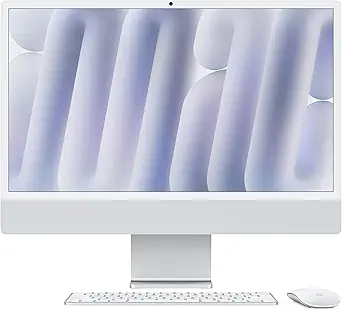 | Best for Power and Expandability in Classroom Labs | Processor: M4 chip with 10-core CPU and GPU | Display: 24-inch Retina, 4.5K resolution | Memory: 24GB Unified Memory | VIEW ON AMAZON | See Our Full Breakdown |
| imac for classroom lab | Processor | Display | Memory | Storage |
|---|---|---|---|---|
| Apple 2024 iMac All-in-One Des | M4 chip with 8-core CPU and 8-core GPU | 24-inch Retina, 4.5K resolution | 16GB Unified Memory | 256GB SSD |
| Apple 2024 iMac All-in-One Des | M4 chip with 10-core CPU and GPU | 24-inch Retina, 4.5K resolution | 24GB Unified Memory | 512GB SSD |
More Details on Our Top Picks
Apple 2024 iMac All-in-One Desktop Computer with M4 Chip, 24-inch Retina Display, 16GB Memory, 256GB SSD, Blue
This model is distinguished by its powerful M4 chip, offering an 8-core CPU and GPU, which makes it well-suited for multitasking and running demanding applications in a classroom setting. The vibrant 24-inch Retina display ensures students and teachers can work with sharp visuals, especially for multimedia projects. Its 16GB of unified memory provides a smooth experience for most educational software, though the 256GB SSD could become a limitation for large files or extensive storage needs. Compared to the Silver model, it offers less RAM and storage but is slightly more affordable and still packs enough power for typical classroom tasks. Its limited external display support (up to two) might restrict lab setups requiring multiple screens. Overall, this pick offers a compelling mix of performance and affordability, especially for smaller labs or environments prioritizing aesthetics and seamless Apple ecosystem integration.
Pros:- Powerful M4 chip for fast, responsive performance
- Vibrant 24-inch Retina display with excellent color accuracy
- Seamless integration within the Apple ecosystem
- Stylish, colorful design that appeals to students
Cons:- Limited storage capacity for large files
- Supports only two external displays
- Premium price point may be a barrier for some schools
Best for: Small to medium classroom labs focused on multimedia and general productivity
Not ideal for: Labs requiring extensive storage, high-end multitasking, or multiple external displays
- Processor:M4 chip with 8-core CPU and 8-core GPU
- Display:24-inch Retina, 4.5K resolution
- Memory:16GB Unified Memory
- Storage:256GB SSD
- Color:Blue
- Connectivity:Wi-Fi 6E, Bluetooth 5.3, Thunderbolt 4, supports 2 external displays
Our verdict“A balanced, high-performance choice ideal for smaller classroom labs focusing on multimedia work.”
Apple 2024 iMac All-in-One Desktop Computer with M4 Chip, 24-inch Retina Display, 24GB Memory, 512GB SSD, Silver
This variant elevates performance with a 10-core CPU and GPU, making it better suited for demanding applications like 3D modeling, complex data processing, or running multiple heavy programs simultaneously. Its 24GB of RAM and 512GB SSD provide ample space and speed, reducing bottlenecks during intensive tasks, which is advantageous in a classroom with advanced software needs. The Silver color adds a sleek, professional look that fits well in high-tech labs. The support for up to four Thunderbolt 4 ports expands external device connectivity, making it easier to connect multiple monitors, peripherals, and external drives. The tradeoff is its higher price, which could be prohibitive for some budgets. Additionally, the storage, while larger out of the box, might still require external expansion for extensive data collection or media projects. Overall, this model is better suited for tech-heavy labs with high-performance demands and the need for multiple connections.
Pros:- High-end M4 chip with 10-core CPU and GPU for demanding tasks
- Large 24GB RAM for multitasking and intensive applications
- Supports four Thunderbolt 4 ports for extensive external device connections
- Sleek, professional appearance
Cons:- Premium price may limit adoption in budget-conscious environments
- Limited storage out of the box for large media files
- No included peripherals, additional costs possible
Best for: Advanced classroom labs that require high power, multitasking, and expandability
Not ideal for: Small or budget-constrained labs with simpler computing needs
- Processor:M4 chip with 10-core CPU and GPU
- Display:24-inch Retina, 4.5K resolution
- Memory:24GB Unified Memory
- Storage:512GB SSD
- Color:Silver
- Connectivity:Wi-Fi 6E, Bluetooth 5.3, 4 Thunderbolt 4 ports
Our verdict“A powerhouse designed for high-performance classroom labs that need maximum expandability and speed.”

How We Picked
Our selection process focused on models specifically designed to support classroom environments, emphasizing performance, expandability, and cost-effectiveness. We compared specifications like processor power, memory, storage, and connectivity options to identify which iMacs can handle typical educational tasks—from multimedia projects to administrative software. We also considered user reviews and professional insights to determine which model offers the best balance of features for educational settings in 2026. Finally, we prioritized models with support for multiple external displays and robust connectivity, crucial for classroom labs.
| imac for classroom lab | Processor | Color | Connectivity |
|---|---|---|---|
| Apple 2024 iMac All-in-One Des | M4 chip with 8-core CPU and 8-core GPU | Blue | Wi-Fi 6E, Bluetooth 5.3, Thunderbolt 4, supports 2 external displays |
| Apple 2024 iMac All-in-One Des | M4 chip with 10-core CPU and GPU | Silver | Wi-Fi 6E, Bluetooth 5.3, 4 Thunderbolt 4 ports |
Factors to Consider When Choosing Imac For Classroom Labs
Selecting the right iMac for classroom labs in 2026 depends on understanding your specific educational needs and budget. Key factors include performance capacity, expandability, display quality, and connectivity options. Schools focusing on multimedia, graphic design, or software development will want more powerful configurations, while general use labs may do well with more modest setups. Price is also a significant consideration, especially for larger institutions. Here, I break down what to look for in each category to help you make an informed choice.Performance Power and Processor
In a classroom environment, the processor determines how smoothly students can run demanding applications like video editing, CAD, or data analysis software. The M4 chip with 8-core CPU in the base model offers excellent performance for most tasks, but if your lab runs intensive applications regularly, the 10-core CPU in the Silver model will provide a considerable boost. Think about your software needs—if they’re moderate, the base model suffices; for high-end tasks, investing in the Silver version pays off.
Memory and Storage
Memory impacts multitasking and software responsiveness. The 16GB RAM in the base model is suitable for most educational workloads, but the 24GB in the Silver model is better suited for multitasking or larger datasets. Storage capacity is another key factor; 256GB SSD is adequate for basic use, but large media libraries or extensive file storage will require more space, which the Silver model provides with 512GB SSD. Consider whether your students will need to store large files locally or if cloud storage can supplement.
External Display Support and Connectivity
Classroom labs often rely on multiple screens for collaboration or demonstrations. The base model supports two external displays, which may limit larger setups. The Silver model supports up to four Thunderbolt 4 ports, making it easier to connect multiple monitors and peripherals without external hubs. If your lab setup involves complex configurations or multiple projectors, the Silver iMac’s expandability becomes a major advantage.
Price and Budget Considerations
While both models are premium-priced, the base iMac offers a solid balance of performance and cost for smaller or budget-conscious labs. The Silver model, with its higher specs and expandability, justifies its price in environments where power and future-proofing are priorities. Evaluate your long-term needs and whether the added investment aligns with your educational goals.
Frequently Asked Questions
Can these iMacs support multiple external displays?
Yes, both models support external displays, but the base model is limited to two while the Silver version supports up to four Thunderbolt 4 ports, allowing for more extensive multi-monitor setups. This difference is crucial for labs that require multiple screens for collaborative work or complex demonstrations.
How does the M4 chip improve classroom performance?
The M4 chip provides a significant boost in speed and efficiency over previous models, enabling smooth multitasking and faster processing of multimedia content. It handles demanding applications like video editing or 3D modeling more effectively, making it suitable for advanced coursework or creative projects.
Is storage capacity a concern for classroom use?
The 256GB SSD in the base model may be limiting if your lab handles large file sets or extensive multimedia content. The 512GB SSD in the Silver model offers more room, but for many schools, supplementary external drives or cloud storage will still be necessary, especially for larger projects.
Are these iMacs suitable for students and teachers with different needs?
Absolutely. The base model caters well to general classroom tasks like research, document creation, and multimedia viewing. The Silver model is better suited for tech-heavy environments requiring high performance, multitasking, and expandability, making it more versatile for advanced coursework or specialized projects.
What about peripherals and accessories?
Both iMacs do not include peripherals like keyboards or mice, so schools should budget for compatible accessories. External peripherals can expand usability, especially in labs where multiple users might need to connect external drives, cameras, or additional displays.
Conclusion
For smaller labs or environments prioritizing aesthetics and ease of use, the Apple 2024 iMac with M4 Chip (Blue) offers a compelling balance of performance and style. Schools with high-performance needs, larger budgets, or complex setups should consider the Silver model for its additional power, expandability, and future-proofing. Budget-conscious institutions might find the base model sufficient, while advanced labs will benefit from the Silver’s higher specs. Ultimately, matching the iMac’s specs to your lab’s specific workload and expansion requirements will determine the best fit.