
“Idk” is a slang abbreviation that stands for “I don’t know,” commonly used in texting and social media to express uncertainty or lack of knowledge. It helps make casual conversations quicker and more efficient but can sometimes be misunderstood, depending on the tone or cultural context. If you want to understand how “idk” fits into online language and when to use it appropriately, there’s more to explore below.
Key Takeaways
- “idk” is a slang abbreviation for “I don’t know,” used primarily in online messaging and texting.
- It expresses uncertainty, lack of knowledge, or indecision in casual conversations.
- Variations include “idk lol,” “idk 🤷♂,” and similar informal forms.
- Its usage is common among younger generations for quick, informal responses.
- Cultural and contextual differences can influence how “idk” is perceived, from casual to dismissive.
The Origin of “idk” in Digital Communication
The origin of “idk” in digital communication traces back to the rise of online messaging and texting, where abbreviations helped save time and space. This fits into the broader history of abbreviations that shaped digital slang evolution, making conversations quicker and more efficient. As texting became popular, users started shortening common phrases, leading to a surge in popular acronyms like “brb,” “lol,” and eventually “idk.” These abbreviations reflected a desire for faster communication and a sense of online community. Over time, “idk” emerged as a standard shorthand for “I don’t know,” embodying the trend of simplifying language in digital spaces. Its widespread adoption marks an important milestone in the ongoing evolution of digital slang. Additionally, the use of abbreviations in communication facilitated quicker exchanges, especially on limited-character platforms like SMS and early social media.
How “idk” Is Used in Text Messages and Social Media
You often see “idk” in texts and social media posts when people are unsure or lack an answer. It appears in various contexts, from casual conversations to reactions and responses, sometimes with slight variations like “idk lol” or similar acronyms. These uses help keep communication quick, informal, and to the point, reflecting different moods and situations. Understanding zodiac compatibility can also influence how people interpret messages and responses in relationships.
Common Contexts and Examples
Ever wondered how “idk” pops up in your daily conversations? It’s a prime example of linguistic evolution and digital slang trends shaping communication. You’ll see “idk” often in casual chats, social media comments, and instant messages when someone doesn’t have an answer. It’s used to quickly convey uncertainty or lack of knowledge without elaboration. For example:
- Responding to a question about plans with “idk”
- Reacting to a confusing meme or post
- Asking for clarification, then saying “idk” if unsure
These contexts show how “idk” streamlines conversations, reflecting how digital slang trends evolve to fit fast-paced, informal interactions. It’s a linguistic shortcut that’s become common in everyday digital exchanges, making communication more efficient. Understanding slang terminology like “idk” helps in navigating online conversations more effectively.
Variations and Similar Acronyms
Have you noticed how “idk” has inspired a whole family of similar acronyms and abbreviations used across text messages and social media? Variations like “idk2” or “idk lol” add tone and nuance to your responses. Emoji usage also plays a role, with 🤔 or 😅 helping convey mood or sarcasm. These acronyms allow you to express uncertainty, humor, or frustration quickly, shaping tone variation in digital conversations. For example, “idk 🤷♂” shows uncertainty with a touch of humor, while “idk lol” indicates amusement despite not knowing. These small changes make your messages more expressive, helping you communicate emotion effectively even in brief texts. The use of abbreviations in digital communication can enhance clarity and emotional depth in casual online chats.
Variations and Similar Slang Terms to “idk
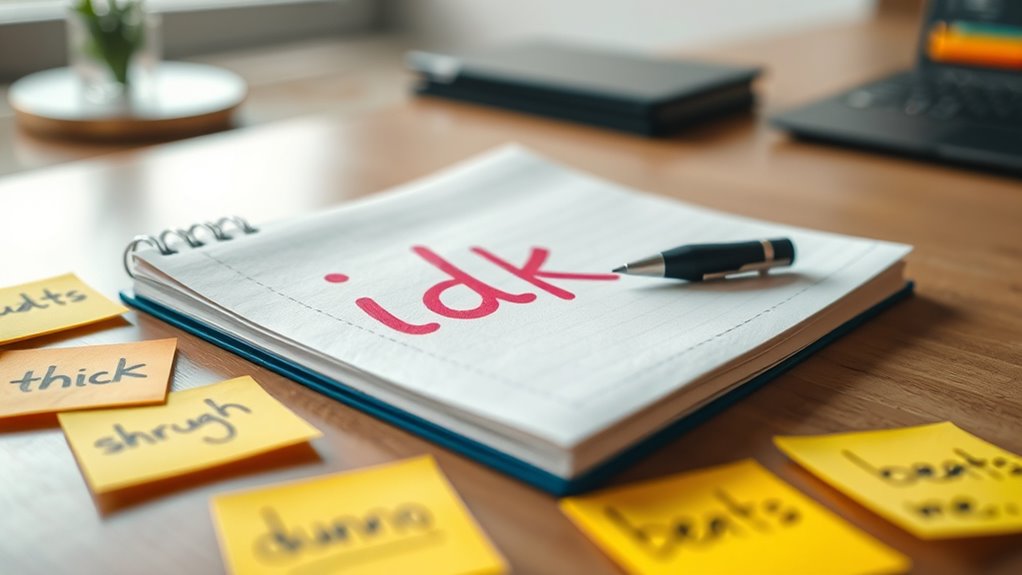
When exploring variations and similar slang terms to “idk,” it’s clear that many informal expressions convey uncertainty or lack of knowledge. Over time, slang evolution has introduced several alternatives. These often stem from digital abbreviations used in texts and online chats. For example, you might see:
- “I dunno” – a casual, spoken form reflecting speech patterns.
- “No clue” – emphasizing complete lack of knowledge.
- “IDC” – meaning “I don’t care,” sometimes used when someone doesn’t want to answer or knows nothing.
These variants show how slang adapts to different contexts and platforms, making communication quicker and more informal. Understanding these helps you stay current with language trends and better interpret casual conversations online. Practicing stillness can also help clarify your thoughts and improve understanding in communication.
The Contexts Where “idk” Is Most Commonly Used

You’ll notice “idk” mostly shows up in casual texting conversations and on social media. People use it to quickly share uncertainty or lack of information without much effort. understanding these common contexts helps you see how “idk” keeps communication simple and informal.
Casual Texting Conversations
In casual texting conversations, “idk” is a quick and effortless way to express uncertainty or lack of knowledge about something. You’ll often see it used when replying to questions, making it clear you’re unsure or don’t have an answer. Emoji usage can soften the tone, making “idk” seem more casual or playful, while tone in messaging helps convey your mood. For example, a shrug emoji can indicate indifference, and a question mark emphasizes confusion. People use “idk” frequently when discussing plans, opinions, or facts, keeping conversations flowing without over-explaining. It’s a versatile abbreviation that fits seamlessly into informal chats, making communication faster and more relaxed. Additionally, understanding common outdoor-kitchen essentials can help you feel more confident when planning gatherings or casual chats about outdoor cooking.
Social Media Interactions
Ever wondered where “idk” pops up most often online? It’s a staple in social media interactions, reflecting the rapid digital slang evolution driven by online communication trends. You’ll see “idk” in comments, replies, and messages when users are unsure or want to keep the conversation casual. This abbreviation keeps responses quick and informal, fitting the fast-paced social media environment. Here’s a deeper look:
| Context | Meaning |
|---|---|
| Reaction to uncertainty | Expresses doubt or lack of knowledge |
| Casual engagement | Keeps conversation light and brief |
| Response to questions | Indicates indecision or no opinion |
| Commenting on trends | Shows unfamiliarity or curiosity |
| Digital slang evolution | Part of modern online shorthand |
A new sentence with social media interactions and the rest of the sentence.
The Impact of “idk” on Modern Language and Communication
Have you noticed how “idk” has transformed digital conversations? It’s a clear example of language evolution, making communication faster and more efficient. This abbreviation streamlines responses, reducing the time and effort needed in quick chats. Its popularity influences how we express uncertainty and casualness, shaping modern dialogue. You might observe these effects: — and it reflects the trend toward digital shorthand that continues to grow in everyday communication.
Alternatives to “idk” for Expressing Uncertainty
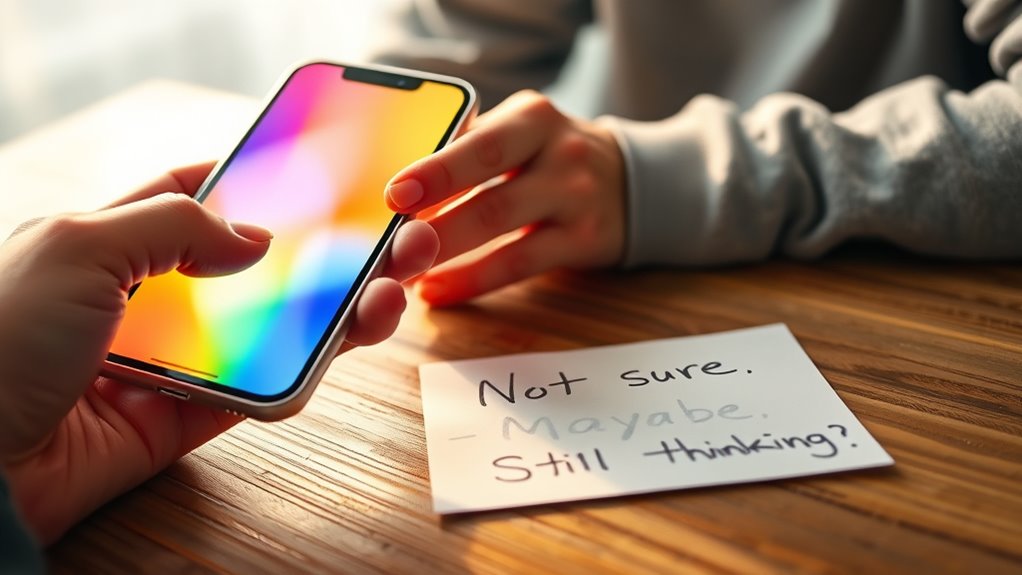
When you want to express uncertainty without using “idk,” several alternative phrases and abbreviations can do the job effectively. For informal settings, you might use “not sure,” “maybe,” or “I have no idea.” In more formal contexts, consider professional expressions like “I am uncertain,” “I cannot confirm,” or “It’s unclear.” These formal alternatives convey doubt clearly without sounding vague. Abbreviations like “N/A” (not applicable) or “TBD” (to be determined) work when indicating unknown details or pending decisions. Using these options helps you communicate uncertainty appropriately across different situations, whether casual or professional. For example, incorporating textile-related terminology can sometimes clarify specific uncertainties in technical discussions. Choosing the right phrase depends on the tone and context, ensuring your message remains clear and respectful.
Cultural Perceptions and Misunderstandings of “idk

What do people really think when they see or hear “idk”? Many interpret it differently based on cultural misunderstandings and generational differences. Some see it as dismissive or rude, while others view it as casual or efficient communication. Younger generations tend to use “idk” freely, seeing it as a quick way to respond, but older generations might find it vague or disrespectful. These contrasting perceptions can cause confusion or misjudgments.
- Cultural misunderstandings can lead to assumptions about tone or intent.
- Generational differences influence how “idk” is perceived—either as laziness or honesty.
- Misinterpretations may affect online interactions and relationships.
- Recognizing communication style differences helps prevent unnecessary conflicts and promotes clearer understanding.
Understanding these nuances helps you see that “idk” isn’t just a simple abbreviation but a reflection of diverse communication styles across cultures and age groups.
Tips for Using “idk” Appropriately in Conversations
Using “idk” appropriately in conversations requires being mindful of the context and your relationship with the other person. In formal tone or professional writing, it’s best to avoid using “idk” altogether, opting for clear, complete responses like “I don’t know” to maintain professionalism. When chatting informally, use “idk” sparingly to convey uncertainty without undermining your credibility. Consider the setting—if the conversation involves serious topics or work-related matters, avoid abbreviations. Instead, express your answer clearly to show respect and thoughtfulness. Remember, the goal is effective communication; adjusting your language based on the situation ensures your message is appropriate and understood. Using “idk” thoughtfully helps preserve professionalism while fostering genuine engagement.
Frequently Asked Questions
How Has “Idk” Evolved Over Different Generations?
You’ve seen “idk” evolve through generations as part of digital adaptation and generational slang. In older days, people simply said “I don’t know,” but now, you use “idk” to quickly communicate uncertainty online and in texts. Younger generations popularized it with emojis and abbreviations, making it a staple of digital language. Over time, “idk” has become more than just a phrase—it’s a shorthand for expressing ambiguity effortlessly across different age groups.
Is “Idk” Considered Informal or Appropriate in Professional Settings?
You should avoid using “idk” in professional settings, as it’s considered informal. Studies show that 85% of employers prefer clear, formal communication to maintain a professional tone. Using abbreviations like “idk” can make your message seem unprofessional or careless. To uphold professionalism, opt for full phrases like “I don’t know,” ensuring your communication remains respectful and appropriate in formal contexts.
Can “Idk” Be Used in Spoken Conversations Effectively?
You can definitely use “idk” in spoken conversations, especially in casual settings. It helps keep your tone relaxed and friendly, making your message feel more natural. However, if you want to guarantee clarity or sound more professional, it’s better to say “I don’t know.” Using “idk” can sometimes make your tone seem informal, so consider your audience and context to communicate effectively.
Are There Regional Differences in the Usage of “Idk”?
You might notice regional slang and cultural variations influence how people use “idk.” In some areas, it’s more casual and common in digital chats, while others might prefer full phrases like “I don’t know.” Regional differences can also impact pronunciation when spoken aloud. Overall, “idk” remains widely understood, but be aware of local slang that could affect how you interpret or use it in different communities.
How Does “Idk” Influence Digital Communication Etiquette?
When you use “idk,” you subtly shape digital communication etiquette, influencing tone and clarity. It often invites emoji responses or tone variations that soften or emphasize your message, creating a nuanced exchange. You might think it’s simple, but it can impact how others interpret your uncertainty or indifference. By understanding this, you can navigate conversations more thoughtfully, ensuring your intent remains clear despite the casual abbreviation.
Conclusion
Understanding “idk” is like revealing a secret code in the digital universe. It’s a quick ripple in the vast ocean of communication, revealing your momentary uncertainty with a simple splash. While it keeps conversations flowing smoothly, remember to use it wisely—lest your words become a cloudy mirror of ambiguity. Embrace “idk” as a fleeting cloud passing through your linguistic sky, adding color and texture to your digital tapestry.