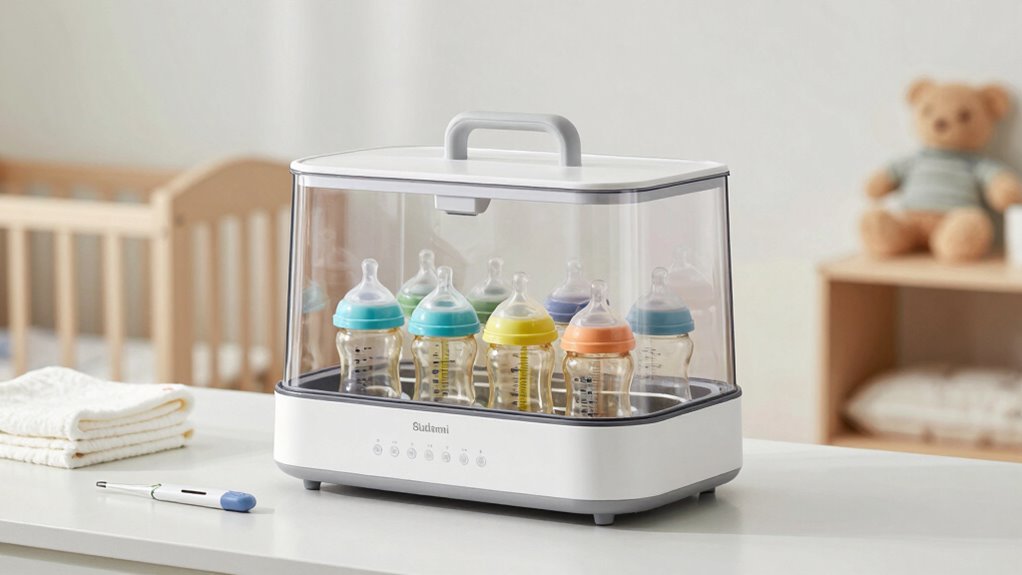

Bottle sterilizers help you quickly reduce bacteria on bottles and accessories by using steam, UV light, or boiling water. However, they don’t guarantee complete sterilization or prevent all contamination, so proper cleaning beforehand is vital. Sterilizers are a helpful addition but shouldn’t replace thorough washing with soap and water. To guarantee your baby’s safety, understanding their limitations and proper usage is key—there’s more to know if you want to keep things truly hygienic.
Key Takeaways
- Bottle sterilizers effectively reduce bacteria but do not guarantee complete sterility or prevent all contamination.
- They assist in quick, efficient cleaning but require proper use and maintenance for optimal safety.
- Sterilizers do not replace thorough cleaning with soap and water before sterilization.
- They are useful for reducing germs but cannot eliminate all bacteria or viruses if not used correctly.
- Combining sterilization with good hygiene practices enhances overall safety and reduces infection risks.
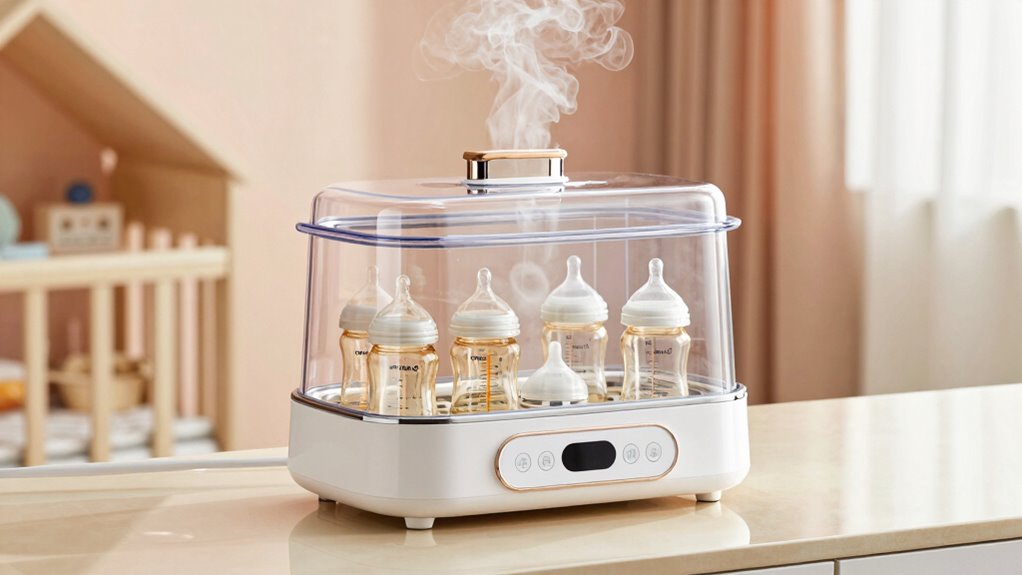
Have you ever wondered how to guarantee your baby’s bottles stay completely clean and safe? It’s a natural concern for any parent. Bottle sterilizers are designed to help with this, offering a quick and efficient way to eliminate germs. These devices use steam, UV light, or boiling water to sanitize bottles, nipples, and other accessories. While they do a great job at reducing bacteria, it’s important to understand what they can and cannot do. They considerably lower the risk of infections, but they don’t guarantee absolute sterility or prevent all types of contamination.
Many parents turn to alternative sterilization methods, especially when they want options beyond electric sterilizers. Boiling bottles in water for a few minutes is a traditional method that’s simple and effective. You just need a pot, water, and a few minutes. Microwave sterilizers are another popular choice; they use steam to sanitize bottles quickly. These methods can be just as efficient as electric sterilizers when done correctly, but they require careful attention to timing and technique. They’re often more affordable, portable, and convenient for travel or quick sterilization needs. However, regardless of the method, safety considerations are essential. Always make sure that your bottles and accessories are compatible with boiling or microwave sterilization to avoid damage. Also, handle hot items carefully to prevent burns, and keep sterilized items dry and uncontaminated until use. Proper storage after sterilization is just as important. If you leave bottles exposed to the air, they can rapidly become recontaminated, so use sterile tongs or wash your hands before handling.
It’s worth noting that sterilization doesn’t replace good hygiene practices. You still need to wash bottles thoroughly with soap and water before sterilizing to remove milk residue and dirt. Sterilization is an extra step, not a substitute for cleaning. Additionally, it’s helpful to be aware that bacteria can develop resistance over time if sterilization is not combined with thorough cleaning practices, which underscores the importance of proper hygiene. Using multiple sterilization methods can enhance overall safety, especially in environments with higher contamination risks. Proper knowledge of sterilization methods can help you choose the safest and most effective options for your family. When selecting a sterilizer, consider the type of materials your bottles are made of to ensure compatibility and longevity. They’re a safeguard, but not a foolproof shield. Safety considerations extend beyond just choosing the right method; you must also keep your sterilizer clean, follow manufacturer instructions, and regularly inspect your equipment. This helps guarantee you’re not introducing new bacteria or risking damage to your bottles. Understanding sterilization methods can help you make better decisions about which options are safest and most effective for your family.
In the end, sterilization is an essential part of keeping your baby safe, but it’s just one piece of the puzzle. Combining proper cleaning with effective sterilization, safe handling, and good hygiene practices will give you peace of mind and protect your little one’s health.

GROWNSY Bottle Sterilizer and Dryer, Compact Electric Steam Baby Bottle Sterilizer (Esterilizador de Biberones), Bottle Sanitizer for Baby Bottles, Pacifiers, Pump Parts
Smarter Design, Not Smaller Capacity: Stop Choosing Between Capacity and Counter Space. We reimagined the interior to be…
As an affiliate, we earn on qualifying purchases.
As an affiliate, we earn on qualifying purchases.
Frequently Asked Questions
Are Bottle Sterilizers Safe for All Types of Bottles?
Yes, bottle sterilizers are generally safe for all types of bottles, but you should check for sterilizer compatibility with your bottle material. Some plastics, glass, or silicone bottles may require specific sterilization methods. Always read the manufacturer’s instructions to guarantee your bottles won’t be damaged. By doing so, you protect your baby’s health without risking harm to your bottles.
Can Sterilizers Eliminate All Bacteria and Viruses?
Think of sterilizers as your first line of defense, but they’re not invincible. They can eliminate most bacteria and viruses, yet some microbes develop resistance, making complete eradication tough. Sterilizer limitations mean they might not reach every tiny crevice or handle resistant strains. So, while they substantially lower risks, they don’t guarantee the total elimination of all microbes, and ongoing hygiene practices remain essential for safety.
How Often Should I Sterilize Bottles?
You should sterilize bottles after every use, especially for newborns and infants with weaker immune systems. The sterilization frequency depends on bottle material—plastic, glass, or silicone—and how often you use them. For plastic bottles, sterilize daily, while glass bottles can be sterilized less frequently. Always follow the manufacturer’s instructions, and guarantee thorough cleaning before sterilization to keep your baby safe from germs.
Do Sterilizers Work Without Electricity?
Most sterilizers rely on electricity to operate, making electricity dependency a key factor. Electric sterilizers heat water to create steam, which sterilizes bottles effectively. However, non-electric sterilizers, like microwave or cold-soak types, work without electricity, but they may be less durable over time. If you need a portable option or face power outages, non-electric sterilizers provide a reliable alternative, though they might not last as long as electric ones.
Are There Chemical-Free Sterilization Options?
Did you know that over 60% of parents prefer chemical-free sterilization options? Yes, there are chemical alternatives like natural disinfectants, such as boiling water, vinegar, or steam. These methods effectively sanitize bottles without harsh chemicals, making them safer for your baby. You can easily incorporate natural disinfectants into your routine, ensuring your baby’s bottles stay clean and safe without relying on chemical-based sterilizers.

Dr. Brown's Microwave Steam – for Baby Bottles, Nipples, Bottle Parts, Pacifiers, Teethers and Breast Pump Parts
MICROWAVE STEAM STERILIZER. Steam heat quickly sterilizes baby bottles, nipples, bottle parts, and more.
As an affiliate, we earn on qualifying purchases.
As an affiliate, we earn on qualifying purchases.
Conclusion
While bottle sterilizers might seem like the ultimate solution to all your worries about germs, don’t be fooled into thinking they’re magic wands. They can’t eradicate every tiny, sneaky bug lurking in every nook and cranny. Remember, they’re just one part of a bigger cleaning plan—no device can do all the work for you. Stay vigilant, practice good hygiene, and use sterilizers as the helpful tools they are, not miracle workers!

Dr. Brown's All-in-One Sterilizer and Dryer for Baby Bottles, Parts and Other Newborn Essentials
BABY BOTTLE STERILIZER AND DRYER. Sterilize up to six Narrow or Wide-Neck baby bottles at once, plus bottle…
As an affiliate, we earn on qualifying purchases.
As an affiliate, we earn on qualifying purchases.

UV Light Sanitizer, UV Box Sanitizer, Conveniently Sanitizes in Minutes, Large Capacity, No Cleaning Required, Touch Control
SANITIZES IN MINUTES – Phones Keys Credit Cards Wallets Toys Beauty Items and more – Convenient Drying Cycle…
As an affiliate, we earn on qualifying purchases.
As an affiliate, we earn on qualifying purchases.