Hindi alphabet learning toys can make early practice more engaging, but the options differ in how they teach sounds, letter shapes, and writing. My best overall pick is Hindi Alphabet Flashcards with Romanized Pronunciation and Audio for its focused letter practice with pronunciation support. The Stonkraft Wooden Hindi Alphabets and Matras add hands-on letter handling, while My Early Learning Book of Hindi Varnmala suits children ready for guided page-by-page practice. The main tradeoff is choosing between audio help, tactile play, and reusable or book-based activities. Read on for the full breakdown and guidance on matching a format to your learner.

Prime made for students and young adults
- Fast, free delivery for dorm and study essentials
- Prime Video and Amazon Music included
- Member-only deals
Key Takeaways
- Focused alphabet practice separates the strongest starting options from broader Hindi word and phrase kits, which teach more than the script alone.
- Audio and Romanized pronunciation can help adults who are less confident with Hindi sounds, while printed transliteration gives children a visual cue they can revisit.
- Wooden letters and magnetic Gurmukhi pieces add tactile play, but the Gurmukhi set teaches a different script from Devanagari Hindi materials.
- Books, charts, and activity books suit different routines: a wall chart stays visible, while a workbook supports seated practice and pencil skills.
- Bilingual stories and talking cards broaden vocabulary and context, but they are less direct choices when the main goal is learning the Hindi alphabet.
| MAYAPHILOS Hindi and English Talking Flash Cards, 224 Sight Words |  | Best for Bilingual Vocabulary Practice | Brand: MAYAPHILOS | Languages: Hindi and English | Word count: 224 | VIEW LATEST PRICE | See Our Full Breakdown |
| Spark Collection Hindi-English Bilingual Children’s Book with Transliteration |  | Best Interactive Storybook | Languages: Hindi and English | Format: Children’s book | Transliteration: Included | VIEW LATEST PRICE | See Our Full Breakdown |
| Hindi Alphabet Flashcards with Romanized Pronunciation and Audio |  | Best for Pronunciation Practice | Brand: verbacard | Educational objective: Language skills | Card count: 74 | VIEW LATEST PRICE | See Our Full Breakdown |
| Punjabi Gurmukhi Alphabet Magnetic Letters, 40-Piece Set |  | Best Hands-On Punjabi Script Toy | Brand: Sadigali | Quantity: 40 magnets | Script: Gurmukhi | VIEW LATEST PRICE | See Our Full Breakdown |
| Hindi Varnmala (Alphabet) Thick Laminated Primary Chart |  | Best Simple Reference Chart | Language: Hindi | Product type: Alphabet chart | Finish: Thick laminated | VIEW LATEST PRICE | See Our Full Breakdown |
| My Early Learning Book of Hindi Varnmala |  | Best for First Letter Exposure | Format: Padded board book | Language: Hindi | Subject: Hindi Varnmala | VIEW LATEST PRICE | See Our Full Breakdown |
| Spark Collection Hindi-English Bilingual Lift-the-Flap Storybook with Audio and Dry-Erase Activities |  | Best for Interactive Bilingual Learning | Language: Hindi and English | Format: Lift-the-flap storybook | Features: Audio and dry-erase activities | VIEW LATEST PRICE | See Our Full Breakdown |
| Stonkraft Wooden Hindi Alphabets and Matras |  | Best for Hands-On Letter Building | Contents: 61 magnetic wooden Hindi alphabets and matras | Material: Wood | Package dimensions: 6.73 x 5.04 x 2.99 inches | VIEW LATEST PRICE | See Our Full Breakdown |
| Hindi Alphabet Flash Cards with Audio |  | Best for Pronunciation Practice | Brand: Briston | Number of cards: 50 | Card size: 3.5 x 2.5 inches | VIEW LATEST PRICE | See Our Full Breakdown |
| My Beautiful Earth: Hindi-English Bilingual Children’s Book |  | Best for Themed Bilingual Story Time | Language: Hindi and English | Format: Lift-the-flap children’s book | Text support: Transliteration | VIEW LATEST PRICE | See Our Full Breakdown |
| Hindi Letters with Fun Dots!: A Montessori-Inspired Dot Marker Activity Book |  | Best for Hands-On Letter Play | Format: Dot-marker activity book | Learning focus: Hindi alphabet | Activity type: Dot-marker coloring | VIEW LATEST PRICE | See Our Full Breakdown |
| Hindi Flash Cards Kit: Learn 1,500 Basic Hindi Words and Phrases |  | Best for Building Everyday Vocabulary | Format: Flash card kit | Language: Hindi | Vocabulary: 1,500 basic words and phrases | VIEW LATEST PRICE | See Our Full Breakdown |
| My First Hindi Vyanjan and Activity Book for Kids | 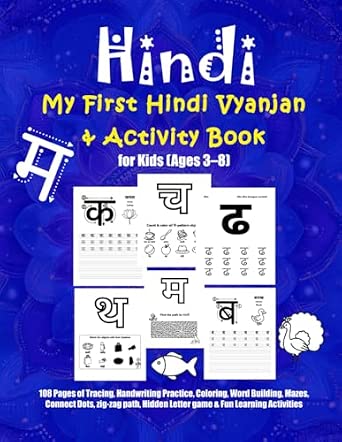 | Best for Structured Consonant Practice | Format: Consonant and activity book | Language: Hindi | Age range: 3–8 years | VIEW LATEST PRICE | See Our Full Breakdown |
| Hindi alphabet learning toy | Format | ASIN |
|---|---|---|
| MAYAPHILOS Hindi and English T | — | — |
| Spark Collection Hindi-English | Children’s book | — |
| Hindi Alphabet Flashcards with | — | — |
| Punjabi Gurmukhi Alphabet Magn | — | — |
| Hindi Varnmala | Primary chart | — |
| My Early Learning Book of Hind | Padded board book | 935440328X |
| Spark Collection Hindi-English | Lift-the-flap storybook | — |
| Stonkraft Wooden Hindi Alphabe | — | B09QMGZTTS |
| Hindi Alphabet Flash Cards wit | — | B0CFG6M9ZF |
| My Beautiful Earth: Hindi-Engl | Lift-the-flap children’s book | 1737309068 |
| Hindi Letters with Fun Dots!: | Dot-marker activity book | B0GN2GSX4T |
| Hindi Flash Cards Kit: Learn 1 | Flash card kit | 0804839883 |
| My First Hindi Vyanjan and Act | Consonant and activity book | B0H2Q1CQVN |
More Details on Our Top Picks
MAYAPHILOS Hindi and English Talking Flash Cards, 224 Sight Words
Wide Hindi-English vocabulary makes this set a better fit for families who want to move beyond letter names into themed words. Its 224 cards span 12 themes, and the reader speaks the words and adds animal and vehicle sounds, giving children an audio prompt as they learn. Compared with Hindi Alphabet Flashcards with Romanized Pronunciation and Audio, which focuses on Devanagari consonants and vowels, this set covers broader everyday vocabulary rather than a focused alphabet sequence. That breadth is useful for bilingual exposure, but it can make the alphabet less central to each session. The screen-free reader supports listening without a phone, though audio depends on using the included reader. Paper cards may also need more careful handling than the durable magnetic letters in the Punjabi Gurmukhi set.
Pros:- Includes 224 words across 12 themes
- Pairs Hindi and English vocabulary
- Reader speaks words and imitates animal and vehicle sounds
- Offers screen-free audio interaction
Cons:- Audio playback depends on the included flash card reader
- The broad vocabulary set is less focused on alphabet mastery than a dedicated letter deck
- Paper cards may be less durable with frequent rough handling
Best for: Families with children ages 3 and up who want Hindi and English words across varied themes with spoken prompts.
Not ideal for: Caregivers seeking a structured Devanagari letter-by-letter deck or a toy that works without its reader.
- Brand:MAYAPHILOS
- Languages:Hindi and English
- Word count:224
- Themes:12
- Included components:Flash cards and flash card reader
- Recommended age:3 years and up
- Material:Paper
- Dimensions:5 x 1 x 0.1 inches
Our verdict“Choose this set for screen-free bilingual vocabulary practice, while alphabet-focused learners may prefer a dedicated Devanagari deck.”
Spark Collection Hindi-English Bilingual Children’s Book with Transliteration
Lift-the-flap reading and dry-erase activities give this bilingual book a more varied feel than the single-purpose Hindi Alphabet Flashcards with Romanized Pronunciation and Audio. Transliteration can help an adult or child connect Hindi text with familiar Roman letters, while audio adds another way to hear the language. That makes the book a good bridge for shared reading, especially for toddlers and children who respond to hands-on page activities. Its alphabet value is less clearly defined: the description does not specify a letter count or a structured sequence, so I would treat it as an introduction to Hindi through reading rather than a complete alphabet curriculum. Compared with the laminated Hindi Varnmala (Alphabet) Thick Laminated Primary Chart, it offers more interaction but less at-a-glance letter reference. The product details also do not specify materials or age range beyond its broad audience.
Pros:- Combines Hindi and English in one book
- Transliteration can support early reading across scripts
- Lift-the-flap pages invite hands-on exploration
- Audio and dry-erase activities add variety to reading
Cons:- The product details do not specify how many alphabet letters it teaches
- Its storybook format may offer less focused repetition than dedicated alphabet flashcards
- Materials and a specific recommended age range are not provided
Best for: Families who want a shared Hindi-English reading activity with flaps, audio, and reusable dry-erase tasks.
Not ideal for: Buyers looking for a clearly sequenced Hindi alphabet resource or a compact reference chart with specified letter coverage.
- Languages:Hindi and English
- Format:Children’s book
- Transliteration:Included
- Page interaction:Lift-the-flap pages
- Audio:Included
- Activities:Dry-erase activities
- Audience:Toddlers and children
Our verdict“Pick this for interactive bilingual reading, but choose a dedicated alphabet deck if systematic letter practice is the priority.”
Hindi Alphabet Flashcards with Romanized Pronunciation and Audio
Dedicated Devanagari coverage gives this 74-card deck a clearer alphabet-learning purpose than the broader MAYAPHILOS Hindi and English Talking Flash Cards, which spreads its 224 words across multiple themes. Romanized pronunciation offers a reading cue, while audio recordings of native pronunciation can help learners hear distinctions that transliteration alone may not convey. Color coding is intended to support repeated study at home, in class, or on the go. The tradeoff is that its audio access method is unspecified, so buyers cannot tell from the supplied details how children will play the recordings. The cards also measure 2.9 x 3.9 inches, a format that may be less pocket-friendly than a compact study aid. Compared with the Hindi Varnmala chart, this deck supports handling and sorting individual cards, but needs more space to display.
Pros:- Covers Hindi consonants and vowels in Devanagari
- Prints Romanized pronunciations on the cards
- Includes native pronunciation audio
- Color-coded cards support repeated study
Cons:- Audio access method is not specified
- The deck focuses on letters rather than broader themed vocabulary
- Card dimensions may be less convenient for very compact travel storage
Best for: Parents and teachers who want a focused Hindi consonant and vowel deck with Romanized cues and pronunciation audio.
Not ideal for: Buyers who need a confirmed, simple audio playback setup or a wall-mounted alphabet reference.
- Brand:verbacard
- Educational objective:Language skills
- Card count:74
- Coverage:Hindi consonants and vowels
- Pronunciation support:Romanized transliteration and audio recordings
- Card dimensions:2.9 x 3.9 x 0.1 inches
- Item dimensions:3.94 x 3.15 x 0.04 inches
- Theme:Language
Our verdict“Choose this deck for focused letter and pronunciation work if the audio access details meet your needs.”
Punjabi Gurmukhi Alphabet Magnetic Letters, 40-Piece Set
Magnetic letter play makes this set the most tactile option here, but its script is Gurmukhi, used for Punjabi, rather than Hindi’s Devanagari. That distinction matters: it is not a Hindi alphabet toy, so buyers should choose it only when Punjabi script learning is part of the goal. Compared with the paper-based Hindi Alphabet Flashcards with Romanized Pronunciation and Audio, these letters can be arranged on a refrigerator or another magnetic surface, turning practice into a shared, visible activity. The 40-piece count limits how much of the alphabet can be displayed at once, and the supplied description gives inconsistent material details, naming both plastic and basswood. That uncertainty makes it harder to judge feel and durability. The set offers hands-on play, but no audio or transliteration support is listed.
Pros:- Provides hands-on alphabet letter arrangement
- Works on refrigerators and other magnetic surfaces
- Designed for family learning
- Multicolor rectangular pieces are easy to distinguish visually
Cons:- Teaches Gurmukhi rather than the Hindi Devanagari alphabet
- Includes only 40 magnets
- Material information is inconsistent, listing plastic and basswood
Best for: Punjabi-speaking families who want children to arrange Gurmukhi letters on a magnetic surface.
Not ideal for: Buyers specifically seeking Hindi Devanagari letters or a set with audio and pronunciation guidance.
- Brand:Sadigali
- Quantity:40 magnets
- Script:Gurmukhi
- Material:Plastic and basswood are both listed in the description
- Color:Multicolor
- Shape:Rectangular
- Model number:Hindimagnets1
Our verdict“Choose this for tactile Punjabi Gurmukhi practice, but skip it for Hindi alphabet learning.”
Hindi Varnmala (Alphabet) Thick Laminated Primary Chart
A direct Hindi alphabet reference is this chart’s main strength: it is a Hindi Varnmala chart with a thick laminated finish. Unlike the interactive Spark Collection Hindi-English Bilingual Children’s Book with Transliteration, it does not offer flaps, audio, or dry-erase activities; it gives learners a static visual to consult. That simplicity can suit a classroom wall or a home study area where children can revisit the alphabet between activities. The tradeoff is limited detail in the supplied product information: no dimensions, letter count, or accompanying practice method is listed. Compared with the Hindi Alphabet Flashcards with Romanized Pronunciation and Audio, the chart is easier to display at a glance, while the deck allows individual card handling and includes pronunciation support. I would treat this as a visual reminder rather than a stand-alone teaching kit.
Pros:- Focuses on the Hindi alphabet
- Thick laminated finish is suited to repeated reference
- Simple chart format can be displayed for quick consultation
Cons:- No audio or interactive practice features are listed
- Product details do not specify dimensions or letter count
- Offers less active practice than flashcards or magnetic letters
Best for: Parents and teachers who want a laminated Hindi alphabet reference visible during lessons or daily practice.
Not ideal for: Learners who need audio pronunciation, hands-on letter activities, or specified dimensions and alphabet coverage.
- Language:Hindi
- Product type:Alphabet chart
- Finish:Thick laminated
- Alphabet focus:Hindi Varnmala
- Format:Primary chart
- Audio:Not specified
Our verdict“Choose this as a durable visual Hindi alphabet reminder, not as a complete interactive learning set.”
My Early Learning Book of Hindi Varnmala
A padded board book gives this pick a simple, sturdy format for introducing young children to Hindi letters. Its focus stays on the Hindi Varnmala, which suits families who want an early alphabet resource without the extra steps of audio, writing practice, or bilingual story activities. Compared with the Stonkraft Wooden Hindi Alphabets and Matras, it offers a guided book format instead of loose pieces children can arrange and reuse; that makes it easier to share a short reading session, but less flexible for hands-on matching. The description does not specify audio, transliteration, or activity pages, so I would treat it as an introductory book rather than a full practice system. It is a focused starting point, though children ready to build words may outgrow its narrower format.
Pros:- Padded board book format is suited to handling by young children.
- Focuses directly on the Hindi Varnmala.
- Part of the My Early Learning Books series.
Cons:- The description does not mention audio or pronunciation support.
- A book offers less hands-on letter arranging than the Stonkraft magnetic set.
- No transliteration or practice activities are specified.
Best for: Caregivers introducing Hindi letters to toddlers or preschoolers who prefer a book they can read together.
Not ideal for: Families seeking audio pronunciation, writing practice, transliteration, or reusable pieces for letter matching.
- Format:Padded board book
- Language:Hindi
- Subject:Hindi Varnmala
- Audience:Children
- Series:My Early Learning Books
- ASIN:935440328X
Our verdict“Choose this as a straightforward first Hindi alphabet book for shared reading, but look elsewhere for active practice or pronunciation support.”
Spark Collection Hindi-English Bilingual Lift-the-Flap Storybook with Audio and Dry-Erase Activities
Hindi and English text with transliteration makes this storybook a bridge for children who are beginning Hindi while relying on English to follow along. The lift-the-flap pages, audio, and dry-erase activities add listening and repeatable practice, so it offers more ways to engage than My Early Learning Book of Hindi Varnmala, whose description centers on a padded alphabet book. That breadth also means it is less narrowly focused on letter drills than the Stonkraft Wooden Hindi Alphabets and Matras, which lets children handle and arrange individual letters. I would choose Spark for shared story time and varied interaction, especially when adults want both languages present. Families looking for a dedicated set of letters to sequence or a clearly specified alphabet-by-alphabet curriculum may find the storybook format less direct.
Pros:- Includes Hindi and English text with transliteration.
- Lift-the-flap format invites active story reading.
- Audio adds listening support.
- Dry-erase activities allow repeat practice.
Cons:- Story format may provide less direct letter sequencing than the Stonkraft wooden set.
- The description does not specify the audio access method or activity content.
- Multiple features may be more than needed for buyers seeking a simple alphabet introduction.
Best for: Families introducing Hindi to toddlers or young children who benefit from English support, audio, and varied story activities.
Not ideal for: Buyers who want a focused letter manipulation set or a clearly specified sequence of alphabet drills.
- Language:Hindi and English
- Format:Lift-the-flap storybook
- Features:Audio and dry-erase activities
- Text support:Transliteration
- Audience:Toddlers and children
Our verdict“Pick this for bilingual story sessions that combine listening and repeatable activities, rather than standalone letter sequencing.”
Stonkraft Wooden Hindi Alphabets and Matras
Sixty-one magnetic wooden letters and matras make this the most hands-on alphabet pick in this group. Children can match, sequence, stencil, and build words, moving beyond recognition in a way that My Early Learning Book of Hindi Varnmala does not offer through its book format. The loose-piece approach also gives it a different job from the Spark Collection bilingual storybook, which pairs language exposure with flaps, audio, and dry-erase activities. Stonkraft makes sense for a child ready to manipulate letters, but the pieces need to be kept together and used on a suitable magnetic surface. The description specifies dimensions and weight, not a storage box or audio support, so I would not choose it for pronunciation instruction or a self-contained read-along experience.
Pros:- Includes 61 magnetic Hindi alphabets and matras.
- Supports recognition, matching, sequencing, stenciling, and word building.
- Wooden pieces offer a tactile alternative to cards and books.
- Package dimensions and item weight are specified.
Cons:- Loose pieces can be misplaced and need a suitable magnetic surface.
- No audio pronunciation or bilingual text is specified.
- The description does not specify a storage container.
Best for: Preschool and early school-age learners who are ready to sort Hindi letters and matras, sequence them, or build simple words with an adult.
Not ideal for: Families who need spoken pronunciation support, a story-led introduction, or a book-based activity that stays together on the page.
- Contents:61 magnetic wooden Hindi alphabets and matras
- Material:Wood
- Package dimensions:6.73 x 5.04 x 2.99 inches
- Item weight:15.5 ounces
- Manufacturer:MFM TOYS
- ASIN:B09QMGZTTS
Our verdict“Choose Stonkraft for reusable, hands-on Hindi letter and matra practice; skip it if pronunciation guidance is your priority.”
Hindi Alphabet Flash Cards with Audio
Audio pronunciation access sets these 50 cards apart for learners who need to hear Hindi letters as well as see them. Stroke patterns and colorful illustrations add visual cues, while the reference chart, learning guide, and storage box make the set more structured than a loose collection of cards. Compared with the Stonkraft Wooden Hindi Alphabets and Matras, this pick favors quick review and spoken modeling over arranging magnetic pieces or building words. Its glossy, water-resistant cardstock is practical for repeated handling, though it is still a card set rather than a tactile letter toy. Audio requires digital access, so it is less convenient when a screen or connection is unavailable; families wanting bilingual story interaction may prefer the Spark Collection storybook.
Pros:- Audio access provides pronunciation support.
- Cards pair letter symbols with stroke patterns and illustrations.
- Glossy, water-resistant cardstock suits repeated handling.
- Includes a reference chart, learning guide, and storage box.
Cons:- Audio requires digital access.
- Card review offers less tactile word building than the Stonkraft wooden set.
- The card size is compact at 3.5 x 2.5 inches.
Best for: Parents, teachers, and independent learners who want visual alphabet review paired with spoken pronunciation.
Not ideal for: Buyers seeking screen-free audio, magnetic letter manipulation, or story-based Hindi-English practice.
- Brand:Briston
- Number of cards:50
- Card size:3.5 x 2.5 inches
- Material:350 GSM cardstock with glossy lamination
- Included components:Alphabet reference chart, audio pronunciation access, learning guide, storage box
- Age range:All ages
- Manufacturer:Acb d.o.o.
- ASIN:B0CFG6M9ZF
Our verdict“Choose these cards when hearing and reviewing Hindi letters matters more than hands-on word building or story activities.”
My Beautiful Earth: Hindi-English Bilingual Children’s Book
Hindi-English text and transliteration make this book approachable for families sharing a story across languages, while its lift-the-flap format gives children a reason to interact with the pages. Audio and dry-erase features add listening and repeatable activity options, placing it closer to the Spark Collection bilingual lift-the-flap storybook than to a dedicated alphabet tool. The title points to an earth theme, which may appeal to families who want a topic-led read, but the provided description does not specify its alphabet coverage or the exact activities. Compared with the 50-card Hindi Alphabet Flash Cards with Audio, this is more suited to shared story time than systematic letter review. I would treat it as a bilingual learning companion, not the main resource for practicing the full Varnmala.
Pros:- Presents content in Hindi and English.
- Includes transliteration to support reading across scripts.
- Lift-the-flap format encourages page interaction.
- Audio and dry-erase features add listening and activity options.
Cons:- The description does not specify how much Hindi alphabet instruction it contains.
- Story-based learning is less systematic than the Hindi Alphabet Flash Cards with Audio.
- The exact audio and dry-erase activity details are not provided.
Best for: Caregivers who want a themed Hindi-English read-aloud with transliteration and interactive features for toddlers or children.
Not ideal for: Learners needing a clearly specified alphabet sequence, standalone letter drills, or magnetic letter building.
- Language:Hindi and English
- Format:Lift-the-flap children’s book
- Text support:Transliteration
- Features:Audio and dry-erase
- Audience:Toddlers and children
- ASIN:1737309068
Our verdict“Choose this as a themed bilingual story companion, while pairing it with a dedicated alphabet resource for letter-by-letter practice.”
Hindi Letters with Fun Dots!: A Montessori-Inspired Dot Marker Activity Book
Dot-marker activities give young learners a tactile way to engage with Hindi letters, making this a better fit for children who enjoy coloring than the Hindi Flash Cards Kit, which focuses on words, phrases, and online audio. Its Montessori-inspired approach pairs alphabet learning with creative activity, so a caregiver can use it for a short, hands-on session rather than a spoken vocabulary drill. The tradeoff is that the listing does not specify page count, age range, or whether pronunciation guidance is included; buyers looking for a clearly structured progression may prefer My First Hindi Vyanjan and Activity Book for Kids, which lists its age range and activities. I’d choose this book for playful letter engagement, while recognizing that coloring alone may not provide the repeated sound practice some beginners need.
Pros:- Connects Hindi alphabet learning with dot-marker coloring.
- Creative format may hold the attention of children who resist flash-card drills.
- Montessori-inspired approach emphasizes hands-on engagement.
Cons:- Product details do not state the page count or intended age range.
- No audio or pronunciation support is specified.
- The activity-book format may offer less vocabulary practice than the Hindi Flash Cards Kit.
Best for: Caregivers of children who learn well through coloring and want a creative introduction to Hindi letters.
Not ideal for: Families seeking pronunciation audio, a stated age range, or a detailed activity progression.
- Format:Dot-marker activity book
- Learning focus:Hindi alphabet
- Activity type:Dot-marker coloring
- Approach:Montessori-inspired
- Additional focus:Creative activities
- ASIN:B0GN2GSX4T
Our verdict“Choose this for a creative, hands-on start with Hindi letters; choose an audio-supported option if pronunciation practice is the priority.”
Hindi Flash Cards Kit: Learn 1,500 Basic Hindi Words and Phrases
1,500 basic words and phrases make this kit the broadest vocabulary-focused choice in this batch, while Hindi Letters with Fun Dots! is better suited to hands-on alphabet activities. Its online audio adds a listening component that can help learners connect written material with spoken Hindi. That breadth also changes the fit: this is a stronger pick for families ready to practice useful words and phrases than for a young child whose immediate goal is recognizing consonants. Compared with My First Hindi Vyanjan and Activity Book for Kids, it offers audio and a much larger stated vocabulary, but the listing does not identify an age range or describe handwriting and play activities. I’d favor it for guided vocabulary practice, provided the learner can use the online audio and is ready to move beyond letter recognition.
Pros:- Covers 1,500 basic Hindi words and phrases.
- Online audio supports listening alongside visual study.
- Vocabulary focus can extend learning beyond alphabet recognition.
Cons:- The listing does not specify an age range or child-focused activity types.
- Online audio access may be less convenient than a self-contained physical activity.
- Its vocabulary breadth may be a poor match for learners who first need structured letter practice.
Best for: Families and beginner Hindi learners who want a large basic vocabulary set paired with online listening support.
Not ideal for: Caregivers seeking a preschool alphabet workbook with tracing, coloring, and a stated age range.
- Format:Flash card kit
- Language:Hindi
- Vocabulary:1,500 basic words and phrases
- Audio:Online audio included
- Learning focus:Basic vocabulary and phrases
- ASIN:0804839883
Our verdict“Pick this kit for broad Hindi vocabulary and audio practice, especially when alphabet tracing is not the main goal.”
My First Hindi Vyanjan and Activity Book for Kids
108 pages of varied practice give this book a more structured route into Hindi consonants than Hindi Letters with Fun Dots!, whose appeal is its simpler coloring-based format. Tracing and handwriting can help children return to letter forms, while word building, mazes, coloring, and hidden-letter games provide changes of pace. The stated ages 3–8 also make its intended audience clearer than the listings for the two other products in this batch. Its focus is narrower than the Hindi Flash Cards Kit: this is built around consonants and activities, not a stated 1,500-word vocabulary or online audio. That makes it a strong fit for early writing practice, but less suited to a learner who primarily wants spoken Hindi or pronunciation listening. I’d choose it when a child is ready to work through multiple kinds of letter-focused exercises.
Pros:- Combines Hindi consonant learning with tracing and handwriting practice.
- Mazes, hidden-letter games, coloring, and word building vary the practice.
- The stated ages 3–8 help caregivers judge whether it suits a child.
- 108 pages provide a substantial set of activities.
Cons:- Focuses on consonants rather than a broad stated vocabulary of words and phrases.
- No audio or pronunciation support is listed.
- A multi-activity workbook may be less appealing to children who prefer open-ended coloring.
Best for: Caregivers of children ages 3–8 who want Hindi consonant tracing, handwriting, and varied workbook activities.
Not ideal for: Learners whose main need is spoken vocabulary, pronunciation audio, or a flash-card format.
- Format:Consonant and activity book
- Language:Hindi
- Age range:3–8 years
- Page count:108 pages
- Activities:Tracing, handwriting practice, coloring, word building, mazes, and hidden-letter games
- Learning focus:Hindi consonants
- ASIN:B0H2Q1CQVN
Our verdict“Choose this for young children who need varied, structured Hindi consonant and handwriting practice.”

How We Picked
I ranked these options by how directly they support Hindi alphabet learning, how clearly they connect letters with sounds, and how practical they are for a child’s routine. Materials focused on Devanagari letters and pronunciation rise above general Hindi vocabulary products when the goal is alphabet recognition. I also weighed hands-on engagement, writing practice, reusability, and whether an adult needs to guide each activity.
The order reflects the balance of those factors, not a claim that one format suits every child. Focused flashcards rank highly for repeatable practice; books and workbooks offer more structure; charts are easy to keep in view but offer less interaction. Broader bilingual products can be useful supplements, while the Punjabi Gurmukhi magnets serve a distinct script-learning need and should not be mistaken for Hindi Devanagari materials.
Factors to Consider When Choosing Hindi Alphabet Learning Toys
Before choosing, decide what progress should look like: recognizing Devanagari characters, connecting them to sounds, tracing or writing them, or using them in words and stories. The best format depends on the child’s age, attention span, and whether an adult can join the activity.
Start With the Learning Goal
Alphabet recognition, pronunciation, handwriting, and vocabulary are related goals, but a single toy may not teach all of them well. For a first introduction, prioritize clear letter forms and a chance to hear or repeat sounds. If the child already recognizes characters, writing activities or simple words may offer more useful practice. A common mistake is choosing the broadest kit because it promises many words, even when the child has not yet learned the script. Think about what the child can do independently today and what the next small step should be. That makes it easier to select a focused resource instead of collecting overlapping materials.
Check Which Script the Product Teaches
Hindi is generally written in Devanagari, while Punjabi Gurmukhi is a separate script. Similar regional context or bilingual labeling does not make the letter sets interchangeable. Check product images and descriptions for the actual characters, especially when buying magnets, charts, or flashcards. If your goal is Hindi literacy, a Gurmukhi set will not substitute for Devanagari practice. Families learning both languages may value both scripts, but they should introduce and store them as distinct learning tools. This small check prevents a mismatch that can confuse an early learner.
Choose the Right Kind of Pronunciation Support
Audio can help children hear a model without relying on an adult to pronounce every letter. Romanized spellings may offer an additional cue, though transliteration is an approximation and can be read differently across languages. A child may also start to depend on English letter sounds if Romanization is treated as the main guide. Use it as a bridge toward listening and recognizing Devanagari, rather than a replacement for either. If caregivers speak Hindi comfortably, printed materials may be enough for shared practice. If they do not, choose a format whose sound support is easy for the child to replay.
Match the Format to Attention and Motor Skills
Young children often benefit from short activities that let them touch, point, move, or mark something. Flashcards make it easy to practice a few characters at a time, while wooden pieces invite sorting and handling. Workbooks add tracing and drawing, which can be frustrating if a child is not ready for pencil control. A chart can support quick visual reminders without requiring a sit-down session. Avoid treating longer practice as better practice; brief repetition can fit more naturally into a child’s day. Pick an activity the child can manage with the level of supervision you can provide.
Consider Durability, Storage, and Reuse
Learning materials get handled repeatedly, so the format affects how easily they stay usable. Laminated pages or sturdy pieces may tolerate frequent use, while books with flaps or activity pages can need gentler handling. Reusable components are useful when a child enjoys repeating the same task, but loose pieces need a clear storage spot. A wall chart saves table space yet depends on a visible place where the child can actually see it. Before buying, consider whether the material will live in a bag, on a wall, or at a shared table. The easiest resource to keep available often gets used more consistently than a larger set that is hard to put away.
Know When to Add Stories or Broader Vocabulary
Bilingual storybooks and word kits can connect Hindi to familiar objects, phrases, and narrative, which may keep a child’s interest high. They are strongest as companions to alphabet instruction when the learner still needs explicit letter practice. If the child already knows basic characters, richer vocabulary and story context may be the more motivating next step. Paying for a wider activity set makes sense when the child will use its different parts, not just when the package looks extensive. For an early beginner, one clear alphabet resource plus conversation may be more manageable. Choose breadth when the learner is ready to use it.
Frequently Asked Questions
Should I choose Hindi alphabet flashcards with audio or a workbook first?
Choose audio flashcards if hearing and repeating letter sounds is the immediate goal or if the adult teaching the child wants pronunciation support. A workbook makes more sense when the child is ready to sit, trace, and work through a sequence with guidance. Neither format replaces the other: listening and letter recognition can come before controlled writing. If attention is brief, start with a few cards at a time rather than expecting a full lesson. Add writing practice once the child shows interest in copying shapes.
Are Romanized Hindi spellings enough to teach pronunciation?
Romanization can give a beginner a helpful prompt, but it cannot capture every sound consistently for readers with different language backgrounds. Treat it as a support alongside audio or a fluent speaker’s model. Encourage the child to associate the sound with the Devanagari letter, rather than memorizing only the Roman letters. Adults can also repeat the sound and invite the child to listen for differences. As confidence grows, reduce reliance on transliteration so the script becomes the main reference.
Can Punjabi Gurmukhi alphabet magnets be used for learning Hindi?
Gurmukhi magnets teach Punjabi’s script, not the Devanagari script used to write Hindi. They can be a good fit for a family teaching both languages, but they do not replace Hindi alphabet materials. Keeping the sets labeled or stored separately can help a young learner distinguish which characters belong to which language. If a listing uses broad bilingual language, inspect the pictured letters before choosing it. For Hindi-only literacy, look for Devanagari explicitly.
Is a Hindi alphabet chart useful if my child already has flashcards?
A chart can serve a different purpose from cards: it keeps the full alphabet visible for quick reference instead of presenting a small set for active recall. It may help a child notice letter order or revisit a character during other activities. A chart provides little feedback, though, so it works best alongside conversation, pointing games, or cards. If wall space is limited or the child rarely looks at displays, another interactive format may be used more often. Consider whether a permanent visual reminder complements the practice you already have.
When should I add bilingual storybooks or Hindi word kits?
Add broader vocabulary when the child is curious about words or stories and can benefit from context beyond isolated characters. Storybooks can connect Hindi sounds and vocabulary to meaning, while a large word kit may suit repeated naming and phrase practice. For a child who is just beginning to recognize Devanagari, keep alphabet work central and use stories as a light supplement. A broad set can feel overwhelming if there is no simple way to choose a small activity. Follow the child’s interest and add breadth when it supports, rather than distracts from, the current learning step.
Conclusion
For a single starting point, I recommend Hindi Alphabet Flashcards with Romanized Pronunciation and Audio as the best overall fit for focused letter and sound practice. The Hindi Alphabet Flash Cards with Audio are a straightforward value choice if audio-led repetition matters most, while Stonkraft Wooden Hindi Alphabets and Matras are better for learners who want tactile letter handling and a more substantial hands-on format. Beginners who benefit from a visible, guided sequence may prefer My Early Learning Book of Hindi Varnmala. For a specific need, choose the laminated chart for an always-visible reference, the dot marker activity book for mark-making practice, or Gurmukhi magnets only when Punjabi script is part of the goal. Match the resource to the next skill your child is ready to practice, then build outward from there.