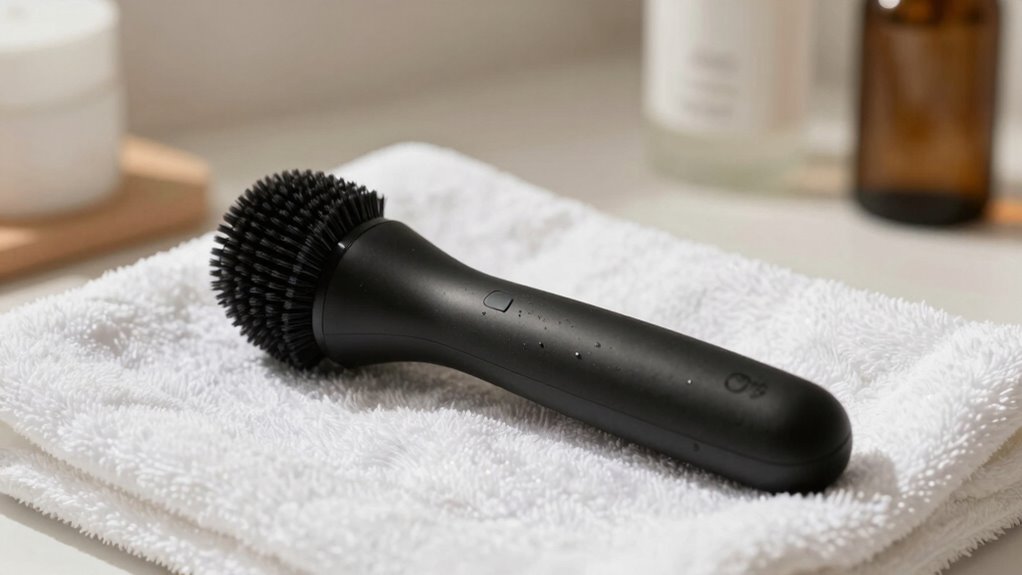

If you have very sensitive, irritated, or compromised skin, you should skip sonic facial brushes to avoid worsening your condition. People with rosacea, eczema, psoriasis, active acne, or open wounds should also avoid using them, as vibrations can increase redness, dryness, or discomfort. It’s best to wait until your skin is calmer or consult a dermatologist before trying one. To discover how to safely use skincare tools, keep exploring these details.

Prime made for students and young adults
- Fast, free delivery for dorm and study essentials
- Prime Video and Amazon Music included
- Member-only deals
Key Takeaways
- Individuals with sensitive skin prone to redness or irritation should avoid or carefully test sonic brushes.
- People with active acne, open wounds, or skin infections should skip sonic brushes to prevent aggravation.
- Those with skin conditions like rosacea, eczema, or psoriasis should consult a dermatologist before use.
- Users experiencing increased dryness, discomfort, or redness should discontinue use immediately.
- Anyone unsure about their skin’s reaction or with compromised skin should seek professional advice before using.

Sonic facial brushes are designed to provide gentle exfoliation, which can be a game-changer for many people. When used correctly, they remove dead skin cells and promote a brighter, healthier complexion. However, if your skin is particularly sensitive or prone to irritation, you might want to think twice before adding a sonic brush to your routine. The high-frequency vibrations can sometimes cause redness or discomfort if your skin barrier is compromised or overly delicate. It’s important to listen to your skin’s signals and start with gentle settings or shorter sessions to see how it responds. Additionally, understanding the skin sensitivity is crucial, as some individuals may find that the mechanical action of sonic brushes is too abrasive. People with skin sensitivity should be cautious because these brushes can sometimes do more harm than good. If you notice increased redness, irritation, or dryness after using a sonic facial brush, it’s a clear sign to stop using it or switch to a softer cleansing method. Those with skin conditions such as rosacea, eczema, or psoriasis should consult a dermatologist before trying sonic brushes, as their skin might react negatively to the vibrations and exfoliation. Additionally, if you have active acne or open wounds, it’s best to skip sonic facial brushes altogether. The mechanical action might aggravate inflammation or cause bacteria to spread, worsening your skin’s condition. Incorporating knowledge about proper skincare techniques can help prevent unnecessary irritation and ensure your skin remains healthy while using cleansing tools. Being aware of product safety standards can also guide you in choosing devices that are designed to minimize skin irritation. Moreover, understanding the importance of gentle cleansing can help you select the right tools and techniques for your specific skin type. Furthermore, using appropriate maintenance of your device can prevent bacteria buildup and ensure it remains safe for regular use.
Products Worth Considering

Samsung 42-Inch S90H OLED 4K Smart TV Bundle

Roborock Qrevo CurvX Robot Vacuum and Mop

Bose TV Speaker (2nd Gen) Compact Soundbar with Bluetooth and HDMI
As an affiliate, we earn on qualifying purchases.
Frequently Asked Questions
Are Sonic Facial Brushes Suitable for Sensitive Skin?
Sonic facial brushes can be suitable for sensitive skin if used correctly, but you should proceed with caution. They offer gentle exfoliation that can help remove dead skin cells without irritation, but it’s important to choose a brush with soft bristles and use it on a low setting. Always test on a small area first, and if you experience redness or discomfort, stop using it to prevent irritation.
How Often Should I Replace the Brush Head?
You should replace your sonic facial brush head every three months to maintain ideal brush longevity and effective cleansing. Regular replacement ensures bacteria buildup is minimized and the brush continues to perform well. Keep an eye on signs of wear, like frayed bristles or decreased vibration. Sticking to the recommended replacement frequency helps protect your skin and keeps your skincare routine effective. Don’t delay, and swap out the brush head on time.
Can Sonic Brushes Help With Acne-Prone Skin?
Sonic facial brushes can help with acne-prone skin by gently cleansing and reducing oil buildup, which may improve acne scars over time. However, if you have sensitive skin or experience skin irritation, using a sonic brush might worsen irritation or cause discomfort. Always start with a gentle setting, and if you notice increased redness or irritation, stop using it. Consulting a dermatologist can help determine if a sonic brush suits your skin.
Are Sonic Brushes Safe for Use Around the Eyes?
Imagine using a sonic facial brush near your eyes and experiencing eye irritation—this can happen if the brush isn’t designed for delicate areas. Sonic brushes aren’t always safe around the eyes because of sensitive skin and the risk of damage. Additionally, poor brush durability might lead to bristles breaking off and irritating your eyes. It’s best to avoid using sonic brushes directly around your eyes to prevent irritation and maintain safety.
Do Sonic Facial Brushes Remove Blackheads Effectively?
Sonic facial brushes can be effective for blackhead removal, as their sonic efficacy helps loosen dirt, oil, and debris lodged in pores. By gently exfoliating the skin, they make it easier to clear out blackheads. However, results vary depending on your skin type and the brush’s settings. Use them consistently and with proper technique to see improvements, but avoid overusing to prevent irritation or damage.
Conclusion
If you have sensitive or acne-prone skin, a sonic facial brush might be like a wild stallion—powerful and tempting, but hard to tame. It can strip away your skin’s natural defenses, leaving it vulnerable to irritation. Think of your face as a delicate garden; sometimes, gentle watering is all you need to let your beauty bloom. Skip the brush if your skin’s a tender flower—treat it with care, and it’ll flourish naturally.