
If you need a space-saving device for everyday work, a mini PC is a good choice because it’s small, portable, and energy-efficient. However, if you require higher performance, better cooling, and easier upgrades, a desktop tower suits demanding tasks like gaming or heavy workloads. Consider your space, upgrade plans, and security needs. To find out which option fits your situation best, keep exploring the differences and benefits of each.
Key Takeaways
- Mini PCs are compact and portable, ideal for space-constrained environments and multiple work locations.
- Desktop towers offer higher performance and upgradability for demanding tasks and future-proofing.
- Mini PCs are energy-efficient and cost-effective for basic daily tasks.
- Desktop towers support more powerful hardware, especially for graphics-intensive work or gaming.
- Organizational security and hardware management considerations influence the choice between mini PCs and desktop towers.
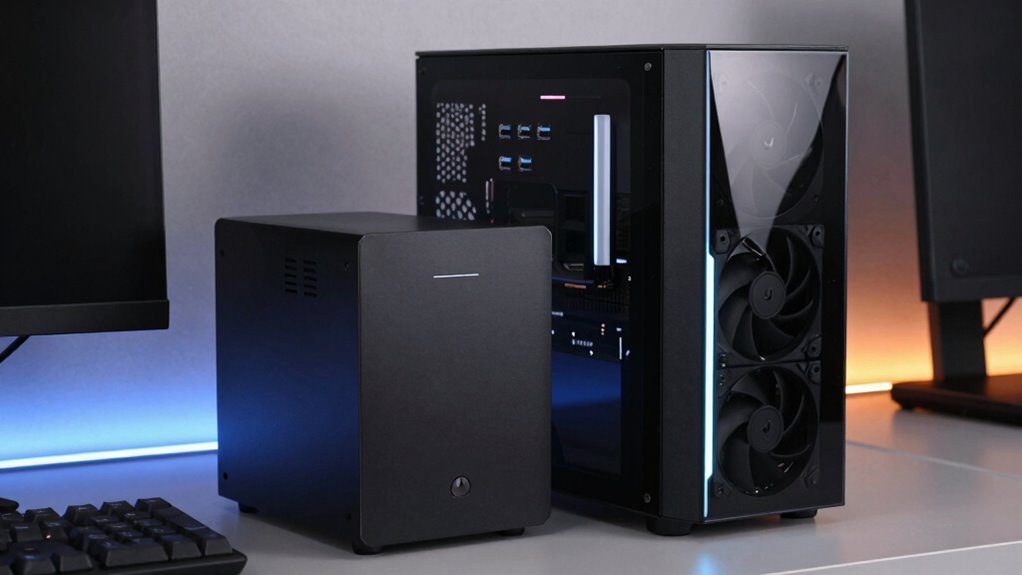
When choosing a computer for everyday work, the decision often comes down to whether a mini PC or a desktop tower best fits your needs. If you’re looking for a compact device that can still handle your daily tasks, mini PCs offer a clear advantage in portability. They’re small enough to fit into tight spaces, can easily be moved between rooms, and often don’t require a dedicated desk area. This makes them ideal if you work in multiple locations or have limited space. Plus, many mini PCs are energy-efficient, which helps reduce power costs over time.
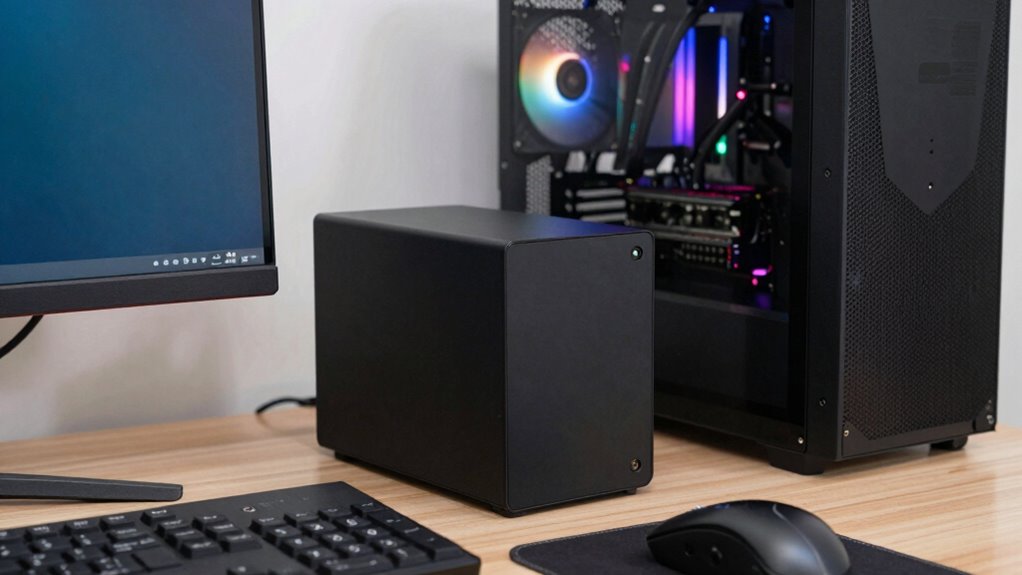
However, if your work involves more demanding tasks or you want room to upgrade components later, a desktop tower might be the better choice. Desktop towers typically have larger cases, which allow for better airflow and higher-performance hardware. This can translate into improved gaming performance if you play games during your downtime. The larger size also makes it easier to upgrade parts like RAM, storage, or graphics cards, ensuring your system stays relevant and powerful over the years. While they’re less portable, desktop towers often provide a better foundation for future-proofing your setup. Additionally, desktop towers generally support a wider range of upgradable hardware, making them a versatile option for evolving needs.
When considering gaming performance, desktop towers generally have the edge. They can house more powerful graphics cards and cooling systems, which are essential for smooth gameplay. Mini PCs, although increasingly capable, often have limited space for high-end GPUs and advanced cooling solutions. This means that if gaming performance is a priority, a desktop tower will usually deliver better frame rates and a more immersive experience. But if gaming isn’t your main focus and you simply want a reliable device for work, mini PCs can still handle casual gaming or less demanding titles.
Portability advantages are a key factor for many users. Mini PCs are lightweight and compact, so you can take your work setup on the go or tuck it away when not in use. This flexibility is especially useful if you travel frequently or work from different locations. Desktop towers, on the other hand, are designed to stay in one place but offer more room for hardware and upgrades, making them a solid investment if you prioritize performance over portability. Ultimately, your choice depends on whether you need mobility or maximum performance and expandability for your everyday tasks.
Additionally, considering enterprise governance can ensure that your hardware setup aligns with security protocols and organizational standards, especially when deploying multiple devices across different locations. Proper planning and understanding of organizational standards can also help streamline hardware management and compliance. Moreover, understanding the hardware limitations of mini PCs can assist in making a more informed decision based on your specific requirements.
As an affiliate, we earn on qualifying purchases.
Frequently Asked Questions
Which Is More Energy-Efficient, a Mini PC or a Desktop Tower?
A mini PC is generally more energy-efficient than a desktop tower, thanks to its smaller size and lower power consumption. You’ll enjoy portable convenience without sacrificing performance, making it perfect for everyday work. Plus, its sleek design offers a clean, aesthetic appeal that fits seamlessly into any workspace. If energy efficiency and a modern look matter most, a mini PC is your best choice, helping you save on electricity and space.
Can Mini PCS Handle High-Performance Tasks Like Gaming or Video Editing?
Think of mini PCs like compact sports cars—they can handle high-performance tasks, but they’re not built for long, intense races. While some mini PCs offer decent gaming performance and handle video editing, they often struggle with high-end rendering or gaming at max settings. If you prioritize heavy-duty gaming or professional video editing, a desktop tower’s larger cooling systems and power supply give you the edge.
How Easy Is It to Upgrade Components in Each System?
Upgrading components in a desktop tower is generally easier because of its modular design and better component accessibility. You can swap out parts like RAM, storage, or graphics cards with minimal effort. Mini PCs, however, often have limited upgrade options due to their compact size and integrated design. While some models allow for upgrades, you’ll usually find less flexibility and more challenges compared to traditional desktop towers.
What Are the Typical Price Differences Between Mini PCS and Desktop Towers?
You’ll find that mini PCs generally cost less than desktop towers, making them budget options for light tasks. Desktop towers, however, often come with a higher price tag due to their larger size and upgrade potential. When considering design, think about whether you prefer a compact, space-saving mini PC or a spacious tower that’s easier to upgrade. Your choice depends on your budget and how much you value upgrade flexibility.
Which Option Offers Better Longevity and Future-Proofing?
Desktop towers generally offer better longevity and future-proofing because of their superior design versatility and upgrade options. You can easily swap out components like RAM, storage, or graphics cards, keeping your system current. Plus, their larger size allows for better cooling and more robust hardware, enhancing aesthetic appeal. Mini PCs are compact but often limit upgrades, which could shorten their lifespan and reduce their ability to adapt to future needs.
As an affiliate, we earn on qualifying purchases.
Conclusion
In the end, choosing between a mini PC and a desktop tower is like selecting a trusty companion or a steadfast fortress—each has its own rhythm. Mini PCs are nimble dancers, perfect for tight spaces and quick moves, while desktop towers stand tall like guardians, ready to handle heavy tasks. Think about your daily grind, your space, and your needs. Whichever you pick, make sure it’s a partner that moves to the beat of your work life.
As an affiliate, we earn on qualifying purchases.
As an affiliate, we earn on qualifying purchases.