To choose the right kitchen sink water filter, consider your water quality and which contaminants you want to remove, like chlorine, heavy metals, or bacteria. Think about installation ease—faucet-mounted filters are simple, while under-sink units may need plumbing work. Check flow rate and capacity to match your household water use, and stay within your budget. With the right info, you’ll find a filter that fits your needs and space perfectly—discover more tips to make the best choice.

Prime made for students and young adults
- Fast, free delivery for dorm and study essentials
- Prime Video and Amazon Music included
- Member-only deals
Key Takeaways
- Identify specific contaminants in your water through testing to select appropriate filtration technology.
- Consider installation options and space availability under your sink for ease of setup and maintenance.
- Match filter capacity and flow rate to your household’s daily water usage for convenience and efficiency.
- Evaluate different filtration technologies (activated carbon, reverse osmosis, UV) based on your water quality needs.
- Balance your budget with long-term maintenance costs to choose a cost-effective and practical water filter system.
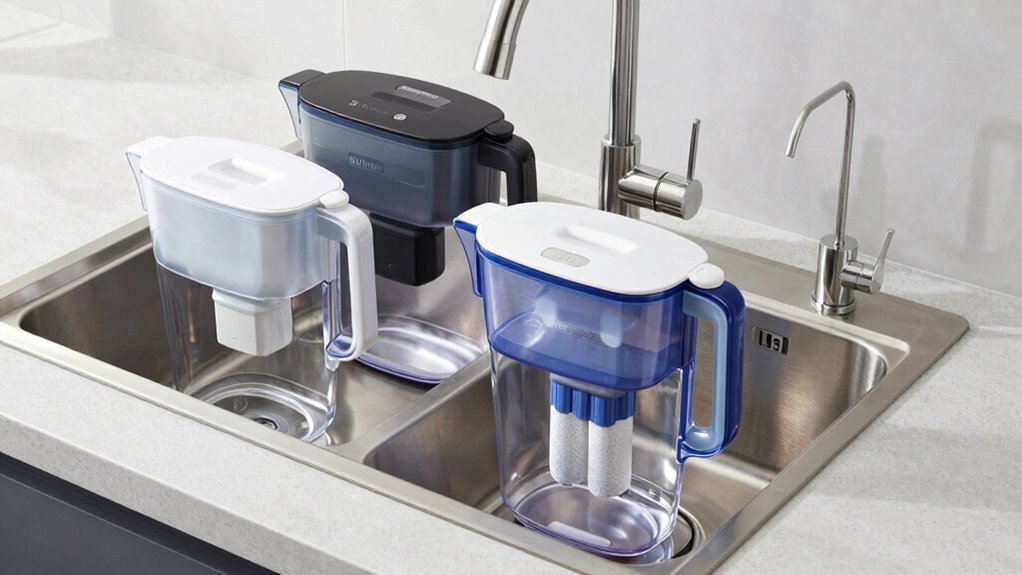
Selecting the right water filter for your kitchen sink is an important step toward guaranteeing clean, safe drinking water. With so many options available, understanding water filtration technology and installation considerations can help you make an informed choice. The key is to find a filter that aligns with your water quality needs, budget, and space constraints.
First, consider the water filtration technology used in different filters. Some systems use activated carbon filters, which effectively reduce chlorine, sediment, and some organic compounds, improving taste and odor. Others incorporate reverse osmosis technology, which pushes water through a semi-permeable membrane to remove contaminants like heavy metals, nitrates, and pesticides. UV filters, on the other hand, use ultraviolet light to kill bacteria and viruses, making them ideal if you’re concerned about microbial contamination. Hybrid systems combine these technologies, providing all-encompassing filtration in a single unit. Knowing which contaminants are present in your tap water can guide you toward the most suitable filtration technology, guaranteeing you get the level of purification you need. Understanding the water quality in your area can help you determine the most appropriate technology for your needs. Additionally, assessing contaminant levels can further refine your choice to ensure the filter effectively addresses specific pollutants. Recognizing the importance of water testing can help you make more precise decisions about filtration needs.
Choose the right filtration technology based on your water contaminants for cleaner, better-tasting water.
Installation considerations are just as crucial as choosing the right technology. You need to evaluate your existing sink setup to determine whether a countertop, under-sink, or faucet-mounted filter fits best. Under-sink units typically require some plumbing work, including cutting into your water line and installing a dedicated faucet. These installations can be more complex but often offer higher flow rates and better filtration capacity. Faucet-mounted filters are easier to install, often requiring no tools, making them ideal if you want a quick solution. Keep in mind space limitations under your sink, especially if you already have other plumbing fixtures or storage items. Additionally, consider the maintenance involved—some filters need regular cartridge replacements or cleaning, while others have longer-lasting filters. Ensuring your chosen filter has features like filter longevity can help you plan maintenance more efficiently. Guaranteeing easy access for filter changes will save you time and hassle in the long run.
You should also think about flow rate and capacity. A filter that slows down your water flow can be frustrating, especially if you frequently use filtered water for cooking or drinking. Check the manufacturer’s specifications to ensure the filter can handle your household’s daily water consumption. Budget is another factor, as more advanced systems tend to cost more upfront but can save money over time with replacement filters and maintenance. Ultimately, choosing a water filter involves balancing your specific needs, the technology’s effectiveness, and installation practicality. By carefully evaluating these aspects, you’ll end up with a filter that not only provides clean, great-tasting water but also fits seamlessly into your kitchen routine.
As an affiliate, we earn on qualifying purchases.
Frequently Asked Questions
How Often Should I Replace My Water Filter?
You should replace your water filter based on its filter lifespan and recommended replacement frequency, typically every 6 to 12 months. Check your filter’s manufacturer guidelines, as some filters last longer or shorter depending on usage and water quality. Regularly inspect for reduced flow or taste changes, which signal it’s time for a replacement. Staying on top of this guarantees your water remains clean and safe to drink.
Are Countertop Filters as Effective as Under-Sink Models?
Countertop filters are nearly as effective as under-sink models, with some filtering out up to 99% of contaminants. You can install a countertop filter quickly, making it a convenient option. However, under-sink models often require more maintenance and space. If you prefer easy countertop installation and less maintenance, a countertop filter works well. For more extensive filtering, under-sink models might provide better long-term results.
Do Water Filters Remove Beneficial Minerals?
Water filters can remove some beneficial minerals, potentially affecting mineral retention and pH balance. However, many filters are designed to retain essential minerals while eliminating contaminants. If maintaining mineral content and pH balance is important, look for filters that specify mineral retention features. You can also consider filters that add minerals back after purification, ensuring your water remains balanced and healthy without stripping away beneficial nutrients.
Can Water Filters Improve Taste and Odor?
Yes, water filters can considerably improve taste and odor. While the purest water might seem bland, filters enhance taste by removing impurities that cause metallic or musty flavors. They also eliminate odors, making your water fresher and more appealing. This dual benefit of taste enhancement and odor elimination encourages you to drink more water daily, ensuring you stay hydrated and enjoy cleaner, better-tasting water straight from your tap.
What Is the Average Cost of Maintaining a Water Filter?
The average cost of maintaining a water filter varies based on filtration technology and your usage, typically ranging from $20 to $100 annually. Cost comparison shows that simpler carbon filters are cheaper to replace, while advanced systems like reverse osmosis need more expensive periodic maintenance. Regular filter changes are essential to guarantee peak performance, so consider your budget and water quality needs when selecting your filter’s maintenance plan.
reverse osmosis water filter system
As an affiliate, we earn on qualifying purchases.
As an affiliate, we earn on qualifying purchases.
Conclusion
Ultimately, selecting the right water filter transforms your kitchen from a simple sink into a hub of health. While a basic filter may remove impurities, a premium system offers peace of mind and better-tasting water. Think of it as choosing between a quick fix and a lasting solution. Your decision isn’t just about water—it’s about investing in your well-being. After all, what’s more invigorating than knowing every sip is pure and safe?
As an affiliate, we earn on qualifying purchases.
under sink water filtration system
As an affiliate, we earn on qualifying purchases.
As an affiliate, we earn on qualifying purchases.
Halloween Picks
halloween
As an affiliate, we earn on qualifying purchases.