To guarantee a comfortable and safe fit for daily walks, measure your dog accurately and choose a harness that’s adjustable. It should be snug but not tight—fitting two fingers comfortably between the harness and your dog’s body. Regular checks and adjustments are key as your dog grows. Proper fit improves leash control, reduces pulling, and prevents discomfort. For more details on finding the perfect fit and training tips, keep exploring these helpful guidelines.

Prime made for students and young adults
- Fast, free delivery for dorm and study essentials
- Prime Video and Amazon Music included
- Member-only deals
Key Takeaways
- Measure your dog accurately and choose an adjustable harness for a proper, snug fit without restricting movement.
- Ensure two fingers fit comfortably between the harness and your dog’s body to prevent slipping or discomfort.
- Regularly check and adjust the harness as your dog grows or gains weight for continued comfort and safety.
- Use positive reinforcement during harness training to promote calm behavior and proper leash manners.
- Prioritize harness styles that evenly distribute pressure and prevent chafing, especially for daily walks.
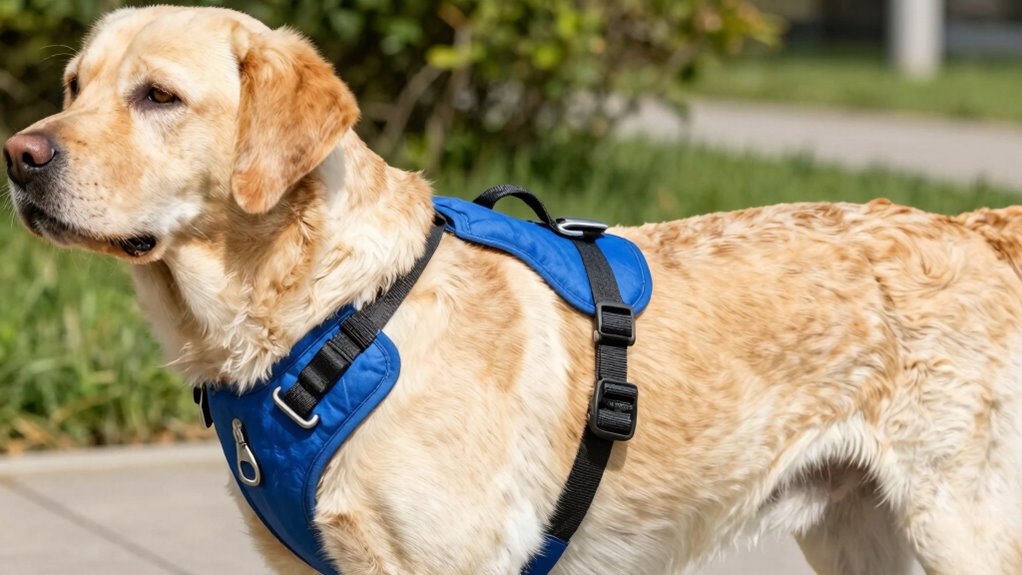
Getting the perfect fit for your dog’s harness is essential for their comfort and safety. When you’re choosing a harness for daily walks, it’s important to think about how your dog moves and how the harness interacts with their body. Proper fitting isn’t just about comfort; it’s also about ensuring safety during your outings. If your harness is too loose, your dog might slip out or get tangled, increasing the risk of injury or escape. Conversely, if it’s too tight, it could cause discomfort or restrict movement. To get it right, you need to measure your dog accurately and select a harness that allows for some adjustment without being overly loose or tight.
Training techniques come into play here as well, especially if your dog is new to harnesses or still learning leash manners. A well-fitting harness makes training easier because your dog feels secure and isn’t uncomfortable or distracted by pinching or chafing. When introducing a harness, start with short, positive sessions, rewarding your dog for calm behavior. Use treats and praise to help your dog associate the harness with good experiences. Consistent training techniques help your dog understand that harness wearing is a positive part of their routine, which reduces pulling and pulling-related stress during walks. Additionally, proper harness fit can significantly improve leash control and reduce pulling tendencies.
Safety considerations are paramount when fitting a harness. Make sure it’s snug enough that your dog can’t wiggle out but not so tight that it pinches or causes discomfort. You should be able to fit two fingers between the harness and your dog’s body comfortably. Pay attention to areas that may chafe or rub, such as around the armpits or neck, and choose harness styles that distribute pressure evenly across the chest or back. If your dog tends to pull, consider a front-clip harness, which can help control their movement without causing strain or discomfort. Regularly check the fit as your dog grows or gains weight, and adjust accordingly. Additionally, choosing a harness with superior filtration can help reduce allergens and irritants that may cause discomfort or skin issues.
Products Worth Considering

Dyson Ball Animal 3 Corded Upright Vacuum

Philips Hue Bridge Pro Smart Lighting Hub

Shark Navigator Robot Vacuum with 30-Day Self-Emptying Base, White (AV2110S)
As an affiliate, we earn on qualifying purchases.
Frequently Asked Questions
How Often Should I Remeasure My Dog for the Harness?
You should remeasure your dog for the harness every few months or if you notice any weight changes. Regularly updating measurements guarantees a proper fit, which is essential for safety tips during walks. Using effective training techniques, like positive reinforcement, helps your dog get comfortable with the harness. Frequent remeasurements and proper fit prevent chafing, discomfort, or escape, keeping walks safe and enjoyable for both of you.
Can a Harness Be Adjusted as My Dog Grows?
Yes, a harness can be adjusted as your dog grows. Notably, about 60% of dog owners find adjustable harnesses more comfortable. Different harness types, like step-in or vest styles, often feature adjustable straps for a perfect fit. Sizing tips include measuring your dog’s girth and neck carefully, then choosing a harness with adjustable straps to accommodate growth, ensuring safety and comfort during daily walks.
What Materials Are Best for Sensitive Skin?
For sensitive skin, you should choose harnesses made from hypoallergenic fabrics and breathable materials. These fabrics help reduce irritation and keep your dog comfortable during walks. Look for options like soft cotton blends or specially designed hypoallergenic synthetics, which are gentle and allow airflow. Avoid rough or synthetic fabrics that can cause itching or discomfort. Always check for smooth seams and a snug but not tight fit to guarantee comfort and skin health.
Are There Harnesses Suitable for All Weather Conditions?
Yes, there are harnesses suitable for all weather conditions. You should look for options made from weather-resistant materials that withstand rain, snow, and sun. Seasonal harness choices often feature breathable fabrics for summer and insulated layers for winter, ensuring your dog stays comfortable year-round. With the right harness, you won’t have to worry about weather ruining your daily walks, keeping your pup safe and secure no matter the forecast.
How Do I Prevent Chafing During Long Walks?
To prevent chafing during long walks, make certain you choose a harness with soft, padded materials that reduce friction. Regularly check your dog’s skin for signs of skin irritation, and adjust the harness snugly but not too tight. Use a gentle, dog-safe anti-chafing balm if needed. Taking these steps guarantees your dog stays comfortable and minimizes the risk of chafing prevention and skin irritation during extended outings.
Conclusion
Think of your dog’s harness as the perfect saddle on a trusted horse—if it fits just right, your companion will move freely and confidently across every terrain. When you choose the right fit, it’s like opening a secret passage to joyful walks and secure adventures. Remember, a well-fitted harness isn’t just gear; it’s the key to a harmonious journey together. Keep adjusting and caring—your dog’s comfort is the treasure you both seek.