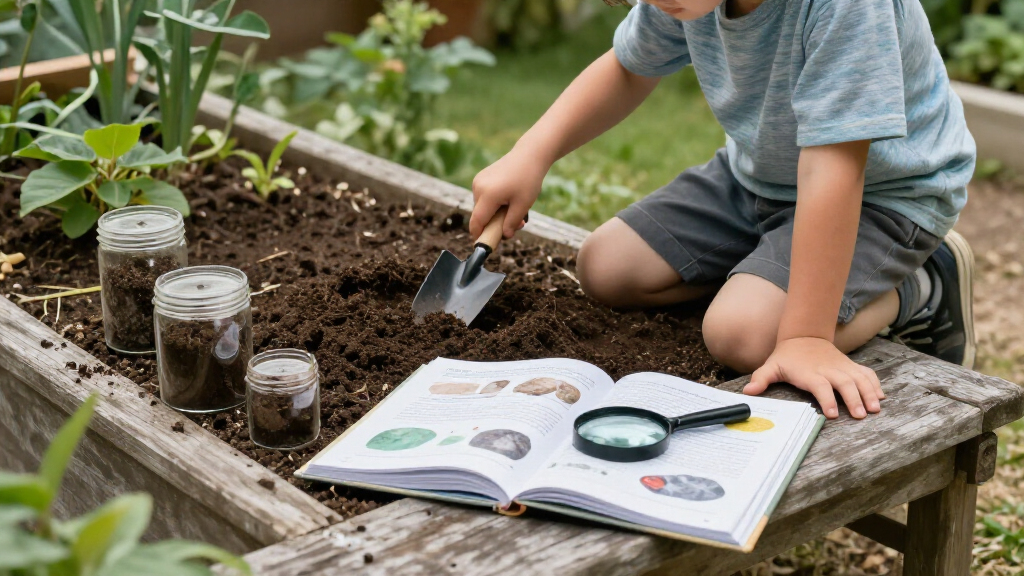

Earth science workbooks for kids range from early-grade activity pages to structured high school review, so the right choice depends on a child’s age and how they learn. I’d make Earth Science Workbook for Kids, Grades 3–5: Earth Explorer Activity Book my best overall pick for its clear elementary focus; Earth Science Made Easy for Kids stands out for visual learners, while Exploring Earth Science in 9 Weeks suits families who want a daily routine. The main tradeoff is between short, engaging activities and more systematic coverage of topics such as weather, geology, oceans, and space. Grade labels, reading demands, and whether a book includes hands-on tasks can matter as much as its topic list. Read on for the full comparison and recommendations by learner type.

Prime made for students and young adults
- Fast, free delivery for dorm and study essentials
- Prime Video and Amazon Music included
- Member-only deals
Key Takeaways
- Grade fit separates the strongest choices: the Earth Explorer book targets grades 3–5, while the high school titles address older students and should not be treated as interchangeable.
- Visual learning has its own lane: Earth Science Made Easy is framed as a visual guide, unlike workbooks built around passages, practice, or a fixed study schedule.
- Routine-oriented families have a distinct option: Exploring Earth Science in 9 Weeks organizes learning into daily work, which differs from a less time-bound workbook.
- The lineup includes several adjacent—not strictly earth science—choices: Nature Smarts and the Grade 1 science workbook may suit broader science learning, but their scope is less specifically earth-focused.
- Older learners can choose between broad guides and focused practice: the grades 6–8 guide and Mark Twain interactive books serve middle school, while the 25 mini-lessons format favors short sessions.
| Earth and Space Science Guide for Grades 6–8 |  | Best for Standards-Aligned Middle School Review | Subject: Earth and space science | Grade level: 6–8 | Format: Workbook | VIEW LATEST PRICE | See Our Full Breakdown |
| Earth Science Workbook for Kids, Grades 3–5: Earth Explorer Activity Book |  | Best for Reading-and-Worksheet Practice | Subject: Earth science | Grade range: 3–5 | Age range: 8–12 | VIEW LATEST PRICE | See Our Full Breakdown |
| Nature Smarts Workbook for Ages 7–9 |  | Best for Playful, Broad Nature Learning | Age range: 7–9 | Topics: Wildlife, geology, Earth science, and habitats | Activities: Puzzles, games, quizzes, and outdoor science experiments | VIEW LATEST PRICE | See Our Full Breakdown |
| Earth Science Workbook for High School: Plate Tectonics, Atmosphere, Oceans, Weather, and Space |  | Best for Broad High School Topic Coverage | Subject: Earth science | Level: High school | Topics: Plate tectonics, atmosphere, oceans, weather, and space | VIEW LATEST PRICE | See Our Full Breakdown |
| Earth Science Made Easy for Kids: A Visual Learning Guide to Geology, Weather, Oceans, and Natural Disasters |  | Best for Visual Topic Introductions | Topics: Geology, weather, oceans, and natural disasters | Format: Visual learning guide | Audience: Kids; specific age range not provided | VIEW LATEST PRICE | See Our Full Breakdown |
| Elementary Earth Science Workbook: Reading Passages, Diagrams, Activities, and Experiments for Grades 3–5 |  | Best for Mixed-Format Learning | Grade level: Grades 3–5 | Topics: Earth, weather, and space | Content: Reading passages | VIEW LATEST PRICE | See Our Full Breakdown |
| High School Earth Science Workbook for Grades 9–10: From Earth’s Core to Deep Space |  | Best for High-Volume Practice | Grade level: Grades 9–10 | Practice questions: 600+ | Topic range: Earth’s core to deep space | VIEW LATEST PRICE | See Our Full Breakdown |
| 25x: Earth Science – Middle School: 25 Mini-Lessons |  | Best for Short Reading Lessons | Subject: Earth science | Audience: Middle school | Lessons: 25 mini-lessons | VIEW LATEST PRICE | See Our Full Breakdown |
| Science Grade 1 Workbook for Kids Ages 6–7 |  | Best for Young Science Beginners | Grade level: Grade 1 | Recommended age: 6–7 years | Practice format: Daily practice | VIEW LATEST PRICE | See Our Full Breakdown |
| Exploring Earth Science in 9 Weeks: Daily Science Workbook for Grades 4–5 |  | Best for a Planned Unit | Subject: Earth science | Grade level: Grades 4–5 | Duration: 9 weeks | VIEW LATEST PRICE | See Our Full Breakdown |
| Mark Twain Earth & Space Science Interactive Books for Grades 5–8 |  | Best for Broad Topic Coverage | Subject areas: Geology, oceanography, meteorology, astronomy | Grade range: 5–8 | Format: Interactive books | VIEW LATEST PRICE | See Our Full Breakdown |
| earth science workbooks for kid | Format |
|---|---|
| Earth and Space Science Guide | Workbook |
| Earth Science Workbook for Kid | Activity book |
| Nature Smarts Workbook for Age | Workbook |
| Earth Science Workbook for Hig | Workbook |
| Earth Science Made Easy for Ki | Visual learning guide |
| Elementary Earth Science Workb | — |
| High School Earth Science Work | Earth science workbook |
| 25x: Earth Science | — |
| Science Grade 1 Workbook for K | — |
| Exploring Earth Science in 9 W | Daily science workbook |
| Mark Twain Earth & Space Scien | Interactive books |
More Details on Our Top Picks
Earth and Space Science Guide for Grades 6–8
This workbook’s clearest advantage is its grades 6–8 scope paired with coverage of both Earth and space science. That makes it a plausible fit for families seeking material organized around school standards, rather than a broad nature activity book like Nature Smarts Workbook for Ages 7–9. The grade band also suits students who have outgrown elementary activities but are not ready for high-school-level coverage such as Earth Science Workbook for High School. The tradeoff is limited detail in the available product information: I can’t tell which standards, topics, or exercise types it includes. Buyers who need a known mix of diagrams, quizzes, or hands-on projects may prefer a workbook with those contents spelled out. It makes the most sense when grade alignment matters more than a preview of specific activities.
Pros:- Covers both Earth and space science
- Designed for grades 6–8
- Organized around science standards
Cons:- Specific topics and standards are not identified in the available information
- Workbook activities and exercise formats are not described
Best for: Families of students in grades 6–8 who want an Earth-and-space workbook described as standards-aligned.
Not ideal for: Buyers who need confirmed topic lists, sample exercise types, or hands-on activities before choosing a workbook.
- Subject:Earth and space science
- Grade level:6–8
- Format:Workbook
- Standards focus:Organized around science standards
- Earth science coverage:Included
- Space science coverage:Included
Our verdict“Choose this for middle-school grade alignment across Earth and space science, but pick a more fully described workbook if activity details matter.”
Earth Science Workbook for Kids, Grades 3–5: Earth Explorer Activity Book
The passages, geology diagrams, worksheets, and quizzes give this book a defined learning rhythm: children can read about a concept, study a visual, then practice it. That makes it a more structured Earth science choice than Nature Smarts Workbook for Ages 7–9, whose appeal is its broader mix of nature topics and games. Its grades 3–5 and ages 8–12 positioning may also suit learners who want more direct Earth science practice than a general visual guide like Earth Science Made Easy for Kids. The main limitation is that the listed contents emphasize reading and paper-based review, not outdoor experiments or a wider range of nature themes. The age span is broad, too, so fit may depend on a child’s reading level and comfort with quizzes.
Pros:- Pairs science passages with geology diagrams
- Includes worksheets and quizzes for practice
- Targets grades 3–5 and ages 8–12
- Keeps the focus on Earth science
Cons:- Listed activities center on reading and written practice rather than outdoor experiments
- The broad age range may not match every child’s reading level
Best for: Ages 8–12 learners in grades 3–5 who benefit from short science readings, geology visuals, and follow-up written practice.
Not ideal for: Children who prefer hands-on outdoor projects, game-led learning, or a workbook with a broader wildlife and habitat focus.
- Subject:Earth science
- Grade range:3–5
- Age range:8–12
- Contents:Science passages, geology diagrams, worksheets, and quizzes
- Series:Curious Minds Premium Learning Library
- Format:Activity book
Our verdict“Pick this for elementary learners who want a clear read-and-practice format rather than a primarily game-based or outdoor activity book.”
Nature Smarts Workbook for Ages 7–9
Rather than concentrating on Earth science alone, this workbook connects geology and earth science with wildlife and habitats. Its puzzles, games, quizzes, and outdoor experiments offer more activity variety than the passage-and-worksheet approach of Earth Science Workbook for Kids, Grades 3–5: Earth Explorer Activity Book. That breadth can help a curious child connect landforms and habitats to the living things around them, while the outdoor experiments offer a change from page-based work. The compromise is a less focused Earth science curriculum: geology shares space with other nature topics, so it may not provide the sustained topic practice a school-focused learner needs. Its ages 7–9 target is also narrower than the grade-based audience of Earth Explorer, making it a less flexible choice as a child gets older.
Pros:- Connects geology and Earth science with wildlife and habitats
- Offers puzzles, games, and quizzes
- Includes outdoor science experiments
- Activity variety can suit children who tire of worksheets
Cons:- Earth science is only part of a broader nature focus
- The stated age range is limited to 7–9
- Does not specify a grade-based sequence
Best for: Children ages 7–9 who enjoy puzzles and outdoor activities and want Earth science woven into a wider nature workbook.
Not ideal for: Older elementary students seeking focused Earth science instruction, or families prioritizing a defined grades 3–5 worksheet-and-quiz sequence.
- Age range:7–9
- Topics:Wildlife, geology, Earth science, and habitats
- Activities:Puzzles, games, quizzes, and outdoor science experiments
- Format:Workbook
- Earth science focus:Included among broader nature topics
- Outdoor activities:Science experiments
Our verdict“Choose this for younger children who learn through varied nature activities, not for a narrowly focused Earth science course.”
Earth Science Workbook for High School: Plate Tectonics, Atmosphere, Oceans, Weather, and Space
This is the most clearly advanced option in this group, with a stated high school level and topics spanning plate tectonics, the atmosphere, oceans, weather, and space. Compared with Earth and Space Science Guide for Grades 6–8, it is aimed at older learners and names a wider set of specific subject areas, which helps families judge its scope. It also gives more topic detail than the unnamed contents of that middle-school guide. The drawback is that the product information does not describe its exercises, sequence, or format, so buyers cannot tell whether it supports independent practice or mostly serves as a reference. Younger children should skip it in favor of an elementary option such as Earth Explorer Activity Book, which specifies age and grade ranges.
Pros:- Designed for high school learners
- Names plate tectonics, atmosphere, oceans, weather, and space
- Covers several major Earth science areas
- Includes space alongside Earth science topics
Cons:- Exercises and activity formats are not specified
- No grade range more precise than high school is provided
- The available description does not clarify topic depth or sequence
Best for: High school students or families seeking one workbook that names several major Earth science fields, including space.
Not ideal for: Elementary or middle school learners, and buyers who need confirmed exercise types or a detailed lesson sequence.
- Subject:Earth science
- Level:High school
- Topics:Plate tectonics, atmosphere, oceans, weather, and space
- Series:CoreReady Workbooks
- Format:Workbook
- Exercise details:Not specified in the available product information
Our verdict“Choose this when high-school-level breadth is the priority, but look elsewhere if you need a clearly described practice format.”
Earth Science Made Easy for Kids: A Visual Learning Guide to Geology, Weather, Oceans, and Natural Disasters
The book’s visual learning format and named topics—geology, weather, oceans, and natural disasters—make it a promising introduction for children who respond better to visual explanations than to a sequence of worksheets. Compared with Earth Science Workbook for Kids, Grades 3–5: Earth Explorer Activity Book, it appears less centered on quizzes and written practice; its value is the visual-guide approach and broad topic sampler. It also covers natural disasters explicitly, while Nature Smarts Workbook for Ages 7–9 spreads attention across wildlife and habitats. The tradeoff is uncertainty about fit: no age range, reading level, length, or specific activity types are provided. Families needing a grade-matched workbook or a clear practice plan may be better served by Earth Explorer.
Pros:- Uses a visual-learning approach designed for kids
- Covers geology, weather, and oceans
- Includes natural disasters as a named topic
- Part of a STEM-focused series
Cons:- No age range or reading level is provided
- Length and specific activity types are not described
- The available information does not confirm a workbook-style practice sequence
Best for: Children who prefer visual introductions to Earth science topics, with an adult willing to check whether the reading level fits.
Not ideal for: Families seeking a specified age or grade match, a known workbook length, or confirmed worksheets, quizzes, and experiments.
- Topics:Geology, weather, oceans, and natural disasters
- Format:Visual learning guide
- Audience:Kids; specific age range not provided
- Reading level:Not specified in the available product information
- Series:Smart STEM Made Easy for Kids
- Length:Not specified in the available product information
Our verdict“Pick this as a visual topic introduction if grade-specific practice is not your main requirement.”
Elementary Earth Science Workbook: Reading Passages, Diagrams, Activities, and Experiments for Grades 3–5
I’d choose this workbook for elementary students who learn better when reading is paired with something to interpret or do. Its passages and diagrams offer more variety than the article-based 25x: Earth Science – Middle School: 25 Mini-Lessons, while the included activities and experiments give young learners ways to work with the ideas beyond reading. Coverage of Earth, weather, and space also makes it a broad introduction rather than a workbook focused on one branch of the subject. That range is useful for families building general science familiarity, though it may leave less room for extended study of any single topic. It is aimed at grades 3–5, so it is a better fit for elementary learners than the question-heavy high school workbook in this roundup. The description does not specify a lesson schedule or the number of experiments, which may matter to buyers seeking a tightly paced plan.
Pros:- Combines reading passages and diagrams with activity pages and experiments.
- Introduces Earth, weather, and space in one workbook.
- Designed for the elementary grades 3–5 audience.
Cons:- The description does not give a lesson count or planned pacing schedule.
- The broad topic coverage may not provide extended practice in any one area.
- No answer key or experiment materials are specified.
Best for: Grades 3–5 learners who benefit from a mix of short reading, diagrams, and hands-on activities across Earth, weather, and space.
Not ideal for: Families seeking a stated daily or multiweek schedule, a specific activity count, or material for middle and high school students.
- Grade level:Grades 3–5
- Topics:Earth, weather, and space
- Content:Reading passages
- Visual learning:Diagrams
- Practice:Activity pages
- Hands-on component:Experiments
Our verdict“Choose this for grades 3–5 students who want varied Earth science practice, but pick a scheduled workbook if you need a defined daily plan.”
High School Earth Science Workbook for Grades 9–10: From Earth’s Core to Deep Space
For high school students who want repeated question practice, the standout here is its 600+ questions, supported by diagrams and an answer key. That makes it a more practice-centered choice than Elementary Earth Science Workbook: Reading Passages, Diagrams, Activities, and Experiments for Grades 3–5, which is designed around a younger learner and a mix of activity types. The title’s range from Earth’s core to deep space suggests broad coverage, though the description does not break down individual units or explain how the questions are distributed. An answer key can help students check their work independently, but it does not tell buyers whether explanations accompany the answers. This is specifically for grades 9–10; it is a poor match for elementary students or readers looking for experiments and daily activities rather than a large practice set.
Pros:- Offers more than 600 practice questions for repeated review.
- Includes diagrams to support work with visual science concepts.
- Provides an answer key for checking completed practice.
- Covers a wide stated range from Earth’s core to deep space.
Cons:- The description does not specify whether the answer key includes explanations.
- No unit breakdown or pacing plan is provided in the product details.
- Its question-focused format may not suit students seeking experiments or activity-led learning.
Best for: Grades 9–10 students who want a substantial bank of Earth science questions, diagrams, and answers for independent practice.
Not ideal for: Elementary learners or students whose priority is hands-on experiments, a daily lesson sequence, or detailed answer explanations.
- Grade level:Grades 9–10
- Practice questions:600+
- Topic range:Earth’s core to deep space
- Visual learning:Diagrams
- Answer support:Answer key included
- Format:Earth science workbook
Our verdict“Pick this for a grades 9–10 student who needs extensive question practice and an answer key, not a hands-on elementary workbook.”
25x: Earth Science – Middle School: 25 Mini-Lessons
I’d point middle schoolers toward this option when they prefer science presented in short article-based lessons rather than a large question bank. Its 25 mini-lessons give the material a defined collection structure, while the high school workbook High School Earth Science Workbook for Grades 9–10: From Earth’s Core to Deep Space puts more emphasis on extensive practice questions and an answer key. Here, the stated approach is to introduce and reinforce topics through articles, which may work well for reading-led study or brief sessions. The tradeoff is that the description does not mention experiments, worksheets, diagrams, or assessment questions, so buyers should not assume it offers the same practice variety as a conventional workbook. Its middle school audience also makes it a better fit for older learners than the first-grade daily science book in this roundup.
Pros:- Organizes the material into 25 mini-lessons.
- Uses articles to present Earth science concepts.
- Designed to introduce and reinforce topics for middle school students.
Cons:- The product description focuses on Earth science rather than a wider mix of science subjects.
- No experiments or hands-on activities are specified.
- The description does not state whether quizzes, worksheets, diagrams, or an answer key are included.
Best for: Middle school students who prefer short, article-led introductions and reinforcement of Earth science topics.
Not ideal for: Buyers seeking hands-on experiments, a detailed question bank, or a workbook specifically designed for elementary grades.
- Subject:Earth science
- Audience:Middle school
- Lessons:25 mini-lessons
- Articles:25
- Series:25x High & Middle School Science Series
- Instructional approach:Introduces and reinforces important Earth science topics
Our verdict“Choose this for middle school readers who want Earth science in short article-based lessons, but look elsewhere for explicit experiments or extensive question practice.”
Science Grade 1 Workbook for Kids Ages 6–7
This is the youngest-learner pick in the group: its daily practice and hands-on activities are aimed at children ages 6–7, rather than the older elementary audience of Exploring Earth Science in 9 Weeks: Daily Science Workbook for Grades 4–5. Earth topics appear alongside space and physical science, so it suits a child starting general science more than one seeking sustained Earth science study alone. Experiments and STEM challenges add activity-based work, which can make science practice more varied for a first grader. The tradeoff is the same breadth that helps a beginner: Earth science shares space with other fields, and the material is specifically designed for grade 1. Families with older children or a focused Earth science unit may prefer a workbook with a narrower subject scope and a more advanced grade target.
Pros:- Designed for a clearly defined first-grade age range of 6–7.
- Includes daily practice alongside experiments and STEM challenges.
- Combines Earth topics with space and physical science.
Cons:- Earth science is only part of a broader science subject mix.
- The grade and age focus may be too basic for older elementary learners.
- The description does not specify the length of the daily plan or the number of activities.
Best for: Parents and educators introducing science to first graders ages 6–7 through daily activities, experiments, and STEM challenges.
Not ideal for: Families looking for an Earth-science-only workbook or material pitched above first-grade level.
- Grade level:Grade 1
- Recommended age:6–7 years
- Practice format:Daily practice
- Activities:Experiments and STEM challenges
- Topics:Earth, space, and physical science
- Product type:Science workbook
Our verdict“Pick this for a 6–7-year-old beginning science, but choose a dedicated Earth science workbook for focused subject practice.”
Exploring Earth Science in 9 Weeks: Daily Science Workbook for Grades 4–5
Of these options, this one gives grades 4–5 learners the clearest stated study timeline: daily activities over nine weeks. That structure makes it a stronger fit for families or classrooms planning a defined Earth science unit than Elementary Earth Science Workbook: Reading Passages, Diagrams, Activities, and Experiments for Grades 3–5, whose description offers several content types but no schedule. Its classroom and homeschool use also makes the intended setting flexible. The tradeoff is that buyers are choosing a paced Earth science plan, not a workbook described as covering Earth, weather, and space through a mix of passages, diagrams, and experiments. The description does not list specific topics, activity formats, or an answer key, so readers needing those details may prefer a product with more explicit content information.
Pros:- Sets out a nine-week learning period for easier unit planning.
- Uses daily activities to support regular science practice.
- Intended for both classroom and homeschool use.
- Focuses on Earth science rather than a broad mix of science subjects.
Cons:- The description does not identify the specific Earth science topics covered.
- Activity formats and the presence of diagrams or experiments are not specified.
- Designed for grades 4–5, limiting its fit for younger or older students.
Best for: Homeschool families and teachers planning a structured nine-week Earth science unit for grades 4–5.
Not ideal for: Buyers who need named topic coverage, specified experiments or diagrams, an answer key, or material for learners outside grades 4–5.
- Subject:Earth science
- Grade level:Grades 4–5
- Duration:9 weeks
- Format:Daily science workbook
- Intended use:Classroom and homeschool activities
- Learning structure:Daily activities
Our verdict“Choose this for grades 4–5 learners who need a daily Earth science plan lasting nine weeks, but check other options for named topics or specified hands-on formats.”
Mark Twain Earth & Space Science Interactive Books for Grades 5–8
Four connected subject areas make this set a strong fit for grades 5–8 students who need more than a geology-only workbook: it covers geology, oceanography, meteorology, and astronomy in an interactive-book format. That breadth gives classroom teachers and homeschool families room to connect Earth systems with space science, while its grade range overlaps with Earth and Space Science Guide for Grades 6–8. Compared with that grade-focused guide, this set’s defining advantage is its explicit coverage across all four named areas; compared with 25x: Earth Science – Middle School: 25 Mini-Lessons, it may suit buyers seeking books rather than a mini-lesson structure. The tradeoff is limited detail in the available description: it does not specify activities, experiments, lesson sequence, or book count. I’d choose it for topic variety, not for a known hands-on project plan.
Pros:- Covers geology, oceanography, meteorology, and astronomy in one set.
- Designed for the middle-grade range of grades 5–8.
- Interactive-book format offers an alternative to a conventional workbook.
- Suitable for both classroom and homeschool use.
Cons:- The description does not identify specific activities, experiments, or learning sequence.
- No individual book count or topic-by-topic depth is provided.
- Its grade range may not fit younger elementary learners or high school students.
Best for: Grade 5–8 teachers or homeschool families seeking an interactive resource that spans geology, oceans, weather, and astronomy.
Not ideal for: Buyers who need a clearly documented sequence of lessons, named experiments, or a single-topic workbook with specified activities.
- Subject areas:Geology, oceanography, meteorology, astronomy
- Grade range:5–8
- Format:Interactive books
- Intended use:Classroom or homeschool curriculum
- Science focus:Earth and space science
- Product type:Book set
Our verdict“Choose this set when broad Earth and space science coverage for grades 5–8 matters more than a specified lesson plan or activity list.”
How We Picked
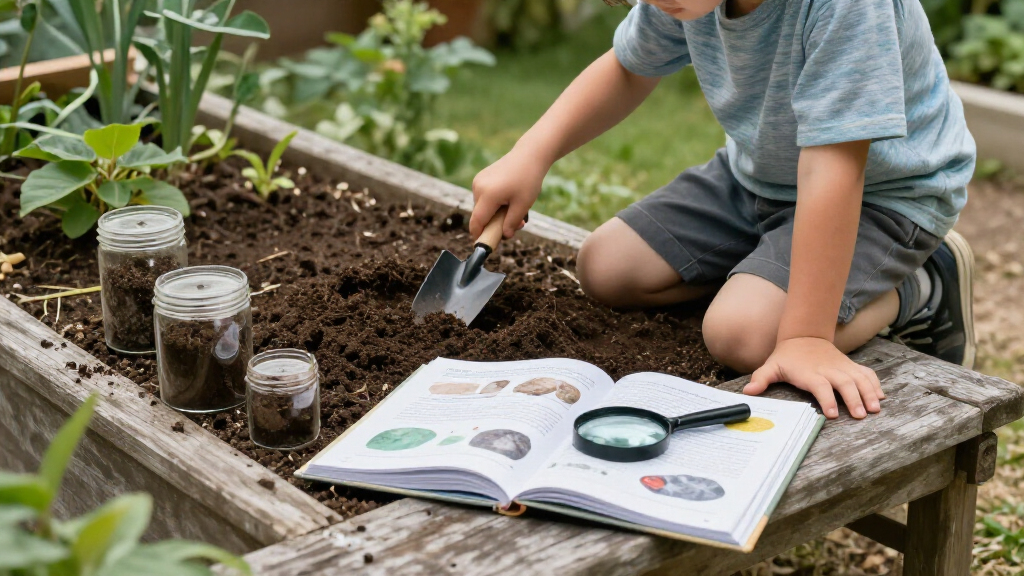
I compared each title by age and grade fit, how directly its stated scope addresses earth science, and the learning format it offers. A book aimed at grades 3–5 should be judged differently from a high school workbook; a visual guide or mini-lesson collection also serves a different purpose from a daily program. I favored titles whose stated audience and format make it easier for a buyer to predict how the book might fit into schoolwork, enrichment, or independent study.
The order reflects specificity, usability, and likely fit for the broadest set of earth science learners, not a claim that one book suits every child. Focused earth science workbooks rank ahead of broader science options for this topic, while grade-specific titles are separated by learner stage and study style. Because the product information here gives titles and scope rather than page samples or verified activity details, I avoid claims about print quality, difficulty beyond the stated audience, or the quality of individual lessons.
| earth science workbooks for kid | Format |
|---|---|
| Earth and Space Science Guide | Workbook |
| Earth Science Workbook for Kid | Activity book |
| Nature Smarts Workbook for Age | Workbook |
| Earth Science Workbook for Hig | Workbook |
| Earth Science Made Easy for Ki | Visual learning guide |
| Elementary Earth Science Workb | — |
| High School Earth Science Work | Earth science workbook |
| 25x: Earth Science | — |
| Science Grade 1 Workbook for K | — |
| Exploring Earth Science in 9 W | Daily science workbook |
| Mark Twain Earth & Space Scien | Interactive books |
Factors to Consider When Choosing Earth Science Workbooks For Kids
Before choosing a workbook, match its teaching job to the child’s needs. Age, scope, and lesson format shape whether a title will feel useful or mismatched; the points below can help you make that decision without relying on a grade label alone.
Match reading demands to the learner, not just the grade label
A workbook’s stated grade range is a starting point, not a guarantee that its reading level will suit every child. Earth science terms such as erosion, atmosphere, and tectonic plates can add difficulty even when the math or writing is simple. If a child is an emerging reader, check whether the book appears to rely on long passages or can be used with an adult reading prompts aloud. Older students may find an elementary title too shallow even if they enjoy its subject. A common mistake is buying by age alone and overlooking the work required to complete each page. Choose a book that leaves room for curiosity without turning every activity into a reading test.
Decide how much earth science coverage you want
Some books focus directly on earth science, while others sit within broader science learning or combine Earth with space. Before buying, list the topics the child needs: geology, weather, oceans, natural hazards, or astronomy may call for different coverage. A broad title can be useful for a first exposure, but it may not provide enough practice in a particular unit. Conversely, a narrow workbook can leave gaps if the goal is a year of varied science learning. Check the title and description for the subject range rather than assuming that every book labeled “science” treats Earth systems in depth. The best match is the one whose scope fits the learning goal, not the one with the broadest-sounding name.
Choose a format that fits the child’s attention and routine
Visual guides, short lesson collections, reading passages, and daily plans ask children to work in different ways. A child who likes brief tasks may respond better to mini-lessons than to a long sequence of text-heavy pages. A family that wants steady practice may prefer a defined schedule, while a flexible workbook can be easier to use around school assignments. Think about whether the book will be used independently, with a parent, or alongside a classroom unit. A common buying error is choosing a format that looks engaging to an adult but does not match the child’s attention span or available time. The most usable workbook is one that can become part of the household’s actual routine.
Look for the right balance of explanation and activity
Practice pages can reinforce knowledge, but children also need clear explanations before they can apply new concepts. Reading passages and diagrams may help build understanding; activities and experiments can make abstract processes easier to discuss. Consider whether the learner needs more instruction, more review, or a mix of both. Do not assume that the word “interactive” means a book includes extensive hands-on projects, or that “workbook” means it teaches a topic from the beginning. If the product description does not clarify the balance, treat that as a reason to check sample pages before purchase. A good fit supports the child’s current learning stage rather than simply offering more pages.
Treat adjacent science titles as supplements when earth science is the goal
Nature-themed and general science workbooks can build observation skills and scientific vocabulary, but they may not cover Earth systems in a focused way. That distinction matters when a child needs practice for a specific unit or curriculum. A broader title can still work well as an introduction, enrichment activity, or companion to a dedicated earth science book. If you need one main resource, prioritize a title whose stated scope names the earth science topics you want to teach. Families often mistake an appealing science theme for complete subject coverage. Pairing a broad workbook with a focused resource may make more sense than expecting one book to do both jobs.
Frequently Asked Questions
Which type of earth science workbook is a good starting point for an elementary student?
Start with the student’s grade and reading comfort, then look for a title explicitly aimed at elementary learners. A focused grades 3–5 workbook is a better match for earth science practice than a general science book when the goal is geology, weather, or oceans. For a child who learns more readily from images, a visual guide may be easier to approach than passage-heavy work. If the student is younger or still developing reading independence, plan to read instructions together. The right starting point is the book the child can use regularly without needing constant help.
Should I choose a workbook that includes space science too?
Choose an Earth-and-space title if the child’s curriculum or interests cover both subjects, or if you want a wider introduction to science. A combined scope can connect Earth to its place in space, but it may leave less room for detailed practice in individual earth science topics. If your immediate goal is a unit on rocks, weather, oceans, or natural hazards, a more focused book may be a closer fit. Check the stated topic list before deciding, since “Earth and space” can cover a wide range. A broader title works best when breadth is a feature you want, not a substitute for targeted review.
Can a workbook replace a school textbook or classroom lessons?
Usually, a workbook is best treated as practice or enrichment unless its description clearly presents it as a complete course. Activities, diagrams, and short readings can reinforce ideas, but they may not provide the full sequence, depth, or teacher support of a class curriculum. For a student studying a specific unit, use the workbook alongside class materials and check that its topics match the lessons. Independent learners may still benefit from an adult discussing unfamiliar terms or checking answers. If you need a primary teaching resource, review sample pages and learning objectives before relying on a workbook alone.
How do I choose between a daily program and a book of shorter lessons?
Choose a daily program if a predictable schedule helps your family keep science practice going. A mini-lesson format may suit a child who prefers short sessions or needs flexibility around other schoolwork. The choice is less about which structure is inherently better and more about whether the child will follow it consistently. Consider how many days per week you can realistically set aside and whether you want a set sequence or pick-and-choose activities. A schedule that is too demanding can stall, while a flexible book may be overlooked unless you make a simple routine for it.
Is a general science workbook enough when my child needs earth science practice?
It depends on whether the child needs broad exposure or focused topic review. A general science title can support curiosity and basic scientific habits, but its earth science coverage may be limited or uneven. For a school assignment or a specific learning goal, look for the relevant topics named directly in the book’s scope. You can use a broad workbook as a supplement, especially for younger children, while pairing it with a more focused resource for targeted practice. That approach avoids expecting a general science title to cover a subject in depth when its scope is wider.
Conclusion
For most families seeking a focused elementary resource, I’d start with Earth Science Workbook for Kids, Grades 3–5: Earth Explorer Activity Book as the best overall choice. For a best-value pick, I’d look first at 25x: Earth Science – Middle School if short, focused lessons meet the learner’s needs; its compact lesson format is the main draw, though it is aimed at middle school rather than younger children. For a best premium-style option, choose Mark Twain Earth & Space Science Interactive Books when an interactive middle-school format matters more than a narrowly earth-only scope. Beginners may be better served by Earth Science Made Easy for Kids for its visual approach, while families seeking a defined routine can opt for Exploring Earth Science in 9 Weeks. For high school study, compare the dedicated high school workbook with Earth and Space Science Guide for Grades 6–8 only if the student’s level truly fits; the grade range should lead the decision. Match the title to the child’s stage and study style, and treat broad science books as supplements when focused earth science coverage is the goal.