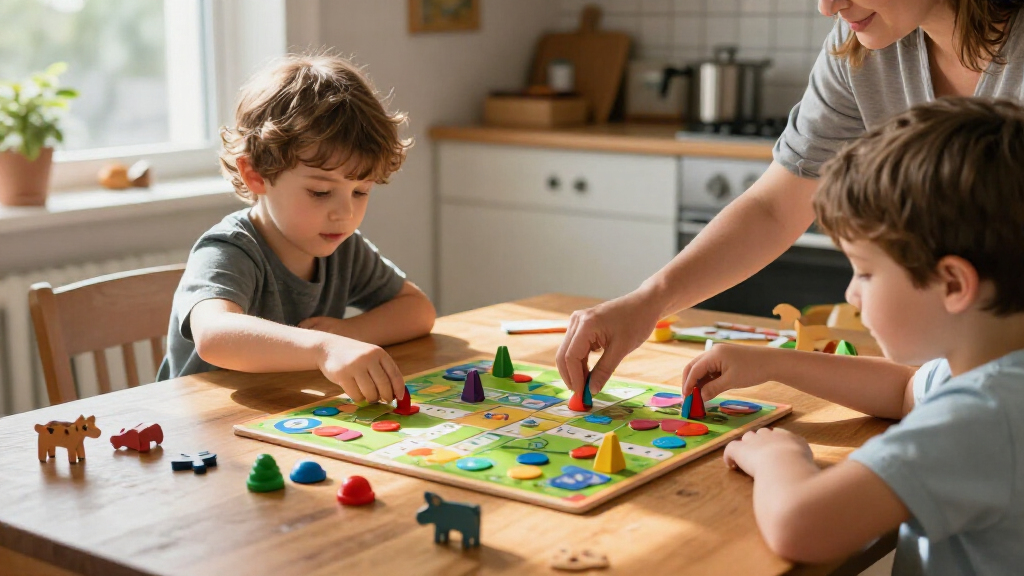
For families seeking educational board games for kids, my best overall pick is ThinkFun Zingo!, which gives early readers a simple, active way to practice word recognition. Learning Resources Math Island is a standout for addition and subtraction, while Scholastic Race Across the USA makes geography the focus for older children. The main tradeoff is choosing between games that teach a clear skill and games that put fun, accessible play first. Age fit, reading level, replay value, and how much adult help a game needs can matter as much as its subject. Read on for the full breakdown and recommendations by learner and play style.

Prime made for students and young adults
- Fast, free delivery for dorm and study essentials
- Prime Video and Amazon Music included
- Member-only deals
Key Takeaways
- Zingo! stands out for early literacy because its quick picture-and-word matching suits pre-readers better than games that ask children to form sentences.
- Math Island and Matheroni Pepperoni serve different math needs: Math Island targets addition and subtraction practice, while Matheroni Pepperoni is aimed at a younger, narrower age range.
- Geography games split by style and age: Stamp It! World Tour offers a broad world-tour theme, while Race Across the USA is a more focused fit for children ages 8 and up.
- Some familiar family games are lighter on direct instruction. Candy Land and Chutes and Ladders can make a friendly first board-game experience, but they offer less subject-specific practice than the literacy, math, and geography picks.
- Game complexity changes the learning experience: Sequence for Kids adds strategy, while Scrabble Junior and Sentence Search ask children to work with letters or language in different ways.
| Hasbro Gaming Scrabble Junior Board Game for Ages 5+ |  | Best for Growing Spellers | Players: 2–4 | Recommended age: 5 years and up | Playing time: 15 minutes | VIEW LATEST PRICE | See Our Full Breakdown |
| ThinkFun Zingo! Bingo Game for Pre-Readers and Early Readers, Ages 4+ |  | Best for Pre-Readers | Age range: 4–10 years | Players: 2–6 | Cards: 6 double-sided cards with 2 levels of play | VIEW LATEST PRICE | See Our Full Breakdown |
| Stamp It! World Tour Geography Board Game for Kids |  | Best for Geography and Route Planning | Players: 2–6 | Recommended age: 8–12 years | Language: English | VIEW LATEST PRICE | See Our Full Breakdown |
| Skillmatics Sentence Search Educational Board Game |  | Best for Hands-On Grammar Practice | Age range: 5–8 years | Word tiles: 120+ color-coded tiles | Sentence-builder tiles: 20 wooden tiles | VIEW LATEST PRICE | See Our Full Breakdown |
| Hasbro Gaming Candy Land Board Game for Kids, Ages 3 and Up |  | Best First Board Game | Players: 2–4 | Recommended age: 3 years and up | Estimated playing time: 15 minutes | VIEW LATEST PRICE | See Our Full Breakdown |
| Learning Resources Math Island Addition & Subtraction Game | 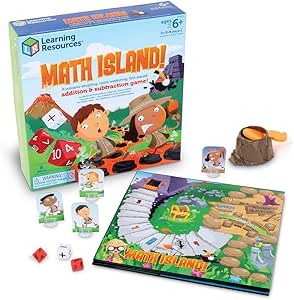 | Best for Hands-On Arithmetic Practice | Brand: Learning Resources | Age range: 6–10 years | Players: 2–4 | VIEW LATEST PRICE | See Our Full Breakdown |
| Number Hunter Math Board Game for Kids |  | Best for Varied Basic Math Challenges | Brand: Clever Fox Play | Recommended age: 5 years and up | Players: 2 or more | VIEW LATEST PRICE | See Our Full Breakdown |
| Scholastic Race Across the USA Geography Board Game for Kids, Ages 8+ |  | Best for U.S. Geography Learning | Brand: University Games | Minimum age: 8 years | Players: 2–4 | VIEW LATEST PRICE | See Our Full Breakdown |
| The Fidget Game SquishyLand in Rainbow Reef Board Game |  | Best for Multisensory Early Reading | Age range: Pre-K to 2nd Grade | Recommended age: 3 years and up | Players: 2–6 | VIEW LATEST PRICE | See Our Full Breakdown |
| Jax Sequence for Kids Strategy Game |  | Best for Pre-Readers’ Logic Practice | Brand: Jax | Recommended age: 3 years and up | Players: 2–4 | VIEW LATEST PRICE | See Our Full Breakdown |
| Hasbro Gaming Chutes and Ladders Board Game for Ages 3+ |  | Best for First Counting Practice | Players: 2 to 4 | Recommended age: 3 years and up | Playing time: 30 minutes | VIEW LATEST PRICE | See Our Full Breakdown |
| Matheroni Pepperoni Addition and Subtraction Math Board Game for Kids Ages 5–7 |  | Best for Hands-On Addition and Subtraction | Brand: Pidoko Kids | Recommended age: 5 years and up | Players: 1 to 4 | VIEW LATEST PRICE | See Our Full Breakdown |
| educational board games for kid | Players | Recommended age | Language | Brand |
|---|---|---|---|---|
| Hasbro Gaming Scrabble Junior | 2–4 | 5 years and up | English | — |
| ThinkFun Zingo! Bingo Game for | 2–6 | — | English | — |
| Stamp It! World Tour Geography | 2–6 | 8–12 years | English | — |
| Skillmatics Sentence Search Ed | — | — | — | — |
| Hasbro Gaming Candy Land Board | 2–4 | 3 years and up | — | Hasbro Gaming |
| Learning Resources Math Island | 2–4 | — | — | Learning Resources |
| Number Hunter Math Board Game | 2 or more | 5 years and up | English | Clever Fox Play |
| Scholastic Race Across the USA | 2–4 | — | English | University Games |
| The Fidget Game SquishyLand in | 2–6 | 3 years and up | English | — |
| Jax Sequence for Kids Strategy | 2–4 | 3 years and up | — | Jax |
| Hasbro Gaming Chutes and Ladde | 2 to 4 | 3 years and up | — | — |
| Matheroni Pepperoni Addition a | 1 to 4 | 5 years and up | — | Pidoko Kids |
More Details on Our Top Picks
Hasbro Gaming Scrabble Junior Board Game for Ages 5+
Scrabble Junior earns its place for giving early readers a clear next step: children start by matching letters to words on one side of the board, then switch to making words themselves. That two-stage setup makes it more adaptable than Candy Land, which practices color matching and turn-taking but does not build spelling. Its four-player capacity and 15-minute playing time also suit a short family game. The tradeoff is that the matching side offers more support than an open-ended word game, while the create-your-own-words side may frustrate children who are not ready to spell independently. I’d choose it for a child who recognizes letters and wants to practice putting them together, rather than for a preschooler who needs a no-reading starting point.
Pros:- Two board sides provide a supported matching mode and a more challenging word-making mode.
- Colorful pictures and kid-sized words give early readers visual clues.
- Supports 2–4 players and includes four scoring tokens.
- No batteries are required.
Cons:- The create-your-own-words side can be difficult for children who are still learning basic spelling.
- Its educational focus is narrow: spelling and vocabulary rather than broader skills.
- Designed for indoor play, and no manufacturer warranty is listed.
Best for: Families with children around age five or older who are ready to move from recognizing letters toward spelling simple words.
Not ideal for: Preschoolers who are not yet comfortable with letters, or families seeking a game centered on math, geography, or non-reading play.
- Players:2–4
- Recommended age:5 years and up
- Playing time:15 minutes
- Board:Double-sided
- Letter tiles:105
- Educational objective:Spelling and vocabulary
- Language:English
- Batteries:Not required
Our verdict“Choose Scrabble Junior when you want a short, adaptable game that helps early readers progress from letter matching to building words.”
ThinkFun Zingo! Bingo Game for Pre-Readers and Early Readers, Ages 4+
Zingo! is the strongest fit here for children who are not reading independently but are ready to connect pictures, words, and matching. Its Zinger dispenser releases tiles for players to match to their cards, making each turn feel active without requiring Scrabble Junior’s letter-building skills. The double-sided cards offer two levels of play, so the game can grow with a young learner. Compared with Candy Land, Zingo! puts more emphasis on language and symbol recognition; Candy Land is simpler for children who mainly need practice taking turns and identifying colors. Zingo!’s limits are practical: the listed set has six cards, so it supports up to six players, and play depends on drawing and matching rather than creating words. The dispenser also adds a component to keep track of after the game.
Pros:- Picture-and-word matching supports language and early reading without requiring independent reading.
- Double-sided cards provide two levels of play.
- The Zinger dispenser makes tile draws part of the activity.
- Includes an easy-cleanup unit and a parent’s guide.
Cons:- The included six cards limit play to six players, despite conflicting product wording about a seventh card.
- Matching is the main activity; it offers less word creation than Scrabble Junior.
- The plastic dispenser and tiles require storage and are intended for indoor, manual play.
Best for: Families, educators, or caregivers seeking an active language-and-matching game for pre-readers and early readers, including small groups of up to six.
Not ideal for: Children ready to practice spelling words independently, or groups larger than six players using the included cards.
- Age range:4–10 years
- Players:2–6
- Cards:6 double-sided cards with 2 levels of play
- Tiles:72 double-sided tiles
- Dispenser:Zingo! Zinger with easy-cleanup unit
- Material:Plastic
- Theme:Reading
- Language:English
Our verdict“Pick Zingo! for lively matching and early language practice, especially when players are not yet ready to spell words on their own.”
Stamp It! World Tour Geography Board Game for Kids
Stamp It! World Tour stands apart from the reading-focused games in this group by pairing geography questions with route choices and travel missions. Players plan journeys and decide whether to travel by bus, ship, or airplane, so learning includes making choices rather than only recalling answers. Passports and stamp tokens give those journeys a concrete goal, while 160 question cards provide material for repeated rounds. Compared with Scholastic Race Across the USA, this game takes a broader world-geography angle and offers multiple travel modes; it is a better match for children drawn to continents and international travel than to U.S. geography. Its age range starts at eight, and it needs at least two players, so it is not a solo activity or a first board game for preschoolers.
Pros:- Combines geography trivia with route planning and travel-mode choices.
- Passports, stamps, and tickets give missions a hands-on structure.
- Includes 160 question cards for a substantial pool of prompts.
- Supports groups of 2–6 players.
Cons:- Requires at least two players and is not suited to solo play.
- The 8–12 age range makes it less accessible to younger children.
- The many tickets, stamps, passports, and cards may take more setup and sorting than Candy Land.
Best for: Families or classrooms with children ages 8–12 who enjoy geography questions, planning routes, and playing in groups of two to six.
Not ideal for: Younger children who need a simple matching game, solo learners, or buyers seeking a game with a stated short playing time.
- Players:2–6
- Recommended age:8–12 years
- Language:English
- Game mechanics:Strategy, choice, route planning, and trivia
- Educational objective:Geography
- Question cards:160
- Included pieces:6 character pieces, 6 passports, 25 stamp tokens, 30 tickets, and 1 die
- Usage:Indoor
Our verdict“Choose Stamp It! for older kids who want geography practice combined with group trivia and route-planning decisions.”
Skillmatics Sentence Search Educational Board Game
Skillmatics Sentence Search is the most direct choice in this lineup for practicing how words work together. Its color-coded tiles sort words by parts of speech, while the wooden sentence-builder tiles and guided instructions help children assemble and practice sentences. That makes it a more explicit grammar activity than Scrabble Junior, which focuses on spelling and vocabulary through letter matching and word creation. The tradeoff is a less clearly defined game format: the product data does not state a player count or activity duration, and suggested play requires someone to read the tiles aloud. I’d favor this set for a child who benefits from guided language practice with an adult or sibling, not for families who need a fully specified, ready-to-play group game.
Pros:- Color-coded word tiles make parts of speech easier to distinguish.
- More than 120 word tiles support varied sentence-building practice.
- Wooden sentence-builder tiles add a tactile element.
- The instruction manual provides step-by-step guidance for language activities.
Cons:- Suggested gameplay requires an adult or child to read tiles aloud.
- The product information does not specify player count or activity duration.
- Its open-ended sentence work may feel less game-like than Zingo!’s turn-based matching.
Best for: Families with children ages 5–8 who want hands-on sentence construction and can take part in reading tiles aloud.
Not ideal for: Buyers seeking a clearly defined competitive board game, a stated player count, or an activity children can use independently before they can read the tiles.
- Age range:5–8 years
- Word tiles:120+ color-coded tiles
- Sentence-builder tiles:20 wooden tiles
- Materials:Cardboard, wood, and cloth
- Accessories:2 cloth bags and instruction manual
- Skills:Grammar, vocabulary, reading, and communication
- Model number:SKILL1134SS
Our verdict“Pick Sentence Search when grammar and sentence construction matter more than a defined group-game format.”
Hasbro Gaming Candy Land Board Game for Kids, Ages 3 and Up
Candy Land is the easiest entry point in this set for young children: players draw color cards and move a pawn, with no reading needed. That makes it more accessible to preschoolers than Scrabble Junior or Zingo!, where letter or word matching shapes the learning. Its educational value is narrower, centered on color recognition, matching, and taking turns, but that simplicity helps children join before they are ready for spelling or geography. The tradeoff is that card draws largely determine movement, so children have little strategic control and limited practice beyond recognizing colors and waiting for a turn. I’d choose it as a first shared board game, not as the main pick for a family seeking sustained academic challenges.
Pros:- No reading is needed to follow the color-card rules.
- Color-coded cards support recognition and matching.
- Simple turns suit young children learning basic board-game routines.
- Instructions are provided in English and Spanish.
Cons:- Learning is limited mainly to colors, matching, and turn-taking.
- Movement relies on drawing cards, leaving players with little strategic choice.
- The game is designed for 2–4 players and does not suit solo play.
Best for: Families introducing board games to children ages 3 and up who are not yet reading and can benefit from color matching and turn-taking.
Not ideal for: Buyers seeking spelling, grammar, geography, or strategic decision-making practice, or players who prefer games with more control over their moves.
- Players:2–4
- Recommended age:3 years and up
- Estimated playing time:15 minutes
- Included components:Gameboard, 4 gingerbread pawns, card deck, and instructions
- Skills:Color recognition, matching, and turn-taking
- Languages:English and Spanish
- Brand:Hasbro Gaming
Our verdict“Choose Candy Land as a simple first game for a preschooler, but look to Zingo! or Scrabble Junior for more focused language practice.”
Learning Resources Math Island Addition & Subtraction Game
Math Island turns counting and arithmetic into the route through an adventure board, asking players to solve addition or subtraction problems up to 20 to move. The volcano popper gives dice rolls a physical, playful moment, which may help keep younger players engaged with repeated practice. Compared with Number Hunter Math Board Game for Kids, Math Island is more focused on a defined range of basic arithmetic, while Number Hunter adds even-and-odd challenges and challenge cards. That narrower scope suits children building confidence with early sums, but gives families less variety once those skills are secure. It also needs at least two players, so it is not a solo practice option. I’d choose it for a child ready to work with numbers through 20 who benefits from a lively, tactile game format.
Pros:- Practices counting, addition, and subtraction up to 20 during play.
- Volcano popper adds an interactive dice-rolling feature.
- Supports play with 2–4 players.
- Includes a board, character pieces, dice, and instructions for a ready-to-play set.
Cons:- Requires at least two players, so children cannot use it for solo practice.
- The math scope is limited to counting and addition and subtraction up to 20.
- Its stated age range starts at 6, so it may not suit younger beginners.
Best for: Families with children ages 6–10 who are practicing counting, addition, and subtraction through 20 and want a shared tabletop activity.
Not ideal for: Families seeking solo math practice or a broader challenge covering skills beyond basic arithmetic through 20.
- Brand:Learning Resources
- Age range:6–10 years
- Players:2–4
- Math skills:Counting, addition, and subtraction up to 20
- Components:Game board, 4 character pieces, volcano popper, 2 number dice, 1 operation die, instructions
- Model number:LER5025
Our verdict“Choose Math Island for a shared, tactile way to rehearse arithmetic through 20, but pick Number Hunter for added challenge-card and even-and-odd practice.”
Number Hunter Math Board Game for Kids
Number Hunter makes dice-based arithmetic its main event: players add or subtract, move around the board, and tackle 50 challenge cards, with even-and-odd numbers also in the mix. That range gives it more types of practice than Learning Resources Math Island, which concentrates on counting and operations through 20 and adds a volcano popper instead. Number Hunter is the stronger fit if a child is ready to switch between basic math tasks; its listed 20-minute play time also gives families a sense of the session length. The tradeoff is that challenge cards and several number concepts may feel demanding to children still learning what addition and subtraction mean. It requires at least two players, so it cannot replace independent practice.
Pros:- Combines addition, subtraction, and even-and-odd number practice.
- Includes 50 challenge cards alongside number and operation dice.
- Offers a screen-free format for family or classroom play.
- Lists a 20-minute playing time and a reinforced box.
Cons:- Requires at least two players.
- The arithmetic challenges may be too advanced for children who have not begun basic addition and subtraction.
- Includes several kinds of math practice, which may be less focused than Math Island for a child learning one skill at a time.
Best for: Families or classrooms with at least two children ages 5 and up who can attempt basic arithmetic and benefit from varied dice and card challenges.
Not ideal for: Children who are not yet ready for basic arithmetic, or families looking for a solo game or a focused introduction to counting.
- Brand:Clever Fox Play
- Recommended age:5 years and up
- Players:2 or more
- Playing time:20 minutes
- Math topics:Addition, subtraction, even and odd numbers
- Included components:Game board, 5 game pieces, 2 number dice, 1 operation die, 50 challenge cards, game rules
- Language:English
- Package:Reinforced box
Our verdict“Pick Number Hunter when a child is ready for several kinds of basic math practice, and choose Math Island for a narrower focus on arithmetic through 20.”
Scholastic Race Across the USA Geography Board Game for Kids, Ages 8+
Race Across the USA gives geography practice a clear goal: visit six states, answer questions, then return to your home state. Its board clues and state cards support learning about states, capitals, and landmarks, while grade-level questions let children with different school backgrounds share a game. That makes it a more direct U.S. geography choice than Stamp It! World Tour Geography Board Game, which offers a world-tour framing rather than this state-to-state race. The tradeoff is the subject’s narrow focus: children who want reading, math, or general strategy practice will get more of that elsewhere in this roundup. Players also need to answer geography questions to advance, so a child who finds recall questions frustrating may need adult support.
Pros:- Builds practice around U.S. states, capitals, and landmarks.
- Board clues and state cards support geography learning during play.
- Grade-level questions allow children from different school levels to play together.
- Suitable for family, classroom, and educational group play.
Cons:- Designed for 2–4 players, limiting larger groups unless they take turns.
- Players must answer geography questions to progress.
- Its U.S.-focused subject matter offers less breadth than a general educational game.
Best for: Families, teachers, and learning groups with children ages 8 and up who want to practice U.S. states, capitals, and landmarks together.
Not ideal for: Children younger than 8, players seeking broad subject coverage, or groups that want a game without geography question prompts.
- Brand:University Games
- Minimum age:8 years
- Players:2–4
- Playing time:20 minutes
- Genre:Educational
- Edition:Standard Edition
- Language:English
- Included components:Game board, cards, airplane pawns
Our verdict“Choose Race Across the USA for group practice with U.S. geography, but select a broader learning game if state knowledge is not the goal.”
The Fidget Game SquishyLand in Rainbow Reef Board Game
SquishyLand in Rainbow Reef pairs animal squishies with a board and cards to practice phonemic awareness, phonics, rhyming, and syllable decoding. That tactile approach makes it distinct from ThinkFun Zingo! Bingo Game, which is aimed at pre-readers and early readers but does not list squishies among its components. SquishyLand is a better match for young learners who benefit from handling pieces while they work on early reading skills, and its 2–6 player range suits small groups at home or in class. Its learning scope is specific, though: the stated range runs from Pre-K through Grade 2, so older readers may outgrow the content. The listed 15-minute playing time also points to a brief session rather than an extended game night.
Pros:- Practices phonemic awareness, phonics, rhyming, and syllable decoding.
- Combines animal squishies, cards, and a colorful board for tactile play.
- Supports 2–6 players for home or classroom groups.
- Lists alignment with U.S. state and Canadian provincial standards.
Cons:- Its stated learning range ends at Grade 2, limiting usefulness for older readers.
- The listed play time is 15 minutes, which may be short for families seeking a longer session.
- Its early-reading focus is narrower than the subject variety offered by other educational games.
Best for: Parents and early-years teachers looking for a tactile reading activity for children from Pre-K through Grade 2, including small groups of up to six.
Not ideal for: Older children ready for more advanced reading work, or families seeking a longer game with broader learning topics.
- Age range:Pre-K to 2nd Grade
- Recommended age:3 years and up
- Players:2–6
- Playing time:15 minutes
- Included components:Animal squishies, board game, cards
- Materials:Cardboard, silicone
- Language:English
- Educational objective:Develop early reading skills
- Standards alignment:U.S. State Standards and Canadian Provincial Standards
Our verdict“Choose SquishyLand for short, tactile early-reading practice with a small group, and choose Zingo for a different pre-reader game format.”
Jax Sequence for Kids Strategy Game
Sequence for Kids uses animal cards and board spaces to build toward a row of four chips, giving young players a simple goal that invites matching and logical thinking without requiring reading. Unicorn and dragon cards add special moves, but the core turn remains more accessible than question-based games such as Race Across the USA, where geography knowledge is needed to progress. Its recommended age begins at 3, making it a useful early strategy option for children who are not ready for academic trivia. The tradeoff is that it develops reasoning through play rather than teaching a defined school subject like Math Island or SquishyLand. It also contains small parts that pose a choking hazard and is limited to four players.
Pros:- No reading is required to take part.
- Animal cards and special unicorn and dragon moves help make turns accessible to young children.
- Matching cards to board spaces supports logical thinking.
- Supports 2–4 players and does not require batteries.
Cons:- Small parts present a choking hazard for young children.
- Limited to four players.
- Offers general strategy and logic play rather than practice in a defined academic subject.
Best for: Families with children ages 3 and up who want a no-reading matching and strategy game for two to four players.
Not ideal for: Households with children who may put small pieces in their mouths, larger groups, or buyers seeking direct math, geography, or reading instruction.
- Brand:Jax
- Recommended age:3 years and up
- Players:2–4
- Included components:Folding game board, 42 playing cards, 84 chips, instructions
- Game mechanics:Card game, racing, variable player powers
- Material:Plastic
- Dimensions:10.5 × 2 inches
- Weight:1.5 pounds
- Batteries:Not required
Our verdict“Choose Sequence for Kids when you want a no-reading first strategy game, but pick a subject-focused option for direct academic practice.”
Hasbro Gaming Chutes and Ladders Board Game for Ages 3+
Chutes and Ladders makes early number practice accessible to children who are not reading yet: players spin, count spaces, and move their pieces, with ladders and chutes adding a simple visual payoff. Its rules are easier to grasp than the addition-and-subtraction problems in Matheroni Pepperoni, so it suits younger players who are just learning to count. The tradeoff is that learning mostly happens through counting each move; there are few choices for children to make, and the outcome depends heavily on the spinner. With a 30-minute playing time listed, it may also feel repetitive for a child who wants a faster round or more strategic decisions. I’d choose it for low-pressure number recognition, not for advancing beyond basic counting.
Pros:- No reading is needed to take part.
- Spinning and moving pieces give children practice counting spaces and recognizing numbers.
- Supports play with 2 to 4 players.
- The board, playing pieces, and spinner provide the basic components for a ready-to-play game.
Cons:- Gameplay offers limited strategic depth because players mainly spin and move.
- The listed 30-minute playing time may feel long for some young children.
- The age recommendation of 3 years and up excludes younger children.
Best for: Families with children aged 3 and up who want a no-reading game for practicing counting together.
Not ideal for: Caregivers seeking math challenges beyond counting, meaningful strategic choices, or a game suited to children under 3.
- Players:2 to 4
- Recommended age:3 years and up
- Playing time:30 minutes
- Game mechanics:Race and roll-and-move
- Educational skills:Counting and number recognition
- What’s included:Game board, cardboard playing pieces, and spinner
- Battery requirement:No batteries required
- Instructions:English and Spanish
Our verdict“Choose Chutes and Ladders for a simple first counting game; pick Matheroni Pepperoni instead when a child is ready to solve addition and subtraction problems.”
Matheroni Pepperoni Addition and Subtraction Math Board Game for Kids Ages 5–7
Matheroni Pepperoni connects basic math problems to a hands-on task: children solve addition or subtraction, then place pepperoni tokens on their pizza slices. That gives it a more focused math goal than Chutes and Ladders, where counting is woven into moving around the board rather than solving equations. It also allows solo play or groups of up to four, which can make practice easier to fit around different household schedules. The scope is deliberately narrow, though: children who have moved beyond basic addition and subtraction may outgrow the challenge, and the listed cardboard material may be less appealing to families seeking sturdier components. I’d choose this for young learners who benefit from touching and placing pieces as they work through simple sums.
Pros:- Practices addition and subtraction through a concrete token-placement activity.
- Also supports number recognition, counting, turn-taking, and strategic thinking.
- Can be played solo or with up to four players.
- Includes colorful pizza slices, math tokens, and special action pieces.
Cons:- Math practice focuses on basic addition and subtraction rather than a wider range of skills.
- The game is made of cardboard, which may not suit buyers seeking more durable materials.
Best for: Families with children aged 5–7 who want hands-on practice with basic addition and subtraction, including the option to play solo.
Not ideal for: Older or more advanced learners looking for broader math topics, or families prioritizing non-cardboard game materials.
- Brand:Pidoko Kids
- Recommended age:5 years and up
- Players:1 to 4
- What’s included:4 pizza slices, 50 math pepperoni tokens, 1 burnt pepperoni, 1 spinner, and instructions
- Educational skills:Number recognition, counting, addition, subtraction, turn-taking, and strategic thinking
- Material:Cardboard
- Item weight:0.66 kg
- Model number:PKSK010
Our verdict“Choose Matheroni Pepperoni for tactile practice with early equations; choose Chutes and Ladders for a younger child who is still learning to count.”
How We Picked
I compared these 12 games by the learning they actively ask children to do, including reading, spelling, sentence-building, math, geography, and strategic thinking. I also weighed age and skill fit, how clearly the rules support independent play, whether the learning goal is part of each turn, and the likely usefulness of repeat plays. A game that merely has an educational theme does not rank as highly as one whose core actions give children regular practice with a specific skill.
The ranking favors clear learning value paired with accessible play, while recognizing that families have different goals. Picks with a focused subject and a suitable audience rank ahead of familiar, easy-entry games that emphasize basic turn-taking over academic practice. I also considered tradeoffs: a more skill-focused game may need an adult nearby, and a simpler game may be easier to bring out but teach less directly. Since the list spans different ages and subjects, the best choice depends on the child’s current abilities and what the family wants game night to reinforce.
| educational board games for kid | Brand |
|---|---|
| Hasbro Gaming Scrabble Junior | — |
| ThinkFun Zingo! Bingo Game for | — |
| Stamp It! World Tour Geography | — |
| Skillmatics Sentence Search Ed | — |
| Hasbro Gaming Candy Land Board | Hasbro Gaming |
| Learning Resources Math Island | Learning Resources |
| Number Hunter Math Board Game | Clever Fox Play |
| Scholastic Race Across the USA | University Games |
| The Fidget Game SquishyLand in | — |
| Jax Sequence for Kids Strategy | Jax |
| Hasbro Gaming Chutes and Ladde | — |
| Matheroni Pepperoni Addition a | Pidoko Kids |
Factors to Consider When Choosing Educational Board Games For Kids
Before choosing a game, decide what you want playtime to accomplish and how much support your child will need. These broader checks can help you avoid buying a game that sounds educational but does not match your child’s stage, interests, or family routine.
Match the Skill to What Your Child Can Do Now
A printed age range is a useful starting point, but children can have very different reading and math skills at the same age. Check what players must actually do: recognize words, read instructions, solve sums, or make strategic choices. A game that is too easy may lose its appeal, while one with repeated unfamiliar tasks can turn play into a lesson the child resists. Choose a skill just beyond what the child can already do independently, with help available when needed. For mixed-age play, look for turns that allow younger children to participate without requiring older players to wait through every move. Matching the challenge to the child often matters more than choosing the most advanced-sounding subject.
Look for Learning Built Into Every Turn
An educational theme does not guarantee meaningful practice. Ask whether children must use the target skill to make progress or whether the subject appears only in the artwork or occasional prompts. Repeated choices, answers, or word matches can give a child more chances to practice than a game that pauses for a single learning question. At the same time, a game with a strong academic focus may feel like extra homework if every turn is a test. Think about whether your child enjoys repetition and whether they need a game that balances practice with movement, luck, or strategy. The right balance can make it easier for children to choose the game again on their own.
Factor in Adult Support and Reading Independence
Some children can follow a familiar turn structure but still need help reading cards, checking answers, or keeping track of rules. Consider whether an adult will be available during most sessions, particularly if the game targets a newer skill. Picture cues and short, repeated actions can make a game easier to play independently, while text-heavy instructions may call for more coaching. Adult participation is not a flaw; it can give children a chance to talk through answers and learn from mistakes. The tradeoff is that a game requiring constant adult direction may be harder to bring out during a busy evening. Choose based on the kind of play your household can realistically support.
Choose for Replay, Not Just First-Day Appeal
A colorful theme may attract a child initially, but replay value depends on how often the game offers fresh decisions or useful practice. Games built around the same basic sequence can be comforting for beginners yet feel repetitive to children who want more control. Strategy and changing questions can sustain interest, though they may also make play slower or more demanding. If you are choosing for a child with a short attention span, a concise round may be more valuable than a large box with many components. Think about whether the game works for a quick session and whether players can vary the challenge as skills grow. A good fit is one your family will actually set up again.
Pick a Subject the Child Wants to Revisit
Learning games work best when the theme gives a child a reason to engage with the skill. A child interested in places may be more drawn to geography than spelling, while a child who likes word play may welcome language practice. Avoid choosing only for an academic gap if the theme is likely to put the child off; shared enjoyment helps keep practice voluntary. You can also use interests to widen learning, such as choosing a familiar game format with a less familiar subject. For siblings, a theme that gives each player something to enjoy can reduce the feeling that one child’s schoolwork is taking over game night. Let the child’s curiosity guide the subject, then check that the play still fits their abilities.
Decide When a More Focused Game Is Worth It
A focused educational game can be a good choice when a child needs repeated practice in one area, but it may not suit every family’s game shelf. If your goal is broad family participation, a simpler game with a low learning barrier may see more use, even if it teaches less directly. A specialized subject game makes more sense when the child is already curious about that topic or has a clear skill to practice. Avoid assuming that a more complicated game will automatically teach more; extra rules can take attention away from the learning itself. Compare the time needed to explain and play with the amount of practice the child gets. Choose the focused option when its specific benefit matches a real household need.
Frequently Asked Questions
Which game is the best starting point for a child who is not reading yet?
Zingo! is the clearest starting point in this lineup for pre-readers because it centers on matching and word recognition rather than asking children to read full sentences. A parent can help connect pictures with printed words while the child learns the turn pattern. Check that the child is comfortable attending to the cards and taking turns, since those skills shape how enjoyable the game feels. Scrabble Junior and Sentence Search make more sense once a child is ready for more active letter or language work. If the goal is simply a relaxed first board-game experience, Candy Land is another accessible option, though its academic practice is lighter.
Which option should I choose for addition and subtraction practice?
Math Island and Matheroni Pepperoni are the most direct choices here for addition and subtraction. Use the child’s age, confidence, and appetite for repeated math problems to decide between them rather than assuming the same format will suit every learner. Number Hunter is another math-themed option, but families seeking focused addition and subtraction practice should compare its play tasks with those two games before buying. A child who gets frustrated by timed or highly repetitive work may respond better to shorter turns or adult-guided play. The best pick is the one that encourages the child to keep solving problems without making mistakes feel like a penalty.
Are educational board games useful for children with different ages or skill levels?
They can work for mixed ages, but a shared table does not mean every child will find the same challenge level. Younger players may need help reading or counting, while older children may become bored if they have no meaningful choices. Before choosing, check whether players can assist one another, use different levels of challenge, or stay engaged through strategy and conversation. A simple game can bring siblings together, but it may not offer enough learning depth for the older child. For a group with a wide age spread, prioritize easy-to-explain rules and plan to adjust how much support each player gets.
Should I choose a subject-focused game or an easy family game?
Choose a subject-focused game when your child is interested in that topic or you want regular practice with a particular skill. Choose an easy family game when your bigger goal is to create a low-pressure shared activity that children can join quickly. In this lineup, the math, literacy, and geography options have clearer academic aims, while Candy Land and Chutes and Ladders are more about accessible, familiar play. Neither type is automatically better: a game that rarely gets played delivers little practice. Consider what your family is most likely to bring to the table, then decide how much direct learning you want each session to include.
How can I tell if a game will be too difficult without playing it first?
Read the age guidance alongside the actions required during play, since the age label alone may not reflect a child’s reading or math readiness. Look for whether players must read independently, solve unfamiliar problems, remember several rules, or make choices that depend on earlier turns. Compare those demands with what your child can already do comfortably and whether an adult can offer support. A game slightly above a child’s current level can be rewarding when help is available, but too many new demands at once can spoil the experience. If you are unsure, prefer clear, repeatable turns over a game that combines complex rules with a new academic skill.
Conclusion
For the strongest blend of approachable play and early learning, I recommend Zingo! as the best overall, especially for pre-readers and early readers. Scrabble Junior is my best value-style pick for families looking for a familiar word-game format, while Stamp It! World Tour is my best premium-style choice for children drawn to geography and a broader world theme. Candy Land is my best pick for beginners who need a simple introduction to taking turns, though it offers less direct academic practice. For specific needs, choose Math Island or Matheroni Pepperoni for arithmetic, Race Across the USA for older geography learners, and Sequence for Kids for strategy. Start with the child’s interest and current skill, then choose the game whose learning goal fits the kind of play your family will repeat.