
TL;DR

Get school and study supplies delivered free — and shop member deals
- Fast, free delivery on millions of items
- Access to Prime Big Deal Days deals on October 6–7
- Prime Video, Amazon Music and more included
NASA’s October 2026 skywatching guide points to three main events: Saturn at opposition on Oct. 4, the Orionid meteor shower peaking overnight Oct. 21–22, and the Moon passing near the Pleiades on Oct. 27–28. NASA advises looking for Orionids before dawn after the Moon sets, because moonlight may obscure fainter meteors.
NASA published its October 2026 skywatching guide on Oct. 1, highlighting Saturn’s opposition, the Orionid meteor shower and a close apparent pairing of the Moon with the Pleiades star cluster. The dates give skywatchers several opportunities to observe the night sky, although moonlight may reduce the number of Orionid meteors visible.
Saturn reaches opposition on Oct. 4, when Earth passes between the planet and the Sun, placing Saturn opposite the Sun in Earth’s sky. NASA says the planet will rise around sunset and remain visible for much of the night, making the date a favorable time to look for the ringed planet.
The Orionid meteor shower is expected to peak overnight Oct. 21–22. NASA says the meteors come from small pieces of debris left by Halley’s Comet. Although they appear to radiate from the direction of Orion, meteors may streak across any part of the sky. A bright waxing gibbous Moon is expected to wash out some of the fainter ones; NASA recommends trying the hours before dawn, after moonset, and choosing a dark viewing location.
On the night of Oct. 27–28, the Moon will pass close to the Pleiades, a star cluster also called the Seven Sisters. NASA advises looking east in the evening as the Moon and cluster rise higher. The cluster can appear to the unaided eye as a slightly fuzzy group of six or seven stars; binoculars or a telescope can show more detail.
Three October Targets for Skywatchers
The guide turns a month of celestial events into specific dates and practical viewing advice. Saturn’s opposition offers a long evening viewing window, while the Orionid peak gives observers a chance to watch a meteor shower linked to Halley’s Comet. The Moon’s passage by the Pleiades offers a separate, easy-to-find pairing for people looking toward the eastern sky.
The recommendations also set expectations: the Orionids may be harder to see this year because moonlight can outshine fainter meteors. NASA’s advice to wait until after moonset helps readers choose a more favorable time, but it does not guarantee a particular number of meteors or clear skies.
As an affiliate, we earn on qualifying purchases.
How October’s Events Line Up
NASA’s report, written by Raquel Villanueva of NASA’s Jet Propulsion Laboratory, groups the month’s viewing opportunities by date: Saturn on Oct. 4, the Orionids on Oct. 21–22, and the Moon near the Pleiades on Oct. 27–28. It also points readers to NASA skywatching resources and the Night Sky Network, a nationwide coalition of amateur astronomy clubs that shares NASA-related science and public observing activities.
The report includes a science update about Saturn. NASA says observations made with the Hubble Space Telescope the previous month revealed a ten-sided atmospheric wave encircling the planet’s south pole, which appears to be strengthening. The report contrasts this with the long-known hexagon-shaped jet stream at Saturn’s north pole, described as spanning nearly 20,000 miles. The southern feature is a developing atmospheric pattern, rather than one of the listed October viewing events.
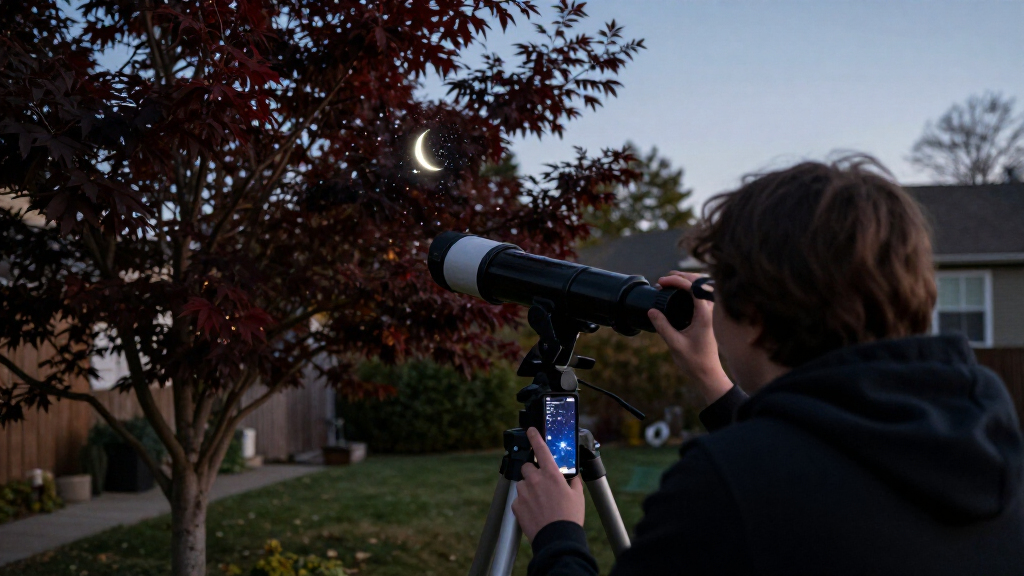
telescope for viewing planets and star clusters
As an affiliate, we earn on qualifying purchases.
As an affiliate, we earn on qualifying purchases.
Weather and Viewing Conditions
Local visibility will depend on weather, light pollution and the observer’s location. NASA’s guide gives dates and general viewing directions but does not forecast cloud cover or provide location-specific viewing times. It also does not state how many Orionids observers should expect to see; moonlight is expected to hide some fainter meteors, and actual counts can vary.
The report describes Saturn’s south polar wave as appearing to strengthen, but does not give a detailed forecast for how the feature will develop or specify what later observations may show. The October guide also refers readers to Moon phases without listing the phase dates in the supplied report text.
As an affiliate, we earn on qualifying purchases.
Watch the October Sky
Skywatchers can use the listed dates to plan observations through the month: look for Saturn around and after Oct. 4, try the Orionids before dawn after moonset on Oct. 21–22, and watch the eastern sky on the evening of Oct. 27–28 for the Moon near the Pleiades. Dark skies and clear local conditions will affect what is visible, especially for the meteor shower.
NASA directs readers to its skywatching resources and the Night Sky Network for additional observing information. The agency says Hubble observations have revealed a developing southern atmospheric pattern on Saturn; the guide does not announce a specific follow-up date or mission milestone.
As an affiliate, we earn on qualifying purchases.
Key Questions
When does Saturn reach opposition in October 2026?
Saturn reaches opposition on Oct. 4. NASA says it will rise around sunset and remain visible for much of the night.
When should I look for the Orionid meteor shower?
The shower is expected to peak overnight Oct. 21–22. NASA recommends looking in the hours before dawn after the Moon sets, when moonlight is less likely to obscure faint meteors.
Where in the sky will the Orionids appear?
The meteors appear to radiate from the direction of Orion, but NASA says they can streak across any part of the sky. Look broadly overhead rather than only at the constellation.
Can I see the Pleiades without a telescope?
Yes. NASA says the Pleiades can be seen with the unaided eye as a slightly fuzzy grouping of six to seven stars. Binoculars or a telescope can reveal more detail.
What did NASA report about Saturn’s atmosphere?
NASA says Hubble observations from September 2026 revealed a ten-sided atmospheric wave around Saturn’s south pole that appears to be strengthening. The guide does not give a forecast for how the feature will develop.
Source: primary
Fall Picks
fall essentials
As an affiliate, we earn on qualifying purchases.