TL;DR

Prime made for students and young adults
- Fast, free delivery for dorm and study essentials
- Prime Video and Amazon Music included
- Member-only deals
NASA’s Astronomy Picture of the Day for Oct. 29, 2026, features a photograph of Venus seen nearly between Earth and the Sun. The explanation describes how sunlight scattered and refracted by Venus’s backlit atmosphere makes its crescent extend beyond 180 degrees, producing tips known as the planet’s “horns.”
NASA’s Astronomy Picture of the Day for October 29, 2026, shows Venus as a slender crescent with tips that appear to extend beyond a semicircle. The accompanying explanation says the effect comes from sunlight refracted and scattered by Venus’s backlit atmosphere when the planet is seen nearly between Earth and the Sun, offering a view of a familiar planet in a less familiar phase.
The image is credited to Thierry Legault. NASA’s explanation describes the view as Venus seen “almost directly between the Sun and the Earth.” In that alignment, the side facing Earth is largely turned away from direct sunlight, much as the Moon appears dark at new phase. Venus, however, has a substantial atmosphere that interacts with sunlight around the planet’s edge.
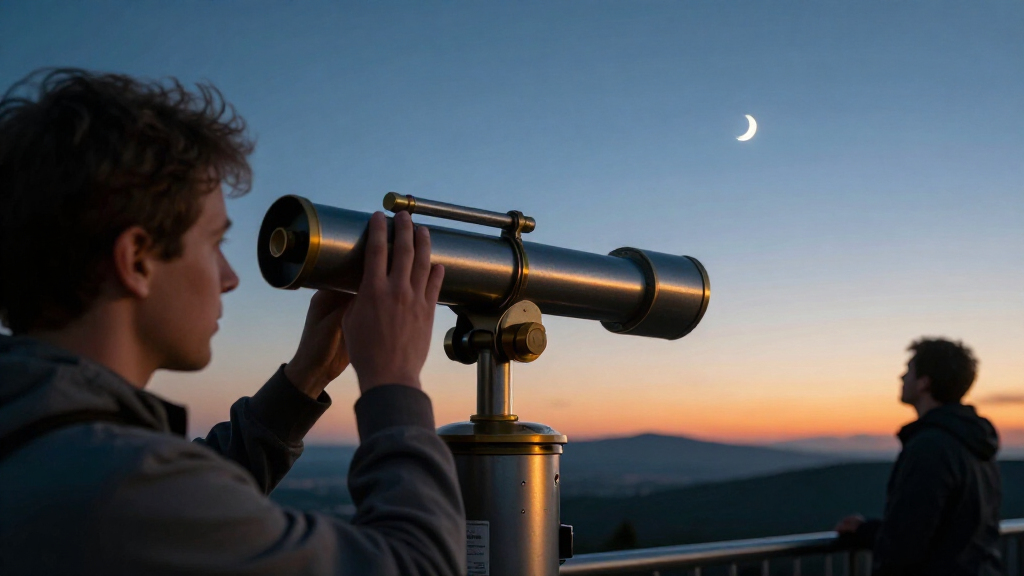
According to the APOD explanation, the atmosphere refracts and scatters sunlight, making a glowing arc that reaches beyond 180 degrees. The arc’s ends are called the “horns” of Venus. The page says the planet’s crescent can be observed with a small telescope or binoculars during twilight; it adds that people with exceptionally acute eyesight may be able to see it without optical aid.
NASA’s page says this near alignment occurs about once every year and a half, comparing it with the Sun-Earth-Moon arrangement at a new Moon. The comparison is about geometry, not identical appearance: the new Moon is dark to observers on Earth, while Venus’s atmosphere can scatter sunlight around its outline. APOD lists the image’s authors and editors as Cecilia Chirenti, Robert Nemiroff, Jerry Bonnell and Keighley Rockcliffe, and credits the service to NASA’s Astronomy Picture of the Day operation, NASA Science Activation and Michigan Technological University.
How Venus Makes Its Crescent
The feature highlights a visible consequence of Venus’s dense, light-scattering atmosphere: its illuminated outline can appear to continue around the dark portion of the planet. The horn-like tips are not separate structures. They mark the apparent ends of the crescent arc in this viewing geometry, as described in NASA’s explanation.
For observers, the image connects planetary geometry with a practical skywatching opportunity. Venus is often recognized as a bright point of light, but its changing phase becomes apparent through binoculars or a telescope. The APOD notes that the narrow crescent can be viewed during twilight; it does not provide a particular observing location, date-specific forecast, or directions for safely locating the planet. The photograph and explanation therefore offer an accessible demonstration, while leaving local visibility to conditions and timing.
The post also links the observation to the history of astronomy. It says ancient Babylonian astronomers may have been among the first to study changes in Venus’s brightness, which are related to its phases. That connection underscores that tracking Venus is not solely a modern telescopic activity: its changing appearance has been part of astronomical records across cultures.
Products Worth Considering

eufy E25 Robot Vacuum and Mop Combo with HydroJet Roller Mop

Dyson Cyclone V10 Origin Cordless Vacuum

eufy Security Essential Alarm System, 7-Piece, No Monthly Fee
As an affiliate, we earn on qualifying purchases.
Venus Between Earth and Sun
Venus’s phases arise from the changing positions of the Sun, Venus and Earth. As the planet moves along its orbit, observers on Earth see different fractions of its sunlit side, much as the Moon’s appearance changes over the month. When Venus is nearly aligned between Earth and the Sun, the visible illuminated portion becomes a thin crescent.
The APOD description distinguishes this scene from a new Moon. The Moon has no comparable atmospheric glow in the explanation’s comparison, whereas Venus’s atmosphere scatters and bends sunlight around its edge. That light produces the extended arc called the horns. The source characterizes the alignment as occurring once every year and a half, but it does not give a more precise orbital calculation or the exact circumstances of the photographed observation.
NASA’s entry also places Venus observations in a long cultural record, mentioning records from multiple cultures and the oldest surviving Maya book. It does not identify the specific records or make a detailed historical argument. The central subject of the day’s entry remains the photograph and the atmospheric effect that shapes Venus’s crescent.
Details Behind the Photograph
The NASA page identifies the photographer and describes the alignment, but the supplied entry does not state when or where the photograph was taken, what equipment was used, or how the image was processed. It also does not give a precise date for the alignment shown. Those details cannot be inferred from the caption alone.
The viewing guidance is general. Whether Venus can be seen from a particular place depends on local conditions and the planet’s position in the sky; the APOD does not provide a forecast or confirm visibility for a specific audience. Its statement that exceptionally acute eyesight may be enough is presented as a possibility, not a guarantee.
The historical note is similarly qualified: NASA says Babylonian astronomers may have been the first to study Venus’s brightness changes. The entry does not provide evidence or further detail to resolve that question, nor does it identify the Maya book it references. These points are brief context, not the main subject of the image explanation.
The Next APOD Entry
NASA’s Astronomy Picture of the Day is published daily, with a different image or photograph and an accompanying explanation. The Oct. 29 page points readers to “What’s next?” as the following day’s picture, but the supplied source does not name or describe that image. The next APOD entry is the expected follow-up in the series; no additional announcement about Venus observations or a related mission is included in this report.
Readers interested in viewing Venus can use the entry’s broad guidance—binoculars or a small telescope during twilight—while checking local sky conditions and taking care not to point optical equipment at the Sun. The NASA page does not specify a viewing schedule or location, so the exact opportunity will vary by observer.
Key Questions
What are the “horns” of Venus?
They are the apparent tips of the glowing crescent arc. NASA’s explanation says sunlight refracted and scattered by Venus’s atmosphere makes the arc extend beyond 180 degrees.
Why does Venus look like a crescent?
Venus has phases because Earth sees different portions of its sunlit side as the planets move around the Sun. In the image described by APOD, Venus is nearly between Earth and the Sun, leaving a thin visible crescent.
Can Venus’s crescent be seen without a telescope?
The APOD says it can be viewed with binoculars or a small telescope during twilight. It adds that exceptionally acute eyesight may allow unaided viewing, but does not promise that it will be visible to everyone.
When was the featured image published?
NASA published it as the Astronomy Picture of the Day on October 29, 2026. The source credits the photograph to Thierry Legault but does not give its capture date or location.
Source: science.nasa.gov