
TL;DR

Prime made for students and young adults
- Fast, free delivery for dorm and study essentials
- Prime Video and Amazon Music included
- Member-only deals
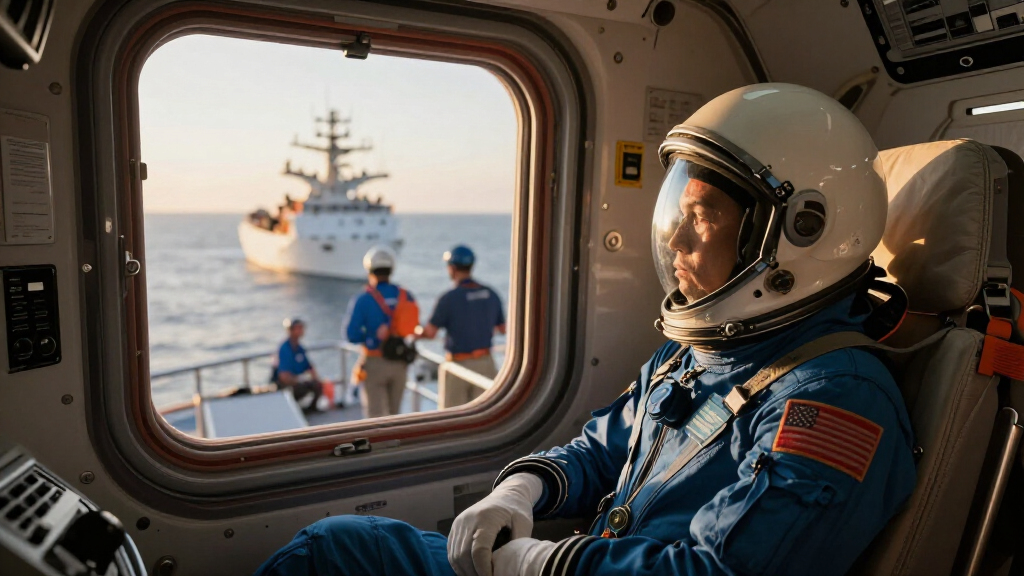
NASA’s SpaceX Crew-12 mission is ending, and its four astronauts and cosmonaut are scheduled to return from the International Space Station in early October. Their work included research into bone and cartilage, stem cells, antibiotic-resistant bacteria, pharmaceutical crystals and manufacturing in microgravity; the practical benefits remain subjects of investigation, not established outcomes.
NASA’s SpaceX Crew-12 mission is ending, with astronauts Jessica Meir and Jack Hathaway, European Space Agency astronaut Sophie Adenot and Roscosmos cosmonaut Andrey Fedyaev scheduled to return from the International Space Station in early October. NASA’s mission summary highlights a range of research conducted during their stay, including experiments on cells, materials, microbes and methods of producing supplies in space.
The crew’s investigations used microgravity as a research environment to examine processes that can be harder to study on Earth. NASA described work on pharmaceutical crystals, ultracold atoms, bone scaffolds, soft materials, antibiotic resistance, engineered cartilage and stem cells. These are research projects with potential applications, not proof that new treatments or technologies are ready for routine use.
Among the health-related studies, Hathaway worked with equipment testing for antibiotic-resistant bacteria, while Meir supported an investigation into engineered cartilage tissue. Adenot handled a bone scaffold made from wood that is designed to mimic bone structure and support cell growth. NASA says the work could inform future treatments and help protect crews from health risks during long missions, but the source does not report final results from these investigations.
The crew also supported technology demonstrations with possible uses beyond the station. NASA reported that small parts made using the station’s metal 3D printer had been returned to Earth for quality assessment against ground-made parts. Other experiments included generating intravenous fluid in microgravity and expanding stem cells. The source describes their aims and possible benefits, but gives no outcome data or timetable for judging whether they meet those aims.
Research for Earth and Long Missions
Crew-12’s research matters because long-duration spaceflight creates conditions that are difficult to reproduce on Earth, while also placing pressure on astronauts’ health and the supplies available to them. Experiments on bone loss, microbes and cell growth can help researchers investigate risks associated with living in space. Findings may also be relevant to medical research on Earth, although any clinical benefit will depend on results and further testing.
Manufacturing and supply experiments address a separate challenge: crews traveling far from Earth cannot rely on frequent deliveries. NASA says on-demand metal parts and IV fluids could reduce dependence on resupply and support future exploration. For now, these remain capabilities under study. The mission summary does not establish that either system is ready to replace Earth-supplied equipment or medical products.
The investigations also show how station research connects basic science with possible applications, from crystal formation to tissue engineering. That connection is a reason for the work, not a guarantee of a specific product or treatment. Readers should distinguish NASA’s descriptions of intended benefits from confirmed, independently measured outcomes.
Products Worth Considering

Ring Alarm 14-Piece Wireless Security System Kit

TCL 85-Inch QM6K Series QLED Mini LED 4K HDR Smart Google TV

Google Nest Doorbell (Wired, 2nd Gen) – Snow
As an affiliate, we earn on qualifying purchases.
Crew-12’s Station Research Portfolio
The International Space Station serves as a platform for research in microgravity, where changes in gravity can affect how cells, fluids and materials behave. NASA says that setting can provide researchers with a different way to investigate subjects ranging from crystal structures to the assembly of particles suspended in water. The agency’s Crew-12 report presents examples of the team’s work rather than a consolidated account of final findings.
The listed projects included the Cold Atom Lab, which studies ultracold atoms, and research into colloidal solids, pharmaceuticals and bone regeneration. NASA said a recent Cold Atom Lab upgrade increases the number of atoms produced. The crew’s work also covered cartilage tissue and hematopoietic stem cells, which NASA says may be relevant to medical research, including studies connected with blood and immune systems.
Station experiments depend on cargo flights as well as crew time. NASA noted that Northrop Grumman’s Cygnus XL resupply spacecraft delivered fresh food and research projects, including an instrument intended to improve space-weather modeling and a project examining gut-microbiome stability. Those deliveries provide context for Crew-12’s work but do not change the reported return schedule.
Results and Return Details Pending
The exact return date, time and landing location are not specified in NASA’s source material, which says only that the crew is scheduled to come home in early October. The report does not provide a detailed departure or splashdown plan, and the schedule could be updated.
The source also does not give final results for the featured experiments, explain how many investigations have been completed, or say when findings will be published. Potential applications described by NASA—including new therapies, improved pharmaceutical production and reduced reliance on resupply—remain possible outcomes rather than demonstrated benefits. It is not clear from the report how the crew’s research hardware and samples will be handled after return.
Return and Follow-Up Research
The immediate next step is the crew’s planned return to Earth in early October. NASA has not stated a specific date in the supplied report. After the astronauts and cosmonaut leave the station, investigators can continue evaluating data and, where relevant, compare returned materials with samples or parts produced on Earth.
Further updates are expected to clarify the return schedule and report on the investigations as analysis proceeds. NASA’s summary does not provide publication dates or a timetable for results, so the scientific and practical conclusions will emerge later than the mission’s scheduled end.
Key Questions
Who is returning with NASA’s SpaceX Crew-12?
The four crew members named by NASA are Jessica Meir, Jack Hathaway, Sophie Adenot and Andrey Fedyaev. Meir and Hathaway are NASA astronauts, Adenot is with the European Space Agency, and Fedyaev is a Roscosmos cosmonaut.
When is Crew-12 scheduled to return?
NASA’s report says the crew is scheduled to return in early October. It does not give a precise date or time.
What research did Crew-12 support?
The projects covered pharmaceutical crystals, ultracold atoms, bone and cartilage, stem cells, antibiotic-resistant bacteria and technologies such as metal 3D printing and intravenous-fluid production.
Have the experiments produced confirmed medical benefits?
NASA’s report describes the goals and potential applications of the investigations but does not report final results or confirmed medical benefits. The possible uses remain subject to research and evaluation.
Why conduct these experiments in space?
Microgravity can alter how cells, fluids and materials behave, providing researchers with a different setting for studying them. Some projects also examine ways to support crew health and supplies on longer missions.
Source: primary