
Science experiment kits vary enormously in what they actually teach: some are hour-long novelty sets built around wow-factor reactions, while others offer dozens of structured experiments that build real lab skills over months. For most families, the National Geographic Amazing Chemistry Set is the best overall pick, thanks to genuinely educational experiment variety and clear instruction quality. Budget-minded buyers get more repeat value from the UNGLINGA 150-Experiment Kit, while parents of preschoolers should look at the Doctor Jupiter kits for ages 4+, which trade chemical excitement for age-safe simplicity. The main tradeoff in this category is experiment count versus experiment depth — a kit promising 150 activities often includes filler projects that take two minutes each. Read on for the full breakdown of all 15 kits and which one fits your child’s age, patience, and interests.

Prime made for students and young adults
- Fast, free delivery for dorm and study essentials
- Prime Video and Amazon Music included
- Member-only deals
Key Takeaways
- Experiment count is the most misleading spec in this category: the UNGLINGA 150-experiment kit and National Geographic’s 100+ chemistry set both advertise big numbers, but Nat Geo’s experiments are longer, better explained, and reuse materials more meaningfully.
- Preschool kits (Doctor Jupiter, Melican) cluster around the same 50–60 simple activities, so the real differentiator is instruction clarity and whether supplies are pre-portioned — not the headline experiment count.
- Microscope and electronics picks (BMDSAE, RISUNTOY, LINGO) are single-skill tools, not general science kits; they reward kids with a focused interest but frustrate children who expect variety.
- The Glow-in-the-Dark kit is the most niche pick here — high excitement, low educational depth, and best treated as a supplement to a broader kit rather than a standalone purchase.
- Across the lineup, instruction manual quality predicted satisfaction better than any hardware spec: kits with illustrated, failure-tolerant guides (Nat Geo, Doctor Jupiter) consistently outperformed cheaper rivals with the same activities.
| UNGLINGA 70+ Experiments Science Kit for Kids |  | Best Overall Starter Kit | Number of experiments: 70+ | Experiment types: Chemistry, physics, magic, and more | Included: Easy-to-follow instruction manual | VIEW LATEST PRICE | See Our Full Breakdown |
| UNGLINGA 150-Experiment Science Kit for Kids | 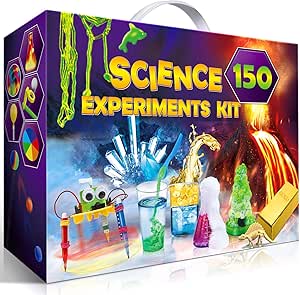 | Most Experiments Pick | Brand: UNGLINGA | Experiment count: 150 | Recommended age: 8 years and up | VIEW LATEST PRICE | See Our Full Breakdown |
| PATIFEED 150-Experiment Science Kit for Kids |  | Best for Siblings and Group Play | Number of experiments: 150 | Topics: Chemistry, physics, and earth science | Included instructions: Illustrated step-by-step manual | VIEW LATEST PRICE | See Our Full Breakdown |
| National Geographic Science Magic Kit for Kids, 8+ |  | Best for Showmanship and Demonstrations | Brand: Blue Marble (National Geographic) | Age range: 8 years and up | Experiments included: 20 magic experiments plus 85+ additional experiments | VIEW LATEST PRICE | See Our Full Breakdown |
| BMDSAE 1000X Handheld Digital Microscope for Kids with 2.0-Inch IPS Screen |  | Best for Specimen Viewing | Magnification: Up to 1000X | Display: 2.0-inch IPS screen | Camera: 2MP | VIEW LATEST PRICE | See Our Full Breakdown |
| UNGLINGA 70-Experiment Science Kit for Kids |  | Best for Activity Variety | Brand: UNGLINGA | Experiments: 70 | Recommended age: 8 years and up | VIEW LATEST PRICE | See Our Full Breakdown |
| National Geographic Amazing Chemistry Set for Kids, 100+ Experiments |  | Best for Chemistry Beginners | Brand: Blue Marble | Age range: 8 years and up | Experiments: 15 kit-based experiments plus 85 bonus experiments | VIEW LATEST PRICE | See Our Full Breakdown |
| Doctor Jupiter First Science Experiments Kit for Kids Ages 4+ |  | Best for Preschool Science | Experiment count: 100+ | Recommended age: 4–8 years | Experiment topics: Water science, color science, volcano science | VIEW LATEST PRICE | See Our Full Breakdown |
| Doctor Jupiter My First Science Experiments Kit for Kids Ages 4+ |  | Best for Supplied Starter Tools | Brand: Doctor Jupiter | Recommended age: 4 years and up | Experiments: Over 100 | VIEW LATEST PRICE | See Our Full Breakdown |
| Melican 60+ Science Experiment Kit for Kids Ages 4 and Up |  | Best for Preschool Scientists | Brand: Melican | Age Range: 4 years and up | Experiments: 60+ | VIEW LATEST PRICE | See Our Full Breakdown |
| UNGLINGA 40+ Experiments Science Kit for Kids |  | Best Value Chemistry Starter | Brand: UNGLINGA | Experiments: 40+ | Recommended Age: 8 years and up | VIEW LATEST PRICE | See Our Full Breakdown |
| Glow-in-the-Dark Science Experiments Kit for Kids Ages 8–12 |  | Best Theme Pick for Reluctant Scientists | Number of Experiments: 15+ | Experiment Topics: Chemistry and physics | Age Range: 8–12 years | VIEW LATEST PRICE | See Our Full Breakdown |
| National Geographic Mega Science Lab – 75 Experiments for Kids |  | Best Overall | Brand: Blue Marble / National Geographic | Age Range: 8 years and up | Number of Experiments: 75 (45 included + 30 bonus with household items) | VIEW LATEST PRICE | See Our Full Breakdown |
| RISUNTOY 31-Piece Snap-Together Electronics Kit for Kids |  | Best for Circuit Builders | Brand: RISUNTOY | Model: RC1006-CA | Circuit Modules: 31 | VIEW LATEST PRICE | See Our Full Breakdown |
| science experiment kit | Brand | Recommended age |
|---|---|---|
| UNGLINGA 70+ Experiments Scien | UNGLINGA | — |
| UNGLINGA 150-Experiment Scienc | UNGLINGA | 8 years and up |
| PATIFEED 150-Experiment Scienc | — | — |
| National Geographic Science Ma | Blue Marble (National Geographic) | — |
| BMDSAE 1000X Handheld Digital | — | Over 3 years |
| UNGLINGA 70-Experiment Science | UNGLINGA | 8 years and up |
| National Geographic Amazing Ch | Blue Marble | — |
| Doctor Jupiter First Science E | — | 4–8 years |
| Doctor Jupiter My First Scienc | Doctor Jupiter | 4 years and up |
| Melican 60+ Science Experiment | Melican | — |
| UNGLINGA 40+ Experiments Scien | UNGLINGA | 8 years and up |
| Glow-in-the-Dark Science Exper | — | — |
| National Geographic Mega Scien | Blue Marble / National Geographic | — |
| RISUNTOY 31-Piece Snap-Togethe | RISUNTOY | 36 months – 12 years |
More Details on Our Top Picks
UNGLINGA 70+ Experiments Science Kit for Kids
This option stands out for striking the right balance between variety and manageability. While the UNGLINGA 150-Experiment kit offers more than double the activities, many of its projects lean on household items, and younger children can get overwhelmed by that volume. Here, the 70+ experiments span chemistry, physics, and even simple “magic” tricks, giving kids a broad introduction across disciplines without demanding a pantry full of extra supplies. Compared with the National Geographic Science Magic Kit, this set goes wider than showmanship — it trades a little spectacle for genuine scientific grounding. The easy-to-follow manual means less parental hand-holding, which matters if the goal is independent play. The tradeoff: no stated age range or safety details, so adults will need to supervise and judge readiness themselves.
Pros:- 70+ experiments covering chemistry, physics, and more
- Manual designed for children to follow with minimal adult help
- Broad topic coverage encourages exploration of multiple disciplines
- Fun projects like bouncy balls and volcanoes keep kids engaged
Cons:- No specified age range, making suitability judgment harder
- Safety details are not documented, so supervision is a must
Best for: Parents of roughly 6–10 year olds who want a broad, self-directed first science kit
Not ideal for: Buyers who need clear age guidance and documented safety standards for very young children
- Number of experiments:70+
- Experiment types:Chemistry, physics, magic, and more
- Included:Easy-to-follow instruction manual
- Brand:UNGLINGA
- Learning style:Hands-on, self-directed play
- Age guidance:Not specified
Our verdict“The most sensible first purchase for families who want variety and independence without committing to a 150-experiment marathon.”
UNGLINGA 150-Experiment Science Kit for Kids
When sheer longevity of use is the priority, this kit pulls ahead of everything else in this batch. With 150 illustrated, step-by-step experiments, it outlasts the UNGLINGA 70+ kit by more than double, making it a better fit for a child who blows through activities quickly — or for stretching across rainy weekends and school breaks. The clear age rating of 8 and up also gives it an advantage over its smaller sibling, which lists no age guidance at all. The tradeoff is real, though: a meaningful share of the experiments require common household items that aren’t in the box, so the effective “open and go” count is lower than the headline number. Compared with the PATIFEED 150-Experiment kit, the two are close on paper; this one’s advantage is the explicit age recommendation and structured manual.
Pros:- 150 experiments across chemistry, physics, and earth science
- Illustrated step-by-step manual supports independent learning
- Clear age recommendation of 8 years and up
- Includes dedicated science tools and kid-friendly materials
Cons:- Some experiments require household items not included
- The large volume can overwhelm children who prefer fewer, deeper projects
Best for: Kids 8 and up with sustained interest in science who want months of activities
Not ideal for: Households that want everything in the box, since some experiments need extra supplies
- Brand:UNGLINGA
- Experiment count:150
- Recommended age:8 years and up
- Educational objective:Creative skills
- Included components:Science experiment tools and materials
- Manual:Illustrated step-by-step guide
- Supplemental items:Some projects use common household items
Our verdict“The pick for families who want maximum experiment count and are fine supplementing with pantry staples.”
PATIFEED 150-Experiment Science Kit for Kids
This set matches the UNGLINGA 150-Experiment kit on paper, but its marquee projects — the erupting volcano, bubble experiments, and balloon rocket — skew toward group-friendly spectacle, which makes it the stronger choice when two or more kids are sharing one kit. The balloon rocket and volcano are naturally collaborative in a way that solo chemistry trays are not. Like its UNGLINGA rival, it relies on common household items for some experiments, so plan a quick pantry check before gifting. Compared with the National Geographic Science Magic Kit, it offers far more structured experiments (150 versus 20 with materials included), though it lacks that kit’s polished brand pedigree and presentation. The illustrated step-by-step manual keeps multi-kid sessions from devolving into chaos.
Pros:- 150 experiments spanning chemistry, physics, and earth science
- Headline projects like the volcano and balloon rocket encourage group participation
- Illustrated step-by-step manual keeps sessions organized
- Wide topic variety prevents boredom over time
Cons:- Some experiments require household items not included
- Overlaps heavily with the UNGLINGA 150 kit, offering little differentiation for solo users
Best for: Families with two or more children sharing one kit, or parents running group science sessions
Not ideal for: Gift-givers who want a fully self-contained kit with zero extra shopping
- Number of experiments:150
- Topics:Chemistry, physics, and earth science
- Included instructions:Illustrated step-by-step manual
- Signature projects:Erupting volcano, bubbles, balloon rocket
- Supplemental items:Some activities use common household items
- Format:Hands-on STEM kit
Our verdict“Choose this over the UNGLINGA 150 when siblings or playdates will share the fun; otherwise the two are near interchangeable.”
National Geographic Science Magic Kit for Kids, 8+
Where the UNGLINGA 70+ kit teaches quietly, this one turns science into a performance. Its 20 magic experiments are designed to be shown off, which changes who it’s for: the kid who wants to amaze grandparents rather than quietly mix solutions. The included booklet with 85+ additional experiments extends its life well beyond the initial 20, narrowing the gap with the bigger UNGLINGA sets — though most of those extras require sourcing your own materials. The trusted National Geographic brand also means consistent quality control and packaging polish, something the UNGLINGA and PATIFEED kits can’t always claim. The tradeoff: the materials-included portion is modest at 20 experiments, and the source doesn’t detail individual experiment contents, so buyers can’t fully preview what’s inside before it arrives.
Pros:- Combines magic tricks with genuine chemistry and science learning
- Materials included for 20 experiments plus a booklet of 85+ more
- Established brand with a clear 8+ age rating
- Performance format builds confidence and presentation skills
Cons:- Only 20 experiments come with included materials
- Individual experiment contents are not specified before purchase
Best for: Kids 8 and up who love performing and want science they can show off to an audience
Not ideal for: Buyers who want a large number of fully supplied experiments, since only 20 come with materials
- Brand:Blue Marble (National Geographic)
- Age range:8 years and up
- Experiments included:20 magic experiments plus 85+ additional experiments
- Set name:Mega Science Kit
- Model number:NGMEGAMAGIC
- UPC:816448027680
Our verdict“The obvious pick for a young showman who learns best when there’s an audience involved.”
BMDSAE 1000X Handheld Digital Microscope for Kids with 2.0-Inch IPS Screen
For kids more interested in examining a leaf or fabric than mixing a volcano, this handheld microscope brings a different kind of science exploration to the roundup. Its 2.0-inch screen and adjustable LEDs let a child view samples directly, while photo and video capture make observations easier to revisit. Compared with the National Geographic Amazing Chemistry Set, which guides children through prepared chemistry activities, this pick centers on looking closely and recording what they notice. That makes it a useful tool for observation-led projects, though it offers less structured instruction than an experiment kit with a printed activity sequence. The manual focus gives children control over the image but can take practice, and the battery lasts up to two hours. Choose it for visual investigation; skip it if you want a broad set of ready-to-run experiments.
Pros:- Built-in screen allows viewing without a separate computer
- Captures photos and videos for reviewing observations
- Adjustable LEDs offer control over specimen lighting
- Lightweight 200g body is easy to carry
Cons:- Manual focusing can be challenging for younger children
- Battery runtime is limited to up to two hours
- Does not provide a broad set of guided experiments
Best for: Families who want a portable microscope for observing and documenting small specimens.
Not ideal for: Buyers looking for a guided kit with many supplied experiment materials and activities.
- Magnification:Up to 1000X
- Display:2.0-inch IPS screen
- Camera:2MP
- Lighting:8 adjustable LEDs with 3 brightness modes
- Battery:600mAh; up to 2 hours
- Storage:32M; stores 200+ photos or AVI videos
- Weight:200g
- Compatibility:Windows XP–11 and Mac 11.0+
- Recommended age:Over 3 years
Our verdict“Pick this microscope for close-up observation and recording, rather than a kit built around a sequence of hands-on experiments.”
UNGLINGA 70-Experiment Science Kit for Kids
The 70 listed experiments span crystals, volcanoes, balloon rockets, and fruit circuits, so this set has more topic variety than the chemistry-focused National Geographic Amazing Chemistry Set. Its illustrated guide also explains the science behind activities, helping turn a result into a conversation about chemistry or scientific methods. That mix makes it a strong option for families who want to sample different kinds of projects rather than stay with one theme. The tradeoff is that the product information does not specify the included components, making it harder to tell how many experiments can be done using kit-supplied materials. Some activities need adult supervision, too. I’d choose it for breadth, but favor a more clearly itemized kit if knowing exactly what arrives matters to you.
Pros:- Lists 70 experiments across several science topics
- Illustrated guide explains procedures and the science behind them
- Includes both chemistry and non-chemistry activities
- Activities can be shared with family or classmates
Cons:- Product information does not specify the included components
- Some experiments call for adult supervision
- The available details do not clarify how many activities use supplied materials
Best for: Families with children 8 and up who want activities across chemistry, crystals, simple circuits, and motion.
Not ideal for: Buyers who want a clearly listed inventory of included materials or projects children can complete without adult help.
- Brand:UNGLINGA
- Experiments:70
- Recommended age:8 years and up
- Educational focus:STEM and chemistry
- Set name:Comprehensive Science Experiment Set
- Number of items:1
- Model number:HZDZKH030
Our verdict“Choose this set for a wide range of listed activities and explanations, provided you are comfortable with uncertainty about the included components.”
National Geographic Amazing Chemistry Set for Kids, 100+ Experiments
This is the clearest chemistry-focused choice in this batch: the kit supplies tools and materials for 15 experiments, including crystals and color-changing solutions, then points to 85 more activities using household items. Compared with the broader-topic UNGLINGA 70-Experiment Science Kit, it gives chemistry a more defined center and names useful tools such as test tubes, beakers, and pipettes. That can help a young beginner feel more like they are following a small lab routine. The headline count needs context, though: only 15 experiments are described as using included kit materials. The additional activities call for household supplies, so this is less self-contained than a buyer might expect from the total. It suits families happy to supplement the kit, but may frustrate anyone seeking materials for every listed activity.
Pros:- Includes materials for 15 chemistry experiments
- Provides test tubes, beakers, and pipettes for hands-on use
- Adds 85 activities using common household items
- Focuses on chemistry concepts such as crystals and color changes
Cons:- Only 15 experiments are described as using included materials
- The additional activities require household supplies
- Less topic variety than a kit spanning circuits, motion, and other fields
Best for: Families with children 8 and up who want a chemistry-centered introduction and are willing to supply household materials for extra activities.
Not ideal for: Buyers who expect the included materials to cover all 100 listed experiments.
- Brand:Blue Marble
- Age range:8 years and up
- Experiments:15 kit-based experiments plus 85 bonus experiments
- Educational objective:STEM
- Included tools:Test tubes, beakers, and pipettes
- Set name:Amazing Chemistry Set
- Model number:NGMEGACHEMAR
Our verdict“Pick this for an accessible chemistry starter set if sourcing household supplies for the bonus activities suits your family.”
Doctor Jupiter First Science Experiments Kit for Kids Ages 4+
With a stated age range of 4–8 years and activities covering water, color, and volcano science, this kit is aimed at younger experimenters than the 8-and-up UNGLINGA 70-Experiment Science Kit. Illustrated step-by-step directions give a parent and child a shared route through each activity, while the broad topic mix offers simple ways to talk about cause and effect. Its over-100 experiment count is appealing, but the supplied components are not detailed in the product information, so I can’t tell how much of that variety comes with the box versus household materials. Adult guidance may also be needed. This is the age-targeted pick for early shared exploration, while older children wanting more detailed chemistry tools may get more from National Geographic’s set.
Pros:- Designed for a younger age range than the 8-and-up kits
- Lists over 100 experiments across water, color, and volcano science
- Illustrated steps support parent-child activity time
- ASTM F963-17 safety standard is specified
Cons:- Some experiments may require adult guidance
- Included components are not specified in the provided product details
- The available information does not clarify how many activities use supplied materials
Best for: Parents looking for guided, shared science activities for children ages 4–8, especially around water and color.
Not ideal for: Older children seeking detailed chemistry equipment or buyers who need a clear list of included materials.
- Experiment count:100+
- Recommended age:4–8 years
- Experiment topics:Water science, color science, volcano science
- Safety standard:ASTM F963-17
Our verdict“Choose this for guided early science activities with an adult, while older children may prefer a kit with more specified lab tools.”
Doctor Jupiter My First Science Experiments Kit for Kids Ages 4+
For families choosing between two Doctor Jupiter kits aimed at ages 4 and up, this version gives a more concrete picture of what arrives: beakers, a conical flask, goggles, a tray, and several other reusable tools are listed alongside ingredients and an instruction manual. That makes it easier to plan a first supervised experiment than with the Doctor Jupiter First Science Experiments Kit, whose supplied components are not specified in the available details. Both list more than 100 activities and ASTM F963-17 compliance, so the clearest distinction here is the itemized starter setup. The ingredients can run out with repeated use, and adult guidance is needed for some activities. I’d favor this version when the tools matter more than having a better-defined set of experiment topics.
Pros:- Lists beakers, a conical flask, goggles, a tray, and other tools
- Includes an instruction manual and bonus experiment booklet
- Offers over 100 hands-on experiments
- Meets ASTM F963-17 toy safety standards
Cons:- Some experiments require adult guidance
- Supplied ingredients may run out with repeated use
- The provided details do not identify specific experiment topics
Best for: Parents of children 4 and up who want an itemized starter set of reusable experiment tools for supervised activities.
Not ideal for: Families expecting supplied ingredients to last through repeated use or wanting clearly listed experiment topics.
- Brand:Doctor Jupiter
- Recommended age:4 years and up
- Experiments:Over 100
- Included components:2 beakers, conical flask, spatula, 2 stirring sticks, 2 spray bottles, 2 cups, funnel, safety goggles, tray, food essences, food additives, dried leaves, food colors, instruction manual, and bonus experiment booklet
- Safety standard:ASTM F963-17
- Model number:DJ Junior Science
- Manufacturer:Metis Learning Solutions Pvt. Ltd.
Our verdict“Choose this Doctor Jupiter version if an itemized collection of starter tools matters more than a clearly specified topic list.”
Melican 60+ Science Experiment Kit for Kids Ages 4 and Up
Most experiment kits start at age 8, which leaves younger kids watching from the sidelines. Melican lowers the entry age to 4, pairing over 60 experiments — volcano eruptions, lava lamps, dinosaur egg digging — with illustrated instructions and safety goggles sized for small experimenters. Compared with the Doctor Jupiter First Science Kit, Melican trades polish for sheer volume, offering more activities at a similar difficulty floor. The tradeoff is real, though: nearly every experiment needs an adult actively involved rather than supervising from the kitchen, so this is a co-play kit, not an independent one. Still, for parents who want guided weekend science time with a preschooler, this option makes more sense than the age-8 kits elsewhere in this roundup.
Pros:- 60+ experiments gives weeks of varied activities
- Safety goggles included, which most kits in this range omit
- Illustrated instructions make it easy for adults to lead without prep
- Activities like fossil digging and lava lamps hold short attention spans
Cons:- Requires parental assistance for essentially every experiment
- Materials are consumed quickly by favorite experiments, limiting repeats
Best for: Parents of children ages 4–7 who want structured, hands-on science time they can do together
Not ideal for: Anyone hoping for independent play — every experiment requires active adult assistance
- Brand:Melican
- Age Range:4 years and up
- Experiments:60+
- Included Components:Manual, experiment materials and tools, safety goggles
- Educational Objective:Logical thinking
- Model Number:SYTZ2
Our verdict“A strong pick for families whose kids are too young for the 8+ chemistry kits but eager to do real experiments.”
UNGLINGA 40+ Experiments Science Kit for Kids
This is the low-commitment entry point of the roundup. With 40+ experiments like bouncy balls and lava lamps, UNGLINGA delivers the classic chemistry-kit experience at a smaller scale than the UNGLINGA 150-Experiment and PATIFEED 150-Experiment kits, and that restraint is the point — it lets a family test whether hands-on science clicks before investing in a mega box. Compared with the National Geographic Mega Science Lab, it lacks real specimens and brand pedigree, but the step-by-step illustrated instructions are clear enough for an 8-year-old to follow with light oversight. The main compromise is that some household items must be sourced yourself, which means an adult scans the list before experiment day. For a first chemistry kit or a birthday gift under uncertainty, this is the sensible floor of the lineup.
Pros:- 40+ experiments at a low entry cost per activity
- Illustrated, step-by-step instructions kids can mostly follow alone
- Creative builds like bouncy balls reward observation and experimentation
- Small footprint makes it easy to store between sessions
Cons:- Requires common household items not included in the box
- Fewer flagship experiments than the 75+ activity kits in this roundup
Best for: Budget-conscious gift-givers testing whether an 8-year-old enjoys hands-on chemistry before buying a bigger kit
Not ideal for: Households wanting a fully self-contained kit — some experiments won’t run without pantry staples you supply
- Brand:UNGLINGA
- Experiments:40+
- Recommended Age:8 years and up
- Educational Objectives:Creative skills, imagination development, observation skills
- Included Components:Science experiments set
- Part Number:HZDZKH52
Our verdict“The right first chemistry kit for families who want to gauge interest before committing to a larger set.”
Glow-in-the-Dark Science Experiments Kit for Kids Ages 8–12
Some kids bounce off generic chemistry kits but lean in when the results glow. That’s the entire thesis here: 15+ luminous chemistry and physics experiments — glowing slime, light-producing reactions — framed by a full-color illustrated manual aimed squarely at ages 8–12. It has fewer total experiments than the Melican or UNGLINGA 40+ kits, but the glow theme gives it a hook those generalists lack, and the physics component adds variety beyond the slime-and-volcano staples. The honest drawback is vagueness about what’s actually in the box — no detailed materials list is published — so buyers are trusting the theme rather than auditing the contents. Some experiments also expect an adult nearby. Compared with broader kits, this one trades quantity for a memorable visual payoff that works well for science fair demos.
Pros:- Glow-in-the-dark results create a strong visual hook for disengaged kids
- Combines chemistry and physics rather than chemistry alone
- Full-color manual supports independent work by older kids
- Well suited to science fairs and school projects
Cons:- No published list of included experiment materials
- Smaller experiment count than similarly priced general kits
Best for: Kids ages 8–12 who find standard chemistry kits boring but love visual, glowing results and show-and-tell moments
Not ideal for: Detail-oriented buyers who want a full materials list before purchasing, since contents aren’t itemized
- Number of Experiments:15+
- Experiment Topics:Chemistry and physics
- Age Range:8–12 years
- Instruction Manual:Full-color illustrated guide
- Materials:Child-friendly, tested materials
- Skill Focus:Observation, logical thinking, problem-solving
Our verdict“Choose this when the goal is excitement and demo appeal rather than maximum experiment count.”
National Geographic Mega Science Lab – 75 Experiments for Kids
This is the pick I’d point most families toward first. The Mega Science Lab bundles three complete kits — Earth science, chemistry, and science magic — into 45 in-box experiments plus 30 more using household items. What separates it from the UNGLINGA 40+ and Melican kits is real specimens: actual rocks, minerals, glow-in-the-dark crystals, and a genuine fossil to excavate, which turns a one afternoon activity into a keepsake collection. The science magic angle also gives it demo value the glow-themed kit would envy. Tradeoffs exist: 30 of the 75 experiments aren’t fully self-contained, so the headline number overstates what’s in the box, and the multi-kit bundle means pieces are easy to scatter across sessions. Still, for variety, build quality, and brand accountability, nothing else in this batch matches its range for an 8-year-old.
Pros:- Three distinct kits in one box give strong variety across scientific disciplines
- Real specimens — rocks, minerals, crystals, and an actual fossil — outclass paper-and-powder kits
- Science magic tricks add performance appeal for siblings and show-and-tell
- Established brand with U.S.-based customer support
Cons:- 30 of the 75 experiments require additional household items not included
- Three kits’ worth of components are easy to lose without deliberate organization
Best for: Families with kids 8 and up who want one kit covering geology, chemistry, and magic-trick science with genuine specimens
Not ideal for: Buyers expecting 75 fully self-contained experiments — a third of them require household items you supply
- Brand:Blue Marble / National Geographic
- Age Range:8 years and up
- Number of Experiments:75 (45 included + 30 bonus with household items)
- Included Kits:Earth Science Kit, Chemistry Kit, Science Magic Kit, bonus experiment guide
- Educational Objective:Critical thinking, observation skills, STEM
- Model Number:NGMEGASCIKIT
- Manufacturer:JMW Sales, Inc.
Our verdict“The best all-around choice for a household that wants depth, real specimens, and variety from a single purchase.”
RISUNTOY 31-Piece Snap-Together Electronics Kit for Kids
Every other kit in this roundup is consumable chemistry — once the volcano erupts, it’s done. RISUNTOY is a reusable engineering system: 31 snap-together modules that recombine into 300+ circuit projects with fans and RGB lights, no soldering or tools required. That makes it the only kit here that grows with a child, from simple first builds at age 3 to progressively complex projects by age 12, where the National Geographic Mega Lab is largely finished within its experiment list. The 18-page color manual and project cards give structured progression rather than one-off fizz. Two gripes: batteries aren’t included, so have two AAs ready before gifting, and the component count is modest — creative builders will eventually want an expansion set. For a kid who’d rather wire things than mix them, this stands apart from the entire chemistry-heavy field.
Pros:- 300+ project combinations from a reusable 31-module set
- Snap-together design means no soldering, tools, or safety concerns
- Color manual plus project cards provide structured skill progression
- Wide age band supports both beginner and advanced builds
Cons:- Requires two AA batteries that aren’t included
- Only 31 modules — ambitious builders will outgrow the base set
Best for: Kids ages 3–12 who like building and wiring things and will reuse a circuit system for years rather than run through one-off experiments
Not ideal for: Kids drawn to chemical reactions and messy experiments — there are zero volcanoes or slime here
- Brand:RISUNTOY
- Model:RC1006-CA
- Circuit Modules:31
- Projects:300+
- Recommended Age:36 months – 12 years
- Power:2 AA batteries (not included)
- Assembly:Snap-together; no soldering or tools required
- Guides:18-page color manual and 2 project cards
Our verdict“The clear choice for a builder who wants open-ended electronics projects instead of consumable chemistry experiments.”

How We Picked
I evaluated each kit against five buyer-relevant criteria: educational depth (do experiments teach a concept or just produce a visual effect), instruction quality (clarity, troubleshooting tips, and whether a parent must supervise every step), material quality and refill practicality, age-appropriateness as advertised versus as experienced, and longevity — how many weeks of genuine use a family realistically gets before the kit is exhausted. Single-purpose tools like microscopes and electronics sets were judged on a separate track, since a 31-piece snap circuit kit can’t be compared head-to-head with a chemistry set on experiment count.
The ranking logic favors depth over volume and clarity over gimmicks. Kits that front-load big experiment numbers but rely on filler activities ranked below kits with fewer, richer projects. Brands appearing multiple times (UNGLINGA, Doctor Jupiter, National Geographic) were compared internally first, so the lineup reflects each brand’s strongest offering rather than redundant picks at different price tiers.
Factors to Consider When Choosing Science Experiment Kits
Before choosing a kit, it helps to understand what actually separates a great science gift from one that’s played with once and shelved. These are the factors that shaped my rankings — and the mistakes I see buyers make most often.Experiment Count Is Marketing — Depth Is What You’re Buying
The single biggest mistake in this category is shopping by headline number. A “150-experiment” kit frequently counts each color variation of the same activity as a separate experiment, so a volcano, a glitter volcano, and a color-changing volcano become three items on the box. What matters is how many distinct scientific concepts a kit covers and how long each activity holds attention. A 40-experiment kit with 20-minute guided projects often delivers more total learning hours than a 150-experiment kit of two-minute tricks. Check whether the manual explains why each reaction happens — that’s the clearest signal that a manufacturer invested in education rather than box appeal.
Age Ratings Are Suggestions, Not Guarantees
Most kits label their age range generously to widen the buyer pool, so treat the printed age as the ceiling of independent use, not the floor. A kit marked 8+ typically expects reading comprehension, fine motor control, and patience for multi-step procedures; a determined 6-year-old can enjoy it with a parent doing the measuring. Conversely, preschool kits marked 4+ become boring for capable 7-year-olds within a week. The most reliable guide is your child’s attention span: kids who can follow a 15-minute LEGO build can handle structured chemistry kits; kids who flit between activities do better with quick-reaction sets.
Consumables Run Out — Check What’s Refillable
Chemistry kits are, by nature, finite. Once the citric acid and baking soda run out, the beakers and test tubes are only useful if you’re willing to source replacement chemicals yourself — which many kits make easy by using kitchen-safe ingredients, and some make impossible with proprietary tablets. Before buying, look at whether experiments use common household materials (vinegar, salt, food coloring) or brand-specific packets. Kits built on household staples keep delivering value for years; proprietary-consumable kits are effectively single-use purchases. Electronics kits and microscopes sit at the opposite end — nothing is consumed, but the tradeoff is a narrower skill focus.
Supervision Requirements Differ Wildly
Some kits are designed as genuine independent play; others quietly require an adult for nearly every experiment. This rarely appears on the box. General patterns: preschool kits (Doctor Jupiter, Melican) expect heavy parental involvement but no safety risk, mid-range chemistry kits need an adult for measuring and heating, and electronics sets like the RISUNTOY snap kit are among the few that kids can genuinely self-direct. If you’re buying for a child you won’t be supervising — a gift for a grandchild, or a kit meant to occupy a rainy afternoon — this factor should outweigh experiment count entirely.
Specialist Kits Versus General Kits
The lineup here splits into two fundamentally different products: general science kits (UNGLINGA, Nat Geo, Doctor Jupiter) that sample across chemistry, physics, and earth science, and specialist tools (the BMDSAE microscope, RISUNTOY circuits, LINGO coding kit) that build one skill deeply. General kits suit undecided kids and make safer gifts. Specialist kits suit a child who has already shown sustained interest — a kid who collects rocks, takes apart remotes, or asks how computers work. Buying a specialist kit for an undecided child usually produces shelf-ware; buying a general kit for a focused child produces boredom. Match the tool to the interest, not the other way around.
Magic Framing: Fun First or Learning First?
Several kits, most visibly the National Geographic Science Magic Kit, package experiments as tricks to perform. This framing is genuinely powerful for reluctant learners — a kid who refuses a worksheet will happily fool their sibling with a chemical color change — but it shifts the reward from understanding to applause. Magic-framed kits work best when a parent uses the included explanations to circle back to the science afterward. If your child is already curious and self-motivated, skip the theatrics and buy a straightforward lab-style kit, which spends its budget on materials and manual depth rather than props.
Frequently Asked Questions
Is a bigger experiment count always the better buy?
Almost never, and it’s the most common trap in this category. Large-count kits typically achieve their numbers by splitting variations of the same activity into separate line items, and many of the “experiments” in 150-count kits are crafts or observation tasks rather than science. A 40-experiment kit with structured, well-explained procedures usually produces more engagement per dollar and more actual learning. I’d treat experiment count as a rough ceiling on total play sessions, not a measure of quality, and weigh the manual’s explanations and materials list more heavily than the box number.
What’s the right kit for a 4- to 6-year-old who can’t read yet?
Look at the Doctor Jupiter and Melican preschool kits, which use picture-led instructions and rely on safe, tactile activities like color mixing and water absorption. At this age, the goal isn’t chemistry knowledge — it’s following steps, observing results, and building the habit of asking why. Expect to run every experiment yourself while your child pours and stirs. Resist the urge to buy an 8+ chemistry kit early, even for an advanced child, because the fine-motor demands and multi-step waiting will produce frustration rather than enthusiasm.
Should I buy a microscope kit or a general experiment kit first?
If your child hasn’t expressed a specific interest in microscopy, start with a general kit — it samples enough fields to reveal what actually captures their attention, and nothing is lost if one topic falls flat. A handheld kids’ microscope like the BMDSAE is a focused tool: wonderful for a child who already collects leaves and bugs, but a single-purpose gadget for everyone else. Also note that handheld models trade magnification power and stability for portability, so they complement rather than replace a serious student microscope later. The safe sequence is general kit first, specialist tool once an interest proves durable.
Are these kits safe to use without adult supervision?
It depends entirely on the kit type. Electronics snap kits and preschool kits carry minimal risk and are suitable for independent play in another room. Chemistry kits — even kid-safe ones using baking soda and citric acid — generally involve measuring, sometimes warm water, and cleanup, so an adult should at least be present, and most manuals state this directly. Any kit involving glowing, fizzing, or color-change reactions deserves supervision not because the chemicals are dangerous but because unsupervised kids improvise, mixing things the manual never intended. A reasonable rule: if the kit has powders, a parent is in the room.
Can a kit like this actually teach real science, or is it just toys?
Both outcomes exist within this lineup, and the difference comes down to the instruction manual more than the materials. Kits that explain the reaction behind each activity — acids meeting bases, polymer absorption, density layers — convert play into genuine science literacy, especially when a parent asks follow-up questions. Kits that produce a visual effect and move on teach spectacle, which still has value as enthusiasm-building but won’t compound into understanding. Look for manuals with a “what happened and why” section after each experiment; that single feature separates the educational kits from the toy ones in this roundup.
Conclusion
For most buyers, the National Geographic Amazing Chemistry Set is the best overall choice — it balances experiment depth, instruction quality, and longevity better than anything else here. For best value, the UNGLINGA 150-Experiment Kit delivers the most raw activity per dollar, provided you accept that some of those activities are quick and shallow. The National Geographic Mega Science Lab earns the premium slot for families who want breadth across chemistry, earth science, and physics in one box. For beginners and preschoolers, the Doctor Jupiter kits for ages 4+ are the safest, clearest entry point, with the Melican kit as a close alternative. And for specific interests, choose the BMDSAE microscope for a budding biologist, the RISUNTOY snap circuits for a tinkerer, and the LINGO coding kit for a kid drawn to computers. Match the kit to the child, not the box numbers, and any of these picks will earn its place on the shelf.
Halloween Picks

Fun Costumes Creepy Twin Boys Halloween Animatronic

Thuodo 8 FT Tall Halloween Inflatable Three-Headed Dragon with LEDs

Vexalify 11-Inch Halloween Pumpkin Fog Machine with 12-Color Lights
As an affiliate, we earn on qualifying purchases.